

The Art of Hearing Heartbeats
2,950-word summary 13 min read 325 pages in the book
- First published
- 2002
- Publisher
- Other Press
- Pages
- 325
- ISBN
- 9781590514634
- Original title
- Das Herzenhören
Reading options
What's inside (9 sections)
I picked this up on a rainy Sunday with no particular expectations, and I nearly put it down in the first chapter. The opening scene is a teahouse in Kalaw, Burma, hot and dusty, with flies on the pastry case and a strange old man who fixes the narrator with an unblinking stare. It felt like the setup to one of those books where a wise stranger explains the meaning of life to a skeptical Westerner. That suspicion never fully went away. But the story the old man tells pulled me in anyway, and by the last page I understood why this German journalist's first novel became a bestseller in his home country and then found a second life in English.
The book was published in Germany in 2002 as Das Herzenhören, and the English version arrived from Other Press in January 2012, translated by Kevin Wiliarty. It runs about 325 pages in the paperback I read. Sendker was a journalist rather than a novelist, and this was his debut. That shows in both directions. The reporting instinct gives the Burma scenes a sharp eye for ordinary detail, while the storytelling sometimes leans hard on the very fairy-tale qualities that led one reviewer to compare it to Nicholas Sparks and Elizabeth Gilbert.
A daughter follows a letter to Kalaw
The narrator is Julia Win, a lawyer in New York, and the person she is looking for is her father, Tin Win. He was a successful attorney with Hollywood clients, a photographic memory and a calm way of reading people that Julia used to think of as a kind of private magic. Then one morning he left home saying he had an appointment in Boston and never came back. The police traced his route through Thailand and found his passport near Bangkok. After four years with no word, the family still had no idea where he had gone or why.
What sets Julia on her journey is something her mother gives her among her father's belongings: a love letter written in 1955 to a woman named Mi Mi, someone nobody in the family has ever heard of. The letter makes clear that Tin Win and Mi Mi had not seen each other for sixteen years at the time he wrote it, which works out to 5,864 days. There is an address in Kalaw, a small town in Burma, and Julia decides to go there. She is not sentimental about it. She describes herself as someone who trusts her intellect rather than her intuition, and her father's silence has left her with a great many questions.
Her mother, in one of the more quietly painful passages, admits something before Julia leaves. She had wanted Tin Win, had pushed to marry him, and knew all along that his heart belonged to someone else. She had hoped that given time she could win it, and eventually understood that she never would. It is a short speech, and it reframes everything Julia thinks she knows about her parents' marriage.
In Kalaw, Julia walks into a teahouse that is little more than a wooden shack on dusty earth. An old man gets up from his table and comes to hers. His name is U Ba, and he says he has been waiting for her for four years, pacing the main street and even going to the little airport when a plane came in from the capital, in case she arrived. He knows her name, her birth date, and her favorite childhood story, a Burmese fairy tale called The Tale of the Prince, the Princess, and the Crocodile. His question to her, on that first meeting, is blunt: do you believe in love?
Julia's suspicion is entirely reasonable. U Ba's manner is courtly and odd, his command of the language mismatched with his ruined, aged body. She keeps waiting for the catch. Instead, he begins to tell her the first twenty years of her father's life, years that her mother never knew and that Tin Win never spoke of.
The boy waiting on a pine stump
The story U Ba tells begins with Tin Win's mother, Mya Mya. She was a fearful, superstitious woman who had watched her twin brother die when she was five, and she never felt any warmth toward the child she bore. An astrologer who examined Tin Win saw a boy with enormous talent and a great capacity to love, but knowing his parents could not hear that, he told them only that the boy would bring them great sorrow. Mya Mya took it as a curse.
A string of small misfortunes seemed to confirm it. Chickens in the neighborhood died after his birth. A great aunt died eight weeks to the day after he was born. Then Tin Win's father was killed in an accident at work, and Mya Mya abruptly left. She told her six-year-old son she would be back soon and walked away for good. The boy did what any six-year-old would do with those words. He sat down on a pine stump near the house and waited. He stayed there for seven days, until he was close to starving, before the neighbor Su Kyi found him.
Su Kyi was a childless widow, and she took the boy in as if he were her own. She also took over the job of looking after a grand empty house that belonged to a wealthy relative who never appeared. For a while, Tin Win lived in the ordinary rhythm of a village childhood, quiet and solitary, spending his days in the woods. Then, around the age of ten, his sight began to fail. Cataracts set in, and within a short time he was blind.
Su Kyi brought him to the monastery in Kalaw, to a blind monk named U May who had known loss of his own. U May did not cure him. What he offered was a way to live with blindness rather than be swallowed by it. He took Tin Win as a novice, taught him philosophy, and had him read in braille. The boy stayed four years and surpassed the other novices. He never quite belonged there, though. He was too much a loner for monastery life, and his real discovery came in the woods and lanes outside it.
Hearing what other people miss
The gift that gives the book its title arrives gradually. On his way to the monastery one morning, Tin Win hears children singing and suddenly understands that he can tell sounds apart the way a sighted person tells leaves and blades of grass apart. Over time he learns to identify the faintest noises, a bird in a nest, water in a ditch, the rustle of an animal in brush. He cannot always say where a sound comes from, but he can hear what others cannot.
The moment that changes everything happens in the monastery. Tin Win picks up a rhythmic beating he cannot place. He follows it, asks if anyone is there, and a girl's voice answers. It is Mi Mi, and the sound he has been hearing is her heart. She is about his age. When her family comes to fetch her, she gets down on all fours and crawls away, and only later does he learn why.
Mi Mi was born with mangled, useless feet. She cannot walk, and she gets around by crawling or by being carried. What she has instead is a voice, a gift for singing that the village believes can heal. Tin Win, who cannot see her face, hears the sound of her heart and her singing and falls in love before he has any idea what she looks like. When he finally feels her feet with his hands, it makes no difference to him.
The two of them become a single working unit. He carries her on his back, and she tells him what he is hearing and where to go. She is his eyes; he is her legs. He finds her in a crowded market by listening for the one heartbeat he has learned to recognize. When her family disappears for a stretch to attend a funeral and she is gone, he lies on his mat and will not eat or drink until she comes back and sings to him. They pledge to always be there for one another. For about four years they are inseparable, and as they approach eighteen they talk about marriage.
It is a lovely idea, and Sendker sells it well: two people each missing something the other supplies, joined by sound and touch rather than sight. The book is at its best in these scenes, which are concrete and patient. He does not rush the relationship. You believe the intimacy because you have watched it built out of small acts of attention.
The uncle who arranged everything
The trouble comes from Tin Win's great uncle, U Saw, a wealthy man who has never involved himself in the family. An astrologer tells U Saw that he had better attend to a relative in need, and U Saw, looking after his own interests, decides the boy is worth rescuing. Two strangers arrive at Tin Win's house and tell him he must come to Rangoon so his eyes can be examined. He has no real choice. Before he leaves, uncertain whether he will ever come back, he runs to Mi Mi, carries her to a hiding place, and the two say goodbye in the way young lovers do when they believe the world is ending.
In Rangoon, doctors find that cataracts caused the blindness and operate. When the bandages come off, Tin Win is overwhelmed by light. He has to relearn how to see, and he does it with the same discipline he brought to listening. His scholarship impresses U Saw, who sends him to a good boarding school and then, eventually, to study law in the United States. The uncle's plan is to groom him as a partner in his own business, with an arranged marriage thrown in for good measure.
What makes U Saw genuinely unpleasant rather than merely heavy-handed is the letter writing. Tin Win and Mi Mi write faithfully to each other. U Saw intercepts every letter in both directions, so each believes the other has stopped caring. He even writes to Mi Mi pretending to speak for Tin Win, telling her not to make contact again until his studies are finished. As the years pass, suitors come for Mi Mi and she refuses them all. She stays in Kalaw, waiting on a promise nobody has kept.
Julia listens to all of this with a skepticism that slowly gives way. Small details from her father's life begin to line up with the story U Ba is telling. The pine stump, the fairy tale, the way he seemed to listen to people before he spoke to them, all of it points somewhere she had never looked. The man she thought she knew turns out to have been a closed book, and the quiet she mistook for coldness had a history.
The life he built in America
Tin Win stays in the United States. He finishes his legal studies, becomes a successful lawyer, and marries Judith, the woman who will become Julia's mother. They have two children, Julia and a son. From the outside it is a prosperous, settled life, and Julia grows up regarding her father as a reserved but remarkable man. He never speaks of the first twenty years of his life, and his American wife never learns about Mi Mi.
This is the part of the book that stuck with me most, because it is so ordinary. Sendker does not dwell on the mechanics of a law career or a New York childhood. He lingers instead on what was left unsaid. A marriage can hold a person who is present in body and absent in heart, and a child can grow up sensing the gap without being able to name it. Julia's whole search is an attempt to name it. Her mother's confession early in the book, that she knew she never had Tin Win fully, hangs over everything that follows.
Meanwhile, decades pass in Kalaw. Mi Mi lives out her life without marrying, cared for by the village and carried through the days by the people who know her. The fifty-year span between separation and reunion is the quiet engine of the novel. The title's idea of hearing heartbeats becomes a way of talking about attachment that does not fade with distance or time. Whether you buy that depends on how much you are willing to grant the book's particular brand of romantic faith.
Two pyres and a column of smoke
U Ba eventually reaches the end of his account. Tin Win did return to Kalaw, four years before Julia arrives. He and U Ba talked in the teahouse, the old man asking him what to say to his daughter when she eventually came looking. Then Tin Win walked to Mi Mi's house and found her near death. They spent one last night together, and in the morning both were dead. Sendker ties Tin Win's death to the moment Mi Mi's heart stops. It is not presented as an ordinary illness, and the novel asks you to accept that a man can die of a broken heart in the literal sense.
The village holds a funeral. The two are cremated on separate pyres, and the smoke rises and joins into a single column in the sky. This is the image buried inside the fairy tale Julia's father used to tell her, the one about the prince and princess separated by a river and helped by a crocodile. In that story the prince dies in the crocodile's jaws while escaping other crocodiles, and the princess dies of grief soon after. Their funerals happen at the same time, and the smoke from their pyres joins. Julia's mother called it a sad ending. Her father called it a happy one. The whole argument between them fits inside that difference of opinion.
The final turn is a family secret. U Ba leaves a set of photographs at Julia's hotel. In each one, an old woman who must be Mi Mi appears with a young man, and the same young man appears again and again at different ages. In the last photograph, Julia recognizes the face. It is U Ba. He is the child of Tin Win and Mi Mi, the son conceived in that last night together, and therefore Julia's half-brother. That is why he knew her name and her favorite story, and why he had waited four years by the main road and at the airport. He had a story to hand over.
Julia finds him in Mi Mi's house during the monthly gathering where the village still celebrates the two lovers. The search that began with a missing father ends with a brother she never knew she had, and with a version of her father she could never have found in New York.
What works and what strains
I want to be fair about the limits. The frame in which a wise old man explains the meaning of love to a skeptical Westerner can feel contrived, and there are moments when U Ba speaks with a wisdom that belongs more to Sendker than to a village elder. The book also leans on coincidence and on a style of storytelling that treats the extraordinary as ordinary. Tin Win's ability to hear heartbeats is presented as a fact, and readers who want their magic explained will not get an explanation. The ending, with its joined smoke and its literal death from a stopped heart, asks for a willingness to accept the fairy-tale logic the novel has been building throughout. Kirkus, reviewing the English edition, said plainly that fans of Nicholas Sparks or Elizabeth Gilbert would eat it up. That is a fair warning as much as a recommendation.
The pacing is uneven too. The middle stretches, with Tin Win learning his craft and waiting for news of Mi Mi, move slowly, and Julia's skepticism takes a long time to soften. Some readers will find the sentiment thick. The prose is full of large claims about love, fate and the wisdom of the heart, and the translator's English sometimes has a formal, slightly old-fashioned cadence. If a novel can be too sure of its own tenderness, this one flirts with it.
And yet the book won me over in the end, mostly because the small scenes are so well observed. The boy sitting on a stump waiting for a mother who is never coming back. The two young people getting to know each other through sound and touch. The aunt who takes in a child nobody else wanted. A daughter standing in a hot teahouse, angry at a father who left her with nothing but questions. Sendker understands that grief and love often arrive in the same package, and he trusts his readers to sit with both.
What I took away was not the big statement about love moving mountains, which is the line the marketing leans on. It was the quieter idea that a person's life can contain a whole other story that the people closest to them never hear. Julia has to travel halfway around the world and listen to a stranger for days to learn who her father was. That is a strange, moving way to find out where you come from, and it is the reason this small debut has lasted.
FAQ
Is The Art of Hearing Heartbeats based on a true story?
No. It is Sendker's debut novel, first published in German in 2002 as Das Herzenhören and translated into English by Kevin Wiliarty. Sendker was a journalist, and the love story and characters are fictional.
Who is U Ba, and why has he been waiting for Julia?
U Ba is the older man who tells Julia her father's story in a Kalaw teahouse. He has waited four years because he is Tin Win and Mi Mi's son, which makes him Julia's half-brother, and he wants to pass on his parents' story.
What does the title refer to?
It refers to Tin Win's gift, developed after he goes blind, of hearing the heartbeats of people around him. He first hears Mi Mi's heart in a monastery, and the ability becomes the book's way of describing a love that survives decades apart.
Similar books

Marina
A fifteen-year-old boarder in 1979 Barcelona follows a singing voice into a ruined mansion and finds a girl, a watch, and a mystery the city has kept buried…
2,352-word summary · 10 min read

Heart the Lover
Lily King's seventh novel revisits a 1980s college love triangle thirty years on, as a woman who once gave up a baby decides what to tell the lover who never…
2,441-word summary · 11 min read

Good Dirt
A stoneware jar made by an enslaved potter links a prominent Black New England family across a hundred and fifty years of prosperity, grief and buried history.
2,069-word summary · 9 min read
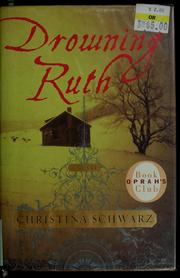
Drowning Ruth
In 1919 a Wisconsin mother drowns beneath the ice, and her sister insists the little girl who remembers it only dreamed the event. Schwarz unfolds the truth in…
2,386-word summary · 11 min read
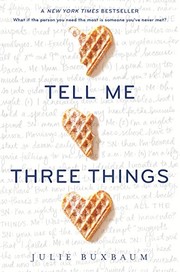
Tell Me Three Things
A grieving Chicago teen lands in her new stepfamily's Los Angeles mansion, then gets anonymous emails promising to guide her through a brutal private school.
2,292-word summary · 10 min read

Say You'll Remember Me
A vet who writes off a sick kitten falls for the woman who saves it, then follows her into the hard, funny work of caring for a mother with dementia.
2,293-word summary · 10 min read

Atmosphere
A 1984 shuttle disaster opens this love story between two NASA astronauts who must hide their relationship. Reid builds toward the radio call that changes…
2,261-word summary · 10 min read

The Japanese Lover
A Polish refugee and the son of a Japanese gardener fall in love in San Francisco in 1939, then keep the affair secret for nearly seventy years.
2,286-word summary · 10 min read
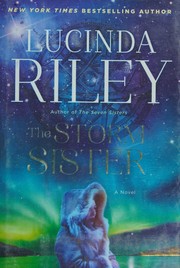
The Storm Sister
Ally D'Aplièse loses her father and her lover within weeks, then follows a brass frog and a Norwegian biography into Anna Landvik's music and the world of…
2,376-word summary · 11 min read
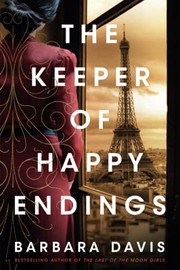
The Keeper of Happy Endings
Barbara Davis's 2021 standalone braids a Paris dressmaker's wartime losses with a grieving Boston artist who unlocks her family's secrets through an old row…
2,437-word summary · 11 min read
Everything We Keep
A widow questions her husband's death when a stranger claims his past.
2,307-word summary · 10 min read

Next Year in Havana
A Cuban-American writer takes her grandmother's ashes to Havana and finds a hidden 1959 love that reshapes her family story.
2,962-word summary · 13 min read
When He Was Wicked
Widowed Francesca Bridgerton falls for her late husband cousin Michael, who loved her silently for years.
2,055-word summary · 9 min read
The Things We Leave Unfinished
Georgia Stanton and Noah Harrison finish Scarlett's last novel while her WWII romance with pilot Jameson unfolds in letters. A dual timeline story of grief,…
2,565-word summary · 11 min read
Thank You for Listening
A former child star turned audiobook narrator takes a final romance job to help her grandmother, only to fall for the secretive voice reading opposite her.
2,148-word summary · 10 min read
Our Souls at Night
A widow asks her widower neighbor to lie beside her at night, not for sex but for company, and two lonely people in a small Colorado town begin again.
2,582-word summary · 11 min read

Of Love and Other Demons
In colonial Cartagena, a twelve-year-old girl bitten by a rabid dog is locked in a convent, where the priest sent to exorcise her falls in love.
2,258-word summary · 10 min read

Love Forms
A Trinidadian mother sent away at sixteen returns to the loss of her daughter forty years later, in Claire Adam's quiet, longlisted novel.
2,153-word summary · 10 min read

Kiss the Sky
Rose Calloway signs her family up for a reality show to save her fashion line, and her old rival Connor Cobalt keeps pace.
2,178-word summary · 10 min read

Yellow Crocus
In 1837 Virginia, an enslaved wet nurse is separated from her own son to raise a planter's daughter, and the two women build a love the law says cannot exist.
2,094-word summary · 9 min read

Wolfsong
Ox Matheson grows up believing he is worth nothing. Then the Bennett family moves in next door, werewolves with a secret, and a boy named Joe begins to howl…
2,823-word summary · 13 min read
Twisted Palace
Twisted Palace closes The Royals with Reed accused of murder and a father back from the dead. Ella fights to clear his name while the family finally acts like…
2,303-word summary · 10 min read
Theft
Gurnah traces three linked lives in Tanzania, where a servant's accusation of theft opens a family history of love, duty and quiet betrayal.
2,454-word summary · 11 min read

The Wrong Bride
In Catharina Maura's Windsors opener, model Raven Du Pont takes her absent sister's place at the altar beside billionaire Ares Windsor, the man she has…
2,397-word summary · 11 min read

The Winter People
A century-old ritual for calling back the dead connects a Vermont farmhouse, a girl who came back from the well and a modern investigation into a…
2,037-word summary · 9 min read
The Shoemaker's Wife
Two young Italians meet in the Alps, are separated by fate, and find each other again in New York before war pulls them apart, in a saga drawn from Adriana…
2,261-word summary · 10 min read
The Pull of the Stars
Over three days in a Dublin maternity ward in 1918, a nurse, a suffragette doctor on the run and a young volunteer face the flu, childbirth and unexpected love.
2,578-word summary · 11 min read

The Paying Guests
A widowed mother and her unmarried daughter take in lodgers in 1922 south London, and a secret affair between Frances and Lilian pulls them into a murder case.
2,661-word summary · 12 min read

The Obsession
After a childhood in the shadow of her serial killer father, photographer Naomi Carson puts down roots in a coastal town, only to face a copycat killer…
2,230-word summary · 10 min read
The Love of My Life
Emma loves her husband Leo and their little girl. Then Leo, an obituary writer, starts filing the facts of her life, and the woman he thinks he married begins…
2,803-word summary · 12 min read