
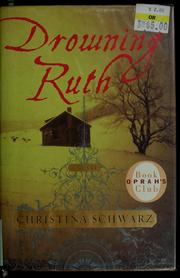
Drowning Ruth
2,386-word summary 11 min read 338 pages in the book
- First published
- 2000
- Publisher
- Doubleday
- Pages
- 338
- ISBN
- 9780385502535
Reading options
What's inside (8 sections)
I came to this book knowing only two things: that it had been an Oprah's Book Club selection around the turn of the century, and that people argued about its ending. What I did not expect was how much of the story turns on a small physical detail, a bite mark on a woman's hand. Schwarz plants that mark early in her debut novel and refuses to explain it until the last pages. Nearly everything else, the drowning, the affair, the given-away baby, is arranged around the question of how that mark got there.
Published in 2000 by Doubleday, Drowning Ruth is set mostly in rural Wisconsin in the years after the First World War. It is a historical novel, but it borrows the machinery of a mystery, withholding its central facts and doling them out in fragments from several narrators. The book follows its characters into the 1940s. spoilers are baked into a story like this, and I am going to tell you how it ends, because the ending is the reason everyone talks about it.
Two sisters, a farm, and a thin patch of ice
The sisters at the center of the book could not be more different. Mathilda, called Mattie by nearly everyone, is small, pretty, well liked, and given to impulse. Her older sister Amanda is tall, awkward, serious, and never quite at ease in her own skin. When Mattie marries Carl, a neighbor from the island farm nearby, Amanda feels pushed aside and leaves to train as a nurse. That early rivalry never really goes away. It sits underneath everything the sisters do to and for each other.
Mattie and Carl set up house on a small island near the family farm, and there they have a daughter, Ruth. The marriage does not last in any easy sense. Carl feels trapped by island life and enlists in the army, shipping out to France. Hurt and angry, Mattie moves back into the old house of their late parents on the mainland. Not long before all of this, the sisters lost those parents to influenza, the pandemic that swept through in 1918 and 1919. Amanda, working among wounded soldiers in a Milwaukee hospital, carries a private guilt about the sickness, a suspicion that she brought the infection home from the ward. Grief and blame are part of the air the sisters breathe.
Amanda, meanwhile, is coming apart. She is exhausted, frequently ill, and anxious in a way that her nursing superiors can no longer ignore. She takes a leave and returns to the family farm to stay with Mattie and the little girl. The three of them settle into a close household, and Amanda begins to think of Ruth as hers. She grows fiercely protective of the child. Then she persuades a reluctant Mattie to move back out to the island, and the three of them go.
This is the point where the book starts tucking away the pieces it will need later. The island, the winter ice, the difference between the sisters, and Ruth's stubborn habit of remembering things grown adults prefer to forget, all of it is set down plainly before Schwarz begins to scramble the order of telling.
The pregnancy and the arrangement between the sisters
The reason for Amanda's collapse becomes clear in stages. She has been having a secret affair with a married man in the community, a wealthy man named Clement Owens who owns a large house near the farm. The relationship began years earlier, during a visit home, and it left her pregnant. In the small town of this period an unwed mother would be ruined, so Mattie agrees to a plan. When the baby comes, Mattie will claim the child as her own and spin a story about an orphaned infant left by a hired girl who died in childbirth. The sisters will raise the child together. Ruth, who is around four by now, will simply have a new plaything in the house.
The plan holds right up to the moment it does not. Amanda gives birth in the house on the island, with Ruth tucked under the bed during the whole ordeal. But once the baby is born, Amanda's feelings shift. She cannot bear to hand the child over, and in the dead of night she decides to leave the island with her newborn, walking out across the frozen lake. She sets off with the baby and, crucially, does not account for Ruth. The little girl wakes, sees her aunt going, and follows her out onto the ice, calling after her. Mattie wakes too and runs out to bring Ruth back.
What happens next is the book's central scene, and Schwarz gives it to us only in pieces, letting different characters describe what they saw and did not see. The ice breaks beneath Ruth and Mattie. Mattie manages to shove the child up onto solid surface, but she cannot get herself out. Amanda, with the newborn set down nearby, stretches out on the cracking ice and tries to pull her sister up. She cannot do it without going under herself. And then Mattie, thrusting up one last time, bites Amanda hard on the hand, forcing her to let go. The bite is the final gift of a sister who knows that Amanda will not release her while there is any hope at all.
Ruth and the newborn survive, half frozen on the ice. Mattie does not. Amanda walks away with a scarred hand and a story she has already begun to build.
The cover story and Carl's return
Amanda takes the newborn into town to a woman whose own child has just been stillborn. She tells the woman the hired girl died in childbirth and asks her to take the baby, whom she names Imogene. The grieving woman is so taken with the child that she misses the things she should have noticed: that both Ruth and Amanda are wearing nightgowns and are nearly blue with cold, and that there is blood on Amanda. The Lindgren family raises Imogene as their own daughter. This is how Ruth and Imogene end up related without anyone in the town knowing it.
Carl comes home from the war badly injured and walking with a cane. Amanda nurses him back to health and stays on at the farm to help with Ruth, who is traumatized by the drowning and wary of the father she barely knows. Carl is told that Mattie wandered out alone one night and was later found beneath the ice. He does not believe it. He senses that Amanda is hiding something, and the sense grows. In one thread of the book he becomes convinced that Clement Owens, the man who found Mattie's body, had something to do with her pregnancy and her death, and he comes close to acting on it. His suspicion is misdirected, but it is not baseless, and it keeps the pressure on Amanda.
Schwarz is very good at this middle stretch. She lets the reader know more than Carl does, so his fumbling toward the truth has a painful slowness to it. At the same time Amanda's mind is failing again. Her anxiety returns, and eventually she is committed to a mental hospital. Carl, now raising Ruth alone and unsure of himself with children, calls in his cousin Hilda to help. Hilda is strict and humorless, sees Ruth as a problem child, and seems almost to enjoy punishing her. Ruth loathes her, and when Amanda finally comes home, the girl begs her never to leave again. The request is what starts to unlock Amanda's memory of that night on the ice.
Ruth and Imogene grow up
The novel jumps forward. Ruth starts school, where she is odd and prickly and quickly becomes an outcast. The girl who draws her out is Imogene Lindgren, the most popular girl in class and, unknown to both of them, Ruth's half sister. The two become close friends, close enough that when Ruth brings Imogene home to play, Amanda is shaken by the sight of her. She remembers the arrangement she and Mattie made, and the way she abandoned it. She remembers that she is looking at her own child.
The girls stay friends into young adulthood. They talk about going to Chicago to work in advertising, they go to dances, and they both fall for the same young man, Arthur Owens. Arthur is the son of Clement, the man who seduced Amanda all those years ago. That makes Arthur and Imogene half siblings, a fact that no one but Amanda understands at first. Meanwhile Amanda, still living with Ruth, finds herself spying on Clement and sees him trying to seduce Imogene, who works for the Owens family. She goes to warn him off and ends up falling under his spell again, the old pull of him still working on her.
Clement talks her into going out on the lake with him. While he is swimming, he says something that cuts her, and Amanda takes the boat and leaves him in the water. She says she forgot he had a heart condition. He dies before he can make it back to shore. It is hard to read this as anything but another of Amanda's evaporations of responsibility, a repetition of the way she keeps stepping out of situations she cannot face. By this stage in the book, that pattern is the truest thing about her.
Arthur eventually leaves Ruth and announces that he intends to marry Imogene. Amanda cannot allow it. She tells Ruth the truth: Imogene is her daughter, Clement is Imogene's father, and Arthur is Clement's son, so the wedding would join half siblings. The two of them forge a letter, written as though from Arthur, saying he loves someone else. Imogene and Arthur quarrel, and the engagement breaks. Imogene goes to Chicago to get over it. Ruth and Imogene had planned to run away to Chicago together, but Ruth cannot go through with it and comes back to stay with Amanda, the woman who raised her and who needs her now.
What the last pages reveal
The truth about the drowning arrives at the very end, in a flashback that Amanda can finally bring herself to tell. She had set the newborn down and was trying to pull Mattie out of the ice. Mattie bit her hand to make her stop, choosing to drown so that Amanda, Ruth, and the baby would live. The bite mark that has been sitting in the book since the early chapters is finally explained, and with it the question of which sister loved which more.
This is the shock the reviewers were guarding when the book came out. On a first reading it lands hard, because Schwarz has spent hundreds of pages letting Amanda off the hook in her own telling. We have been invited to see her as a woman done in by illness, grief, and a cruel town. The final scene asks us to hold that view alongside another one, in which her sister died because Amanda would not let go. The book does not choose between these readings. It insists that both are true of her.
Around that reveal sit the smaller closings. Imogene has been given to a good family and grows up loved, which is the one clean mercy Amanda manages to arrange. Carl never learns the full story. Ruth chooses the difficult loyalty of staying with the aunt who both saved and failed her. The novel carries its people to 1941, so that we see what the secrets cost over decades rather than only in the season they were made.
What works and what strains
I admired the structure more and more as I went. Telling this story out of order, with several people holding different pieces of it, is exactly the right choice for a book about what a family agrees not to remember. Ruth's insistence that she remembers drowning, and Amanda's flat refusal to hear it, gives the novel its engine. The historical setting is not decoration either. The hospital scenes, the long shadow of the influenza pandemic, and the hardscrabble economics of keeping a Wisconsin farm all do real work in explaining why these people are so trapped.
Amanda is a difficult, compelling creation. She is not a villain, and she is not a victim in any simple sense. She loves Ruth, and that love is genuine. She also uses Ruth, and lies to her, and makes choices that ruin the people closest to her, usually because she cannot bear to stay in a room with her own shame. The book is at its best when it refuses to sort this out for us. The scene where she abandons Clement in the water, and then explains away her forgetting, says more about her than any amount of interior monologue could.
The weaknesses come from the same design. The coincidence pileup near the end asks a lot of a reader: the two girls are half sisters, the man they both want is the half brother of one of them, and the man who dies in the lake is that boy's father. It is a tightly wound knot, and it can feel engineered rather than lived. The final revelation, for all its power, arrives with a neatness that some readers will find too tidy, as if one scene is being asked to carry every unresolved feeling in the book. There are also stretches, especially around Carl's suspicion of Clement, where the mystery machinery feels more borrowed than necessary.
And yet the book earns most of what it attempts. The title is a quiet trick: Ruth is the one who drowns in the telling, and the one who does not die. By the end you understand that the whole novel has been about who gets to decide what happened on that ice, and what a person owes to the child who was there. It is a debut with more ambition than polish, but the ambition is of the worthwhile kind. I would hand it to a reader who likes a mystery that keeps its emotional stakes high, and I would warn them not to trust the first version of any story they are told.
FAQ
Is Drowning Ruth based on a true story?
No. It is a work of historical fiction set in rural Wisconsin after World War I, though Schwarz drew on the 1918 influenza pandemic and the lake country where she grew up.
Who actually drowns in Drowning Ruth?
Mathilda Neumann drowns beneath the ice of a Wisconsin lake in 1919 after pushing her daughter Ruth to safety. Ruth nearly drowns too but is revived by her aunt Amanda.
What is the twist at the end of Drowning Ruth?
Amanda reveals that Imogene is her own daughter, given away on the night Mathilda died, and that the young man Imogene plans to marry is her half brother. Mathilda's death is shown to be a deliberate sacrifice.
Similar books

The Winter People
A century-old ritual for calling back the dead connects a Vermont farmhouse, a girl who came back from the well and a modern investigation into a…
2,037-word summary · 9 min read

The Silent Sister
Returning to New Bern to clear out her late father's house, Riley MacPherson finds proof that the sister she believes drowned decades ago is alive under…
2,706-word summary · 12 min read

The Woods
Twenty years after two teenagers were murdered and two vanished at summer camp, prosecutor Paul Copeland identifies a fresh corpse as one of the missing.
2,490-word summary · 11 min read
The Distant Hours
A letter posted in 1941 reaches Edith Burchill in 1992 and draws her to Milderhurst Castle, where three elderly sisters still guard the secret of a stormy…
2,261-word summary · 10 min read

The Art of Hearing Heartbeats
When a New York lawyer vanishes, his daughter follows an old love letter to Burma, where a stranger narrates the story of the father she never knew.
2,950-word summary · 13 min read

Marina
A fifteen-year-old boarder in 1979 Barcelona follows a singing voice into a ruined mansion and finds a girl, a watch, and a mystery the city has kept buried…
2,352-word summary · 10 min read

Good Dirt
A stoneware jar made by an enslaved potter links a prominent Black New England family across a hundred and fifty years of prosperity, grief and buried history.
2,069-word summary · 9 min read
Gone Before Goodbye
Reese Witherspoon's first novel, written with Harlan Coben, follows a bereaved surgeon whose griefbot guides her into a medical conspiracy stretching from…
2,648-word summary · 12 min read

The Beach House
A young valet is beaten to death at a Hamptons party, and his law-student brother spends a year building a case against the family that covered it up.
2,049-word summary · 9 min read

The Art Forger
A disgraced Boston painter agrees to copy a Degas stolen from the Gardner Museum, then begins to suspect the original she is copying is itself a forgery.
2,117-word summary · 9 min read

The Echo of Old Books
Barbara Davis's 2023 novel sends a rare-book dealer in 1984 New Hampshire hunting for the authors of two unpublished volumes that tell opposite sides of one…
2,491-word summary · 11 min read
The House We Grew Up In
The Bird family of the Cotswolds breaks apart after a suicide and spends twenty years not talking about what happened.
2,198-word summary · 10 min read
The Tuscan Child
After her father's death, Joanna follows a returned letter to Tuscany and uncovers his wartime love, a hidden painting and a village secret. A dual-timeline…
2,095-word summary · 9 min read
Ghosted
After seven perfect days with Eddie, Sarah is ghosted, and her search for answers uncovers a secret tied to the accident that changed both their lives.
2,011-word summary · 9 min read
The Storm Sister
Ally D'Aplièse loses her father and her lover within weeks, then follows a brass frog and a Norwegian biography into Anna Landvik's music and the world of…
2,376-word summary · 11 min read

The Clockmaker's Daughter
A London archivist finds a Victorian satchel holding a photograph, a sketchbook and a letter, then follows them to Birchwood Manor, where a young woman died in…
2,886-word summary · 13 min read

Family of Liars
The prequel to We Were Liars: Carrie Sinclair finally tells the story of the summer of 1987, the boy who died on Beechwood Island, and the lie her family built…
2,072-word summary · 9 min read

The Heiress
A missing heiress returns to claim a mansion full of letters and lies.
2,362-word summary · 10 min read
Everything We Keep
A widow questions her husband's death when a stranger claims his past.
2,307-word summary · 10 min read
The Lake House
Detective Sadie reopens 1933 Edevane baby vanishing tied to writer Alice.
2,055-word summary · 9 min read
Sadie
Sadie hunts sister killer while podcast chases her in split narrative thriller.
2,091-word summary · 9 min read

Before the Fall
A private jet falls off Martha's Vineyard. A painter and a small boy survive, then face grief and the news cycle.
2,185-word summary · 10 min read

The Seven Sisters
Maia follows Pa Salt clue from Geneva to Rio and Christ the Redeemer.
2,210-word summary · 10 min read

The Secret Keeper
A girl watches her mother kill a stranger in 1961; fifty years later she digs into her mother wartime London past.
2,262-word summary · 10 min read
I Am Watching You
A florist watches two schoolgirls chat with ex cons on a train and stays silent. A year later one girl is still missing and someone starts watching her.
2,939-word summary · 13 min read
The Good Daughter
Twenty eight years after a home invasion shattered her family, a lawyer witnesses a school shooting that reopens old wounds.
2,505-word summary · 11 min read
The Forgotten Garden
A Brisbane woman traces a century old abandonment from an English country house to a Cornish cove and a hidden author.
2,056-word summary · 9 min read

The Lost Apothecary
A hidden 1791 apothecary poisons cruel men, and two centuries later an historian uncovers her trail.
2,691-word summary · 12 min read
Into the Water
A drowning pool, eleven narrators, and sisters divided in Hawkins's murky second thriller.
2,598-word summary · 12 min read

Pretty Girls
Estranged sisters Claire and Lydia reunite after a murder exposes snuff films, their sister Julia's fate, and a killer near Lydia's daughter.
2,498-word summary · 11 min read