
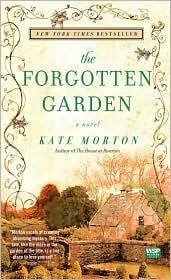
The Forgotten Garden
2,056-word summary 9 min read 560 pages in the book
- First published
- 2008
- Publisher
- Washington Square Press
- Pages
- 560
- ISBN
- 9781416550556
Reading options
What's inside (9 sections)
I started The Forgotten Garden on a rainy weekend and looked up to find I had missed lunch. Kate Morton published it in Australia with Allen and Unwin in 2008, and the US paperback I cite from Washington Square Press runs 560 pages with ISBN 9781416550556. It is a triple timeline mystery about a child left alone on an Australian wharf in 1913, a woman who learns at twenty one that she was that child, and a granddaughter who inherits a Cornish house full of fairy tales. Morton writes big, old fashioned novels with houses, gardens, secrets, and slow reveals. This is the one where all of that machinery works best for me, even when I guessed parts of the ending early.
The frame belongs to Cassandra. She is in Brisbane, running a small antique shop with her husband, caring for her grandmother Nell after a stroke. Nell dies, leaving Cassandra the deeds to Blackhurst Manor in Cornwall, a place neither of them has seen, plus a folder of sketches and a book of dark fairy tales. Cassandra marriage is already thin. Her husband wants children and certainty. She wants time to grieve and to understand why Nell, usually open, went silent about her past in her last years. A trip to England, meant to sell the house fast, becomes a long stay. The manor is damp, half shut, with a walled garden that has been locked for decades and a cottage where an old woman once wrote stories that local children still whisper about.
Nell story rewinds to 1975. She is fifty, running a Brisbane boarding house, when her father reveals on her twenty first birthday, years earlier in memory, that she arrived alone on a ship as a four year old with a small suitcase and no family. No one claimed her. He and his wife raised her as their own. Nell spent her adult life trying to trace that ship. In 1975, newly widowed and retired, she finally sails to England with a few clues. A port official note. A child rhyme. A memory of a woman with red hair. She finds Blackhurst, meets locals who remember the Mountrachet family, and starts to piece together a story about two cousins, a lost author, and a garden designed as a puzzle. Her search stalls when Cassandra needs her back home. Nell returns to Brisbane, pots her roses, and keeps the folder closed. Why she stopped is the question Cassandra inherits.
The oldest thread is Eliza Makepeace, and she is the reason to read. Eliza is twelve in 1900, living in a London slum with her twin brother Sammy and a mother who tells stories to keep hunger at bay. After their mother dies, they are taken in by an uncle who works for the Mountrachet family in Cornwall. Eliza is clever, hungry to read, quick to invent. She explores Blackhurst grounds, befriends Rose Mountrachet, the lonely daughter of the house, and clashes with Linus, Rose brother, who is pious and cold. Eliza starts writing fairy tales that are sharp and a little cruel, about changelings and locked doors and girls who are left. A local publisher takes notice. She becomes, under a pen name, the author of the very book Cassandra found. Her tales are quoted through the novel and they work as clues. Each one hides a real event at Blackhurst.
Morton braids the three lives without losing momentum, mostly. Cassandra in the present clears rooms, interviews elderly witnesses, and reads Eliza tales against parish records. Nell in 1975 walks the same lanes, a little faster and more frustrated, getting close enough to scare someone. Eliza from 1900 to 1913 grows from servant child to published writer to a woman who makes a terrible choice to protect someone she loves. The wharf scene, when it finally comes, is not a twist so much as a sorrow you have been dreading. A small girl in a white coat holding a suitcase, told to wait, watching a ship leave. Morton earns it by delaying the full context until you care about every adult who put her there.
Blackhurst as a character
Blackhurst Manor deserves its own paragraph. Morton loves houses that keep paper. Attics with labeled boxes. Cottages with manuscripts under floorboards. Gardens with maze hedges and forgotten gates. Blackhurst is crumbling but not gothic for show. The damp is real. The ivy has to be cut. The maze was designed by Eliza and Rose as children and then left to grow wild after a death. Cassandra clears it slowly, with help from a local gardener who knows more than he says at first. Each cleared path reveals a statue or a door that matches a fairy tale image. I liked that the garden is not magic. It is a puzzle made by clever girls that adults forgot how to read.
Cornwall itself is drawn with affection and restraint. Cliff walks, cold sea, village shops where everyone knows whose granddaughter you are. Morton avoids postcard writing. Weather interrupts plans. Buses run late. Old people remember selectively. One of the best witnesses is an elderly man who tells Cassandra a story three times with three different endings, not to deceive but because memory works that way. Cassandra learns to cross check rather than trust charm. That methodical digging gives the present timeline its pleasure. You feel you are solving alongside her, not waiting for a letter to explain everything.
What Morton does well
She is very good at mothers and grandmothers who fail in human ways. Nell loves Cassandra fiercely but withholds the very story Cassandra needs. Rose loves her daughter in a possessive way that curdles. Eliza loves Sammy with a ferocity that leads to bad decisions. None of these women are saints. They lie to protect children and then have to live inside the lie. Morton does not excuse them, but she shows the cost. Nell gardening in Brisbane for thirty years instead of returning to Cornwall is not laziness. It is fear that the truth will make her less loved. Cassandra has to prove, by staying and listening, that love can hold the facts.
The fairy tales are the other strength. Eliza stories are short, strange, and well placed. A girl who trades her voice for a key. A garden that only opens for the child who was lost. A mother made of snow. They read like real Edwardian tales, moral but not tidy, and each one points to a Blackhurst event without spelling it out. If you like books within books, this will please you. The author identity mystery, who wrote the famous tales, is solved about two thirds through, which lets the last third focus on motive rather than name. That choice keeps the ending from feeling like a quiz.
Where it sags
Length is the honest criticism. At 560 pages, the middle repeats. Cassandra finds a clue, travels to interview someone, is told to come back tomorrow, reads a tale, sleeps badly, repeats. Two or three witnesses could have been combined. Her marriage trouble is sketched thinly, mostly phone calls where her husband sounds reasonable and she sounds distant, and his late appearance feels rushed. Nell timeline, vivid in 1975, fades for a long stretch while Eliza takes over, and when Nell returns you have to reorient. Readers who want tight thrillers will find the pace slow. This is a novel that asks you to live in it, not race it.
I also guessed the parentage reveal well before Morton confirms it. The clues are fair, perhaps too fair. Red hair, a distinctive coat, a rhyme about a thief. If you read a lot of family mysteries, you will see the shape by page 300. What kept me going was not who but how the adults justified it. Eliza choice on the wharf, Rose panic, Linus cruelty dressed as duty. The moral texture is richer than the puzzle. Go in expecting sorrow rather than shock and you will be satisfied.
The final hundred pages
Without detailing every turn, Cassandra opens the walled garden, finds the last cache of Eliza papers, and understands why Nell stopped digging. Nell had gotten close enough to see that learning the full story would implicate people she loved and force Cassandra to rethink her own childhood. She chose peace over completeness. Cassandra, younger and with less to lose, chooses completeness. She tracks a surviving relative, hears a confession given freely at last, and decides what to do with Blackhurst. She does not turn it into a museum or burn it down. She moves in, slowly, with paint and plumbers and a dog, and starts to write down what she knows for the next generation. The garden stays partly wild, which feels right. Some things are cleared. Some are left.
Eliza fate is the emotional punch. She does not get a simple reward for talent. Publishing success does not save her from class contempt or from the Mountrachet power over her brother future. Her last act is protective and wrong, the kind of wrong that ruins three lives while saving one. Morton lets her be guilty and sympathetic at once. Rose, often unsympathetic, gets one scene of plain grief that reframes her. Linus gets no such softening, and the book is better for it. Some people use propriety to hide hardness. The novel knows the difference.
Nell in 1975 and Cassandra now
One pairing I kept thinking about is Nell at sixty and Cassandra at thirty doing the same walk. Nell moves faster, annoyed by closed archives and vague vicars. Cassandra moves slower, taking photos and buying coffees for witnesses. Both hit the same wall. People who were children in 1913 remember sounds rather than facts. A coat color. A song. A door that was always locked. Morton shows how family research really works. You collect five soft memories and one hard paper, a passenger list with a mark, and suddenly the soft ones firm up. Nell almost gets there. She finds the right cottage, the right surname, the right tale. What stops her is kindness. An old woman asks her to leave a name buried. Nell, who knows what shame can do, agrees for a season that becomes decades. Cassandra, with less personal debt to the living, can ask again.
A word on the twins
Sammy and Eliza deserve more than plot function. Sammy is steady where Eliza burns. He protects her in London lodgings, carries coal, learns a trade, and later takes a fall that was meant for her in a way I will not detail. Eliza loves him with a fierceness that tips into control. She decides what he should want. A place at Blackhurst. A job. Silence about certain nights. Morton lets that love be both beautiful and damaging. When Sammy finally speaks plainly near the end, it lands because he has been quiet so long. Siblings who survive poverty often develop this pattern. One talks, one endures. Morton honors both sides without picking a favorite.
Why I recommend it
If you like dual timeline historical fiction with houses and papers, this is top shelf. It pairs well with Morton later The Secret Keeper but is warmer and more fairy tale inflected. If you are new to her, start here rather than with The House at Riverton, which is colder. Content notes are light but real. Child abandonment, death of a parent, infertility and miscarriage discussion, a violent assault in the past described without lingering detail, and grief after a grandparent death that may hit close.
What stayed with me is not the maze solution but Nell in Brisbane, tending roses she brought as cuttings from a garden she never fully understood, telling her granddaughter stories that were true in shape if not in name. Families do that. They pass down a tale about a brave girl or a locked door and hope the child will one day ask what it meant. Cassandra finally asks. Morton gives her an answer that is painful and generous at once. I closed the book late, cold tea beside me, glad I had missed lunch for it. Few long novels earn their length so gently. This one does, in its garden, at its own pace, with dirt under its nails.
FAQ
When was The Forgotten Garden published?
Allen and Unwin published it in Australia in 2008. The Washington Square Press paperback runs 560 pages and the ISBN is 9781416550556.
Who are the main characters?
Cassandra, her grandmother Nell, Nell as a child called Nellie, Eliza Makepeace, and Rose and Linus Mountrachet.
Is it part of a series?
No. It stands alone, though Morton returns to dual timelines and lost houses in later novels.
Similar books
The Lake House
Detective Sadie reopens 1933 Edevane baby vanishing tied to writer Alice.
2,055-word summary · 9 min read
The Clockmaker's Daughter
A London archivist finds a Victorian satchel holding a photograph, a sketchbook and a letter, then follows them to Birchwood Manor, where a young woman died in…
2,886-word summary · 13 min read
The Secret Keeper
A girl watches her mother kill a stranger in 1961; fifty years later she digs into her mother wartime London past.
2,262-word summary · 10 min read

Anatomy: A Love Story
In 1817 Edinburgh, a noblewoman who wants to be a surgeon disguises herself to study anatomy and falls for the grave robber who supplies her with bodies.
2,031-word summary · 9 min read
Once Upon a River
A wounded man stumbles into a riverside inn carrying what appears to be a drowned child who is not quite dead, and the story braids the guesses of everyone who…
2,173-word summary · 10 min read
The Echo of Old Books
Barbara Davis's 2023 novel sends a rare-book dealer in 1984 New Hampshire hunting for the authors of two unpublished volumes that tell opposite sides of one…
2,491-word summary · 11 min read
The Tuscan Child
After her father's death, Joanna follows a returned letter to Tuscany and uncovers his wartime love, a hidden painting and a village secret. A dual-timeline…
2,095-word summary · 9 min read
The Prisoner of Heaven
Fermin Christmas past returns with a stranger and a prison debt.
2,388-word summary · 11 min read
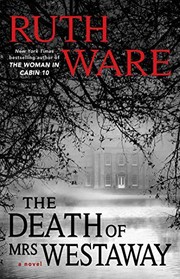
The Death of Mrs. Westaway
Broke tarot reader Hal claims a Cornish inheritance and finds attic locks and lies.
3,313-word summary · 15 min read
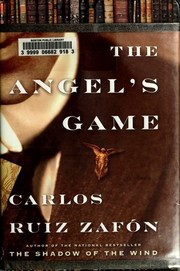
The Angel's Game
In 1920s Barcelona, a young writer accepts a strange publisher's offer to write an impossible book and finds his life turning into a ghost story.
2,699-word summary · 12 min read
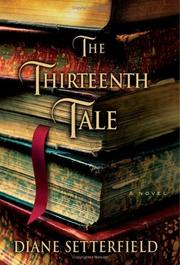
The Thirteenth Tale
A dying novelist tells her true story at last to a bookseller's daughter, and the mystery of the Angelfield twins comes into the open.
2,928-word summary · 13 min read
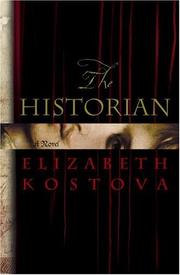
The Historian
A daughter traces her father's search for Dracula through letters and archives across Europe.
3,237-word summary · 14 min read
Mexican Gothic
In 1950 Mexico, glamorous Noemi Taboada leaves Mexico City for High Place after a desperate letter, to rescue cousin Catalina from the chilling Doyles and…
2,523-word summary · 11 min read
The Shadow of the Wind
In postwar Barcelona, Daniel finds a cursed novel and hunts its vanished author while a burned man watches.
2,000-word summary · 9 min read
The House at Riverton
In 1999, ninety eight year old maid Grace Bradley tapes the truth about a 1924 shooting at Riverton Manor, poet Robbie Hunter, two sisters and a lie held for…
2,433-word summary · 11 min read
What Moves the Dead
Alex Easton arrives at the Usher house to find Madeline dying, the tarn full of fungus, and the local hares refusing to stay dead.
2,586-word summary · 11 min read

The Beach House
A young valet is beaten to death at a Hamptons party, and his law-student brother spends a year building a case against the family that covered it up.
2,049-word summary · 9 min read
The Art Forger
A disgraced Boston painter agrees to copy a Degas stolen from the Gardner Museum, then begins to suspect the original she is copying is itself a forgery.
2,117-word summary · 9 min read
The Unmaking of June Farrow
A woman in a North Carolina flower-farming family walks through a red door into 1951, where she must solve her mother's disappearance and decide whether to…
2,701-word summary · 12 min read
The Black Dahlia
James Ellroy builds a fiction around the real Black Dahlia murder, following two Los Angeles cops whose partnership and obsessions destroy them.
2,533-word summary · 11 min read
Only Time Will Tell
A Bristol dockworker's son wins a scholarship, falls in love with the daughter of the family that owns the shipyard, and learns that his father's death was not…
2,082-word summary · 9 min read
Night Film
A disgraced journalist investigates the death of a reclusive horror director's daughter, following a red coat through hospitals, secret clubs, and a family…
2,690-word summary · 12 min read
The Moonstone
A cursed yellow diamond vanishes on the night of a birthday party, and eight witnesses tell what they saw.
2,603-word summary · 12 min read
Her Fearful Symmetry
Twins Julia and Valentina inherit a London flat above Highgate Cemetery from an aunt they never met, then find a ghost in it and a family secret.
2,057-word summary · 9 min read
The Storyteller's Secret
A New York journalist goes to India to learn why her grandmother loved a British officer, and why a family servant kept the truth for forty years.
2,270-word summary · 10 min read

Last Night at the Telegraph Club
The 2021 National Book Award winner follows Lily Hu, a Chinese American teenager in 1954 San Francisco, as she falls for Kath and learns what it costs to be…
2,336-word summary · 10 min read
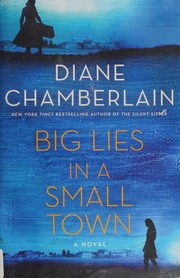
Big Lies in a Small Town
A 22-year-old woman leaves prison to restore a 1940 mural, and Edenton, North Carolina, starts talking.
2,187-word summary · 10 min read
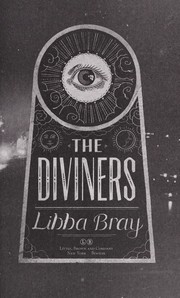
The Diviners
In 1920s New York, Evie O'Neill's ability to read objects pulls her into an occult investigation that awakens something far older and more dangerous.
2,045-word summary · 9 min read
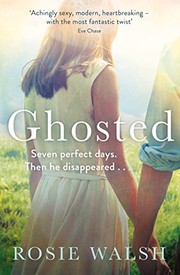
Ghosted
After seven perfect days with Eddie, Sarah is ghosted, and her search for answers uncovers a secret tied to the accident that changed both their lives.
2,011-word summary · 9 min read
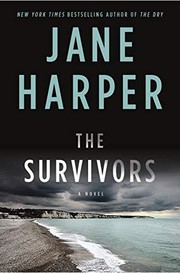
The Survivors
Kieran Elliott returns to Evelyn Bay twelve years after a storm killed his brother, and a young woman's murder forces the town to face what it has concealed.
2,571-word summary · 11 min read