
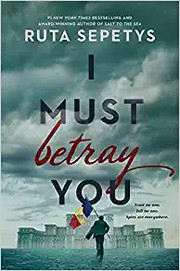
I Must Betray You
2,258-word summary 10 min read 336 pages in the book
- First published
- 2022
- Publisher
- Philomel Books
- Pages
- 336
- ISBN
- 9781984836038
Reading options
What's inside (9 sections)
I picked up I Must Betray You because of a detail in the description that I could not shake: the main character keeps a notebook hidden under the floor of his closet, and he writes down the truth because he cannot say it anywhere else. That image did more to get me into this book than any summary of the plot. Ruta Sepetys published it in 2022 with Philomel Books, and it runs 336 pages in the edition I read. It is young adult historical fiction set in Bucharest in 1989, in the last months of Nicolae Ceaușescu's rule, and it is built almost entirely out of things people could not say out loud.
A boy who writes things down
Cristian Florescu is seventeen. He lives with his mother, his older sister Cici, and his grandfather, whom he calls Bunu, in an apartment in Bucharest. He is interested in philosophy and in writing, which in this setting is not a harmless combination. Romania under Ceaușescu is a country where the apartments are bugged and the government has built a vast network of citizen informers called the Securitate. Every wall has ears. Every conversation can be reported.
Cristian's solution is the notebook. He hides it beneath the floorboards in his closet and records what he sees and hears there, including the small humiliations and the large ones. The notebook is his private version of the country, a record of a reality that the state insists does not exist. It is also the book's central device, and Sepetys uses it to give the story its urgency. When Cristian writes something down, we know he is risking his life to keep it.
I want to say something about how the book handles this. The regime in I Must Betray You is not presented as a distant evil. It is a system that reaches into the kitchen, the classroom, and the family. Cristian's home has been searched and wired. He and his grandfather can only criticize the government through jokes, because a joke can be taken as a joke if the wrong person hears it. That detail, more than any figures about repression, made the danger feel real to me.
The man with the paddle hands
The plot starts when Cristian is called into a meeting with a Securitate agent he nicknames Agent Paddle Hands, after the man's broad, flat hands. The agent accuses him of accepting foreign currency from an American acquaintance named Dan Van Dorn. The actual offense is small. Cristian gave Dan a few stamps for his collection, and Dan gave him a dollar in return. In a normal country this would be nothing. Here it is a weapon.
The agent uses two things to force Cristian's cooperation. One is the accusation itself, which can be made to disappear if Cristian is useful. The other is Bunu's deteriorating health. The old man is sick, and Cristian is told, without quite being told, that his cooperation will determine whether his grandfather gets care. He agrees to spy on Dan and his father, the American ambassador, and he tells himself he is doing it to gather information on the Securitate. That is the story he needs in order to live with the decision. It is also a lie he keeps making himself believe.
What follows is a peculiar friendship. Cristian is supposed to be reporting on the Van Dorn family, but Dan is a decent, ordinary teenager who likes stamps and libraries and is curious about Romania. Through him Cristian sees what the regime has been hiding: that Americans have abundant food, that they can speak freely, that the West is not the monster the television says it is. The American library becomes a kind of window. Cristian visits it as an informant and stays as someone who wants to know what is on the other side.
Everybody might be an informer
The most exhausting thing about Cristian's life is not the agent or the surveillance. It is not knowing who reported him. That uncertainty spreads through the book until nearly every relationship is suspect. There is Liliana Pavel, the girl he likes, whom he meets after the meeting with the agent and takes to a movie night run by a neighborhood contraband smuggler called Starfish. There is his best friend Luca, who was the only other person who knew about the stamps. There is his sister Cici, who works and who has been subjected to a humiliating gynecological exam as part of the regime's campaign to increase the population.
Sepetys lets the suspicion grow rather than settling it. Cristian wonders whether Liliana informed on him, then concludes it was Luca. He punches Luca after a forced harvest trip shows him that the government's propaganda about Romania's abundance is false, and the friendship ends there. Liliana eventually breaks things off because she suspects Cristian informed on her family. Bunu warns him not to trust anyone because there is an informer in the family. Every warm relationship in the book is poisoned by the same question: who is listening?
There are small openings in that fear. A researcher from Harvard moves into Cristian's apartment building to care for her dying Romanian mother, and she brings with her a sense of the world outside. Cristian and Bunu listen to Radio Free Europe at night, and the reports of changes in other Eastern European countries give them something to hope for in whispers. Bunu's health even improves for a time, and Cristian lets himself imagine a future. Then he has to go back to his reports and pretend to be a loyal informer. The book keeps placing those moments of ordinary hope right next to the machinery that crushes them.
I found this the hardest part of the novel to read, and I mean that as a strength. A world in which you cannot trust your sister or your best friend is a world in which solitude becomes a form of safety. Cristian's notebook is the only relationship he can trust, because it cannot betray him. Or so he thinks.
Small betrayals, and a grandfather who dies
Cristian keeps filing reports that he hopes are useless. He tries to mislead the Securitate, to give them nothing that matters, and Agent Paddle Hands eventually makes clear that he does not believe a word of it. The reports are worthless, and the agent knows Cristian is playing him. That cat and mouse continues until Cristian comes home one day and finds Bunu murdered. The old man has been killed to discourage the family from embracing revolutionary ideas, and the message is aimed directly at Cristian.
After that, the notebook changes purpose. It stops being a private record and becomes evidence. Cristian begins passing what he has written to Mr. Van Dorn, the American diplomat, along with accounts of the human rights violations he is witnessing. He also finds photographs and articles in the American library showing Ceaușescu at Disneyland with his family while ordinary Romanians queue for food and live in fear. That image of the dictator at play while his country suffers is where the book's anger becomes sharpest. Sepetys uses it to show the gap between the regime's image and its reality.
Before his final meeting with Dan, Cristian leaves the notebook on Mr. Van Dorn's desk. It is the boldest thing he has done, and it is also a gamble, because he has no idea whether the diplomat can use what he has written. Dan gives him a Christmas present, since they will likely not see each other again, and asks him to read an essay he has written about life in Romania. Cristian refuses. He knows that if he reads it, he will have to report its contents to the Securitate, and that is one betrayal he cannot bring himself to commit. It is a small refusal, but after a book full of forced choices, it feels enormous.
Around this time Cristian also discovers that Cici has been informing on him. He finds her lockbox, where she keeps money and contraband, and realizes she has been reporting on him the whole time. He follows her and sees her with Agent Paddle Hands, and he concludes she had a hand in Bunu's death. He is wrong about the reasons, but the book does not tell us that until much later. For most of the story Cici functions as the betrayer inside the home, and Cristian's fury at her is one of the most painful threads in the novel.
Timișoara, the protests, and Jilava
News arrives of an uprising in Timișoara, and something in Cristian changes. He buys a set of Amnesty International reports on Romanian human rights from Starfish, which is an act of open defiance. He joins a demonstration in Bucharest where citizens boo Ceaușescu off a stage, and the protest turns violent when soldiers arrive. Luca is shot. Cristian is seized, beaten, and taken to Jilava, the political prison.
What happens inside Jilava is deliberately degrading. Cristian and the other children are forced to kiss the official portraits of Ceaușescu and his wife Elena, referred to in the book as Mother Elena. They are made to clean a filthy bathroom. Cristian is also held with Liliana, who has been arrested too, and the two of them are eventually moved to a juvenile detention center. He manages to escape in order to get help for the others.
The escape leads to one of the stranger sequences in the book. Cristian trades Kent cigarettes to hospital staff so he can see Luca, who is alive but has lost an arm. He asks Cici, whom he still does not trust or forgive, to help Liliana. He goes to Luca's apartment to protect his younger sisters while the streets fill with violence and looting. These chapters move quickly, and at times the pace feels almost too fast for the weight of what is happening. Events pile up, and the reader has to keep running to stay with Cristian.
Christmas, and what the files say afterward
Cristian and Liliana are reunited. She has been tortured in the detention center, and the two of them confess their feelings for each other and spend Christmas Eve and Christmas Day together. While they listen to the radio, Ceaușescu is captured, tried, and executed. They share Twinkies and talk about a future that, for the first time in the book, seems possible. It is a small, quiet ending after a very loud few chapters, and Sepetys earns it.
The epilogue jumps forward years. Cristian works as an English teacher and Liliana owns a bookstore. His entire family is dead, including Cici, who was killed during the revolution. He obtains thousands of pages of declassified Securitate files and reads them, and what he learns rearranges everything he believed about his sister. Cici was a double agent working for the Americans, and she had been trying to protect him the whole time, even obtaining foreign passports for the two of them. The true informer in the family was his mother, who made a deal to keep her children safe. The woman he blamed too quickly turns out to have been the one carrying the burden.
The final image is unsettling. Cristian learns that Agent Paddle Hands is alive and living nearby, and the novel ends with him waiting outside the man's door. There is no speech, no confrontation, no tidy accounting. After hundreds of pages about the difficulty of knowing the truth, Sepetys refuses to hand the reader a clean resolution. That choice is the right one. A dictatorship built on secrets does not end because the dictator is executed, and the people who served it do not all disappear.
What stays with me
Sepetys includes an author's note, archival photographs, and a long source list, and her research is all over the book. The details of daily life under Ceaușescu, from the food queues to the forced exams to the way neighbors watched one another, are specific enough that they never feel like background. This is a book that wants you to understand a system rather than visit it. It was well received, with starred reviews and a place on a number of best of the year lists, and it is easy to see why. The research is matched by a thriller's pacing.
It is also a hard book in places, and the violence is only part of the reason. The last stretch, from the demonstration to the prison to the escape, moves so fast that some of the emotional weight gets left behind. A few coincidences strain belief. And the epilogue's revelations about Cici and the mother arrive after the reader has already spent the book feeling a certain way about them, which some readers will find satisfying and others will feel as a manipulation. I leaned toward the first group, but I understand the second.
Readers who want a gentle introduction to historical fiction should look elsewhere. This is a young adult novel, but it does not soften what it describes, and the fear in it is the fear of a child who does not know which adult to trust. What I keep thinking about is the notebook under the floor. In a country where every word could be used against you, a seventeen-year-old decided that writing things down was worth the risk. That act, more than the revolution happening around him, is the thing the book is really about.
FAQ
Is I Must Betray You based on real history?
Yes. It is set in Bucharest during the final months of Nicolae Ceaușescu's rule in 1989, and Sepetys includes an author's note, archival photographs and a source list describing her research.
Is it a sequel to Between Shades of Gray or Salt to the Sea?
No. It stands alone, though it is written for the same young adult audience and examines another period of twentieth-century oppression.
Does the novel have a happy ending?
Cristian survives and is reunited with Liliana, but the ending is sober. Most of his family is dead and he still has unanswered questions.
Similar books
Between Shades of Gray
In 1941, fifteen-year-old Lina is deported from Lithuania to Siberia and uses her drawings to survive and send word to her father.
2,263-word summary · 10 min read
Exodus
Leon Uris's sweeping 1958 novel follows Jewish refugees, Haganah fighters, and Holocaust survivors from Cyprus to the founding of Israel and the 1948 war.
2,529-word summary · 11 min read
Edge of Eternity
Five families cross civil rights, Cold War and Berlin Wall to the eighties.
2,489-word summary · 11 min read
The Night Watchman
A Chippewa night watchman in 1953 North Dakota recognizes a bill as an attempt to end tribal recognition, while a young woman searches for her missing sister…
2,036-word summary · 9 min read
Sunrise on the Reaping
Twenty-four years before Katniss, sixteen-year-old Haymitch Abernathy is swept into the fiftieth Hunger Games, where District 12 must send four tributes and…
2,198-word summary · 10 min read
Land
O'Farrell's tenth novel follows a Famine-survivor mapmaker who abandons the British Ordnance Survey to chart Ireland in Irish, as his family begins to scatter.
2,438-word summary · 11 min read
The Bronze Horseman
On the day Germany invades the Soviet Union, Tatiana Metanova meets a mysterious Red Army officer, and their love is tested by the Siege of Leningrad.
2,461-word summary · 11 min read
The Island of Missing Trees
A talking fig links 1970s Cyprus lovers Kostas and Defne with their grieving London daughter Ada years later.
3,172-word summary · 14 min read
Code Name Verity
In 1943 France, captured agent Verity writes a confession for von Linden to buy time. Her pilot friend Maddie survives the crash and searches for her by…
2,690-word summary · 12 min read
Cleopatra: A Life
Pulitzer winner Schiff restores Cleopatra as a capable ruler, from Ptolemy debts and Caesar to Antony, Actium, and her death in 30 BC, built from coins and…
3,586-word summary · 16 min read
The Sympathizer
Double agent captain spies in Saigon fall and LA exile while confessing to commandant.
2,169-word summary · 10 min read
Winter of the World
Five families from Berlin to Moscow live through the Nazis, World War II, and the atomic age in Follett's second Century volume.
2,402-word summary · 11 min read
The Girl You Left Behind
Two women a century apart fight for what they love, joined by a portrait painted in wartime France and claimed in modern London.
2,613-word summary · 12 min read
Shogun
An English pilot wrecked in 1600 Japan becomes a pawn in Lord Toranaga's patient bid for power, and slowly becomes Japanese himself.
2,251-word summary · 10 min read
Wolf Hall
In Mantel's Booker winner, Thomas Cromwell rises from a Putney forge to Henry VIII's council, steering the annulment crisis past Wolsey's fall toward a break…
2,911-word summary · 13 min read
Life After Life
Ursula Todd dies and restarts through wars, flus, and bad marriages.
2,060-word summary · 9 min read
Fall of Giants
Five families from Wales to Russia live through World War I, the Russian Revolution, and the fight for women's votes.
2,255-word summary · 10 min read
Salt to the Sea
Four refugee teens cross frozen Prussia toward a doomed ship that history barely remembers.
2,094-word summary · 9 min read
The True True Story of Raja the Gullible (and His Mother)
A gay philosophy teacher in Beirut revisits six decades of Lebanese history, family trauma, and his thorny bond with his mother.
2,274-word summary · 10 min read
The Teacher of Nomad Land
In 1941 Iran, an orphaned boy straps a chalkboard to his back and sets off to teach nomads, hoping to keep his little sister with him.
2,534-word summary · 11 min read

The Last Bookshop in London
A woman who has never cared for reading takes a job in a dusty London bookshop as the Blitz begins, and finds her place in it.
2,264-word summary · 10 min read
The Guns of August
Tuchman narrates the first month of World War I, from a 1910 royal funeral to the Marne, and the decisions that trapped Europe.
2,405-word summary · 11 min read
She Who Became the Sun
A peasant girl takes her dead brother's name and becomes Zhu Chongba, climbing from a Buddhist monastery toward a fractured China's throne.
2,170-word summary · 10 min read
Shadow of the Hegemon
Battle School graduates return to Earth in 2197, where Achilles kidnaps Ender's Jeesh and Bean works to free them while Peter Wiggin plays for the title of…
2,093-word summary · 9 min read
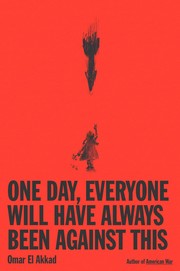
One Day, Everyone Will Have Always Been Against This
From a viral 2023 post, Omar El Akkad builds a furious short argument about Western promises, silence and complicity during the Gaza war.
2,218-word summary · 10 min read
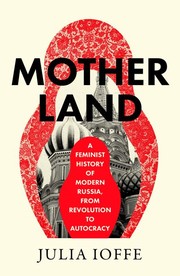
Motherland: A Feminist History of Modern Russia, from Revolution to Autocracy
A feminist history of modern Russia told through women's lives, from the revolutionaries of 1917 to Pussy Riot and the politics of today.
2,191-word summary · 10 min read

Yellow Crocus
In 1837 Virginia, an enslaved wet nurse is separated from her own son to raise a planter's daughter, and the two women build a love the law says cannot exist.
2,094-word summary · 9 min read
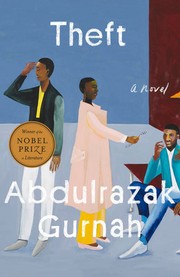
Theft
Gurnah traces three linked lives in Tanzania, where a servant's accusation of theft opens a family history of love, duty and quiet betrayal.
2,454-word summary · 11 min read
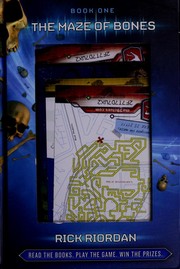
The Maze of Bones
When orphaned siblings Amy and Dan Cahill choose a clue over a million dollars at their grandmother's will reading, they are swept into a global race through…
2,831-word summary · 13 min read

The Kitchen God's Wife
Amy Tan's second novel pairs a San Jose speech therapist with her Chinese mother, whose account of war, an abusive husband, and a narrow escape comes out in a…
2,896-word summary · 13 min read