
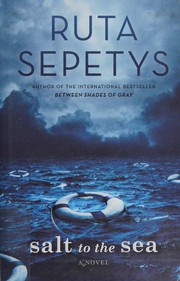
Salt to the Sea
2,094-word summary 9 min read 393 pages in the book
- First published
- 2016
- Publisher
- Philomel Books
- Pages
- 393
- ISBN
- 9780399160301
Reading options
What's inside (12 sections)
I finished Salt to the Sea on a train and sat still for a station I did not need, which tells you how the ending lands. Ruta Sepetys published it with Philomel Books in 2016, a 393 page young adult novel with ISBN 9780399160301. Four teenagers flee collapsing East Prussia in winter 1945 toward a ship that promises escape. Joana the nurse. Florian the forger with stolen art. Emilia the pregnant Polish girl. Alfred the Nazi sailor who writes letters no one answers. Their paths meet on the road to the Wilhelm Gustloff, a German liner that sank with far more dead than Titanic and barely made history books. Sepetys gives that silence a human shape.
The structure is short chapters in rotation, each voice distinct. Joana, Lithuanian, twentyish, leads a walking group with medical calm that hides guilt about a patient who died when she left. Florian, Prussian, nineteen, carries a forged pass, a pack with a piece of the Amber Room, and a plan to disappear. He is prickly and competent, kind in actions he will not name. Emilia, fifteen, Polish, pregnant from assault by Soviet soldiers, talks to her unborn child as if conversation can keep both alive. Alfred, seventeen, also aboard in letters at first, believes in Hitler with a fervor that curdles into menace. He polishes shoes, reports imaginary sabotage, and dreams of medals while real sailors avoid him.
The road
The road chapters are the strongest. Snow, hunger, boots falling apart, a farmhouse where a woman shares soup if you chop wood, a barn where a birth nearly happens too soon. Sepetys writes cold you feel in teeth. Refugees stretch for miles, carts stuck, babies crying, soldiers deserting. Joana triage becomes the group glue. She treats blisters, finds food, decides who walks and who rides. Florian steals and forges to keep them moving. Emilia shares stories about her farm to keep spirits up while hiding her swelling belly under coats. A blind girl, a old shoemaker, a tired soldier join and leave. No one is safe because the front moves faster than feet.
Florian guilt drives his arc. He worked for a Nazi art historian, helped loot, then took a piece to bargain freedom. He also failed to stop a murder of a Jewish family he was told to ignore. That failure replays in dreams. Joana senses his shame without demanding confession. Their slow trust is built on tasks rather than talk. Carry this. Boil that. Watch Emilia while I scout. Romance, when it comes, is chaste and practical. A shared blanket. A hand on a back during a contraction scare. War leaves little room for speeches. Sepetys respects that by keeping dialogue short and letting actions carry feeling.
Emilia is the heart and the hardest to read without ache. Fifteen, assaulted, pregnant, Polish among Germans who despise Poles, she survives by making herself useful and invisible at once. She cooks, mends, tells the baby stories about a future farm. She fears Joana will judge her and learns instead that Joana grieves a similar loss in different form. Their sister bond, forged on ice, is the book emotional core. When Emilia labor starts in a fishing hut with bombs falling, Joana delivers with Florian holding a lamp and Alfred watching from a doorway with wrong eyes. It is tense without being graphic, and it binds the group before the ship.
Alfred
Alfred chapters are uncomfortable by design. Written as letters to a girl back home and as internal boasts, they show Nazi indoctrination as vanity rather than ideology. He cares about uniform creases, about being noticed by officers, about imagined heroics. He reports a nurse for defeatism. He steals. He fantasizes about Emilia while despising her as subhuman. Sepetys does not humanize him into sympathy. She shows how ordinary need for praise becomes lethal inside a system that rewards cruelty. Young readers get a clear portrait of how fascism recruits lonely boys. Adult readers will recognize the type in any uniform.
The Gustloff boarding is chaos rendered clearly. Thousands with passes, more without. Children lifted over heads. Soldiers shoving. Alfred in uniform swaggering aboard while Joana group squeezes through a medical line. Sepetys researched survivor accounts and it shows in details. The ship heated too hot. The pools drained or full. The captain arguing about lights. Life jackets missing straps. Once at sea, Soviet torpedoes hit. The sinking takes chapters, not pages, and Sepetys stays with individuals rather than statistics. A shoe floating. A boy giving his vest to Emilia. Florian holding Joana in water so cold it burns. Alfred clinging to debris while shouting orders no one follows.
The sinking and after
Without detailing who lives in order, the aftermath focuses on cost rather than miracle. The sea in January kills in minutes. Rescue boats save few. Those who reach land are not safe from grief or guilt. Emilia fate is the book wound. Joana survivor shame shapes her future nursing. Florian art theft resolves in a way that values life over objects. Alfred end is fitting and unredeemed. Sepetys closes with a modern coda where descendants honor the dead, a reminder that 9,000 drowned, mostly children, and most readers never heard the ship name before this book. That coda risks sentiment but earns it through restraint. Names on a memorial. Flowers on water.
What works and what strains
What works is research worn lightly. Sepetys, known for Between Shades of Gray, interviewed survivors and divers and walked the routes. You feel it in boot details, soup recipes, ship corridors. Short chapters keep pace fast for young readers without dumbing language. Each narrator sounds different in diction and rhythm. Joana steady. Florian clipped. Emilia soft. Alfred puffed. That craft helps classrooms where four voices could blur.
The strain is Alfred. His chapters, necessary as warning, break momentum because he is deliberately dull and vain. Some teens skim him. His ending, while just, feels rushed compared to the care given the girls. A subplot about the Amber Room piece also fades. It motivates Florian flight but resolves too neatly in water. Readers who want thriller payoff may find the sea takes plot as well as people. This is historical witness fiction, not heist fiction. The treasure matters less than the children.
Who it is for
Read it if you teach or learn World War II beyond Normandy, or if you liked Code Name Verity for its girl focus and want an Eastern Front counterpart. It pairs well with Between Shades of Gray but stands alone. Content notes include wartime violence, sexual assault and pregnancy from assault discussed without graphic detail, childbirth in danger, drowning deaths including children, Nazi ideology quoted to condemn, and survivor guilt. Suitable for teens and up, with support for younger readers around Emilia story.
I closed it thinking about shoes. A pair pulled from water. A pair left on deck. A pair that never fit. Sepetys uses footwear through the book to mark class, flight, and care. Joana gives her boots away. Florian carries too much in his pack and drops art to carry a girl. Those choices are the thesis. What we carry defines us when we must run. Salt to the Sea carries its dead carefully across ice and water so we will remember a ship history forgot. For a young adult novel, that is heavy work done with grace. Bring tissues and warm socks. You will need both.
History note
The Wilhelm Gustloff sank on January 30, 1945 after Soviet submarine S 13 torpedoes, with estimates around 9,000 dead, the worst maritime loss on record. Most were refugees. The Amber Room stolen from Russia remains missing. Sepetys blends these facts with fictional teens. Check survivor accounts and museum pages after. The novel will feel less like adventure and more like memorial, which is its intent.
Joana guilt
Joana survivor guilt needs a fuller telling because it drives her nursing. In Lithuania she left a patient during a Soviet raid to save herself and others, and the boy died. She replays the choice nightly. Should she have carried him. Could she have hidden. That unanswerable question makes her overwork on the road. She takes every wound personally. A blister becomes proof she is useful. A fever becomes a test she must pass. Florian recognizes the pattern because he carries his own version about the Jewish family he failed. Their bond forms not through confession but through recognition. Two people who understand that survival feels like theft. When Joana finally tells the story aloud in the ship hold, Emilia holds her hand and does not absolve her. She just stays. That staying matters more than pardon.
Florian and the Amber Room
The stolen art thread deserves clarity because some readers find it confusing. Florian worked for Dr. Lange, a Nazi historian looting Russian palaces, and helped crate the Amber Room panels. When ordered to kill a witness, he refused too late to prevent it and fled with one small piece as both evidence and bargaining chip. He plans to trade it for passage west. Along the road the piece becomes dead weight. Heavy. Useless for food. Dangerous if searched. He keeps it from habit until the ship, when he drops it to hold Joana in water. That release is the moral pointed in one gesture. Art can be remade. People cannot. Sepetys, who cares about looted heritage, does not dismiss the loss. She ranks it. Life first. Beauty later. The panels remain missing in reality, a wound no novel can close.
The shoemaker and the blind girl
Two minor companions earn a closer look because Sepetys uses them to show who wars discard first. The shoemaker, an old German who mends boots for food, walks though his hands bleed because stopping means freezing. He tells stories about shoes he made for weddings while repairing refugee soles with wire. When he dies on the road, Joana takes his tools and carries them to the ship. That inheritance matters. Care continues through objects. The blind girl, abandoned by family who fled faster, navigates by sound and touch. Emilia befriends her without condescension. They share a coat. They sing to mark miles. Her survival to the ship is one of the book small mercies. Wars blind and orphan. Girls still share coats. Sepetys refuses to let history be only soldiers and ships. It is also a shoemaker tools in a nurse pack and a blind child humming to stay brave.
Language on the road
Four narrators mean four languages colliding, and Sepetys handles it with light hands. Joana thinks in Lithuanian and speaks German to patients. Florian curses in Prussian dialect when stressed. Emilia prays in Polish to a child who will be born stateless. Alfred writes in stilted official German he copies from posters. No one comments on translation. Readers understand everyone while characters often do not. That gap creates both danger and tenderness. A misunderstood order. A shared song with different words. When Joana and Florian finally speak plainly about guilt, they do it in broken German that is more honest than fluent speeches would be. War scrambles language. Care translates anyway. Young readers who speak one language at home and another at school will feel this code switching in their bones.
The rescue boats deserve a sober paragraph. Few in number, overloaded fast, they saved hundreds while thousands watched lights fade. Sepetys names real vessels without turning them into heroes. Crews pulled children from oil slicks with bare hands that froze to rails. Some boats left full and returned empty after torpedoes found them too. That proportion, saved versus lost, is why survivor guilt saturates the coda. Living feels random rather than earned. Joana carries a rescued boy shoes for years. Florian keeps a list of names he could not pull aboard. Memory here is not healing. It is duty. Keep the names. Tell the ship.
One more small grace notes the book refusal to rank suffering. A German soldier boy who deserted gets soup beside a Polish girl who was assaulted by his army. No one forgives in dialogue. They share a blanket because the alternative is freezing. Sepetys lets enemies receive care without staging reconciliation speeches. Hunger makes politics quiet. The blanket is not peace. It is survival with witnesses. After war, witnesses become the only courts that matter. These children saw each other at worst and shared bread anyway. That memory, more than any trial, convicts the systems that put them on ice.
FAQ
When was Salt to the Sea published?
Philomel Books published it in 2016. The hardcover runs 393 pages and the ISBN is 9780399160301.
Who narrates Salt to the Sea?
Joana the nurse, Florian the forger, Emilia the pregnant Pole, and Alfred the sailor.
Is it part of a series?
No. It stands alone, a companion to Between Shades of Gray with new people.
Similar books
Between Shades of Gray
In 1941, fifteen-year-old Lina is deported from Lithuania to Siberia and uses her drawings to survive and send word to her father.
2,263-word summary · 10 min read
A Long Walk to Water
Two eleven-year-olds in southern Sudan, twenty-three years apart: a Dinka boy fleeing war and a Nuer girl walking hours for water, until their stories meet at…
2,217-word summary · 10 min read

Fever 1793
Philadelphia, 1793: fourteen year old Mattie Cook nurses family, buries neighbors, and keeps a coffeehouse through yellow fever.
2,259-word summary · 10 min read
We Were the Lucky Ones
Based on her own family, Hunter follows the Kurc family of Radom as war scatters five siblings from Siberia to Brazil and back toward reunion.
2,805-word summary · 12 min read
The Things We Cannot Say
A Florida mother travels to Poland to answer her silent grandmother's plea, uncovering a wartime love story and a decades-old identity swap.
2,365-word summary · 11 min read
Cilka's Journey
After surviving Auschwitz, Cilka Klein is sentenced to a Siberian labor camp, where she trains as a nurse and fights to stay human.
2,365-word summary · 11 min read

Lilac Girls
Three women meet across World War II: a New York volunteer, a Polish courier turned prisoner, and a German camp doctor.
2,731-word summary · 12 min read
The Book Thief
Markus Zusak's The Book Thief retold: Liesel in Molching, Hans and Rosa, Max in the basement, and Death as narrator.
2,560-word summary · 11 min read

The Orphan's Tale
A Dutch teenager rescues a Jewish baby from a death train and joins a German circus, where a Jewish aerialist teaches her to fly.
2,943-word summary · 13 min read

The Long Winter
Dakota Territory, 1880: seven months of blizzards cut a town off from the railroad, and a family survives on twisted hay, ground wheat, and a dangerous wheat…
2,210-word summary · 10 min read

The Japanese Lover
A Polish refugee and the son of a Japanese gardener fall in love in San Francisco in 1939, then keep the affair secret for nearly seventy years.
2,286-word summary · 10 min read

Anatomy: A Love Story
In 1817 Edinburgh, a noblewoman who wants to be a surgeon disguises herself to study anatomy and falls for the grave robber who supplies her with bodies.
2,031-word summary · 9 min read
The Power of One
A boy in apartheid South Africa decides to become welterweight champion of the world, and the novel follows every mentor, fight, and loss that gets him there.
2,145-word summary · 10 min read

The Only Woman in the Room
A novel about Hedy Lamarr's escape from an arms-dealer husband, her Hollywood career, and the frequency-hopping patent the Navy ignored.
2,067-word summary · 9 min read

The Icebound Land
Captured and enslaved in Skandia, Will fights a drug that erases him while Halt and Horace cut a bloody road through Gallica to bring him home.
2,088-word summary · 9 min read

Wilder Girls
At a quarantined boarding school off Maine, three girls with strange mutations search for a missing friend and learn what the adults have hidden.
2,594-word summary · 12 min read

The Valley of Horses
Exiled from the Clan, Ayla survives alone in a hidden valley, tames a horse and a cave lion, and nurses a wounded stranger back to life.
2,311-word summary · 10 min read

The Happiest Man on Earth
Eddie Jaku's memoir follows a Leipzig childhood, Buchenwald, Auschwitz, a death march, and the slow rebuilding of a life in Australia.
2,597-word summary · 12 min read
The House of the Scorpion
A clone raised in a drug lord's poppy fields learns what he was made for and chooses what to do with the life he was given.
2,527-word summary · 11 min read

The Girl with Seven Names: A North Korean Defector's Story
Hyeonseo Lee crossed the frozen Yalu River at seventeen, spent years hidden in China, escaped to South Korea, and later returned to rescue her family.
2,404-word summary · 11 min read

Stones from the River
Trudi Montag is born a dwarf in a small German river town in 1915 and grows up to keep the town's library and its secrets, from the First World War to the…
2,818-word summary · 13 min read

Origins
Stefan's diary of 1864 and 1888: how he and Damon fell for Katherine, became vampires, and went looking for a killer in London.
2,056-word summary · 9 min read

Last Night at the Telegraph Club
The 2021 National Book Award winner follows Lily Hu, a Chinese American teenager in 1954 San Francisco, as she falls for Kath and learns what it costs to be…
2,336-word summary · 10 min read

The Tuscan Child
After her father's death, Joanna follows a returned letter to Tuscany and uncovers his wartime love, a hidden painting and a village secret. A dual-timeline…
2,095-word summary · 9 min read
The Diviners
In 1920s New York, Evie O'Neill's ability to read objects pulls her into an occult investigation that awakens something far older and more dangerous.
2,045-word summary · 9 min read
Mother Night
Howard W. Campbell Jr., a Nazi propagandist and American spy, tells the story of his double life from an Israeli prison cell while waiting to be tried for war…
1,988-word summary · 9 min read

Wither
In a future where women die at twenty, sixteen-year-old Rhine is sold as a bride to a wealthy stranger and plots an escape from a beautiful prison.
2,395-word summary · 11 min read

Never Fade
Ruby, now a leader in the Children's League, must track down the boy whose memories she erased, because he holds the only proof of what caused the disease that…
2,188-word summary · 10 min read

Those Who Save Us
A Minnesota professor hunts her mother's hidden wartime past in Weimar, where survival came wrapped in an SS officer's protection. A dual timeline about…
2,345-word summary · 10 min read

Fable
Abandoned on a lawless island at fourteen, Fable spends four years diving for gems to buy passage off it, straight into the cutthroat trade of the Narrows.
2,320-word summary · 10 min read