
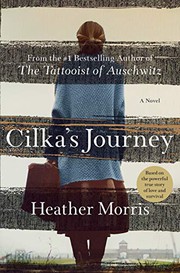
Cilka's Journey
2,365-word summary 11 min read 352 pages in the book
- First published
- 2019
- Publisher
- St. Martin's Press
- Pages
- 352
- ISBN
- 9781250265708
- Series
- The Tattooist of Auschwitz (#2)
Reading options
What's inside (8 sections)
I came to Cilka's Journey right after rereading The Tattooist of Auschwitz, which is the right order even though this book stands on its own. In that first novel Cilka Klein is a minor figure, a young woman in Birkenau whose position gives her small powers to help others, including Lale Sokolov. This second book, published in 2019 by St. Martin's Press at 352 pages, follows her after the gates open. I expected a story about going home. What Morris actually wrote is a story about being punished for surviving.
That premise hooked me and troubled me in equal measure. The book asks readers to sit with a question that has no clean answer. What do we owe young people who were forced into terrible bargains in the camps, and what happens when their liberators treat those bargains as crimes.
Liberation that was not freedom
The novel opens in January 1945 as Soviet forces reach Auschwitz Birkenau. Cilka is eighteen and has been a prisoner for nearly three years, taken from Slovakia at sixteen. Unlike many around her she looks physically less starved, because a camp commandant noticed her beauty and kept her apart from other women, forcing her into a sexual relationship that came with extra food and a separate place to sleep. Morris presents this plainly. Cilka did not choose it in any free sense. She endured it because refusal meant death.
The Soviets do not see it that way. Interrogators question her about speaking several languages and about sleeping with the enemy. Within weeks she is charged as a collaborator and sentenced to fifteen years of hard labor. After months in a cold prison in Krakow she is loaded onto a freight train with other women and sent east to Vorkuta, a labor camp complex in Siberia, inside the Arctic Circle, where prisoners mine coal in brutal cold.
The train chapters are strong. Cilka befriends a younger girl named Josie, only sixteen, who has never been in a camp before and is frightened by everything. Cilka, who knows exactly how intake works, talks her through it. That small act establishes the pattern for the whole book. Cilka survives by helping, and by staying useful to people with power.
I should note the moral framing here, because the book will be judged on it. Morris does not argue that Cilka did nothing wrong in any technical sense under Soviet law. She shows instead that consent under a death threat is not consent, and that punishing a teenager for being assaulted is its own crime. Some readers will want a deeper legal or historical discussion of Soviet filtration of camp survivors. The novel keeps that context light, a few lines of interrogation and a sentence handed down. I wished for more background on how common such sentences were, since the book leans on the shock of it. But the emotional logic is clear, and it carries the story into Siberia.
Hut 29 and the hospital
Arrival at Vorkuta is deliberately disorienting. The women are hosed down, shaved, stripped of their clothes, and marched past male prisoners who select camp wives. A man named Boris claims Cilka. The nightly assaults that follow are described without lingering detail, which I was grateful for. Morris makes the frequency and dread clear and spares the reader staged scenes.
Daily life is coal and cold. The women of Hut 29, about twenty of them, sleep crowded together, sew numbers onto their clothes, eat thin gruel, march to the mines, and haul coal until their hands crack. Guards toss the hut on searches. Informers trade rumors for favors. Josie struggles badly at first, and Cilka covers for her when she can, sharing food and warning her which guards to avoid.
A turning point comes through an accident. Josie badly burns her hand on the hut stove flue after being shoved. The hut leader takes both girls to the camp hospital, where a doctor named Yelena Georgiyevna notices Cilka. Yelena is direct and observant, and she sees that Cilka is literate, multilingual, and calm around blood. She offers Cilka temporary work in the hospital while Josie heals. Cilka hesitates. Hospitals in her experience are places where selections happen. But the mines are killing her by inches, so she accepts.
These chapters benefit from Morris plain style. She does not decorate suffering. Cold is cold. Hunger is hunger. The hut women have distinct habits and tempers, though only a few become full characters. Hannah, one of the hut mates, learns pieces of Cilka past at Auschwitz and uses the knowledge to demand medicine, which adds a believable pressure. Kindness exists, but it is rationed, and everyone understands the price of what they give.
Learning to nurse
Cilka proves good at hospital work. She files records, fetches medicine, writes down examination notes, and learns to anticipate what doctors need. Yelena offers to train her properly as a nurse. Under Yelena guidance she moves through the wards. She helps in the maternity unit with a doctor named Petre, an old school friend of Yelena. She learns to assist at births, to prepare instruments, to clean and feed newborns, and to track mothers and infants through a system that returns women to mine labor within weeks of delivery while their babies stay in a nursery.
The nursery chapters are quietly devastating. A handful of women care for far more babies than they can hold. Some infants are listless from poor food and little attention. Cilka and Petre push to get more help assigned there, and they manage small improvements. Josie herself becomes pregnant by her camp husband, and her shame and fear build until she tries to take her own life. Cilka gets her to the hospital, and Petre puts Josie under daily observation until the baby comes. Her daughter, Natia, becomes a kind of shared hope for the hut.
Cilka also works the infectious ward when typhoid runs through the camp. The disease reminds her of her sister Magda, who died of typhoid at Auschwitz, and Morris uses that memory sparingly rather than as a set piece. Later Cilka joins ambulance runs with drivers ferrying injured miners, and she proves willing to enter unstable tunnels to reach the hurt. One collapse buries her badly enough to put her in a hospital bed as a patient. Because a man she helped save speaks up for her, she earns a move to the nurses quarters, which gives her slightly more safety at night.
What I liked here is the slow professional growth. Cilka is not a natural saint. She is a teenager who learns procedures, makes mistakes, and gets better. Yelena teaching, correcting, and finally trusting her gives the middle of the book a spine. My complaint is that some medical turns resolve a bit neatly. A difficult birth steadies. A fever breaks. The camp remains brutal, but Cilka competence shields her more than seems likely. Still, the accumulation of small duties feels honest. Nursing in this book is mostly washing, carrying, recording, and staying awake, not dramatic rescues.
The names she carries
Interspersed through the Vorkuta story are flashbacks to Auschwitz, and these are the sections readers will argue about. We learn Cilka was made block leader of a block where women waited before being sent to the gas chambers. We learn she helped load carts, including one carrying her own mother. We learn her sister died of illness. We learn the commandant who kept her has a name and a rank, and that other prisoners judged her for the food and shoes her position brought.
Morris drip feeds these memories as nightmares and intrusions rather than as a straight history. Cilka tells Yelena pieces of it late in the book, and only when trust is established. I found this structure respectful. A survivor does not narrate trauma in order. She avoids it until she cannot.
The risk is that readers who have not read the first book may feel they are getting fragments instead of a full account. I partly felt that. The flashbacks explain why Cilka flinches at certain orders and why she hides her Birkenau tattoo number, but they rarely stay long enough to show daily life there. That may be deliberate, since Morris already covered Auschwitz in the earlier novel, yet this book asks new readers to accept the weight of events it only sketches.
One more caution. Because Cilka story is based on a real person, some readers will treat every scene as documented fact. Morris states in her notes that she worked from what is known of Cilka Klein time at Auschwitz and from research into women experiences in Siberian camps, shaping the rest as fiction. I kept that distinction in mind while reading. The feelings ring true. The specific conversations and timing should be read as imagined rather than recorded.
Small mercies in Vorkuta
As the years pass, Cilka collects a few protectors. The most important is Maria, the wife of the camp commandant, whose small daughter Katya is treated by Yelena and Cilka first for a broken arm and later for appendicitis. Cilka calm manner with the frightened girl earns Maria gratitude, and Maria tells Cilka to ask for help if she ever needs it. Cilka, in a move that defines her character, does not spend that favor on herself. She asks that Josie and little Natia be released instead. Maria arranges it, and mother and child leave Vorkuta by train.
It is the emotional high point of the book, and Morris stages it without swelling music. Josie freedom does not fix the camp. The hut is still cold. The work quotas still stand. But one child will grow up outside the wire, and that has to count.
Other mercies are smaller. A doctor who intended to let a patient die fires Cilka when she tries to intervene, yet Yelena finds her the maternity post. A guard punishes her with solitary confinement when she takes blame for writing found on Josie sheet, yet her hut mates remember it. Stalin death in 1953 brings a prisoners strike for better conditions, which starts peacefully and ends in bloodshed. Morris covers the uprising briefly, focusing on how it felt inside the hospital rather than on camp politics. I wanted more here. Eight years is a long time to compress, and some years blur together into winter after winter. But the compression is honest in one way. Prison time does blur, and Cilka herself marks it by who arrived, who left, and who died, rather than by dates.
By her eighth year Cilka is trusted, competent, and exhausted. She has survived both a Nazi camp and a Soviet one by making herself needed. The question the book poses is whether she can imagine a life where she is not serving someone powerful to stay alive.
Alexandr and the train out
The answer comes through a prisoner named Alexandr. Cilka notices him from a distance over many months, and the feeling grows slowly into something she tries to suppress. She even asks Yelena to take her off ambulance duty because she no longer wants to risk the safety she has built. Then Alexandr is found beaten in the snow, punished by other prisoners for passing information out of the camp. Cilka treats him, talks with him during recovery, and falls in love in the careful, frightened way of someone who has learned that attachment brings loss.
When men enter the hospital and beat him a second time, Yelena and Cilka save him by falsifying his chart, recording him as dead after another patient death so his enemies stop looking. It is the boldest rule breaking either woman attempts, and it works because Yelena authority protects them.
Cilka own release, when it comes, is sudden. Called to the administration building, she is told her term is cut short and she must leave at once. She spends a night outside the gates, then goes to the station. On the platform she sees a man shoved aside in a scuffle. It is Alexandr, also free. They board the train to Moscow together.
Readers will divide on this ending. On one hand it offers warmth after hundreds of pages of cold, and the image of two freed people finding each other on a crowded platform is genuinely moving. On the other hand it arrives fast, and Alexandr remains less developed than Yelena or Josie. We know his kindness and his courage, but not much of his past or his inner life. I accepted the ending as a novelist choice rather than a historical claim. The book is not arguing that love fixes the camps. It is arguing that Cilka, who gave her release favor to Josie, deserves her own chance to leave, and that she does not have to leave alone.
Stepping back, the strengths are clear. The Vorkuta setting is vivid and distinct from Auschwitz fiction, with its own routines, slang, and cruelties. The nursing plot gives Cilka agency without making her superhuman. The treatment of assault is serious without being exploitative. The weaknesses are also clear. The prose is plain to a fault in places, telling rather than showing. Some secondary figures fade in and out. The romance, while tender, gets limited page time before it must carry the finale. And the book sometimes frames complex guilt in simple terms, as if endurance alone settles moral debts.
Even so, I finished it in two sittings and thought about it for days. Cilka Klein was sixteen when she was taken to Birkenau and eighteen when the Soviets sentenced her to fifteen more years. Those numbers are not invented for effect. They are the core of the book. Everything else, the hospital, the hut, the train, asks a single question around them. How does a person remain a person when two different systems treat her as property. Morris answer is that she does it through work that helps others, through friendships she refuses to abandon, and at last through allowing herself to be loved. That answer is simple, and given what Cilka endured, simplicity feels like mercy rather than a flaw.
FAQ
Is Cilka's Journey a sequel to The Tattooist of Auschwitz?
Yes, though it works alone. Cilka appears briefly in The Tattooist of Auschwitz, and this book follows her own story from the liberation of Birkenau to Vorkuta and out. Reading the first book first adds context but is not required.
Why is Cilka sent to Siberia after the war?
She was taken to Auschwitz Birkenau at sixteen and forced into a sexual relationship with a commandant in exchange for survival. After liberation the Soviets treated that coercion as collaboration and sentenced her to fifteen years of hard labor.
How does Cilka survive Vorkuta?
She learns nursing under Dr. Yelena, working in the maternity, infectious disease, and ambulance wards. The training gives her protection, purpose, and a way to help other prisoners.
Similar books
More from The Tattooist of Auschwitz first, then related titles.
The Tattooist of Auschwitz
Heather Morris retells the years of Lale Sokolov as tattooist at Auschwitz Birkenau, his love for Gita Furman, and the food trades and quiet risks that kept…
2,442-word summary · 11 min read
We Were the Lucky Ones
Based on her own family, Hunter follows the Kurc family of Radom as war scatters five siblings from Siberia to Brazil and back toward reunion.
2,805-word summary · 12 min read
Lilac Girls
Three women meet across World War II: a New York volunteer, a Polish courier turned prisoner, and a German camp doctor.
2,731-word summary · 12 min read
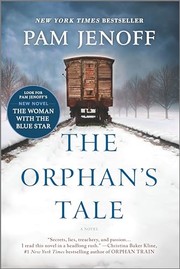
The Orphan's Tale
A Dutch teenager rescues a Jewish baby from a death train and joins a German circus, where a Jewish aerialist teaches her to fly.
2,943-word summary · 13 min read
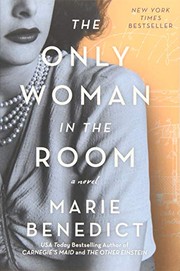
The Only Woman in the Room
A novel about Hedy Lamarr's escape from an arms-dealer husband, her Hollywood career, and the frequency-hopping patent the Navy ignored.
2,067-word summary · 9 min read
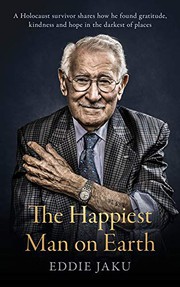
The Happiest Man on Earth
Eddie Jaku's memoir follows a Leipzig childhood, Buchenwald, Auschwitz, a death march, and the slow rebuilding of a life in Australia.
2,597-word summary · 12 min read
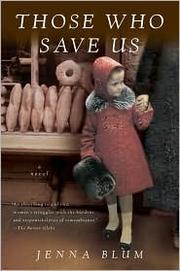
Those Who Save Us
A Minnesota professor hunts her mother's hidden wartime past in Weimar, where survival came wrapped in an SS officer's protection. A dual timeline about…
2,345-word summary · 10 min read
Schindler's List
Womanizing profiteer Schindler spends a fortune typing over a thousand Jews onto factory lists.
2,048-word summary · 9 min read
The Things We Cannot Say
A Florida mother travels to Poland to answer her silent grandmother's plea, uncovering a wartime love story and a decades-old identity swap.
2,365-word summary · 11 min read
Salt to the Sea
Four refugee teens cross frozen Prussia toward a doomed ship that history barely remembers.
2,094-word summary · 9 min read
The Zookeeper's Wife: A War Story
The directors of the Warsaw Zoo hid roughly three hundred Jews in empty cages and outbuildings after the German invasion, while Jan worked for the resistance.
2,065-word summary · 9 min read

The Long Winter
Dakota Territory, 1880: seven months of blizzards cut a town off from the railroad, and a family survives on twisted hay, ground wheat, and a dangerous wheat…
2,210-word summary · 10 min read

The Japanese Lover
A Polish refugee and the son of a Japanese gardener fall in love in San Francisco in 1939, then keep the affair secret for nearly seventy years.
2,286-word summary · 10 min read
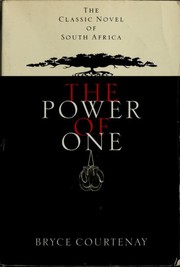
The Power of One
A boy in apartheid South Africa decides to become welterweight champion of the world, and the novel follows every mentor, fight, and loss that gets him there.
2,145-word summary · 10 min read
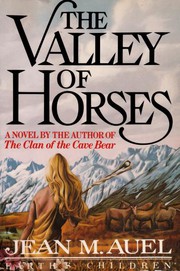
The Valley of Horses
Exiled from the Clan, Ayla survives alone in a hidden valley, tames a horse and a cave lion, and nurses a wounded stranger back to life.
2,311-word summary · 10 min read
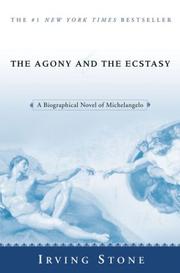
The Agony and the Ecstasy
Irving Stone turns Michelangelo's seventy years of carving, painting, and arguing with popes into a novel about the cost of making something that outlives you.
2,260-word summary · 10 min read

Sophie's Choice
A young Southern writer in 1947 Brooklyn befriends a brilliant, unstable couple and slowly learns the story of the Polish Catholic woman at the center of their…
2,798-word summary · 12 min read
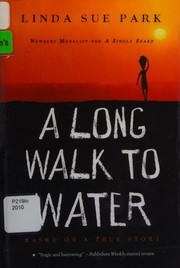
A Long Walk to Water
Two eleven-year-olds in southern Sudan, twenty-three years apart: a Dinka boy fleeing war and a Nuer girl walking hours for water, until their stories meet at…
2,217-word summary · 10 min read
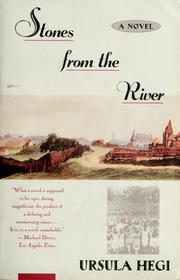
Stones from the River
Trudi Montag is born a dwarf in a small German river town in 1915 and grows up to keep the town's library and its secrets, from the First World War to the…
2,818-word summary · 13 min read
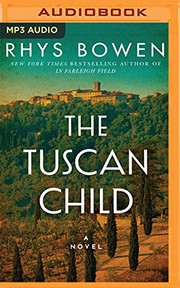
The Tuscan Child
After her father's death, Joanna follows a returned letter to Tuscany and uncovers his wartime love, a hidden painting and a village secret. A dual-timeline…
2,095-word summary · 9 min read
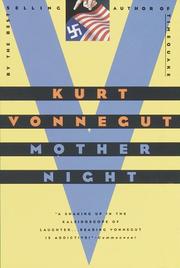
Mother Night
Howard W. Campbell Jr., a Nazi propagandist and American spy, tells the story of his double life from an Israeli prison cell while waiting to be tried for war…
1,988-word summary · 9 min read
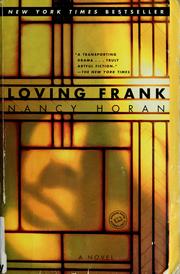
Loving Frank
Mamah Borthwick Cheney leaves her family for Frank Lloyd Wright, and their affair becomes a public scandal that ends in tragedy at Taliesin.
2,034-word summary · 9 min read
Exodus
Leon Uris's sweeping 1958 novel follows Jewish refugees, Haganah fighters, and Holocaust survivors from Cyprus to the founding of Israel and the 1948 war.
2,529-word summary · 11 min read
The War That Saved My Life
Ten-year-old Ada has never left her London flat, hidden away because of her clubfoot. Wartime evacuation sends her to Kent, where a reluctant guardian and a…
2,252-word summary · 10 min read

The Redbreast
Harry Hole chases an ageing sniper through modern Oslo while two Norwegian volunteers on the Eastern Front carry a fifty-year-old betrayal toward a royal…
2,453-word summary · 11 min read
The Lost Girls of Paris
In 1946, a war widow finds an abandoned suitcase in Grand Central holding photographs of twelve women who vanished in the war, and follows their story back to…
2,668-word summary · 12 min read
The Keeper of Happy Endings
Barbara Davis's 2021 standalone braids a Paris dressmaker's wartime losses with a grieving Boston artist who unlocks her family's secrets through an old row…
2,437-word summary · 11 min read
Code Name Verity
In 1943 France, captured agent Verity writes a confession for von Linden to buy time. Her pilot friend Maddie survives the crash and searches for her by…
2,690-word summary · 12 min read

The Paris Library
Odile lands her dream job at the American Library in Paris as war closes in, then hides that past in Montana until teen Lily draws it out.
2,813-word summary · 13 min read
The English Patient
In a ruined Italian villa in 1945, a burned man, a nurse, a thief, and a sapper trade pasts shaped by desert love and war.
2,006-word summary · 9 min read