
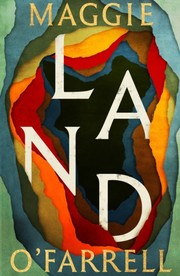
Land
2,438-word summary 11 min read 400 pages in the book
- First published
- 2026
- Publisher
- Alfred A. Knopf
- Pages
- 400
- ISBN
- 9780593320648
Reading options
What's inside (8 sections)
I picked this up because of a family story, though not one that turned out to be mine. The note on the jacket said that O'Farrell had built the book around the few facts she knew about her own great-great-grandfather, a man who worked on the second Ordnance Survey revision of Ireland after the Famine. That small, almost accidental link between a novelist and a surveyor lodged in my head. Land is her tenth novel, published by Alfred A. Knopf in June 2026, and it takes that fragment of an ancestor's life and grows something much larger from it. It is a book about mapping a country, but it is also about the people a map leaves out.
The story is set in Ireland in 1865, two decades after the Great Hunger. That date matters more than anything else in the opening chapters. This is not a country recovering in any tidy sense. It is a place emptied by starvation and emigration, where villages have thinned or vanished and the work of measuring the land has become strangely hard. O'Farrell begins with Tomás, a Famine survivor who has become a mapmaker. He is working for the British Ordnance Survey, the great project to chart the whole country, and he has brought his ten-year-old son Liam along to help. Liam does not want to be there. He is reluctant and bored and a little afraid of his father, a taciturn man with no patience for a child's questions.
What Tomás wants from the survey is not a career. He wants his maps to stand as a record of the disaster, a way of fixing in ink what has been wiped from the ground. The survey sends him across a landscape where absence is the main fact. Fields have gone wild, houses stand empty, and the people who once worked the land are dead or gone to America. To map such a place is to measure a wound. O'Farrell is patient about the particulars of the work, the long days walking, the instruments, the slow business of fixing a line on paper, and she lets the bleakness accumulate without announcing it. The Famine is never a backdrop. It is the condition of everything the characters see.
The encounter in the copse
The book changes direction because of something that happens to Tomás in a copse of trees. O'Farrell keeps the event unsettling rather than tidy. It is the kind of encounter that a man could explain away if he wanted to, but Tomás cannot put it down. Something about the place, and what he finds or thinks he finds there, sends him off course. From that moment the family's life begins to turn.
I want to be careful about how much I spell out here, because the power of the scene lies in its ambiguity. What matters is the aftershock. Tomás comes away from the copse a changed man, and not in a way his wife or children can understand. He stops trusting the official survey. The project that gave his work meaning now seems to him like a false account of the country, a British view that reduces Ireland to measured, gridded territory and ignores what the land actually means to the people who live on it.
This is where the novel's central argument begins to take shape. A map is never neutral. The survey's sheets are precise, but precision of that kind is a kind of claim: this is what the place is, these are its boundaries, these are its names. Tomás comes to believe that the British names on the charts are a form of erasure, a second dispossession laid over the first. He decides to quit the official survey and start a map of his own.
The unofficial map
The map Tomás begins to make is an act of refusal. He records the land in the Irish language, putting back the native place-names and landmarks that the survey has smoothed away. Where the official chart offers a grid, he offers memory and history. Where the British record counts fields and distances, he writes down the names that survived in people's mouths, the names attached to wells and hills and ruins. He is trying to restore a way of seeing that the Famine and the survey have between them nearly finished.
This is the idea the New Yorker singled out for praise in its review, the argument about measured, recollected and dreamed maps. O'Farrell is genuinely interested in the difference between these three kinds of territory. The measured map belongs to the empire, and it is cold and exact. The recollected map belongs to the people who remember what stood here before. The dreamed map is stranger, the land as it exists in story and folklore and the imagination. The novel keeps all three in play, and much of its interest comes from watching them overlap and contradict each other.
I found this part of the book absorbing, and I think it is the reason Land is worth the trouble it asks of a reader. O'Farrell is not content to tell a family story and leave it there. She is asking what it means to put a name on a place, who gets to do the naming, and what is lost when a name disappears. Those questions give the novel a weight that a straightforward historical saga would not have had.
There is a risk in a premise like this, and the book does not always avoid it. A novel with a thesis about maps can start to feel like a lecture with characters attached. O'Farrell mostly keeps the idea buried in the story, but there are passages where Tomás's project seems to exist so that the author can make a point about empire rather than because a man in 1865 would have acted this way. I noticed myself pulling back from the book at those moments, admiring the argument but missing the person.
A move west and a family coming apart
Tomás does not keep his family in Dublin. He moves Phina, his wife, and their children out to a windswept western peninsula, the kind of place where the weather seems to have the final say. It is a decision that makes sense for his map and very little sense for everyone else. The move pulls the family away from schools, income, and the ordinary securities of city life.
Phina is the one who sees the cost most clearly. She worries about the salary they have lost and about the daughters' education, and her worries are not small-minded. They are the calculations of a mother watching her children's prospects narrow. O'Farrell gives Phina a steady, unsentimental intelligence. She loves Tomás, but she can see what his obsession is doing, and the book is at its best when it lets her resentment and her loyalty sit side by side.
Liam, the boy who trudged across the fields with his father at the start, has the hardest time of it. He is frightened by the change in his taciturn father and does not understand why the family has been uprooted. More than that, he is left to work out the practical puzzle of what comes next. How does he finish the mapping? How does he get them home? The adult world has stopped making sense, and the child is handed the job of putting it back together. O'Farrell handles Liam's confusion with care. He is not precocious or wise beyond his years. He is a scared boy trying to do a man's arithmetic.
The western peninsula is where the novel's mood settles. It is a place of wind and sea and old stories, where the past is not finished because the land itself keeps throwing it up. O'Farrell writes the coast with a lot of attention to weather and light, and the setting becomes a kind of pressure on the family. They cannot escape their circumstances here. There is nowhere to go but outward, into the sea and the emigrant ships.
The children who leave
In its second half, the book shifts its attention from Tomás to his children and to the ways they scatter. This is the sprawling part of the novel, and it is where a reader's patience will be tested most. O'Farrell follows each child away from the peninsula, and the family drama becomes a record of dispersal.
Liam, the boy who wanted no part of the survey, ends up in India as a Jesuit missionary. It is a strange fate for a child who could not wait to escape his father's maps, and the novel does not make it feel neat. His sister Enda emigrates to Quebec as a labourer, another young person carried overseas by the same forces that emptied Ireland in the first place. The younger children, Rose and Eugene, stay near the peninsula and close to the widow who once boarded their father. That widow is one of the quiet threads connecting the two halves of the book, a figure from Tomás's earlier life who remains attached to the family long after he has moved on.
What I appreciated here is that O'Farrell refuses to make the children's departures into a tidy moral. No one is rewarded for leaving or punished for staying. The children simply do what children of their time did, which is to go where work or faith or circumstance takes them. The map their father made, the one intended to hold the family and the country together, ends up surrounding a family that has come apart. There is a quiet irony in that, and O'Farrell lets it stand without underlining it.
The cost of this structure is that Tomás, who dominates the opening with such force, fades into the background. By the time the book reaches the children's stories, the mapmaker can feel like a figure from a different novel. I found myself missing him. The opening had built up such a strong pressure around his obsession that I wanted the payoff to stay with him, and instead the camera moves away. Whether this is a weakness or the whole point depends on how you read the book's design. O'Farrell seems to want the land and its long history to outlast any single life, including his.
What the book is arguing about
Land is a novel with a thesis, and the thesis is about how we know a place. The measured map of the empire, the recollected map of memory, and the dreamed map of folklore are all ways of claiming to know something. O'Farrell's suggestion is that each is partial and that the truth of a place is larger than any one of them. The book's title works on several levels at once: the ground itself, the nation, the family's territory, and the act of belonging somewhere.
The folklore and ghost elements are meant to carry the dreamed part of that argument. Ireland here is a place where the dead are close and the land is thick with old stories. When those elements work, they give the novel a strange, layered quality that suits its subject. When they do not, they feel pasted on, a supernatural flourish arriving in a book that has otherwise been careful about its historical account of empire. I never quite settled on which mode I trusted. The book asks you to hold a factual nineteenth-century survey and a world of ghosts in the same hand, and the join shows more often than O'Farrell probably intended.
The historical material, by contrast, feels solid. The Great Hunger is not used as decoration. It is the engine of the plot and the reason the survey is so hard, because a country that has lost a quarter of its people cannot be mapped as if nothing happened. O'Farrell understands that an empty landscape is itself a historical fact, and she keeps that fact in front of the reader. The novel's best pages are the ones where the work of mapping and the work of remembering become the same act.
Where the book loses its grip
I should be honest about the parts that did not work for me. Land is a sprawling novel, and its scale is both its ambition and its problem. The long geological timescale O'Farrell uses, the sense that the land has been here far longer than any family, can make the human drama feel slight. Tomás's anguish is real, Phina's worries are real, Liam's fear is real, but the book keeps pulling back to a view in which individual lives are small. That is a defensible choice. It also means that just as I was drawn into a character, the novel would widen its focus and leave me outside.
The structure compounds this. The shift from Tomás to the children in the second half is handled with skill, but it scatters the emotional weight. A novel that begins with such intense concentration on one man's crisis ends up distributing itself across a peninsula, a mission in India, and a labourer's life in Quebec. There is a lot to admire in the reach of it. There is also a sense that the book has grown bigger than the story it started with.
The folklore and ghost elements sit unevenly beside the historical account, as I said, and I never found a comfortable rhythm between them. At their best they deepen the idea that a place is more than its measured outline. At their worst they feel like a different book inserted into this one.
Still, I finished Land glad I had read it. It is an unusual thing: a historical novel about a mapmaker that is really asking who gets to describe a country and what happens to the people left off the page. O'Farrell writes about the Famine and its aftermath without softening what happened, and she gives her family a specific, painful shape. The book is not always even, and the human story sometimes struggles against the size of the idea. But the idea is a good one, and it stays with you after the maps have been folded away.
I would hand this to a reader who likes historical fiction willing to argue about history, and to anyone interested in Ireland, family secrets, or the way the past survives in a name on a chart. I would be cautious with a reader who wants a tight, character-driven story. Land has an argument to make and a country to contain, and it will not hurry itself for anyone.
FAQ
Is Land based on a true story?
Loosely. O'Farrell drew on the few facts she knew about her own great-great-grandfather, who worked on the second Ordnance Survey revision of Ireland after the Famine.
What is the argument about maps in Land?
The novel sets the British survey's measured grid against maps made from memory and folklore, asking who has the right to name a place and whose names get erased.
What happens to Tomás's children?
As the family disperses, Liam goes to India as a Jesuit missionary, Enda emigrates to Quebec as a labourer, and the younger Rose and Eugene stay near the peninsula.
Similar books
I Must Betray You
In 1989 Romania, a seventeen-year-old is forced to inform on an American diplomat's family and records the truth in a hidden notebook.
2,258-word summary · 10 min read
What the Wind Knows
Annie scatters her grandfather's ashes on Lough Gill and is pulled into 1921 Ireland, where she becomes the missing Anne Gallagher and falls for Dr. Thomas…
2,056-word summary · 9 min read
Small Things Like These
A coal merchant in 1985 Ireland finds a girl locked in a convent and must act.
2,799-word summary · 12 min read
Hamnet
Agnes Hathaway holds her Stratford family together while her husband works in London, until plague takes eleven-year-old Hamnet in 1596.
3,164-word summary · 14 min read

Yellow Crocus
In 1837 Virginia, an enslaved wet nurse is separated from her own son to raise a planter's daughter, and the two women build a love the law says cannot exist.
2,094-word summary · 9 min read
Theft
Gurnah traces three linked lives in Tanzania, where a servant's accusation of theft opens a family history of love, duty and quiet betrayal.
2,454-word summary · 11 min read
The Night Watchman
A Chippewa night watchman in 1953 North Dakota recognizes a bill as an attempt to end tribal recognition, while a young woman searches for her missing sister…
2,036-word summary · 9 min read
The Kitchen God's Wife
Amy Tan's second novel pairs a San Jose speech therapist with her Chinese mother, whose account of war, an abusive husband, and a narrow escape comes out in a…
2,896-word summary · 13 min read
Rachel's Holiday
Rachel Walsh calls her cocaine use recreational until an overdose and a stay at a Wicklow rehab clinic force her to hear what her family and boyfriend have…
2,792-word summary · 12 min read
Hawaii
Michener tells the history of the Hawaiian islands in six sweeping sections, from volcanic origins to statehood, through the lives of those who arrived.
2,295-word summary · 10 min read
Good Dirt
A stoneware jar made by an enslaved potter links a prominent Black New England family across a hundred and fifty years of prosperity, grief and buried history.
2,069-word summary · 9 min read
Flashlight
Susan Choi's Booker-shortlisted novel opens with a father and daughter on a breakwater in 1978, then follows the loss outward through four generations and…
2,849-word summary · 13 min read
Carnegie's Maid
An Irish immigrant answers to a dead woman's name and lands a job as lady's maid in Andrew Carnegie's Pittsburgh household, where her mind for business draws…
2,271-word summary · 10 min read
By the Shores of Silver Lake
Twelve-year-old Laura leaves Plum Creek for Dakota Territory, rides a pony, mourns old Jack, and learns to be eyes for her blind sister Mary.
2,540-word summary · 11 min read
Watermelon
A woman left by her husband on the day their daughter is born retreats to her chaotic Dublin family, then slowly learns to stop believing his version of the…
2,295-word summary · 10 min read
The Wonder
In 1850s Ireland, an English nurse is hired to watch an eleven-year-old girl who claims to live on manna, and finds a child dying in plain sight.
2,298-word summary · 10 min read
The Bronze Horseman
On the day Germany invades the Soviet Union, Tatiana Metanova meets a mysterious Red Army officer, and their love is tested by the Siege of Leningrad.
2,461-word summary · 11 min read
The Boston Girl
Eighty-five-year-old Addie Baum tells her granddaughter how she grew up in Boston's North End, chased education and love, and became the woman she is.
2,439-word summary · 11 min read

Saving 6
Joey Lynch protects his siblings from a violent father while falling for his boss's daughter Aoife, in the third Boys of Tommen novel.
2,680-word summary · 12 min read
Sarah, Plain and Tall
A widowed prairie farmer advertises for a wife, and a woman from Maine answers for a one-month trial. This Newbery winner, told by his daughter, is about a…
2,331-word summary · 10 min read
Manhattan Beach
A Brooklyn girl works the Navy Yard and dives for warships while chasing the gangster who may know why her father vanished.
2,251-word summary · 10 min read
Great Big Beautiful Life
Two rival journalists chase the biography of a reclusive media heiress on a Georgia island, only to find her family history holds a secret bigger than either…
2,394-word summary · 11 min read

The Long Winter
Dakota Territory, 1880: seven months of blizzards cut a town off from the railroad, and a family survives on twisted hay, ground wheat, and a dangerous wheat…
2,210-word summary · 10 min read

The Japanese Lover
A Polish refugee and the son of a Japanese gardener fall in love in San Francisco in 1939, then keep the affair secret for nearly seventy years.
2,286-word summary · 10 min read
1491: New Revelations of the Americas Before Columbus
Charles C. Mann gathers archaeology, ecology, and demography to argue that the Americas before Columbus were older, fuller, and more deliberately shaped than…
2,712-word summary · 12 min read

The Shadow Sister
Star D'Apliese steps out of her sister's shadow and follows a bookshop clue into the Edwardian life of Flora MacNichol, a woman who gave up love for duty.
2,260-word summary · 10 min read

Little Town on the Prairie
In the spring after the Long Winter, fifteen-year-old Laura sews shirts, studies for a teaching certificate, and helps send her blind sister Mary to college.
2,071-word summary · 9 min read

Mrs. Everything
Two Jewish sisters in Detroit grow up, apart and together, across seven decades of American life, from the 1950s to the 2016 election.
2,362-word summary · 10 min read
Euphoria
Three anthropologists in 1930s New Guinea turn fieldwork into a love triangle, and a real history breathes behind them.
2,048-word summary · 9 min read
Wide Sargasso Sea
Jean Rhys gives the first Mrs. Rochester a Caribbean childhood, a marriage built on money and suspicion, and a voice that Charlotte Bronte left in the attic.
2,021-word summary · 9 min read