
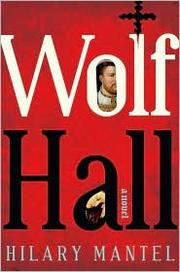
Wolf Hall
2,911-word summary 13 min read 653 pages in the book
- First published
- 2009
- Publisher
- Fourth Estate
- Pages
- 653
- ISBN
- 9780007230181
- Series
- Thomas Cromwell (#1)
Reading options
What's inside (8 sections)
I came to this book after years of hearing it had changed Tudor fiction. I expected crowns and pageantry. What I found felt closer to an office novel set in the 1520s and early 1530s, with a fixer at the center who remembers every debt. Wolf Hall was published 30 April 2009 by Fourth Estate, 653 pages in the first UK hardcover, ISBN 9780007230181, by author Hilary Mantel. It follows Thomas Cromwell from about 1500 to 1535, from a violent childhood in Putney to the edge of supreme power under Henry VIII, ending with the deaths of his great opponents. I read the first hundred pages slowly, then moved faster once the court machinery locked into place.
The hook is simple. England lacks a living male heir. Henry VIII has been married to Catherine of Aragon for twenty years. Their daughter Mary lives, but no son lives. Henry believes the marriage is cursed and void. He wants an annulment so he can marry Anne Boleyn. The pope will not grant it. Cardinal Wolsey, the most powerful minister in England, cannot deliver it and falls. Into that gap steps his former servant Thomas Cromwell, son of a Putney blacksmith, ex soldier, cloth trader, banker, lawyer. He knows Europe, money, and men. He offers Henry a different path. Not permission from Rome, but a break from Rome.
That sounds dry. The book is not dry. It lives in rooms, clothes, food, weather, account books, whispered talks in galleries, barge rides on the Thames, hunts that are really job interviews. Mantel stays in the present tense, close behind Cromwell, and the past feels unfinished, as if outcomes we know were still open.
Putney and the road out
The novel opens with violence at home. Young Thomas is beaten by his father Walter Cromwell, a brewer and blacksmith in Putney, brutal and often drunk. His mother and his sister Kat try to shield him. Kat later marries Morgan Williams, a link that matters because her son Richard Williams will take the Cromwell name and rise with his uncle. Tom flees. He does not run to London. He runs to the continent.
Mantel fills the missing years of the real Cromwell with plausible labor. Thomas serves as a mercenary in French service and survives. He moves through the Low Countries and Italy. He works for bankers in Florence and Venice. He learns interest, exchange, how to read a contract in more than one language, how to judge cloth, wool, wine, jewels. He spends time in Antwerp with English merchants. He picks up French, Latin, Italian, some Dutch and German. He learns to listen in rooms where he is not the most important man, which becomes his lifelong skill.
By the time he returns to England around 1512, he is useful. He marries Elizabeth Wyckes, daughter of a London cloth worker with solid ties. They have a son Gregory, and daughters Anne and Grace. Mantel gives this marriage warmth without excess. Elizabeth runs a capable house. Cromwell loves his children with plain, anxious care. He keeps a large household later at Austin Friars in London, with wards, clerks, cooks, pupils, including Rafe Sadler, who grows from a bright boy into his trusted clerk. This domestic detail matters because the book later takes much of it away. Sweating sickness enters the house. Elizabeth dies. The girls die. Gregory survives. Cromwell, who can solve almost any client problem, cannot bribe death. He carries that loss quietly through the rest of the book.
His legal training builds alongside. He studies English law, works in London practice, drafts, advises, lends, collects. He learns Parliament from the inside, not as theory but as men in a room who need management. He learns the City, the livery companies, the customs house. This is why Wolsey will want him. Wolsey needs someone who can get things done without asking the old families for leave.
Putney never leaves him. Courtiers mock his low birth. Norfolk, Suffolk, Boleyn kin, old churchmen, they smell the forge on him. Cromwell answers with competence and memory. A boy who was hit learns to watch hands and doors.
In service to Wolsey
Cardinal Thomas Wolsey dominates English power when Cromwell joins him in the mid 1520s. Wolsey is Lord Chancellor, Archbishop of York, papal legate, builder of York Place in London and Hampton Court upriver. His household is a government in itself, with secretaries, chaplains, lawyers, cooks, musicians. George Cavendish keeps close attendance. Stephen Gardiner serves as a sharp secretary, later a rival. Cromwell enters as legal counsel and man of business. He sorts estates, houses suppressed to fund Wolsey colleges at Oxford and Ipswich, debts, suits, patronage.
Mantel is strong on service. Cromwell drafts, rides, waits, calms creditors, reads men. He admires Wolsey without illusion. Wolsey seeks peace abroad and display at home. He sends envoys to Rome and leans on the pope, trapped by imperial politics after the sack of Rome in 1527. Nothing moves.
Henry grows restless. Anne Boleyn grows restless. Anne is not passive here. She is clever, sharp tongued, French trained, backed by her father Thomas Boleyn, Earl of Wiltshire, and her brother George Boleyn. Her sister Mary Boleyn has already been Henry mistress and is set aside. Anne refuses that role. She wants marriage and crown. She reads reformist books, argues religion, keeps Henry waiting for years. The court splits. The old nobility around Norfolk hate Wolsey as an upstart churchman. Queen Catherine party, centered on Chapuys and on Bishop John Fisher of Rochester and on Thomas More, holds that the marriage is valid and the pope alone can judge.
When Wolsey fails at Blackfriars in 1529, Henry strips him. York Place becomes Whitehall. Wolsey dies at Leicester in November 1530. Cromwell stays loyal longer than is safe, finds pensions for servants, defends his master in Parliament. Henry notices.
Cromwell grief for Wolsey runs through the book. He does not forgive those who hurried the fall, especially when they mock the cardinal. Yet he transfers allegiance fully to Henry. That transfer drives the novel. He will give Henry what Wolsey could not, by different means.
The king matter and Anne Boleyn
Henry in this book is not distant at first. He is athletic in memory, now thickening, clever in flashes, devout in his own way, convinced God has punished him through lack of sons. Catherine of Aragon, daughter of the Spanish sovereigns and widow of his brother Arthur, married to Henry since 1509, keeps dignity and principle. She insists her first marriage was unconsummated and her second is true. Her daughter Mary stands beside her. Chapuys reports every slight to the Emperor, her nephew. Rome cannot afford to offend the Emperor. So the case stalls.
Mantel walks through the legal theories without turning into a lecture. Was Catherine marriage to Arthur complete. Does scripture forbid marriage to a brother widow. Can a pope dispense. Can a later pope undo a former dispensation. Scholars are hired. Thomas Cranmer, a Cambridge churchman with reformist sympathies, is brought forward to argue the marriage was void from the start. Cromwell organizes the campaign in Parliament and in print. He collects opinions from universities, manages members, links the annulment to money and sovereignty. If England is an empire unto itself, as the preamble to the Act in Restraint of Appeals claims in 1533, then no foreign court can decide an English succession.
Anne story is braided with policy. Cromwell does not love Anne, but he needs her married and crowned to settle the succession. He arranges logistics around her, jewels, households, chambers, coronation planning. He watches Henry courtship with a fixer eye. Henry is infatuated and also theological. He writes, prays, hunts, sulks. Anne alternates between charm and fury. She quarrels with Wolsey memory, with More, with Fisher, with Chapuys, with Cromwell himself when he will not move fast enough. Her coronation in June 1533, pregnant with the future Elizabeth I, is staged as triumph and risk. The court waits to see if the child will be a son. It is a daughter. Henry smiles in public and recalculates in private.
Cromwell builds his own position meanwhile. He joins the Privy Council in 1530. He becomes Master of the King Jewel House in 1532. He becomes Chancellor of the Exchequer in 1533. He uses Austin Friars as a base for business, intelligence, hospitality. He funds scholars and painters including Hans Holbein the Younger. He places men in customs and courts. He uses Parliament as a tool. Statutes follow, submission of clergy, restraint of appeals to Rome, succession act declaring Mary illegitimate and the new marriage valid, supremacy act in 1534 making Henry Supreme Head of the Church in England, with Cromwell as vicegerent in spiritual matters in early 1535 to enforce it. Each step is presented as law, not whim. That is Cromwell method. Make the king desire into statute, then enforce statute as duty.
Court life turns on access. Rooms near the king, hunts, card games, and who translates the Latin letter decide more than speeches do.
Wolfhall, the Seymour seat in Wiltshire, appears near the end. The Seymours are minor gentry, with Jane, Elizabeth, Edward and Thomas at the edge of the story. Cromwell notes Jane quiet manner on progress. Mantel lets the name sit.
More, Fisher, and the oath
The moral center of opposition is Thomas More and John Fisher. Mantel portrait of More surprised many readers used to the saint of stage and film. Here More is brilliant, witty, devout, and also harsh. As Lord Chancellor after Wolsey from 1529 to 1532, he hunts heretics with real zeal. He supports burning of reformers, defends church property, despises Cromwell as a low man with low religion. He resigns over the break with Rome rather than serve a schism. He retires to Chelsea, writes, prays, jokes with family, refuses the oath to the Act of Succession in 1534 because it implies the new marriage and the new headship. He is imprisoned in the Tower. He stays silent, then speaks just enough to condemn himself when he denies Parliament power to make Henry head of the church.
Fisher is older, thinner, more fragile. Bishop of Rochester, scholar, defender of Catherine. He too refuses the oath. He is made a cardinal by Rome in May 1535, which Henry reads as provocation. Fisher is tried and executed 22 June 1535 on Tower Hill. More follows 6 July 1535. Mantel does not stage these as old style martyrdoms. She stages them as law cases Cromwell helps to construct and cannot stop even when he respects the men. Interrogations are shown as careful traps. Rich testimony about words in the Tower is presented as bought and shaped. Juries do as they are told. The axe falls off page, then is discussed in kitchens and counting houses.
Cromwell view is unsentimental. He believes More cruelty to heretics weakens his claim to conscience. He believes Fisher mixes pastoral care with foreign policy that would invite invasion. He also knows both men are braver than most courtiers. He visits More in the Tower in one strained scene, trying to find a form of words that saves life without surrender of principle. More refuses. There is no reconciliation. After the executions, Cromwell walks back to work. Customs must be collected. Monastic visitations must proceed. The new queen must be managed. Henry must be kept steady.
Other deaths crowd these years. Elizabeth Barton is executed in 1534. Carthusians who refuse supremacy die in 1535. Mantel does not hide state violence. Cromwell authorizes pressure and imprisonment. That balance makes readers argue. Administrator or bully with a ledger. Mantel answer is both.
By late 1535 in the novel, Cromwell stands high. Vicegerent in spirituals, master of paperwork and patronage, keeper of the king secret aims. Henry leans on him for everything from theology to household bills. Anne, now mother of Elizabeth but without a son, senses his usefulness fading toward her and turns sharp. The marriage frays. Cromwell watches, calculates, remembers Wolsey. He knows favor is weather. More and Fisher are dead. Catherine lives on, ill and isolated, soon to die in January 1536 beyond the novel close. Mary is demoted and defiant. Anne is still queen, but the Seymours wait in the country house that gives the book its title.
How Mantel tells it
Style is the reason this book won the Booker Prize in 2009 and the National Book Critics Circle Award and still divides readers. Mantel writes in the present tense, third person, locked to Cromwell perception. Events arrive as they arrive. No hindsight speeches. No narrator explaining that Anne has three years left or that Cromwell himself will fall in 1540. When Henry asks a question, we get Cromwell reading of face, hands, pause. When a council meets, we get who sits where, who coughs, who looks away.
The famous device is the pronoun. Mantel often writes he for Cromwell even when other men are in the scene, trusting context to carry meaning. She will write he, Cromwell after a stretch to reset. Sometimes she writes he, Rafe or he, Gardiner to clarify. On many pages it flows. You learn to ride the current. He thinks, he notes, he files. The man at the center becomes a lens. On other pages, especially in crowded galleries with Norfolk, Suffolk, Boleyn men, Chapuys, and servants moving through, you must pause and assign names to hes. Some readers adjust in fifty pages and then love the speed. Others never fully settle and keep a finger on the cast list.
The cast is long. More than sixty named figures plus household staff fill Austin Friars life. Mantel tracks costs, food, barges, moves between Greenwich, Whitehall, Hampton Court, Windsor. A minister who can house and move people can govern.
Chapters cover years, then slow to days around Blackfriars, the coronation, and the trials. Memory arrives as images. A hawk recalls Italy. A bell recalls Putney. Cloth recalls Elizabeth.
Women speak plainly here. Catherine keeps steel courtesy. Anne uses speed and wit. Mary shows injured pride. Jane Seymour watches much and says little, which Cromwell notes as a skill.
The record supplies texture, preambles, oaths, indictments, Chapuys dispatches, More letters from the Tower. Mantel paraphrases rather than forging. Dates and offices hold. Inner life is proposed.
What strains and what stays
Fair criticism belongs here, because admiration without reservation would mislead a new reader.
First, the pronouns. The system works until it does not. In a scene with three men and quick movement, a he can float. Mantel usually anchors within a paragraph, but when you read tired at night you will reread. Some readers solve it by reading character lists first. Some solve it by audio, where a good narrator voices separation. I found the confusion eased after the Wolsey fall, once Cromwell authority grows and other men become satellites rather than rivals for the pronoun. Early on, with Wolsey, Gardiner, More, Norfolk all active, I flipped back more than once.
Second, density. At 653 pages in the cited first edition, this is a long book with many names and statutes. If you want a fast Anne Boleyn romance or a battlefield epic, this is not that. Long stretches concern administration. Which clerk carries which bill. Which bishop signs which submission. Mantel makes these matters tense by tying them to survival, but a reader with no taste for procedure may skim. I skimmed two passages on clerical submissions and then was glad I had caught the names when they returned at trial scenes. Patience is rewarded, but patience is required.
Third, sympathy tilt. By staying with Cromwell, the book softens him and hardens his enemies. More emerges as less likable than tradition allows, which historians debate. Fisher emerges as principled but politically dangerous. Anne emerges as formidable but increasingly isolated, seen through a man she distrusts. Catherine and Mary earn respect, yet the narrative must still work against them because Henry demands it. Readers who revere More may bristle. Readers who adore Anne as heroine may find her edges too sharp. I accepted the tilt as the cost of the method. A close lens cannot be neutral.
What stays after those strains is considerable. Cromwell as a new kind of protagonist for historical fiction, not a king or a lover but a manager who reads law and men. Wolsey as a vivid patron whose fall teaches the whole book. Henry as a changeable master whose charm and menace share a face. Court life as logistics, with barges and beds and bills. Religion as power and belief together, not costume. Law as weapon and shield.
Who should read it. Readers who enjoy immersive histories with large casts. Pair it with a short Tudor outline, keep a list of names on a card, allow two weeks. If the present tense irritates, try Bring Up the Bodies, which is shorter.
I closed the book thinking of Austin Friars at night, clerks gone, dogs fed, ledgers shut, a widower counting blessings and threats in the same column. Cromwell has won, for now. He serves a king who discards servants. He has buried a wife, daughters, a master. He has helped kill two honest opponents. He keeps working because work is the only reply he trusts. The Seymour house in Wiltshire waits in the title like a future. Power will move there next, and Cromwell will follow, ledger in hand.
FAQ
When was Wolf Hall published?
It was first published 30 April 2009 by Fourth Estate in London. The first UK hardcover runs 653 pages with ISBN 9780007230181.
Is Wolf Hall part of a series?
Yes. It is book 1 in the Thomas Cromwell series, followed by Bring Up the Bodies in 2012 and The Mirror and the Light in 2020.
Do I need to know Tudor history before reading it?
No, but it helps. Mantel keeps the focus on Cromwell from about 1500 to 1535, so a basic sense of Henry, Catherine of Aragon and Anne Boleyn makes the politics clearer.
Similar books
More from Thomas Cromwell first, then related titles.
Bring Up the Bodies
Thomas Cromwell sets out to destroy Anne Boleyn, building a case from rumor and revenge while Henry VIII waits to marry Jane Seymour.
2,066-word summary · 9 min read
Exodus
Leon Uris's sweeping 1958 novel follows Jewish refugees, Haganah fighters, and Holocaust survivors from Cyprus to the founding of Israel and the 1948 war.
2,529-word summary · 11 min read

Edge of Eternity
Five families cross civil rights, Cold War and Berlin Wall to the eighties.
2,489-word summary · 11 min read

Violeta
A woman born in 1920 writes her life story to her grandson, from one pandemic to another, through wealth, ruin, passion, and dictatorship in South America.
2,555-word summary · 11 min read

Long Walk to Freedom
Mandela's account of a Thembu childhood, a law practice, a banned movement, twenty-seven years in prison, and the negotiation that ended apartheid.
2,454-word summary · 11 min read

Nothing to Envy
Barbara Demick follows six defectors from Chongjin through the North Korean famine, showing how ordinary people lived, believed, and finally left.
2,068-word summary · 9 min read
The Boleyn Inheritance
Three women narrate Henry VIII's fourth and fifth marriages: a foreign bride who survives, a teenage queen who does not, and the widow who opens the door.
2,391-word summary · 11 min read

Down and Out in Paris and London
Orwell's account of washing dishes in Paris hotels and tramping through London does not ask for pity, only for a clear look at how poverty actually works.
2,282-word summary · 10 min read
The Queen's Fool
A young Jewish refugee with second sight becomes a court fool to Edward VI, Mary I, and Elizabeth, and learns what it costs to tell the truth.
2,412-word summary · 11 min read

Prisoners of Geography: Ten Maps That Tell You Everything You Need to Know About Global Politics
Tim Marshall explains how mountains, rivers, coasts, and resources shape the choices of nations, from Russia's flat borders to the chokepoints of the South…
2,328-word summary · 10 min read

The World Is Flat: A Brief History of the Twenty-first Century
Thomas L. Friedman's 2005 bestseller argues that technology, trade, and open borders leveled the global playing field, and it names the ten forces that did it.
2,369-word summary · 11 min read
The Water Dancer
An enslaved man with a strange power for travel fights to free himself and rescue those he loves.
2,910-word summary · 13 min read
The New Jim Crow: Mass Incarceration in the Age of Colorblindness
How mass incarceration became a racial caste system after civil rights.
2,413-word summary · 11 min read

How to Be an Antiracist
Kendi blends memoir and history to argue that fair policy, not self fixing, creates an equal society.
2,513-word summary · 11 min read
Empire of Pain: The Secret History of the Sackler Dynasty
How the Sackler family sold OxyContin and shaped an overdose crisis while giving to museums.
2,048-word summary · 9 min read

Burial Rites
Condemned for murder in 1829 Iceland, Agnes Magnusdottir spends her final winter on a crowded farm while a young priest listens to her story.
2,976-word summary · 13 min read
Say Nothing
Patrick Radden Keefe traces Jean McConville's 1972 disappearance through the Price sisters, Brendan Hughes, and Gerry Adams, using Boston College tapes to…
2,846-word summary · 13 min read
Cleopatra: A Life
Pulitzer winner Schiff restores Cleopatra as a capable ruler, from Ptolemy debts and Caesar to Antony, Actium, and her death in 30 BC, built from coins and…
3,586-word summary · 16 min read
Midnight's Children
Saleem Sinai, born at India's independence midnight, narrates his family's saga as his life mirrors the new nation's history.
2,734-word summary · 12 min read
Benjamin Franklin: An American Life
Isaacson traces Franklin from Boston runaway to printer, scientist, London agent, Paris diplomat, and founder across 590 vivid pages.
2,149-word summary · 10 min read
Winter of the World
Five families from Berlin to Moscow live through the Nazis, World War II, and the atomic age in Follett's second Century volume.
2,402-word summary · 11 min read
The Communist Manifesto
Marx and Engels trace class struggle from bourgeoisie to proletarians, review rival socialisms, and close with a call to opposition parties. Notes on the 1848…
2,570-word summary · 11 min read
Team of Rivals: The Political Genius of Abraham Lincoln
Lincoln beat three famous rivals for the 1860 nomination, then put them in his cabinet and held them together through the Civil War.
2,675-word summary · 12 min read

Shogun
An English pilot wrecked in 1600 Japan becomes a pawn in Lord Toranaga's patient bid for power, and slowly becomes Japanese himself.
2,251-word summary · 10 min read

A Promised Land
First-volume memoir from Iowa 2008 through the 2011 bin Laden raid, crisis management and doubt.
2,243-word summary · 10 min read
A People's History of the United States
A bottom-up history of the United States from Columbus to Clinton, told through workers, women, Native nations and Black voices against elite rule.
2,398-word summary · 11 min read

The Prince
Machiavelli advises Lorenzo on rule through fear and love, fortune, cruelty and mercy.
2,204-word summary · 10 min read
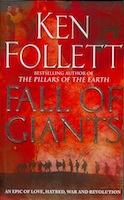
Fall of Giants
Five families from Wales to Russia live through World War I, the Russian Revolution, and the fight for women's votes.
2,255-word summary · 10 min read
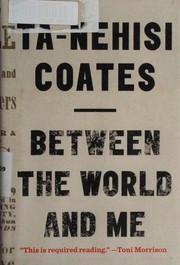
Between the World and Me
Coates writes to his son about the Black body in America, from Howard to the loss of Prince Jones.
2,234-word summary · 10 min read

The Zookeeper's Wife: A War Story
The directors of the Warsaw Zoo hid roughly three hundred Jews in empty cages and outbuildings after the German invasion, while Jan worked for the resistance.
2,065-word summary · 9 min read