

The Guns of August
2,405-word summary 11 min read 511 pages in the book
- First published
- 1962
- Publisher
- Macmillan
- Pages
- 511
- ISBN
- 9780026203104
Reading options
What's inside (10 sections)
I came to this book expecting a dry account of troop movements and came away with a story about people talking themselves into a catastrophe. Barbara Tuchman published it in 1962, and it won the Pulitzer Prize for General Nonfiction the next year. It covers one month, August 1914, from the decisions that launched the First World War to the battle that stopped the German advance short of Paris. The book is about 511 pages in the first Macmillan edition, and it reads far faster than that number suggests.
A funeral in 1910
Tuchman opens with a scene that seems, at first, to have nothing to do with the war. King Edward VII of England dies, and nine kings ride in his funeral in May 1910. The spectacle is enormous. The crowd watches in silence, and the kings include men who will soon be fighting each other. Among them is Kaiser Wilhelm II of Germany, Edward's nephew, who publicly plays the dutiful mourner and privately despises his uncle's diplomacy. Edward had helped move Britain away from isolation and toward understanding with France and Russia, and Wilhelm saw that as a plot to surround Germany. He called his uncle Satan.
That opening does more than set a scene. Tuchman uses the funeral to show the relationships, the resentments, and the vanities of the men who will make the decisions in 1914. She also places two books beside the coffin, so to speak. Norman Angell had argued that war between great trading nations had become impossible because the cost would be too high. General von Bernhardi had argued the opposite, that Germany must strike France or accept decline. One book promised that war was unthinkable. The other promised that war was necessary. Europeans read both.
I liked this opening so much that I reread it after finishing the book. It contains nearly all of Tuchman's method in miniature: a vivid public scene, a sharp private detail, and an argument about ideas that people held before they had to act on them.
The plans before the war
The next section is called Plans, and it walks through what the major powers intended to do. Germany had the Schlieffen Plan, a scheme to defeat France quickly by sweeping through Belgium before turning east to face Russia. It was built on the assumption of a short war, and the man who inherited it, Helmuth von Moltke the Younger, weakened the right wing year by year while growing more confident that it would work.
France had its own wound to avenge. The defeat at Sedan in 1870 had kept the French army on the defensive for forty years and produced plan after defensive plan. That changed when General Joseph Joffre took over and pushed Plan XVII, an offensive scheme built around the belief that attack itself would carry the day. Britain had no formal plan to fight on the continent at first, but military conversations with France grew into a naval agreement and a commitment to send a small expeditionary force. The politicians knew less than the soldiers about what had been promised. Russia, meanwhile, frightened the others with the size of its army, even though its minister of war, Sukhomlinov, was corrupt and had stalled modernization.
Tuchman's point is not that any one plan was absurd on its face. It is that all of them assumed the war would be over quickly. Mobilization timetables hummed along like clockwork, and the clockwork made it harder for anyone to stop. A statesman who warned that the fighting might last two or three years was dismissed as a pessimist. Only a few people, among them Lord Kitchener, expected a long war, and Kitchener was a voice that the politicians had to take seriously but did not want to hear.
The last week of peace
The second section, Outbreak, moves hour by hour. Archduke Franz Ferdinand was assassinated at Sarajevo on June 28, 1914. Austria-Hungary sought revenge against Serbia with German backing, delivered an ultimatum on July 23, declared war on July 28, and bombarded Belgrade. Russia began to mobilize on July 30 to defend Serbian interests and its own standing. Germany sent an ultimatum to Russia on July 31. Tuchman's phrase for the feeling of those days is that war pressed against every frontier.
What impressed me here is the way she handles the small moments that might have changed things. On August 1 in Berlin, the Kaiser ordered general mobilization at five in the afternoon and the invasion of Luxembourg began two hours later. Then a telegram arrived from the German ambassador in London suggesting that Britain would stay neutral if Germany did not attack France. The Kaiser wanted to turn the whole army east. Moltke told him the plan could not be altered. A second telegram later that night removed the possibility anyway, since it said British neutrality depended on Germany refraining from attacking Russia as well.
Paris and London get their own chapters on the same day. In France, Premier Viviani and President Poincaré moved toward mobilization while the French had already pulled troops back from the border to avoid an accidental clash. In London, Prime Minister Asquith held a cabinet split between men who wanted to support France and men who wanted nothing to do with a European war. Edward Grey threatened to resign. Winston Churchill had already ordered the fleet to its war station at Scapa Flow. The cabinet argued while the timetables ran.
Then there is Belgium. On the evening of August 2, the German minister in Brussels opened a sealed envelope and delivered an ultimatum. King Albert I answered no. His army was small and badly equipped, but he understood what the demand meant. Belgium rejected the ultimatum on August 3, and German troops crossed the border the next morning.
Four days that decided a generation
The chapters on August 3 and 4 are the heart of the book for me. Political leaders in several countries stood up in their parliaments and turned a crisis into a war. Grey told the House of Commons about the military conversations with France and asked it not to watch quietly while Belgian neutrality was violated. In Berlin, the Kaiser told the Reichstag that he recognized no parties, only Germans. Bethmann-Hollweg admitted that the invasion of Belgium was contrary to international law, which was a remarkable thing to say aloud in that room, and the Reichstag voted a huge war credit and then adjourned for months.
Nearly everyone expected a short war. The Kaiser told departing troops they would be home before the leaves fell from the trees. Crowds cheered in every capital. Tuchman is at her best on this gap between what people said and what was about to happen. She lets the confident remarks sit on the page without mocking them, and the reader supplies the dread. Kitchener's prediction of a war lasting at least three years reads like a message from another century.
The fighting begins
The final section, Battle, covers the armies in motion. There is a long chapter on the pursuit of the German cruisers Goeben and Breslau in the Mediterranean, a side story that helped bring the Ottoman Empire into the war and that Tuchman had wanted to write about since she was a child. Then come the German advance through Belgium, the Belgian stand at Liège, the arrival of the British Expeditionary Force, and the battles along the Sambre and the Meuse.
The French offensives in Lorraine and the Ardennes went badly. General Lanrezac saw that the Fifth Army was about to be enveloped at Charleroi and pulled it back without waiting for permission, which probably saved the French line and cost him his command. In East Prussia, two Russian armies advanced with poor coordination and unencrypted messages, while German commanders quarreled and were replaced. Hindenburg and Ludendorff arrived to take charge and defeated Samsonov's army at Tannenberg. The Germans also transferred two corps from the western front to meet the Russian threat, a decision that Tuchman notes helped the French elsewhere.
The book ends with the burning of Louvain, the retreat, and the First Battle of the Marne, where the German advance was stopped and Paris was saved. In the afterword Tuchman makes the point she has been building toward. The battles of August were not decisive in the way everyone expected. They produced a deadlock, and that deadlock determined the shape of the next four years. Her argument is that the first month held the seeds of everything that followed, including the peace and the Second World War.
The Marne and the deadlock
The book's last chapters cover the German turn toward Paris and the battle that stopped it. Alexander von Kluck's army swung east of the city, which exposed a gap between German armies, and the French attacked into it. Tuchman calls out the confusion on both sides. Orders went out late. Staff officers argued. Commanders who had been certain of a quick victory suddenly had to improvise. The First Battle of the Marne saved Paris, but Tuchman insists on the awkward truth that the victory was partly accidental. It was won in spite of the leadership, not because of it.
That insistence is part of her larger argument. She does not want to give generals credit for a result they stumbled into, and she does not want the reader to leave with the idea that one battle settled the war. The German retreat from the Marne did not end the fighting. It created the line that the armies would dig into for the next four years. The casualty lists of August had been large, and the war that followed was larger still.
The afterword is where the scale of that failure becomes clear. Tuchman writes about the deadlock as a kind of trap. Both sides had planned for movement and decisive battles, and both sides had built armies that could not easily be stopped once they started. When the advance stalled, the only option was to dig in. Millions of men spent the next years in trenches that nobody had planned for and nobody knew how to escape.
Reading this now, I found the afterword less convincing than the chapters that precede it. The claim that August 1914 determined everything that followed is too strong, and later historians have said so. But the description of the trap itself is hard to argue with. The leaders of 1914 built machines they believed they controlled, and the machines ran away from them.
How the book was made, and where it is weak
Tuchman was a writer who did her own legwork. She read letters, telegrams, diaries, memoirs, cabinet documents, battle orders, and even love letters in libraries on both sides of the Atlantic, and she rented a small Renault and drove over the battlefields of Belgium and France. That combination of archive and road gives the book its texture. The famous opening sentence about the funeral was praised for exactly this reason, and reviewers from the 1960s through the 2010s kept returning to her narrative skill.
The book grew out of work she had already done. She had written about the First World War in The Zimmermann Telegram and had long felt that 1914 was the moment the nineteenth century ended. An editor at Macmillan wanted a book about the battle of Mons and the British expeditionary force. Tuchman was more interested in the escape of the German cruiser Goeben, an episode with a private connection: as a child of two she had been on a small steamer with her family and had watched the pursuit, and her grandfather was the American ambassador Henry Morgenthau. The editor was not interested in that episode alone, so she chose a frame that could hold both subjects. That frame was the first month of the war, which is why the book stops where it does.
The criticisms are worth taking seriously. Historians have argued that her thesis is too tidy, that she arranged the evidence to support a deterministic story in which rigid timetables and entangling alliances dragged Europe toward disaster. Later scholars, including Margaret MacMillan writing in 2014, said that most historians no longer accept that main argument. Others faulted her for leaning on the memoirs of generals and statesmen instead of the massive documentary research that had appeared before 1962, and for giving the German people a harshness that looked like bias. She largely left out the fighting between Austria and Russia and the campaigns in Galicia, which meant the war's origins in the Balkans get thin treatment. The Goeben chapter, which is personally meaningful to her, has been called long and out of context.
I think those criticisms land, especially the one about determinism. A book written at the height of the Cold War, by an American who had watched the Cuban Missile Crisis approach, was bound to read 1914 as a lesson about miscalculation. President Kennedy was so taken with the book that he gave copies to his cabinet and military advisers, and Robert McNamara later recalled him saying that Europe's leaders had bungled into the war and that the United States was not going to do the same. That context does not make the history false, but it does explain the shape of the argument.
Why it still matters
What survives the criticism is the storytelling and the moral clarity about how decisions get made. Tuchman shows leaders who were intelligent, vain, frightened, and tired, all working from plans they did not quite believe in and could not stop. She shows how a telegram, a timetable, and a misplaced confidence can matter more than an army. And she writes scenes that stay with you, from the kings in the funeral procession to the Kaiser telling his troops they would be home in the fall.
The book was on the New York Times bestseller list for forty two consecutive weeks, and it still has the power to make 1914 feel immediate. It won the general nonfiction Pulitzer rather than the history prize because the history prize was reserved for books on American history, which tells you something about how the book was regarded: as a work of wide public interest rather than a specialist study. Read it for the narrative first. Read the criticisms afterward, and keep both in mind.
FAQ
When was The Guns of August published and by whom?
Macmillan published the first edition in 1962. It runs 511 pages and won the 1963 Pulitzer Prize for General Nonfiction, since the history prize was limited to books on American history.
Is The Guns of August a work of fiction?
No. It is narrative military history about the opening month of World War I, based on letters, diaries, cabinet documents, battle orders, and the author's tours of the battlefields.
Do historians still accept Tuchman's argument?
Many do not. Later scholars, including Margaret MacMillan, have rejected her claim that rigid alliances and timetables made the war inevitable, while still praising the book as storytelling.
Similar books

Lone Survivor: The Eyewitness Account of Operation Redwing and the Lost Heroes of SEAL Team 10
Marcus Luttrell's account of the 2005 SEAL mission in Afghanistan that killed three of his team and left him alone.
2,144-word summary · 10 min read
Band of Brothers
Easy Company, 506th Airborne, from Toccoa training through D-Day, Holland, Bastogne, and Hitler's Eagle's Nest.
2,685-word summary · 12 min read
Hiroshima
In 1946 John Hersey followed six ordinary people through the atomic bombing of Hiroshima and its aftermath, using a plain style that made the reporting feel…
2,991-word summary · 13 min read

The Zookeeper's Wife: A War Story
The directors of the Warsaw Zoo hid roughly three hundred Jews in empty cages and outbuildings after the German invasion, while Jan worked for the resistance.
2,065-word summary · 9 min read
Bury My Heart at Wounded Knee: An Indian History of the American West
Dee Brown's 1970 retelling of the American West from the point of view of the people it destroyed.
2,233-word summary · 10 min read
Killing Lincoln
Booth plots as Lincoln pushes war end and reunion in 1865.
2,486-word summary · 11 min read
Cleopatra: A Life
Pulitzer winner Schiff restores Cleopatra as a capable ruler, from Ptolemy debts and Caesar to Antony, Actium, and her death in 30 BC, built from coins and…
3,586-word summary · 16 min read
The Splendid and the Vile
Larson follows Churchill circle through Blitz year with diaries and bombing nights.
2,038-word summary · 9 min read
American Sniper: The Autobiography of the Most Lethal Sniper in U.S. Military History
Navy SEAL sniper Chris Kyle recounts Texas roots, SEAL training, four Iraq tours, and the strain combat placed on his marriage and health.
2,011-word summary · 9 min read
The Rise and Fall of the Third Reich: A History of Nazi Germany
A Berlin correspondent turned historian traces Nazi Germany from beer halls to bunker using eyewitness memory and captured German records.
3,559-word summary · 16 min read
Dead Wake
Larson tracks Lusitania, U-20, and Room 40 toward May 1915 sinking.
2,471-word summary · 11 min read
Days of Love and Rage
Six Syrians build a short democracy in Manbij, then watch inequality and ISIS undo it.
2,022-word summary · 9 min read
A Long Way Gone: Memoirs of a Boy Soldier
A Sierra Leone boy flees rebels, becomes a child soldier at thirteen, and fights his way back through rehab.
2,434-word summary · 11 min read
1776
Washington's amateur army from Boston siege to Trenton through mud and doubt.
2,139-word summary · 10 min read
Unbroken
Louis Zamperini survives a Pacific crash, sharks and POW camps after running in the Berlin Olympics.
3,263-word summary · 15 min read

Zeitoun
A Syrian-American contractor rides out Hurricane Katrina by canoe, rescuing neighbors and stray dogs, until a routine arrest turns into twenty-three days…
2,097-word summary · 9 min read
The Lord of the Rings: Weapons and Warfare
An illustrated 2003 companion that breaks down the weapons, armies and battles of Middle-earth using film production art, maps and commissioned battle plans.
2,297-word summary · 10 min read
Survival in Auschwitz
A chemist deported from Turin records ten months in Auschwitz with a restraint that makes the horror impossible to look away from.
2,177-word summary · 10 min read
One Day, Everyone Will Have Always Been Against This
From a viral 2023 post, Omar El Akkad builds a furious short argument about Western promises, silence and complicity during the Gaza war.
2,218-word summary · 10 min read
Motherland: A Feminist History of Modern Russia, from Revolution to Autocracy
A feminist history of modern Russia told through women's lives, from the revolutionaries of 1917 to Pussy Riot and the politics of today.
2,191-word summary · 10 min read
I Must Betray You
In 1989 Romania, a seventeen-year-old is forced to inform on an American diplomat's family and records the truth in a hidden notebook.
2,258-word summary · 10 min read
Alive: The Story of the Andes Survivors
After a rugby team's plane crashes in the Andes in 1972, Piers Paul Read tells the survivors' 72-day fight to live, drawn from interviews with the men and…
2,179-word summary · 10 min read
Red Storm Rising
A fired Siberian oil field pushes the Politburo toward the Persian Gulf, and a conventional Third World War opens with stealth strikes and a fight for Iceland.
2,661-word summary · 12 min read

Everything Is Tuberculosis
John Green tells the story of a boy with tuberculosis in Sierra Leone and argues that a disease curable since the 1950s still kills a million people a year…
2,015-word summary · 9 min read
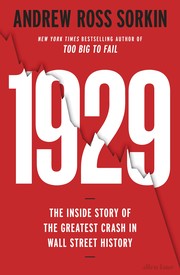
1929
Sorkin's narrative history of the 1929 crash opens on 1 February of that year, seven months before the fall, and follows bankers and speculators through to…
2,953-word summary · 13 min read
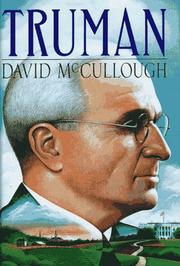
Truman
McCullough's 1992 Pulitzer-winning biography follows Harry Truman from Missouri farm boy and senator to the president who ended a world war.
2,262-word summary · 10 min read
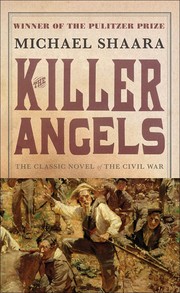
The Killer Angels
A Pulitzer-winning novel of Gettysburg, told through Lee, Longstreet, Chamberlain, and Buford. Shaara turns a familiar battle into a chain of choices made by…
2,242-word summary · 10 min read
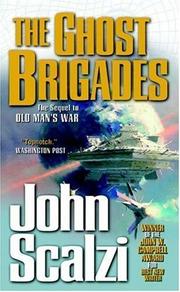
The Ghost Brigades
A traitor inside the CDF sparks an alien alliance, and a soldier grown from his DNA may be the only one who can stop him.
2,279-word summary · 10 min read
Extreme Ownership: How U.S. Navy SEALs Lead and Win
Two retired Navy SEALs turn their Ramadi combat experience into a blunt leadership creed: the leader owns everything, and the team follows when the why is…
2,368-word summary · 11 min read

Long Walk to Freedom
Mandela's account of a Thembu childhood, a law practice, a banned movement, twenty-seven years in prison, and the negotiation that ended apartheid.
2,454-word summary · 11 min read