
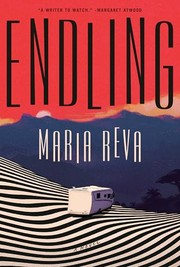
Endling
3,041-word summary 14 min read 352 pages in the book
- First published
- 2025
- Publisher
- Doubleday
- Pages
- 352
- ISBN
- 9780385545310
Reading options
What's inside (9 sections)
I picked this one up because of the title. "Endling" is not a word most people know, and the idea of a novel about snails, Ukraine, and mail-order brides sounded like three books fighting for the same shelf. It turned out to be one book, and a strange, funny, often painful one. Maria Reva published it in June 2025 with Doubleday, her first novel, and by the last page I had been through a caper, a war, and a reckoning with the act of writing a story at all. The edition I read runs 352 pages. I want to walk through it in order, because the order is the whole point, and because the book does something near the middle that changes how you read everything that comes before it.
A van, some snails, and the last of a species
Yeva is a scientist. She drives around Ukraine in a campervan that she has turned into a mobile laboratory, and she is looking for endangered snails. The plan is to gather them and breed them in captivity, to keep populations going that cannot hold on where they are. This is not a clever metaphor the author wants us to decode from a distance. It is Yeva's actual job, and she cares about it in a steady, unshowy way.
The word of the title grows out of that work. An endling is the last living member of a species, the final one of its kind, and Yeva keeps finding them. She travels from place to place with her lab on wheels, collecting creatures that may have no future outside her care. There is something quietly moving about the patience of it. A person has to notice a small, slow animal, decide it matters, and build a whole life around trying to save it. Reva does not ask us to feel sorry for the snails in a big way. She lets Yeva's routine carry the feeling.
What interested me is how the book treats this scientific thread. It could have been a quirky detail, the sort of thing a novel uses to signal that its heroine is unusual. Instead it stays as the anchor of the story. Even when the plot turns into something loud and absurd, the snails never fully leave. They are what Yeva wants to protect, and they are a quiet answer to the question of why a person would bother trying to preserve anything at all. I kept thinking about that while the rest of the book went off the rails.
Yeva's van is home as much as workplace. She lives out of it, drives it across the country, and later it becomes the place where the whole central scheme depends on her. Reva is good at making a vehicle feel like a real space rather than a prop. You get a sense of a woman who has arranged her life around a job nobody around her quite understands, and who has made a private peace with that.
The romance tour that pays for the snails
Here is where the book turns strange in a way that made me laugh. Yeva's science does not pay the bills. She funds it by posing as a bride for a Canadian company called Romeo Meets Yulia. The business flies Western men to Ukraine for romance tours, where they meet women and select wives. Yeva plays the part of a prospective bride, even though she has no intention of marrying any of the men and no intention of sleeping with them. She is using the tour as a cash source, and she is very clear with herself about that.
You can see how a woman with a van and a rare biological mission would fall into this. It is underground work, it is badly regulated, and it runs on men who arrive with a fantasy in their heads and money to spend. Yeva slips into the role because it is there and because it works. Reva writes these early chapters with a light, almost lazy comic touch. The men are not drawn with much sympathy, and that is deliberate. The whole point is that the business sells women as a product, and the women on the inside are running circles around the buyers.
I liked this section more than I thought I would. It has the feel of a con story, where the con is being run by the people you expect to be the victims. Yeva moves through the romance tour with a scientist's detachment, watching the men perform their version of romance while she quietly collects her fee. There is a gap between what the men think is happening and what is actually happening, and Reva keeps that gap wide open. It is funny because it is mean, and it is mean to the right target.
The company name itself, Romeo Meets Yulia, tells you the tone. It is a cheap, cheerful brand for something that turns lonely men and desperate women into inventory. Reva does not spend pages explaining the economics of it. She drops us into a tour already in motion, with flights and meetings and selections, and lets Yeva's inside view do the work. I found myself wanting a bit more detail about how the money actually reached her, but the book is not interested in accounting, and that is a fair choice.
Nastia, Solomiya, and the mother who went missing
At the agency Yeva meets Nastia, who is also posing as a prospective bride. Nastia is there with her older sister Solomiya, who is posing as Nastia's translator. This is the moment when the book quietly changes from a comedy about one woman's double life into something with a much heavier engine underneath.
The sisters are not looking for a husband. They are looking for their mother, a feminist activist who has been missing for eight months. That number matters. Eight months is long enough for hope to thin out and short enough that nobody has stopped looking. The two sisters have taken jobs inside the romance tour as a way to get close to the people who might know something, and they need Yeva's help. They talk her into joining a plan to kidnap thirteen of the paying bachelors, hold them in her van, and use the crisis to expose the misogyny of the mail-order-bride business.
It is a wild plan, and Reva knows it. Thirteen men, one van, three women with an ax to grind and a mother to find. The scheme is the sort of thing that only works in a novel that has already decided to be a comedy. What makes it more than a stunt is the reason behind it. The sisters are not doing this for money or for fun. They are doing it because the system that sells brides is the same system that swallowed their mother, and because nobody in power is going to take it apart for them.
Yeva's agreement to join is one of the more interesting turns in the book. She is not an activist. She is a scientist who has built a life around avoiding exactly this sort of entanglement. But she has been living inside the lie of the romance tour for long enough that the sisters' proposal lands on raw ground. I read her decision less as a conversion than as a woman deciding that the cost of looking away has finally become higher than the cost of getting involved. The book does not lecture about it. It just lets her say yes.
There is a real affection here between the sisters that Reva handles well. Solomiya is the older one, the one who has taken on the role of translator and protector, and Nastia is the one playing the bride. Their mother's disappearance sits behind every scene they are in, even the funny ones. That is the trick of the first half of this novel: the missing woman is never on the page, and her absence keeps getting bigger.
Pasha, who wants to go home
Of the thirteen men caught up in the plan, Pasha is the one the book singles out. He is a Ukrainian expatriate in his thirties living in Vancouver, and he signs up for the romance tour hoping to choose a wife and return home. That small hope is what makes him different from the other buyers. He is not a Western man shopping for an exotic bride. He is a man who left his country and wants a reason to go back to it.
Reva gives Pasha just enough interior life to complicate the clean gender line the scheme is built on. The plan depends on treating the bachelors as a type, as interchangeable examples of a ugly trade. Pasha does not fit neatly. He is lonely, he is homesick, and his reason for being on the tour is gentler than the reasons of the men around him. I do not think the book lets him off the hook entirely. He is still a man paying to choose a woman. But he is drawn with enough care that you cannot file him away as one more joke.
That is one of the better tensions in the early chapters. The novel wants to be a feminist caper about men getting their comeuppance, and at the same time it keeps giving at least one of those men a life outside the joke. Pasha's presence in Vancouver, his decision to pay for a trip to Ukraine, his belief that a wife will solve the problem of home, all of it points to a person acting out of need rather than malice. The book never fully resolves that tension, and I think it is stronger for leaving it open.
When you read the first half knowing what is coming, Pasha's wish to return home takes on a painful edge. He wants to go back to a country that is about to change beyond recognition. Reva does not skim that. She lets the timing do its work.
The twenty-third of February
The plan comes together in Kyiv on 23 February 2022. The women lure the men into the van and drive out into the countryside. This is the caper's payoff, the moment the romance tour turns into a hostage situation, and Reva writes it with the momentum of a heist going exactly as rehearsed. Thirteen men, one van, three women who have finally got the upper hand. For a moment it looks like the scheme might actually work, or at least that it might do the damage the sisters want it to do.
Then, the next morning, Russia invades.
I want to say plainly how abrupt this is. The book does not ease into the war. It does not give you a chapter of ominous news reports or a slow build of dread. The plan is in motion, the women are in the countryside with their captives, and the invasion arrives the following day and shatters everything they have arranged. The caper that has been gathering speed for a hundred pages suddenly has no audience. The men they have kidnapped become irrelevant, the exposure of the mail-order-bride business becomes a small, almost silly thing, and the sisters' private revenge is swallowed by something vast.
This is the pivot the whole book has been built toward, and it is genuinely well timed. A joke about a mail-order-bride scam cannot survive the outbreak of a war, and Reva knows it. The virtue of the scene is that she does not try to make it survive. She lets the smaller story collapse under the weight of the larger one. I found that brave, and I found it uncomfortable in exactly the way the book wants me to be uncomfortable. You spend a hundred pages laughing at a con, and then you are asked to sit with the fact that the thing you were laughing at now looks trivial.
What happens to the kidnapped men, and to the sisters and their missing mother, becomes secondary after the invasion. The book keeps the war close but general. It does not turn into a battle narrative. Instead the invasion functions as a force that rearranges every private plan and makes the earlier comedy hard to look at. Pasha, the man who wanted to go home, is caught in the middle of a home that has just been attacked. The irony is not lost on anyone, and Reva does not need to underline it.
Where the book breaks open
Around page 136, the novel stops pretending to be a novel. Reva inserts acknowledgements and a note on the typeface, right there in the middle of the story, and then starts writing as a fictionalized version of herself. This version is an artist living in her parents' attic in Canada, wrestling with shame at writing a comedy about Eastern European tropes while her country burns. It is one of the strangest mid-book turns I have read in a while, and it is the part that the reviews argued about.
The honesty of it is real. A writer sitting in an attic in Canada, far from the war, trying to finish a funny book about Ukraine, has a genuine problem on her hands. She is making jokes about a place that is being bombed. She is using the kinds of characters that Western audiences expect from that part of the world, the mail-order bride, the expatriate, the eccentric scientist, and she knows it. The fictionalized Reva in the attic is ashamed of exactly that. The book pulls its own author into the frame so that the question of whether this comedy was okay to write cannot be avoided.
The trouble is that the pivot changes the terms of the story midstream. Up to that point I was following Yeva and the sisters and Pasha, and enjoying the strange, mean humor of their scheme. After the pivot I was watching a writer think about her own guilt. Both are interesting. They are not the same book, and the switch is abrupt enough that I felt the ground move under me. The acknowledgements and the note on the typeface are not a small wink either. They take up real space and announce that the story is a made thing, which is fair, but it also stops the plot dead at the moment the war had made it urgent.
I want to be honest that this frustrated me even as I admired it. The attic sections have a raw, argue-with-yourself quality, a person going over and over whether she has the right to tell this story. Some of that is moving. Some of it feels like the author using the war to talk about her own discomfort, which is a different thing. The best parts of the novel are the scenes of Yeva in her van and the sisters in the tour. The metafictional sections never quite earn the space they take from those scenes.
What the critics saw, and where it wobbles
The reviews make the split in the book easy to see. Marcel Theroux likened the first half to a Coen brothers comedy with a feminist message, and that seems exactly right to me. The caper has the loose, oddball energy of a Coen film, with people who talk too much and plans that rely on improbable timing, and the feminist point is never far from the surface. If the book had stopped at the invasion, it would have been a sharp, strange comic novel with a hard ending. There would have been a case for calling it a success.
Ania Szremski, writing in the New York Times, praised the grandfather in besieged Kherson and felt that the metafictional passages wobble. I agree with both halves of that. The grandfather in Kherson is one of the parts that stayed with me, because he belongs to the war rather than to the author's worry about writing the war. He is a person in a besieged city, and Reva treats him with a steadiness that the attic sections never reach. When the book is with him, it trusts the story. When it is in the attic, it keeps stepping back to explain itself.
The wobble is a fair criticism of a book whose pivot changes the terms of the story midstream. I do not think it makes the novel a failure. I think it makes it an uneven one. The first half has a confidence that the second half loses, and the loss is visible. A reader who wants one consistent tone will feel the seam. A reader who likes a novel that argues with itself might find the seam interesting. I land somewhere in the middle. I admired the risk and missed the comic momentum.
The title keeps all of this together better than the structure does. An endling is the last of its kind, and the novel is full of last things: a species down to its final member, a mother missing for eight months, a way of life about to be erased by an invasion, and a comic story that cannot survive the real world it points at. Reva does not need to spell that out. The accumulation does it. By the time the fictionalized Reva sits in her attic, the word has widened from snails to everything the book has lost.
I would hand this to a reader who enjoys books that shift shape and are willing to sit with a story that never fully settles. I would be careful with a reader who wants a clean comic novel with a tidy ending, because the second half refuses to deliver one. It is a debut with an outsized idea and a real command of comic timing, and it is also a book that nearly defeats itself. I finished it glad that I had read it and unsure what I would tell someone to expect. That uncertainty feels appropriate. The book is about a world in which the old plans stopped working, and it is honest enough to let its own plan break down too.
FAQ
Is Endling a war novel?
It opens as a dark comedy about a snail scientist and a mail-order-bride scam, but the Russian invasion arrives the morning after the kidnapping plot and changes the book's terms midstream.
What does the title mean?
An endling is the last living member of a species, which is what Yeva keeps finding among the endangered snails she collects. The word widens to cover the missing mother, a vanishing way of life, and the comic story the war overtakes.
Why does the book break form near the middle?
Around page 136 Reva inserts acknowledgements and a note on the typeface, then writes as a fictionalized version of herself, an artist in her parents' attic in Canada, wrestling with shame at writing a comedy about Eastern European tropes while her country burns.
Similar books
The Silence of the Girls
Briseis, queen of Lyrnessus, is captured by Achilles and narrates the Trojan War from inside the Greek camp, where women are prizes and survival is its own…
2,098-word summary · 9 min read
The Pull of the Stars
Over three days in a Dublin maternity ward in 1918, a nurse, a suffragette doctor on the run and a young volunteer face the flu, childbirth and unexpected love.
2,578-word summary · 11 min read
The Paying Guests
A widowed mother and her unmarried daughter take in lodgers in 1922 south London, and a secret affair between Frances and Lilian pulls them into a murder case.
2,661-word summary · 12 min read

The Kitchen God's Wife
Amy Tan's second novel pairs a San Jose speech therapist with her Chinese mother, whose account of war, an abusive husband, and a narrow escape comes out in a…
2,896-word summary · 13 min read
Birdsong
A love affair in Amiens before the First World War and a granddaughter's search through encoded journals decades later, joined by the tunnels of the Somme.
2,041-word summary · 9 min read

Corelli's Mandolin
A British doctor's daughter on a Greek island falls for the Italian captain billeted with her, until the German arrival turns a gentle occupation into a fight…
2,247-word summary · 10 min read

Sophie's Choice
A young Southern writer in 1947 Brooklyn befriends a brilliant, unstable couple and slowly learns the story of the Polish Catholic woman at the center of their…
2,798-word summary · 12 min read

Wide Sargasso Sea
Jean Rhys gives the first Mrs. Rochester a Caribbean childhood, a marriage built on money and suspicion, and a voice that Charlotte Bronte left in the attic.
2,021-word summary · 9 min read
The Birth of Venus
A Florentine merchant's daughter trains as an artist, marries a man who hides a secret, and survives Savonarola's bonfire of the vanities.
2,404-word summary · 11 min read
The Island of Missing Trees
A talking fig links 1970s Cyprus lovers Kostas and Defne with their grieving London daughter Ada years later.
3,172-word summary · 14 min read
The Sympathizer
Double agent captain spies in Saigon fall and LA exile while confessing to commandant.
2,169-word summary · 10 min read
The English Patient
In a ruined Italian villa in 1945, a burned man, a nurse, a thief, and a sapper trade pasts shaped by desert love and war.
2,006-word summary · 9 min read
Half of a Yellow Sun
Ugwu, Olanna and Richard are pulled from Nsukka comfort into the Biafran war, where love and hunger test every loyalty.
2,973-word summary · 13 min read
Snow Falling on Cedars
A Japanese American fisherman stands trial for murder on a snowy island, while a reporter faces lost love and wartime prejudice.
2,224-word summary · 10 min read
Life After Life
Ursula Todd dies and restarts through wars, flus, and bad marriages.
2,060-word summary · 9 min read
All Quiet on the Western Front
Paul Bäumer enlists at nineteen and faces the trenches of World War I in Remarque's 1929 classic, told from the German side of the wire.
2,543-word summary · 11 min read
Lessons in Chemistry
Lessons in Chemistry retold: Elizabeth Zott fired, TV cooking with science, Six-Thirty helps.
1,951-word summary · 9 min read
All the Light We Cannot See
Doerr's All the Light We Cannot See retold: blind Marie-Laure, Werner the radio boy, and Saint-Malo.
1,962-word summary · 9 min read
A Thousand Splendid Suns
Splendid Suns retold: Mariam and Laila share Kabul house, war, Rasheed, escape and return.
1,957-word summary · 9 min read

The Wilderness
Four Black women move through twenty years of friendship in Angela Flournoy's discontinuous, widely praised second novel.
2,141-word summary · 10 min read
The True True Story of Raja the Gullible (and His Mother)
A gay philosophy teacher in Beirut revisits six decades of Lebanese history, family trauma, and his thorny bond with his mother.
2,274-word summary · 10 min read
The Teacher of Nomad Land
In 1941 Iran, an orphaned boy straps a chalkboard to his back and sets off to teach nomads, hoping to keep his little sister with him.
2,534-word summary · 11 min read
The Rest of Our Lives
A law professor drives his daughter to college, then heads west instead of home, testing a private promise he made twelve years ago.
2,238-word summary · 10 min read
The Pelican Child
Twelve short stories by Joy Williams, where talking dogs, bleak comedy, and the nearness of death mark a late-career stylist at work.
2,415-word summary · 11 min read
The Nix
A stalled novelist and community college professor goes looking for the mother who left him and finds a radical activist whose rock thrown at a governor made…
2,214-word summary · 10 min read
The Last Bookshop in London
A woman who has never cared for reading takes a job in a dusty London bookshop as the Blitz begins, and finds her place in it.
2,264-word summary · 10 min read

The Land in Winter
In the West Country during the Big Freeze of 1962, two young couples are shut in together, and the cold draws out every buried want.
2,265-word summary · 10 min read
She Who Became the Sun
A peasant girl takes her dead brother's name and becomes Zhu Chongba, climbing from a Buddhist monastery toward a fractured China's throne.
2,170-word summary · 10 min read
Only Son
A brief, funny, melancholy debut about a boy whose father dies in 1982 Florida, and the man he becomes, still trying to read the mystery of that loss.
2,170-word summary · 10 min read

Of Love and Other Demons
In colonial Cartagena, a twelve-year-old girl bitten by a rabid dog is locked in a convent, where the priest sent to exorcise her falls in love.
2,258-word summary · 10 min read