
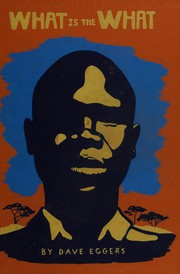
What Is the What: The Autobiography of Valentino Achak Deng
2,840-word summary 13 min read 475 pages in the book
- First published
- 2006
- Publisher
- McSweeney's
- Pages
- 475
- ISBN
- 9781932416640
Reading options
What's inside (9 sections)
I picked this up expecting a refugee story told in the third person, the kind that keeps a respectful distance. Instead the first page puts you inside a man's skull while he lies bound and gagged on the floor of his own apartment in Atlanta, listening to his attackers rummage through his things. It is one of the most disorienting openings I have read in a novel that calls itself an autobiography. By the end I understood why Dave Eggers insisted on that odd label, and also why it makes some readers uneasy.
What Is the What: The Autobiography of Valentino Achak Deng came out in 2006 from McSweeney's, on October 25, a hardcover of about 475 pages. It grew out of a long collaboration between Eggers and Valentino Achak Deng, one of the boys who came to be known as the Lost Boys of Sudan. The book tells Deng's story in his own voice. It was a finalist for the National Book Award and for the National Book Critics Circle Award in fiction. Those honors are deserved, though they also hint at the slippery category the book occupies: part novel, part testimony, part memoir written by somebody else.
A robbery in Atlanta opens the book
The present-day story takes place over roughly two days in 2005. Deng, who has resettled in Atlanta, works the reception desk at a health club and takes classes at a community college. He is trying to build a quiet, ordinary life. Then two people, a man and a woman named Powder and Tonya, break into his apartment. They beat him, kick him in the ribs and stomach, tape his mouth, tie him up, and strip the place of anything worth taking. During the attack they call him "Africa," and then, when that stops being funny to them, "Fucking Nigerian motherfucker." The insult is doing a lot of work in these pages. A man who survived a war is reduced by strangers to a continent, and then to the wrong country on that continent.
Before they leave, the pair put their ten-year-old son in charge of him. The boy is first introduced as "TV Boy" and later as Michael. He is told to guard Deng and keep him quiet. What follows is strange and painful: a grown man, bound on the floor, talking to a child who does not want to hear him. Deng tries to win him over. He tells him about the beginning of the war, about women screaming and babies thrown into wells, and at one point says, "I want you there with me." Michael would rather he stop. He adjusts the television, ignores him, and in general behaves like a bored American kid who has been handed an awkward job.
The gap between them is the engine of the whole book. Deng discovered early in his resettlement that telling his story out loud to Americans often got him nowhere, so he learned to tell what he calls "silent stories." The line arrives early: "When I first came to this country I would tell silent stories. I would tell them to the people that had wronged me." That habit explains the strange structure of the novel. He directs his memories at people who cannot or will not listen. Michael is the first of them.
There is a terrible little scene after the boy leaves. Deng kicks the floor to get the neighbors' attention, certain that someone, anyone, must hear a man being beaten and bound. Nobody does. He lies there convinced that he is loud, that he is being heard, while the building stays quiet. When he finally frees himself and calls the police, he expects the country to intervene on his behalf. An officer eventually shows up, leaves him a complaint card the size of a business card, and goes. Deng's indignation has nowhere to go. He thinks about how refugees can be celebrated one day and ignored the next, once they stop being convenient. It is a bitter passage, and it sets the tone for everything that follows.
Marial Bai, and the day the war arrived
The story Deng tells Michael begins in the Dinka village of Marial Bai, in southern Sudan. He is about six years old when the war reaches them, around 1983. The attackers are an Arab militia the book calls the murahaleen. They sweep through the village, and in the chaos Deng loses track of his father and of his two childhood friends, Moses and William K. William K. gets away. Moses is assumed dead. Deng runs to his aunt's house with his mother, a woman he repeatedly identifies by the yellow dress she wears. Before they can hide properly, they hear his aunt screaming. His mother goes to see what is happening, and Deng never sees her again.
That is the central wound of the book, and Eggers never lets it heal over. The mother's yellow dress becomes a way of remembering someone who vanished into a moment of noise. Deng does not narrate her death, because he never witnessed it. He narrates the not-knowing. For a child, that is almost worse: a person you love walks toward a sound and does not come back, and you spend the rest of your life building a picture out of one detail, a dress.
He survives the raid by hiding inside a bag of grain and staying perfectly still, and he credits God for keeping him quiet. That mix of practical cunning and religious gratitude runs through his voice. He is a boy who believes he is watched over and also understands that nobody is coming to save him. Those two convictions sit side by side without ever quite resolving, and they give the narration its particular texture.
The early chapters move quickly through the first months of flight. Deng joins a group of other boys walking away from the fighting, the ones who would become known as the Lost Boys of Sudan. There is no adult plan, no reliable map, just the knowledge that staying means death and that somewhere else might be safer. He describes hunger, thirst, exhaustion, and the constant fear of being a small, thin child among other small, thin children, all of them trying to keep moving. The walk goes on for a long time. What I remember most is how ordinary the fear becomes in his telling. He does not shout about it. He notes it the way a person notes the weather.
The walk to Pinyudo, and the camp that was not a refuge
Part two moves to Ethiopia and the refugee camp at Pinyudo. By now Deng is one of thousands of boys on the move, and the march north is full of the ordinary hazards of a war zone: soldiers, landmines, wild animals, rivers, and the constant problem of food. The boys have built up an idea of the camp as a place where the trouble stops. It does not work out that way. Pinyudo is crowded, short of supplies, and overshadowed by the same political violence they fled. Safety turns out to be relative, which is a hard lesson for a child to learn twice.
Here the novel switches its listener. Deng is in the emergency room of an Atlanta hospital after the beating, and he has been waiting fourteen hours without treatment. The nurse at reception is named Julian, and it is to Julian that he tells the story of Pinyudo. Details of the hospital room keep intruding on the memories: the fluorescent light, the boredom, the other patients, the growing realization that nobody is going to call him in. The parallel is deliberate. In Ethiopia he waited for relief that never came in the form he expected, and in Atlanta he waits for care that never arrives at all.
When Ethiopian president Mengistu is overthrown, the situation at Pinyudo turns dangerous. Soldiers open fire on the refugees. Deng and the other boys run, and the only place left to go is Kenya. That decision, made in panic by frightened teenagers, leads to the longest stretch of his exile. Eggers keeps the prose plain at these moments. There is no grand description of the shooting, just the fact of it and the fact of the running. The restraint makes the events land harder than any elaborate scene would.
I should say that this middle section can be slow going. The camp chapters are long, and the daily grind of scarcity, schools, and uncertainty does not always build toward a clear turning point. That is arguably the truth of the experience, but truth is not the same as momentum. There are pages where I found myself admiring the endurance on the page rather than sharing it.
Kakuma, and the decade in between
Part three covers Deng's years in the Kakuma refugee camp in Kenya, more than a decade of his life. This is where he grows from a boy into a young man, where he goes to school, where he watches hope arrive in the form of resettlement interviews and then recede for others around him. Kakuma is not portrayed as a paradise either. It is a place where people build lives out of temporary materials, where routines form and then get broken by decisions made far away. Deng learns English, he studies, and he slowly absorbs the idea that he might be selected to leave for the United States.
In the Atlanta frame, he tells this part of the story to people at the health club where he works the front desk. They are the members whose cards he swipes, people who barely look up as he speaks. One of them, an African American woman named Dorsetta, tells him to hang in there. He silently resents the phrase. He does not want to hang in there, he thinks; he believes he survived for something more than endurance. That small exchange is one of the sharpest things in the book, because it shows how quickly a well-meant phrase can become another way of not seeing a person.
The narrative stops just before Deng leaves Kenya. Eggers does not narrate the flight to America or the first days in Atlanta as a travel sequence. The present-tense assault supplies everything the reader needs to know about what came after. This is a bold structural choice. It refuses the tidy immigrant arc in which the boat or plane delivers the hero to a new life and the story ends on a note of arrival. Instead we meet Deng already resettled, already beaten, already wise to the fact that safety in one country can be as fragile as safety in a camp.
That choice also explains the ending. The beating is a genuine tragedy, but it jolts Deng into pulling himself together and setting his sights higher. He returns to work. He keeps going to school. He notices, with a kind of stubborn accounting, the things he has that he did not have in Africa. The book closes looking forward rather than back, and it earns that turn by making us sit through everything that came before.
What the title is asking
The title is deliberately awkward. There is no question mark, and the phrase is hard to say out loud, which is probably the point. Deng explains it through a story his father told him about the Dinka creation. When God made the world, He created the Dinka people first and offered them a choice between cattle and something called the What. The man asked what the What was, and God would not answer. So the man chose the cattle, because a cow is something you can see and count and rely on. God, in the telling, was testing whether the man could take pleasure in what was already in front of him instead of trading it for the unknown.
I have thought about that story a lot since finishing the book. It is not a riddle with a clean answer, and it is not a claim that faith is easy. It is a way of talking about loss. Deng has lost his mother, his father, his village, and years of his childhood to forces he never understood. The question "what is the What" is what you ask when the thing you most want has been taken away and nobody will tell you why. The book never answers it, because Deng never got an answer. What he has instead is the habit of noticing. He counts what remains. That is the nearest the novel comes to a creed.
Who gets to tell a life
This is the part of the book that brought me closest to it and also pushed me away. In the preface Deng writes that over many years he and Eggers collaborated to tell his story, that he told Eggers what he knew and could remember, and that from that material Eggers created the work of art. Eggers has described an eighteen-month period of interviews during which he did not know whether he was helping Deng write his own book or writing a book about him. They settled on a fictionalized autobiography in Deng's voice, because Eggers felt that voice was too distinct to be replaced by any authorial one. Calling it a novel freed him to re-create conversations, combine people, and shape time while keeping to what he saw as the essential truth.
The result is a book with real claims to honesty and real grounds for suspicion. Lee Siegel, writing in The New Republic, put the objection bluntly: how strange that one man should think he could write another man's story, the story of a living person perfectly able to tell it himself, and then call it an autobiography. The question is fair. Deng was still taking basic writing classes when the project began, and he has said he did not yet feel ready to write his own book. That makes the arrangement feel less like a takeover and more like a partnership with unequal power, which is not the same thing as no exploitation at all.
I kept returning to the "silent stories" idea while thinking about this. Deng tells his tale to people who ignore him, and the book itself asks the reader to be the listener who finally pays attention. That is a clever move, and a moving one, but it also flatters the reader a little. We are invited to feel morally awake simply by sitting still and reading. The book knows this. It keeps putting oblivious Americans on the page to show how rare real attention is, and it never lets its narrator fully trust the person he is talking to, even when that person is holding the book.
For all that, Deng's voice is the thing that stays. He is funny in a flat, dry way, suspicious of easy comfort, and capable of great tenderness toward people who have failed him. The scenes of him at the health club, calculating whether a member has really heard a word he said, are as vivid as anything about the war. Eggers is right that the voice could not have been improved by being filtered through someone else. Whether it should have been written down by someone else at all is the question the book leaves open.
What I would tell a reader considering it
Read it if you want a book that refuses the neat shapes of the refugee story. The structure takes some getting used to: memories of Sudan and Kenya keep getting interrupted by a man lying injured in Atlanta, and the listeners change from chapter to chapter. Once that rhythm clicks, the interruptions start to feel like the point. He is always speaking to someone who is not really listening, and the book makes you notice the difference between hearing and attending.
Be warned that it is long for what it covers, and parts of the middle stretch out. If you want a tight narrative with a clear climax, this will test you. The camp chapters are deliberately ordinary, which is both honest and occasionally tiring. The book also asks you to think about authorship and appropriation while you are trying to stay with a story of real suffering, and not every reader will want that argument in the room.
What I took away was smaller and more durable than any lesson. A man who has lost almost everything keeps telling his story to anyone who will hold still, including a child who would rather watch television. He gets beaten, lied to, ignored, and handed a business card by a police officer. He still goes to work the next day and keeps count of what he has. The title asks what the What is. The book does not answer, but it shows a person living as if the question matters, which may be the only answer available.
FAQ
Is What Is the What a novel or a memoir?
Eggers calls it a novel, and it was published as a fictionalized autobiography in Deng's voice. Deng wrote in the preface that he told Eggers what he knew and could remember, and that Eggers shaped it into the finished book.
What does the title mean?
It comes from a Dinka creation story in which God offers the first people a choice between cattle and a mysterious thing called the What. God refuses to explain it, so the man chooses the cattle.
Why does the book open with a robbery in Atlanta?
The present-day assault gives Deng a reason to tell his story to a series of listeners, starting with the ten-year-old left to guard him. It also refuses the tidy arc of a refugee who reaches safety and lives happily ever after.
Similar books

Long Walk to Freedom
Mandela's account of a Thembu childhood, a law practice, a banned movement, twenty-seven years in prison, and the negotiation that ended apartheid.
2,454-word summary · 11 min read
A Long Walk to Water
Two eleven-year-olds in southern Sudan, twenty-three years apart: a Dinka boy fleeing war and a Nuer girl walking hours for water, until their stories meet at…
2,217-word summary · 10 min read
The Girl with Seven Names: A North Korean Defector's Story
Hyeonseo Lee crossed the frozen Yalu River at seventeen, spent years hidden in China, escaped to South Korea, and later returned to rescue her family.
2,404-word summary · 11 min read
American Sniper: The Autobiography of the Most Lethal Sniper in U.S. Military History
Navy SEAL sniper Chris Kyle recounts Texas roots, SEAL training, four Iraq tours, and the strain combat placed on his marriage and health.
2,011-word summary · 9 min read
The True True Story of Raja the Gullible (and His Mother)
A gay philosophy teacher in Beirut revisits six decades of Lebanese history, family trauma, and his thorny bond with his mother.
2,274-word summary · 10 min read
The Teacher of Nomad Land
In 1941 Iran, an orphaned boy straps a chalkboard to his back and sets off to teach nomads, hoping to keep his little sister with him.
2,534-word summary · 11 min read

The Pianist
A Polish pianist endures the Warsaw Ghetto, the Umschlagplatz, and life hidden in the ruins of the 1944 uprising, until a German officer asks him to play.
2,481-word summary · 11 min read
Stories I Only Tell My Friends
Rob Lowe's 2011 memoir runs from an Ohio lumberyard to the Oval Office, through Brat Pack fame, a public scandal, sobriety and a television comeback, told with…
2,234-word summary · 10 min read

Endling
A Ukrainian scientist breeds endangered snails from her van and funds the work by posing as a mail-order bride, until a kidnapping plot meets the outbreak of…
3,041-word summary · 14 min read
Birdsong
A love affair in Amiens before the First World War and a granddaughter's search through encoded journals decades later, joined by the tunnels of the Somme.
2,041-word summary · 9 min read
107 Days
Kamala Harris's memoir of the 107 days between Biden's withdrawal and Election Day, drawn from a journal kept during a campaign she believes she was best…
2,132-word summary · 9 min read

The Ride of a Lifetime: Lessons Learned from 15 Years as CEO of the Walt Disney Company
Bob Iger's 2019 memoir on leading Disney through Pixar, Marvel, Lucasfilm and a global rebuild, told through the lessons he learned along the way.
2,475-word summary · 11 min read
The Book of Negroes
Aminata Diallo is kidnapped from West Africa at eleven and spends a life crossing the Atlantic, surviving slavery, and fighting to be recorded as free.
2,442-word summary · 11 min read
Departure(s)
Barnes's fifteenth and final novel blends fiction, memoir and essay as a grieving north London writer tests what memory can be trusted to deliver. Short,…
2,234-word summary · 10 min read

Corelli's Mandolin
A British doctor's daughter on a Greek island falls for the Italian captain billeted with her, until the German arrival turns a gentle occupation into a fight…
2,247-word summary · 10 min read

Infidel
Ayaan Hirsi Ali's memoir of a Somali childhood, a forced marriage, a Dutch asylum claim, and the political fight that followed the murder of Theo van Gogh.
2,041-word summary · 9 min read

Sophie's Choice
A young Southern writer in 1947 Brooklyn befriends a brilliant, unstable couple and slowly learns the story of the Polish Catholic woman at the center of their…
2,798-word summary · 12 min read
Lone Survivor: The Eyewitness Account of Operation Redwing and the Lost Heroes of SEAL Team 10
Marcus Luttrell's account of the 2005 SEAL mission in Afghanistan that killed three of his team and left him alone.
2,144-word summary · 10 min read
Life
The Rolling Stones guitarist tells his own story: a Dartford childhood, the band's first gigs, the drug raids, the tax years and Patti Hansen.
2,761-word summary · 12 min read
The Silence of the Girls
Briseis, queen of Lyrnessus, is captured by Achilles and narrates the Trojan War from inside the Greek camp, where women are prizes and survival is its own…
2,098-word summary · 9 min read

The Tiger's Wife
A young doctor in a war-scarred Balkan country chases the stories her grandfather left behind, including a deathless man and a deaf girl who loved an escaped…
2,232-word summary · 10 min read

The Letters of Vincent van Gogh
Vincent van Gogh's letters to his brother Theo, in a Penguin Classics selection edited by Ronald de Leeuw, trace a decade of work, faith, and obsession.
2,611-word summary · 12 min read

The Stranger Beside Me
Ann Rule's classic memoir of her friendship with Ted Bundy, written by the true-crime author who knew him long before the world learned what he had done.
2,481-word summary · 11 min read
Born Standing Up: A Comic's Life
Steve Martin's memoir of how a shy Disneyland magician's assistant built a strange avant-garde act, and why he walked away from stand-up at his peak.
2,034-word summary · 9 min read
Killing Lincoln
Booth plots as Lincoln pushes war end and reunion in 1865.
2,486-word summary · 11 min read
Ham on Rye
Henry Chinaski grows up rough in Depression Los Angeles and finds writing.
2,244-word summary · 10 min read
Disgrace
A professor falls after an affair, then faces violence at his daughter farm.
2,533-word summary · 11 min read
Wild Swans
Three generations of women survive warlords, revolution, and the Cultural Revolution in Jung Chang's family memoir.
2,356-word summary · 10 min read

The Island of Missing Trees
A talking fig links 1970s Cyprus lovers Kostas and Defne with their grieving London daughter Ada years later.
3,172-word summary · 14 min read

Cleopatra: A Life
Pulitzer winner Schiff restores Cleopatra as a capable ruler, from Ptolemy debts and Caesar to Antony, Actium, and her death in 30 BC, built from coins and…
3,586-word summary · 16 min read