
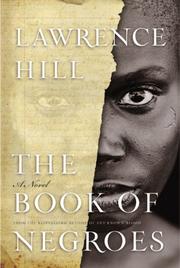
The Book of Negroes
2,442-word summary 11 min read 511 pages in the book
- First published
- 2007
- Publisher
- HarperCollins
- Pages
- 511
- ISBN
- 9780002255073
Reading options
What's inside (8 sections)
I came to The Book of Negroes knowing almost nothing about the document behind its title, and that ignorance turned out to be part of the experience. Lawrence Hill's 2007 novel, published in Canada by HarperCollins as a hardcover of about 511 pages with ISBN 9780002255073, takes its name from a real record compiled in 1783. British officers listed roughly three thousand Black Loyalists who had fled to their lines during the American Revolutionary War and were being evacuated as free people. Hill builds his story around one woman who has to get into that book before she can get out of the country. In the United States, Australia, and New Zealand the same novel appeared under the title Someone Knows My Name. The Canadian title is the original one, and it is the one I will use throughout. This is a work of historical fiction, not a memoir, though Hill writes in a voice so steady and first-person that it often reads like testimony.
A child taken from Bayo
Aminata Diallo is eleven when soldiers come for her. Her father is a jeweller and her mother a midwife in Bayo, a village in what is now Niger in West Africa. The attack is sudden and brutal, and the detail that stayed with me is that Aminata can read and write even at that age. She has been taught. That small fact matters more than anything else in the opening chapters, because the ability to make marks on paper will carry her through the next sixty years.
She is marched to the coast in a coffle, a line of captives chained together, alongside hundreds of strangers and a handful of people from her own village. The walk takes three months. Even before the ship, she makes a private vow that she will one day return. A boy about her age named Chekura has been forced to help the traders; he is not exactly a captor and not exactly a companion, and Hill is careful not to tidy him into either role. He becomes her unlikely friend. The crossing takes months more, includes a slave revolt, and is described without ornament or mercy. Aminata arrives in South Carolina with her name changed to Meena Dee.
What struck me on rereading the early pages is how little Hill explains. He does not stop to lecture about the Middle Passage or to add a footnote about the economics of the trade. He simply puts a child in the hold and lets her notice what a child would notice: the heat, the chained bodies, the language she cannot parse, the sheer physical indignity of it. This is a novel that trusts its reader to understand what is happening. It also refuses to make suffering the only thing about her. Aminata is observant, stubborn, and furious from the start. She is a person having an experience, not an example of one.
Meena Dee, and the cost of learning to read
On the plantation Aminata is taken under the wing of an older enslaved woman named Georgia, who helps her learn English. A fellow Muslim slave named Mamed notices her intelligence and teaches her to read and write in secret. This is the hinge of the whole book. Everything Aminata later does, from keeping records to arguing with abolitionists, grows out of those hours of forbidden instruction. Hill never lets the skill feel like a convenient gift. It is dangerous to know things in a place where knowing is against the law, and Mamed's teaching carries a risk both of them understand.
Aminata grows into a teenager and is reunited with Chekura. They meet in secret once a month, stealing time together in a world that grants them none. Appleby, the plantation owner, finds out. Hill writes what happens next plainly: Appleby rapes her. There is no lingering, no soft focus, no suggestion that this is a turning point in a romance. It is an assertion of ownership, and it arrive as a fact in a life full of them. The two are married anyway, in the only sense such a marriage could have, and they have a son named Mamadu.
Appleby then arranges to sell mother and child separately. Mamadu is taken from her, and Aminata is handed over to a Jewish man named Solomon Lindo, who moves her to Charles Town. She does not know where her son has gone. This is the wound that never closes. I want to be precise about the effect, because the book risks becoming a chain of separations and could easily flatten into a catalogue. It avoids that because Aminata keeps estimating her losses with the clear-eyed accounting of someone who has decided not to go mad. She remembers names. She keeps dates. Her literacy becomes a way of refusing to let people disappear.
She grows close to Lindo and his wife, who permit her to read and write openly, which is a real improvement in her circumstances and Hill does not deny it. Lindo also requires her to hand over a portion of the money she earns as a midwife. That arrangement is fair by the standards of the place and brutal by any other, and the ambiguity is deliberate. A smallpox outbreak kills Lindo's wife and son. Chekura returns and tells her that Lindo helped arrange the sale of Mamadu, who has been reported dead of smallpox. The relationship she had built with Lindo collapses. He takes her to New York to win her back, and during the rioting at the start of the American Revolutionary War, she escapes.
Entering the book
In the years that follow, Aminata works as a midwife and a teacher, helping other Black people learn to read. When the war ends, she proves that she served the British, and her name is entered in the Book of Negroes. This is the historical document Hill has been circling, and the scene of her registration is the quiet center of the novel. She is not merely listed. Because she can read and write and speaks two African languages, she is hired to help record the names of others. The woman who was stolen from Bayo becomes the person writing down who gets to leave. That reversal is the novel's boldest piece of structure, and it lands without any fanfare.
Her job brings her back into contact with Chekura, who also served the British. They have a few months together and plan to resettle in Nova Scotia. Aminata becomes pregnant with their second child, a girl she will name May. Then, as they are boarding the ship, they are separated. Aminata is arrested because Appleby has put out a warrant for her as a runaway slave. The matter is resolved when Lindo appears in court and explains the situation, which simultaneously sets her free. It is an odd, uncomfortable rescue, coming from the man who helped destroy her family, and Hill does not tidy it. She takes another ship to Nova Scotia alone.
This section of the book is where the writing feels most assured. Hill keeps the legal and bureaucratic machinery in view: warrants, testimony, registrations, the exact language of a document that decides who is a person and who is property. I have a weakness for novels that treat paperwork as life-and-death, and this one understands that a form can be a wall or a door. The tension in the registration scenes comes from Aminata knowing she has to perform worthiness for clerks who hold her future in their hands. She does it well because she has had years of practice reading the people who own her.
Birchtown, and the loss of May
Aminata arrives in Shelburne and makes her way to Birchtown, the Black settlement nearby, where she finds work and a community. Two people she meets matter particularly. Jason is a young man whose name she entered in the Book of Negroes, and Daddy Moses, the Preacher, becomes a figure of authority and unease in the settlement. She gives birth to her daughter May. For a stretch, the novel allows something like ordinary life: work, a child, neighbors, the daily labor of building a place.
It does not last. Relations between the Black community and the white settlers sour, as they did historically in the Shelburne riots of 1784. A white couple who employ her leave Nova Scotia and take May with them while Aminata is over in Birchtown. The child is simply gone. She searches for Chekura and learns that the ship carrying him to Nova Scotia was swept to Bermuda and sank. He is presumed dead. Within a few chapters she has lost her daughter and, as far as anyone can tell, her husband.
Hill's handling of these losses is restrained to the point of austerity. There are no scenes of collapsing grief. Aminata keeps working, keeps looking, keeps noting what happened and when. At first I found that emotional reserve frustrating. By the end I understood it as the point. A life lived under this much disorder cannot afford the luxury of stopping, and the people around her do not have the luxury of comforting her either. The novel asks you to register the magnitude of what has happened without being handed a cue for how to feel. That is a demanding choice, and I think it is the right one for this story.
A young British naval officer, Captain John Clarkson, arrives with an offer: land reserved for Black settlers in Sierra Leone. Aminata helps gather people from the community, and the whole settlement eventually leaves for what is promised as a better future. Before they go, she has one more encounter with the past. The ship that takes her toward Africa passes other ships carrying thousands of enslaved people bound for America. She is free, and the sea is still full of the trade that made her a slave. Hill places that image early in the Sierra Leone section so it shadows everything that follows.
Freetown and the long way home
In Sierra Leone the settlers try to establish Freetown under strict British control. Hill is unsentimental about what they find. The new town sits only a few miles from a slave trading center, and it is the very same one from which Aminata was sent to America years before. History has not been defeated by her escape. It has followed her around the Atlantic and set up house next door. Clarkson does what he can, but the settlement is not the haven it was promised. This is the most politically sharp part of the novel, and it is also where Hill connects Aminata's private life to the larger machinery of empire without ever turning her into a symbol.
Clarkson offers to take her to London, where a group of abolitionists needs someone who can speak from experience. Aminata refuses at first. She wants Bayo. She negotiates with a slave trader to take her into the interior, and it takes years before he agrees. The journey is punishing, especially because she is no longer young and is slowing the group down. Then she overhears the traders discussing how they will sell her back into slavery to be rid of her. She escapes to a nearby village and tells her story to the people there. In that moment she understands that getting home matters less than stopping what happened to her from happening to others. She takes Clarkson's offer.
I want to flag a fair criticism here. The middle of the novel moves slowly, and Aminata's long, repeated searches for her children and husband can feel repetitive in a book that is already more than five hundred pages. Hill is clearly interested in the texture of a life rather than the pace of a plot, and there are passages where that interest becomes a refusal to hurry that tested my patience. A few of the secondary figures, particularly some of the white abolitionists, are drawn more simply than the people around them. The book is strongest whenever Aminata is dealing with someone who has power over her and has to be read carefully. It is weaker when the issue is settled and the prose simply continues.
But the decision to return to London is earned, not announced. She has been given every reason to want only her own life back, and she chooses the larger fight with full knowledge of what she is giving up. Hill does not reward that choice with a tidy reunion. When she finally reaches England as an old woman, she publishes her life story, speaks at schools and churches, and meets the King and Queen. May is found again, and her daughter cares for her until her death. The reunion arrives very late, and the years of separation are not erased by it. That restraint is what makes the ending work.
Why the title still matters
Hill has written openly about the decision to call the book The Book of Negroes in Canada. He points out that the phrase comes from the 1783 document and that the word resonated differently in Canada than in the United States. When he toured American cities, he wrote, Black readers told him the title change to Someone Knows My Name was a good thing, because they would never have touched the book under its Canadian name. I read that note after finishing the novel, and it sharpened something I had already felt. The title is not an provocation for its own sake. It is a claim on a specific history, and the discomfort around it is part of what the book is examining.
The novel won the Rogers Writers' Trust Fiction Prize in 2007 and the Commonwealth Writers' Prize in 2008, and it was the winning selection for Canada Reads in 2009. A 2015 miniseries directed by Clement Virgo brought Aminata to a wider audience. None of that is why I would recommend it. I would recommend it because Hill can hold two things at once: the fact of a person's interior life and the fact of a system that treated her as cargo. He writes a woman who reads, counts, bargains, mothers, loses, and finally speaks for herself in a room built by people who once owned people like her. The prose is plain where it needs to be plain and devastating without raising its voice. If you want a novel that treats an eleven-year-old's vow to return home as the beginning of a life rather than a plot device, this is it.
FAQ
Why was this novel published as Someone Knows My Name in the United States?
The 2007 Canadian title refers to a real 1783 record of Black Loyalists leaving New York. Hill has said that American readers told him the word in the title would keep them from picking up the book, so the US, Australian, and New Zealand editions used Someone Knows My Name instead.
Is the Book of Negroes a real historical document?
Yes. British officers compiled it in 1783 to record roughly three thousand Black Loyalists who fled to their lines during the Revolutionary War and were evacuated as free people. Aminata's work copying names into it is fictional, but the record itself is real.
Does Aminata ever find her family again?
She is reunited with her daughter May late in life, and May cares for her until her death. Her husband Chekura is presumed dead after the ship carrying him to Nova Scotia sinks, and her son Mamadu is lost to a sale when he is still a baby.
Similar books
Homegoing
Half sisters Effia and Esi lines span Ghana to America across centuries.
2,552-word summary · 11 min read
The Antidote
In a Dust Bowl town where a woman stores her neighbors' unwanted memories inside her own body, a storm blows the bank away and leaves a tangle of debts and…
2,707-word summary · 12 min read

Good Dirt
A stoneware jar made by an enslaved potter links a prominent Black New England family across a hundred and fifty years of prosperity, grief and buried history.
2,069-word summary · 9 min read
Flashlight
Susan Choi's Booker-shortlisted novel opens with a father and daughter on a breakwater in 1978, then follows the loss outward through four generations and…
2,849-word summary · 13 min read

James
Percival Everett retells Huckleberry Finn from Jim's side, giving him a library, a hidden school, and a voice the novel lets loose.
2,211-word summary · 10 min read

Wide Sargasso Sea
Jean Rhys gives the first Mrs. Rochester a Caribbean childhood, a marriage built on money and suspicion, and a voice that Charlotte Bronte left in the attic.
2,021-word summary · 9 min read
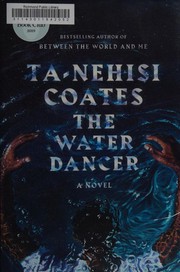
The Water Dancer
An enslaved man with a strange power for travel fights to free himself and rescue those he loves.
2,910-word summary · 13 min read
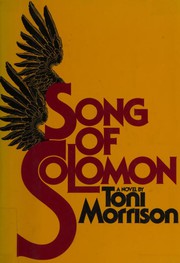
Song of Solomon
Milkman Dead leaves Michigan to hunt for family gold and finds instead the old song of his ancestor Solomon.
2,465-word summary · 11 min read
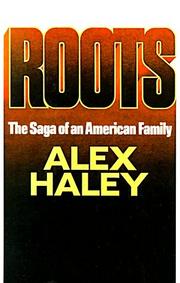
Roots: The Saga of an American Family
Kunta Kinte's Gambian capture begins seven generations to Haley himself across slavery and freedom.
2,082-word summary · 9 min read
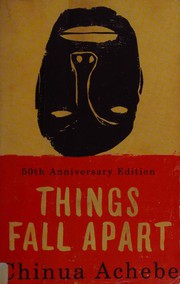
Things Fall Apart
Proud Igbo wrestler Okonkwo rises in 1890s Umuofia, then loses standing through hard exile, a son's conversion, and British missionaries and courts remaking…
2,518-word summary · 11 min read
Beloved
Sethe lives with the memory of killing her child to save her from slavery until a young woman named Beloved arrives.
2,586-word summary · 11 min read

Universality
Natasha Brown's short second novel turns a lockdown fracas over a gold bar into a sharp satire of money, identity and public argument.
2,302-word summary · 10 min read

The Wilderness
Four Black women move through twenty years of friendship in Angela Flournoy's discontinuous, widely praised second novel.
2,141-word summary · 10 min read

The Land in Winter
In the West Country during the Big Freeze of 1962, two young couples are shut in together, and the cold draws out every buried want.
2,265-word summary · 10 min read

Of Love and Other Demons
In colonial Cartagena, a twelve-year-old girl bitten by a rabid dog is locked in a convent, where the priest sent to exorcise her falls in love.
2,258-word summary · 10 min read

Yellow Crocus
In 1837 Virginia, an enslaved wet nurse is separated from her own son to raise a planter's daughter, and the two women build a love the law says cannot exist.
2,094-word summary · 9 min read
What Is the What: The Autobiography of Valentino Achak Deng
Dave Eggers retells the life of Valentino Achak Deng, a Lost Boy of Sudan, in the refugee's own voice, from a burned village to a robbery in Atlanta.
2,840-word summary · 13 min read
Theft
Gurnah traces three linked lives in Tanzania, where a servant's accusation of theft opens a family history of love, duty and quiet betrayal.
2,454-word summary · 11 min read
The Reluctant Fundamentalist
In a Lahore cafe, Changez tells a nervous American how Princeton and a New York career gave way to anger after September 11.
2,340-word summary · 10 min read
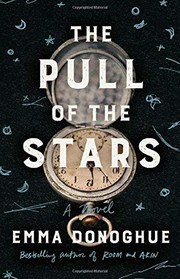
The Pull of the Stars
Over three days in a Dublin maternity ward in 1918, a nurse, a suffragette doctor on the run and a young volunteer face the flu, childbirth and unexpected love.
2,578-word summary · 11 min read
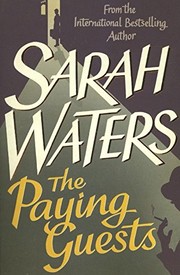
The Paying Guests
A widowed mother and her unmarried daughter take in lodgers in 1922 south London, and a secret affair between Frances and Lilian pulls them into a murder case.
2,661-word summary · 12 min read

The Luminaries
Eleanor Catton's Booker-winning novel drops a young prospector into an 1866 New Zealand gold town where twelve men untangle a web of hidden gold, murder and…
2,949-word summary · 13 min read

The Kitchen God's Wife
Amy Tan's second novel pairs a San Jose speech therapist with her Chinese mother, whose account of war, an abusive husband, and a narrow escape comes out in a…
2,896-word summary · 13 min read

The Bonfire of the Vanities
Tom Wolfe's first novel follows a Wall Street bond trader whose life unravels after a hit-and-run in the Bronx, in a satire of 1980s New York money, race and…
2,268-word summary · 10 min read
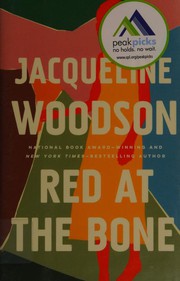
Red at the Bone
A girl's coming-of-age ceremony in a Brooklyn brownstone opens a family story shaped by Tulsa, teenage pregnancy, class and a second tragedy on September 11.
2,108-word summary · 9 min read
Possession: A Romance
A London Library discovery sends two scholars chasing a secret Victorian love affair, in a Booker-winning novel of invented letters, poetry and the race to own…
2,394-word summary · 11 min read

On Beauty
A Rembrandt scholar and his liberal family collide with a conservative rival's household in a Massachusetts college town, in Zadie Smith's comic, argumentative…
2,869-word summary · 13 min read

My Policeman
In 1999 a retired teacher writes a confession to the dying man her husband once loved, unpacking a 1950s Brighton love triangle that cost three people…
2,450-word summary · 11 min read
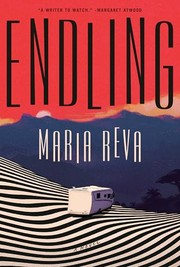
Endling
A Ukrainian scientist breeds endangered snails from her van and funds the work by posing as a mail-order bride, until a kidnapping plot meets the outbreak of…
3,041-word summary · 14 min read
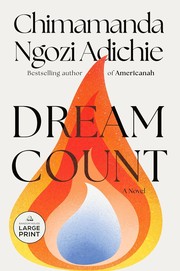
Dream Count
Four women narrate the 2020 lockdown in their own voices: a travel writer, a friend in early labor, a banker cousin and a housekeeper assaulted in a hotel room.
2,286-word summary · 10 min read