
Reading options
What's inside (8 sections)
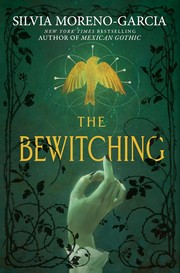
I picked this one up because Mexican Gothic had stayed in my head far longer than most books I read that year, and I wanted to know whether Silvia Moreno-Garcia could pull off a similar trick in a different century. The Bewitching was published by Del Rey on 15 July 2025, and it runs to 368 pages. It is built from three stories set decades apart, and at first I found the shape of it a little hard to hold. There is a teenager on a failing farm in 1908, a writer keeping journals in a 1934 college town, and a broke graduate student in 1998 Massachusetts. The same old story keeps turning up in each of their lives. Once I saw how the pieces fit, I was mostly glad I had stuck with it, although not every stretch moved at the same pace.
Alba, the farm, and the year 1908
The earliest strand takes place in Mexico in 1908, and it introduces Alba Quiroga. She is a headstrong teenager who has been left to keep her family's farm going after her father dies. The work is hard and the future on offer looks small, and she is resentful of the dull life her brother Tadeo seems content to lead. Tadeo is steady where she is restless, and the friction between them gives this part of the book its human weight. She wants out. She just does not know what out looks like.
That setting matters more than it first appears. A farm her father left behind is more than a backdrop. It is the thing Alba is fighting to keep and the thing Arturo wants to sell. Moreno-Garcia uses it to ground the 1908 chapters in work and obligation, so that when the strange elements arrive they land on a life that feels ordinary first. I think that is why the witch matters when she appears. She is intruding on a place that Alba is trying to hold together, which makes the threat personal rather than abstract.
Then their uncle Arturo arrives. He is glamorous and cosmopolitan, a figure from a wider world who seems to promise escape. For a while Alba reads him as her way out of the farm and into something larger. The trouble is that Arturo is less wealthy than he appears. His plan is to sell the farm, which puts him directly against Tadeo, and the family argument becomes the spine of the 1908 chapters. What looked like deliverance starts to look like another kind of trap.
This is also where the supernatural enters. Alba has encounters with a witch, and those encounters force her to face a curse that has been sitting on her family for longer than she understood. The farm, the inheritance and the curse all turn out to be connected. I liked this strand most on a plain level: a young woman stuck on a piece of land, suspicious of the uncle who wants to take it, and increasingly certain that something older than money is at work. Moreno-Garcia gives 1908 a lived-in texture, and Alba's stubbornness makes her easy to root for even when she is being reckless.
Alba is later revealed as the great-grandmother of the protagonist of the 1998 chapters, and that kinship is one of the hinges on which the whole novel turns, though the book is in no hurry to say so.
Beatrice and Virginia in 1934
The middle strand jumps to 1934, to a college town in New England, and it comes to us through the journals of Beatrice Tremblay. Beatrice is a marginal horror writer who moves in the orbit of the Lovecraft circle, a name that tells you a great deal about the literary atmosphere without the book having to spell it out. She is not a famous figure. She is a person on the edge of a literary scene, watching from close range, and her journals are the record of what she sees.
What she sees, chiefly, is her roommate Virginia. Virginia is beautiful and otherworldly, and Beatrice becomes obsessed with her. The detail that matters most is that Virginia is a spiritualist painter who produces what are called spirit pictures. She makes images that supposedly come from the other side, and that gift or trick or fraud sits right at the centre of this strand. Virginia then vanishes without a trace. The disappearance is the event that Beatrice cannot stop circling, and it is the seed of her famous novel, The Vanishing, which is the book that the 1998 protagonist will later write about.
What makes Beatrice's journals compelling is that she is both observer and participant. She records Virginia because she is fascinated by her, and the more she records, the harder it is to tell whether she is documenting a mystery or feeding it. The spirit pictures are a clever device for this. A painting that claims to show a visitor from beyond is exactly the kind of object that can be read as proof by one person and as performance by another. Beatrice's account sits in that uncertainty, and so does the book. Her fame, such as it is, comes from turning the disappearance into fiction, which raises the old question of what a writer owes to the truth of a life.
This section was the most atmospheric of the three for me. There is something quietly unnerving about a writer recording her own obsession in private pages, especially when the object of that obsession is a woman who paints pictures of spirits and then disappears. The 1934 setting lets Moreno-Garcia play with the language of spiritualism and the masculine clubbery of the Lovecraft circle at the same time. Beatrice's position as a marginal figure, a woman near the edge of that world, gives her journals a bitter and observant edge. Her voice is the best thing in the book for my money.
Minerva in 1998
The third strand is set in Massachusetts in 1998, and it follows Minerva Contreras. Minerva is a graduate student who also works as a resident manager, and she is short of money. That combination gives her a reason to be somewhere she might not otherwise choose to be and a reason to care about the people around her. She is writing a dissertation on Beatrice Tremblay and on The Vanishing, the novel that grew out of Virginia's disappearance. Tremblay's papers are held in the mansion of an aging heiress named Carolyn Yates, and much of Minerva's work happens in and around that house.
I liked the small practical details of Minerva's situation. She is a resident manager because she needs the money, and that job means she is the person other students come to when something goes wrong. So when a student goes missing, the disappearance lands on her desk before it lands anywhere else. It gives her a reason to care that is not purely academic, and it keeps the 1998 chapters from floating free of ordinary life. Carolyn Yates's mansion, with its stored papers, is the bridge between the scholar's world and the haunted one, a place where the past is literally kept under one roof.
Then a student under Minerva's care disappears. That is the moment the old story starts repeating itself in the present. The vanishing that Beatrice recorded in 1934 steps out of the dissertation and into Minerva's own life, happening again to someone she knows. Her academic interest turns into something more immediate and more frightening. She is no longer studying a pattern. She is inside one.
The 1998 strand is the one that carries the reader's present-day stakes, and Minerva is a solid anchor. Being a resident manager short of money gives her practical worries that sit alongside the supernatural ones, and Moreno-Garcia is good at keeping both in view. This strand takes a while to get going. The dissertation setup is patient and detailed, and if you are waiting for the fear to arrive, the early chapters ask you to sit through a fair amount of academic groundwork first.
The teyolloquani and the joining of the strands
What ties the three eras together is the teyolloquani, a heart-eating creature from Indigenous folklore that bewitches its victims. That is the engine of the novel. Each timeline is, in its own way, an account of bewitchment. Alba faces the witch and the family curse, Beatrice is caught under Virginia's spell, and Minerva watches the pattern repeat among people she is responsible for. The creature is not a detail tucked into one chapter. It is the reason the three stories belong in the same book.
The book is careful about letting each era keep its own flavour before the joining happens. The 1908 chapters are a farm story that curdles, the 1934 chapters are a literary and spiritualist mystery, and the 1998 chapters read like a campus novel with an edge. Only gradually do you sense that all three are describing the same appetite. That slow recognition is the pleasure of the structure when it works. You start to notice repeated shapes in each era: a vulnerable young woman drawn to a charismatic figure, and a disappearance that everyone finds a reason to explain away. That is when you realise the decades are not so much separate as successive.
The convergence is where the novel either pays off or falls flat, depending on your patience. Library Journal praised the way the timelines merge into what it called "a single thread of palpable terror." That phrase gets at the intended effect. The book wants the separate strands to tighten into one rope, so that the 1908 curse, the 1934 vanishing and the 1998 disappearance are all recognisable as the same hunger showing itself in different years. When the connection lands, it gives the earlier chapters a new significance and makes you want to reread parts of them.
There is real ambition in using an Indigenous folkloric creature as the source of the threat, and the book treats the teyolloquani as something older and more specific than a generic witch. That specificity is one of its strengths. The bewitchment is not a fog that covers everything. It has a definite shape and a long history, and the three heroines are all, in different senses, people who let something in.
Where the structure asks for patience
I should be honest about the parts that did not work for me, because the structure is a demanding one. Three timelines, three heroines and a slow convergence mean that the book holds you at a distance for a long stretch. For a good portion of the reading, you are collecting pieces without being told how they fit. That can be rewarding, and in this case it mostly was, but it also means the opening chapters of each strand can feel like they are withholding something.
The Minnesota Star Tribune's Maren Longbella was blunter about this. She found the structure "too tricky," thought the pace was slow until a convergence that arrived overdue, and argued that the book, for all its gore, "isn't scary" and "not that bewitching." I understand the complaint even though I did not fully share it. There is a gap between the book's gothic trappings and the amount of actual dread it delivers, and the elaborate architecture can feel like it is admired more for its cleverness than for its effect. If you want a novel that begins by frightening you and keeps doing so, this one makes you wait.
I also think the title promises a little more than the book delivers on that front. Bewitchment here is mostly atmospheric, a matter of dread and pull rather than the contained, intoxicating spell the word suggests. When the teyolloquani is finally at the centre of things, the revelation feels more like the solution to a puzzle than a descent into genuine terror. Readers who prefer their horror explicit and physical may find the restraint frustrating, especially given that the book is willing to be gory when it wants to be.
There is also the fact that the three voices, while distinct, do not all sing. The 1934 journals felt richest to me, and the 1998 chapters felt the most functional. The 1908 strand sits somewhere in between. A book built on three interlocking points of view lives or dies on how much you care about each one, and I skipped ahead a little in the sections that felt flatter. That is a personal reaction, and another reader might rank them differently, but it is why the novel's unevenness is worth naming.
Who should read it
I would hand this to a reader who likes their horror slow and atmospheric, with an ambitious structure, and who is willing to let three separate stories gather into one before the payoff arrives. If you enjoyed the way Moreno-Garcia built dread in her earlier work, you will find plenty of the same patience here, and the teyolloquani gives the book a sharper folkloric edge than a standard witch story. The 1934 strand alone is worth the time for anyone who likes the idea of a horror writer documenting her own obsession in private journals.
I would be more careful with a reader who wants scares on the page quickly. The gore is there, but the fear arrives late, and the three-timeline design asks you to trust the book before it has given you much in return. On balance I think the design earns that trust, because the pieces do come together and the last stretch makes the earlier waiting feel purposeful. It is a handsome, slightly overcomplicated novel with one excellent strand and two that mostly hold their own. That may not be the wholehearted recommendation I hoped to give when I started it, but it is an honest one, and I finished glad to have read it.
FAQ
Is The Bewitching part of a series?
No. It is a standalone novel, and it is not connected to Moreno-Garcia's Mexican Gothic beyond a shared interest in gothic dread and Mexican settings.
What is the teyolloquani?
It is a heart-eating creature from Indigenous folklore that bewitches its victims, and it is the thread that ties the three timelines together.
Is The Bewitching actually scary?
The book is gory, but reception was mixed: the Star Tribune's Maren Longbella said it was not scary and not that bewitching, while Library Journal praised its growing sense of terror.
Similar books
The Staircase in the Woods
Twenty-five years after a friend vanished at the top of a staircase in the woods, four estranged adults are summoned back to climb another one.
2,023-word summary · 9 min read
Mexican Gothic
In 1950 Mexico, glamorous Noemi Taboada leaves Mexico City for High Place after a desperate letter, to rescue cousin Catalina from the chilling Doyles and…
2,523-word summary · 11 min read
Witchcraft for Wayward Girls
In 1970 Florida, a girl sent to a maternity home for unwed mothers finds a spellbook, and the real horror turns out to be what the adults do to her and her…
2,077-word summary · 9 min read
Marina
A fifteen-year-old boarder in 1979 Barcelona follows a singing voice into a ruined mansion and finds a girl, a watch, and a mystery the city has kept buried…
2,352-word summary · 10 min read
Ghost Story
Four elderly friends who trade ghost stories every week find their tales coming true after a fifth member dies in this 1979 horror novel.
2,461-word summary · 11 min read
Bat Eater and Other Names for Cora Zeng
A Chinese American crime scene cleaner in pandemic-era New York is haunted by her sister's racist killing and a string of deaths among East Asian women.
2,014-word summary · 9 min read
Wolf Worm
An illustrator hired to draw parasites in 1899 North Carolina finds her employer's locked shed holds something far worse than insects.
2,404-word summary · 11 min read
The Unknown
A struggling actress joins an isolated film shoot about five women who vanished on a Vermont island in 1926, and the staged haunting turns deeply personal.
2,424-word summary · 11 min read
What Moves the Dead
Alex Easton arrives at the Usher house to find Madeline dying, the tarn full of fungus, and the local hares refusing to stay dead.
2,586-word summary · 11 min read
The Tale of the Body Thief
Lestat trades bodies with a psychic thief for one day of mortality and ends up trapped, sick, and hunting his own vampire body.
2,069-word summary · 9 min read
Night Film
A disgraced journalist investigates the death of a reclusive horror director's daughter, following a red coat through hospitals, secret clubs, and a family…
2,690-word summary · 12 min read
Locke & Key, Vol. 1: Welcome to Lovecraft
After their father is murdered, the Locke children move into a haunted family estate where keys unlock doors to ghosts, other places, and dangerous secrets.
2,019-word summary · 9 min read
The Witching Hour
A San Francisco surgeon inherits a haunted New Orleans house where a spirit has courted her witches for centuries, until a Christmas Eve birth gives it living…
2,953-word summary · 13 min read
Later
Boy Jamie Conklin sees dead people who must answer truthfully, pulling him into NYPD cases and a drug crew's greed.
2,009-word summary · 9 min read
We Have Always Lived in the Castle
Merricat guards sister Constance after arsenic deaths, until cousin Charles invades and fire frees them.
3,011-word summary · 13 min read
The Historian
A daughter traces her father's search for Dracula through letters and archives across Europe.
3,237-word summary · 14 min read
The Outsider
Coach Terry Maitland's DNA and witnesses point to an impossible murder, until Ralph Anderson and Holly Gibney trace it to El Cuco.
2,586-word summary · 11 min read
Hidden Pictures
Nanny Mallory sees Teddy drawings predict a murder in New Jersey.
2,332-word summary · 10 min read
The Strange Case of Dr. Jekyll and Mr. Hyde
A London lawyer traces a violent stranger to his respectable friend in Stevenson's 1886 tale of two selves.
2,286-word summary · 10 min read
Miss Peregrine's Home for Peculiar Children
Jacob Portman finds his grandfather dead in the woods, follows a cryptic letter to a ruined orphanage in Wales, and meets children living inside a repeating…
2,331-word summary · 10 min read
The Hangman's Daughter
In 1659 Bavaria, a hangman ordered to torture an innocent midwife instead investigates the deaths of children marked with a strange tattoo.
2,523-word summary · 11 min read
John Dies at the End
Two slacker friends, a drug called soy sauce, and a portal to something that wants every universe.
2,382-word summary · 11 min read

Forever Odd
Six months after Stormy's death, Odd Thomas tracks a kidnapped friend to a decaying hotel and faces a cultist who wants his gift.
2,308-word summary · 10 min read
We Live Here Now
After a near-fatal fall, a woman moves with her husband to a remote Dartmoor house where strange events happen only when she is alone, and a raven watches from…
2,016-word summary · 9 min read
Wake Up and Open Your Eyes
A Brooklyn father drives to Richmond to find his parents lost in a cable news trance, in Chapman's splatterpunk horror about possession spread through…
2,381-word summary · 11 min read
Wake
Seventeen-year-old Janie Hannagan is pulled into other people's dreams whenever they sleep near her. A nursing-home job, a secretive boy and a drug bust give…
2,488-word summary · 11 min read
Through the Woods
Five horror comics in which sisters vanish into the snow, a bride finds a secret in the walls, and a walk through the woods turns fatal.
2,513-word summary · 11 min read
The Winter People
A century-old ritual for calling back the dead connects a Vermont farmhouse, a girl who came back from the well and a modern investigation into a…
2,037-word summary · 9 min read
The Lunatic Cafe
Anita Blake takes a missing-shapeshifter case into St. Louis werewolf politics while Jean-Claude and Richard both press their claim on her.
2,327-word summary · 10 min read
The Distant Hours
A letter posted in 1941 reaches Edith Burchill in 1992 and draws her to Milderhurst Castle, where three elderly sisters still guard the secret of a stormy…
2,261-word summary · 10 min read