
Reading options
What's inside (8 sections)
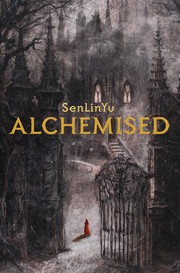
I opened this one with a fair amount of suspicion. A book that runs to 1,040 pages, published by Del Rey in 2025, and carrying a reputation that started life online is a book that has to earn its length, and I was not convinced it would. It earns some of it. It also loses me in places, and I closed the final chapter both impressed by the amount of world on offer and impatient with the way the story keeps circling its own suffering. This is a dark fantasy that began as fanfiction, and you can feel both the strengths and the limits of that origin on almost every page. The press coverage around its release made the connection plain, talking about SenLinYu's Harry Potter fanfiction and the seven-figure film deal that followed. Knowing that going in helps explain the shape of the thing, because this reads like a story written by someone who understands exactly what a devoted audience wants from a slow burn between two people who cannot stand each other.
That is both a compliment and a warning. If the idea of a healer prisoner and her cold, ambitious captor spending hundreds of pages circling each other appeals to you, the book delivers that in generous measure. If it does not, no amount of alchemy or political intrigue is going to save your interest. I found myself somewhere in the middle, drawn in by the details of the world and worn down by the repetition of the central abuse.
Waking up with no past and a room full of enemies
The story drops you in at a point of maximum disorientation. Helena Marino wakes up after fourteen months of stasis with her memory magically wiped. She was once a promising alchemist and a healer for the Resistance, but the civil war in Paladia is over, and the people who won are the guilds and the necromancers. She is now their prisoner. The book does not bother with a gentle orientation scene. She is interrogated and tortured, fitted with manacles that nullify her Resonance, and then taken to the crumbling estate of the High Reeve, Kaine Ferron.
Ferron is her former academic rival, which means the man now holding her was someone who once competed with her on equal terms. That history matters enormously. He does not want a nameless captive. He wants Helena specifically, because she knew things, and because he believes the contents of her head are worth extracting. The estate itself is a piece of atmosphere work. It is crumbling, which suits a regime that won a war but cannot quite keep its own buildings standing, and it gives the early chapters a closed, decaying feel. There is no place to run and no one to trust. The physical setting and her mental state reinforce each other.
I appreciated how quickly the book establishes the rules of her confinement. The manacles are not decoration. They are a practical mechanism that explains why a trained alchemist cannot simply work her way out, and they turn her power into a kind of absence she has to live with. The wiped memory does similar work. Helena is a person with a skill set and a past, both of which have been taken from her, and the story is about what happens when those things start to come back in fragments. It is a strong setup for a mystery, and it is also a setup for a great deal of pain, which the book is entirely willing to deliver.
Ferron and the terrible intimacy of Transference
The relationship at the centre of the book is not a romance in any ordinary sense, at least not at first. Ferron repeatedly performs something called Transference, entering Helena's mind in an effort to recover what she knows. Each session leaves her with brain inflammation and seizures. She tries to kill herself, and she is stopped each time. This is the engine of the early plot, and it is deliberately uncomfortable. The man who was once her rival now has a procedure that lets him go inside her head, and the physical cost lands entirely on her.
What makes it more complicated is that Ferron is not a cartoon torturer. He is an ambitious man in a new regime, and his interest in Helena is intellectual as much as it is cruel. He wants the information, and he also wants to understand her. The book keeps that ambiguity alive. There are moments when his attention reads as calculation and moments when it reads as something he cannot fully explain to himself. That uncertainty is the point of the slow burn, and SenLinYu clearly enjoys making the reader sit with it.
I have mixed feelings about how this is handled. On one hand, the Transference scenes give the book its most distinctive texture. They let the story treat memory as a physical place that can be invaded, damaged, and partly sealed off, which is exactly the kind of idea this world is built to support. On the other hand, the cycle of intrusion, damage, recovery, and another intrusion starts to feel repetitive well before the book is halfway through. A scene that is harrowing the first time becomes wearying the fifth. The author is betting that you are invested in the two leads enough to keep caring about the next round, and for a long stretch I was not sure I was.
Still, the dynamic works as a study of power. Helena has almost no agency in these chapters. She is restrained, medicated against her will, and subjected to a procedure that leaves seizures behind. The only acts that are truly hers are the attempts to end her own life, and even those are blocked. That is a grim place to put a character, and the book never pretends otherwise.
Morrough's conclusion and a scheme hatched without her
The political layer kicks into gear when the High Necromancer Morrough reaches a conclusion about Helena's condition. He decides that she erased her own memories. This is a crucial turn, because it reframes everything that has happened to her. She is not merely a damaged prisoner whose mind was broken by torture. In the ruling powers' eyes, she took the knowledge from herself, which makes her both more valuable and more dangerous. It also raises the question the book spends much of its length chasing: what exactly did she know, and why would she hide it somewhere even she cannot reach?
Then the story takes a turn that is hard to read as anything other than a regime doing the unthinkable with a straight face. Without Helena's knowledge, Morrough's scientist, Doctor Stroud, reverses her sterilization. He enrolls her in something called the Repopulation Programme, and he orders that she and Ferron conceive within two months. The sheer bureaucratic calm of it is what lands. This is not a villain shouting in a dungeon. It is a scientist following an order and a programme with a name, applied to a woman who has no say in what is done to her body.
I found this stretch the most effective part of the book. The horror comes from the coldness rather than the spectacle. Helena has had her memory taken, her power nullified, her body violated by a procedure, and now her reproductive future reassigned by a man she barely knows, all while the people making these decisions discuss her as a problem to be solved. The two-month deadline gives the plot a ticking clock, and it forces a proximity between Helena and Ferron that the story is more than happy to exploit. It is a harsh mechanism, but it is an honest one for the kind of book this is.
What I kept noticing, though, is how little Helena gets to be a person outside of what is done to her in these early chapters. The book is very good at cataloguing violations. It is slower to give her a voice of her own, and that imbalance is one of the reasons the melodrama eventually starts to feel excessive rather than intense.
Four years back into a life she lost
Somewhere in the middle, the book pulls back four years and shows the life Helena has lost. This is the section that gives the title its meaning. We see her Resistance work, her rivalry with Ferron, and the brutal conclusion of the war. The alchemist who healed people and the prisoner in manacles turn out to be the same woman separated by catastrophe, and the flashback lets the reader understand the scale of what was taken. It also lets the rivalry with Ferron breathe. He was not always her jailer. He was once a peer, and watching that earlier version of their relationship is where the fanfiction inheritance shows most clearly, because the book understands that the pull between them comes from a history of mutual regard as much as from fear.
The war's conclusion is presented as brutal, and the book does not flinch from that. Paladia's civil conflict is not a backdrop of banners and speeches. It ends in a way that leaves people like Helena trapped under the winners, and the flashback gives weight to the present-day horror by showing what was sacrificed. The imagery in these chapters is where the book's reputation for worldbuilding makes the most sense. SenLinYu can conjure a room, a wound, or a spell with real specificity, and the resistance work in particular has a tactile quality that the present-day confinement scenes sometimes lack.
The cost is structural. Dropping a large block of backstory into the middle of a book this long slows everything down, and the reader has to carry two timelines at once. For me the flashback was the part I most wanted to keep reading, which is an awkward thing to say about a section that stopped the forward plot in its tracks. It is also fair to say that the book asks a lot of patience here. The alchemy and the politics are interesting, but they arrive in a stretch where the present story has stopped moving, and that is a demanding trade to make in a 1,040-page novel.
A resistance stirring and a warden killed
Back in the present, the situation begins to shift. Helena learns that the Resistance is re-emerging, and the trigger is the assassination of her warden, Mandl. That event cracks the regime's hold in a small but meaningful way. The woman who was supposed to be kept isolated and forgotten suddenly finds that people outside the estate are still fighting, and that her own fate is tied to their efforts. It is the first real opening in the plot, and it arrives after a long stretch of confinement.
From there, Helena works with Ferron to recover the truth about her own importance. This is the central mystery the book has been pointing toward from the first page. Why was she kept alive? What did she know that was worth fourteen months of stasis and a programme designed to put her in Ferron's bed? The answer has to do with her value to both sides of the conflict, and the slow uncovering of it is what gives the final chapters their momentum. The uneasy alliance between the two leads also changes the temperature of their relationship. They are no longer just captor and captive once they are working toward the same discovery, though the book is careful to keep the old imbalance in view.
I wanted more of the political machinery in these later chapters. The Resistance re-emerging after Mandl's death is a promising thread, and the book treats it mostly as a signal that Helena's situation is changing rather than as a story in its own right. The people outside the estate remain sketchy, and that weakness follows the book to the end. When the plot needs a wider world, it mostly gives us the two leads and the walls closing around them.
The question of Helena's importance is handled with more care. The mystery works because her missing memory is genuinely a hole in the story, and the fragments that come back feel earned rather than convenient. The book keeps the reader guessing about what she was willing to do during the war and what she chose to bury, and it holds that question open long enough to build real tension. That is the alchemist's craft at its best, turning absence into a source of suspense.
What the book does well and where it drags
The praise this book received makes sense when you look at the worldbuilding and the imagery. SenLinYu has built a place with its own institutions and magical rules, all shaped by ugly compromises, and the best passages make that world feel lived in rather than designed. The manacles, the Transference, the stasis, the Repopulation Programme, and the necromancers all fit together into a coherent system of control. When the book is describing how that system works, it is at its most convincing. There is a real imagination here, and it is not afraid to be grim.
The criticisms are just as fair. Reviewers called the melodrama excessive at times, and I found plenty of stretches where the suffering stacking up on Helena starts to feel like a device rather than a consequence. The long romantic scenes become repetitive, especially once the captor and captive dynamic shifts into uneasy cooperation, because the book keeps replaying the same tension instead of letting it develop. The secondary characters are thinly sketched. Morrough, Stroud, and Mandl each have a function in the plot, and none of them gets much life beyond it. Even Ferron, who is on nearly every page, can feel more like a collection of desirable and dangerous traits than a person.
Several reviewers also felt that the book leans on its famous fan-fiction origins, and I understand the complaint. You can sense the original story's architecture under the new names and the new magical system, and some of the emotional beats land because the audience already knows the pattern rather than because the book has earned them on its own terms. That is a hard thing to fully escape when a novel begins as a reworking of a much-loved fanfiction. For readers who never met Manacled, the story has to stand on its own, and at 1,040 pages it does not always manage that with much grace.
Who is this for? I would hand it to a reader who loves dense, atmospheric dark fantasy and who has patience for a slow burn that takes its time getting anywhere. The world is worth spending time in, and the central relationship has a genuine charge when the book lets it breathe. I would be cautious with a reader who wants tight pacing or a large cast of fully realized characters. The book is long because it is willing to repeat itself, and the repetition is part of the design rather than an accident. What stays with me is not a tidy ending or a lesson but a set of images: a woman in a crumbling estate with manacles on her wrists, a mind that has been sealed against its owner, and two people trying to work out what one of them knew before the war took it away. That is enough to make the book worth the effort, even when the effort feels like more than the story strictly deserves.
FAQ
What is Alchemised about?
It follows Helena Marino, a memory-wiped alchemist and former Resistance healer held by the regime that won Paladia's civil war, as she and her captor Ferron work to recover what she knows.
Did Alchemised start as fanfiction?
Yes, it is a reworking of SenLinYu's Harry Potter fanfiction Manacled. Press coverage around the 2025 release also noted a seven-figure film deal.
What did critics say about the book?
Reviewers praised the worldbuilding and imagery, but many found the melodrama excessive, the long romantic scenes repetitive, and the secondary characters thinly sketched.
Similar books
The Salt King
Sent back to the salt-mining town he fled, a Jesuit priest investigates miracles that turn pilgrims into pillars of salt. Pulley adds a slow-burning queer…
2,214-word summary · 10 min read
Innamorata
A mute necromancer heiress engineers a royal marriage to reach a forbidden library, then falls for the prince she plans to use.
2,464-word summary · 11 min read
The Tale of the Body Thief
Lestat trades bodies with a psychic thief for one day of mortality and ends up trapped, sick, and hunting his own vampire body.
2,069-word summary · 9 min read
The Witching Hour
A San Francisco surgeon inherits a haunted New Orleans house where a spirit has courted her witches for centuries, until a Christmas Eve birth gives it living…
2,953-word summary · 13 min read
Gallant
Mute Olivia Prior returns to Gallant manor where ghouls walk and a shadow Recommends.
2,081-word summary · 9 min read
Miss Peregrine's Home for Peculiar Children
Jacob Portman finds his grandfather dead in the woods, follows a cryptic letter to a ruined orphanage in Wales, and meets children living inside a repeating…
2,331-word summary · 10 min read
The True True Story of Raja the Gullible (and His Mother)
A gay philosophy teacher in Beirut revisits six decades of Lebanese history, family trauma, and his thorny bond with his mother.
2,274-word summary · 10 min read
The Sandman, Vol. 4: Season of Mists
Dream travels to Hell and is handed the key to its gates, then every god and demon arrives to argue who should rule.
2,351-word summary · 10 min read
The Midnight Train
An eighty-one-year-old bookshop magnate dies and wakes young again aboard a train that carries him back through the moments that mattered most.
2,299-word summary · 10 min read
Steel Princess
After a near drowning, Elsa Quinn starts recovering the memories that explain her fear of water and the boy who promised to destroy her.
2,204-word summary · 10 min read

She Who Became the Sun
A peasant girl takes her dead brother's name and becomes Zhu Chongba, climbing from a Buddhist monastery toward a fractured China's throne.
2,170-word summary · 10 min read

Whistler
Ann Patchett's eleventh novel follows a New York teacher who reconnects with a former stepfather at the Met and hears the strange story of a chestnut mare.
2,697-word summary · 12 min read
Through the Woods
Five horror comics in which sisters vanish into the snow, a bride finds a secret in the walls, and a walk through the woods turns fatal.
2,513-word summary · 11 min read
The Staircase in the Woods
Twenty-five years after a friend vanished at the top of a staircase in the woods, four estranged adults are summoned back to climb another one.
2,023-word summary · 9 min read

The Sacrifice
On her wedding day Laikyn Minson is handed to Tyson Crawford, a Lord who wants her family's ruin, in a dark revenge romance set inside a brutal secret society.
2,603-word summary · 12 min read
The Lunatic Cafe
Anita Blake takes a missing-shapeshifter case into St. Louis werewolf politics while Jean-Claude and Richard both press their claim on her.
2,327-word summary · 10 min read
The Knight and the Moth
Six of seven Diviners vanish, and the last one flees a cathedral with a mocking knight and a gargoyle who calls everyone Bartholomew. Gillig's gothic fantasy…
2,936-word summary · 13 min read
The Cask of Amontillado
A drunken nobleman follows a friend into his family catacombs to taste a cask of amontillado. Poe's 1846 tale turns a wine joke into one of literature's most…
2,916-word summary · 13 min read

The Buffalo Hunter Hunter
A 1912 diary found in a Montana parsonage recounts a Blackfeet man's unraveling after a dying creature's blood turns him undead, in a novel of history and…
2,731-word summary · 12 min read
The Bewitching
A gothic horror novel that moves between 1908 Mexico and 1998 Massachusetts as an old family curse and a folkloric bewitchment repeat across three timelines.
2,332-word summary · 10 min read
Nightmares and Dreamscapes
King's 1993 collection runs from a man buried alive in a Cadillac to a town of dead rock stars, mixing horror, science fiction and dark humor across 816 pages.
3,232-word summary · 14 min read
Memnoch the Devil
In the fifth Vampire Chronicles novel, Lestat is taken by the Devil on a tour of Heaven and Hell and asked to serve as God's adversary.
2,619-word summary · 12 min read
Ghost Story
Four elderly friends who trade ghost stories every week find their tales coming true after a fifth member dies in this 1979 horror novel.
2,461-word summary · 11 min read
Evernight
A girl raised among vampires falls for a human boy at a Gothic boarding school, unaware that he hunts her kind.
2,200-word summary · 10 min read
Daggermouth
A trained killer is sent to execute the Executioner, then bound to him in a forced marriage that could ignite a revolution. H. M. Wolfe's dark dystopian…
2,798-word summary · 12 min read
Bury Our Bones in the Midnight Soil
Across five centuries, three women are turned into vampires by the same restless figure, and each must decide what her endless hunger will cost.
2,727-word summary · 12 min read
Wolf Worm
An illustrator hired to draw parasites in 1899 North Carolina finds her employer's locked shed holds something far worse than insects.
2,404-word summary · 11 min read
The Wind Through the Keyhole
Sheltering from a killing storm, Roland tells his ka-tet a tale of his youth, then a boy's fairy tale that mirrors his own loss.
2,504-word summary · 11 min read
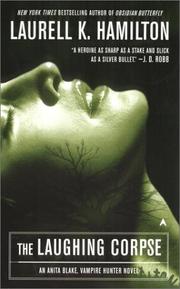
The Laughing Corpse
A millionaire offers Anita Blake a fortune to raise a three-hundred-year-old corpse, then names the human sacrifice it would take. A zombie murder follows.
2,290-word summary · 10 min read
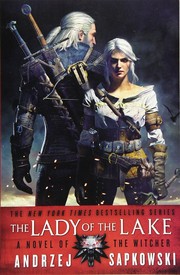
The Lady of the Lake
Ciri is trapped by the Aen Elle while Geralt winters in Toussaint, and the Witcher saga closes with the siege of Stygga and a fog-bound farewell.
2,445-word summary · 11 min read