
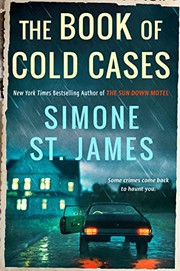
Reading options
What's inside (8 sections)
I came to The Book of Cold Cases because I wanted a ghost story that still played fair as a mystery. A friend who knows my weakness for true crime podcasts left it with a note that said murders and hauntings in equal measure. She was right. The book was published March 15, 2022 by Berkley, 352 pages, ISBN 9780440000211. Simone St. James sets it in Claire Lake, Oregon, a damp small city where everybody remembers the summer of 1977 and nobody agrees on what happened. I read most of it late at night with the kitchen light on, which felt appropriate.
The premise is simple and sticky. Shea Collins runs a true crime blog called the Book of Cold Cases. She is not a cop or a reporter. She is a receptionist by day in a medical office, living with a lingering fog from a violent encounter in her own past, and writing about old murders at night because the writing gives the fear a place to sit. When she gets a chance to interview Beth Greer, the woman acquitted of two brutal murders in Claire Lake in the late seventies, Shea cannot turn it down. Beth said no to everyone for forty years. For reasons Shea does not understand at first, Beth says yes to her.
Shea Collins and the blog that keeps her up
Shea is the kind of narrator I trust and worry about in equal parts. She tells us early that she was attacked once by a stranger, an episode that left her with blackouts and a dread of being caught alone. She has built a careful life since. Same job. Same small house. Same routines. The blog is where the careful life loosens. She writes long posts about unsolved cases, reads comments too late, follows threads she should leave alone.
St. James gives the blog texture without turning chapters into screen captures. We see Shea choosing cases, arguing politely with commenters, saving newspaper clippings in folders, driving past addresses just to see the shape of a house. Her interest in Beth Greer is professional and personal at once. The Greer case is the local legend. In 1977 a young woman and a young man were found dead in separate incidents around Claire Lake, killed in ways that suggested the same hand. Beth Greer, then a wealthy young woman living in a big house on the edge of town with her mother, was charged and tried and acquitted. The town never really acquitted her. Kids still dare each other to walk past the Greer house.
Shea pitches the interview through a letter, expecting silence. Beth answers with an invitation to come to the house. That first yes is the hook of the whole book. Why this blogger. Why now. Shea tells herself it is luck and timing. Readers will suspect, correctly, that Beth has her own reasons and that Shea was chosen, not picked at random.
I liked Shea from these early pages because she admits limits. She says when she is scared. She says when she does not know police procedure. She keeps her day job through the middle of the book, answering phones and filing charts between trips to the Greer house, which keeps the story grounded. This is not a heroine with a gun and a badge. This is a woman with a laptop, a cheap recorder, and a habit of staying too long.
Beth Greer and the house everyone watches
Beth is written to hold the center without giving it away. She is in her sixties when Shea meets her, still living in the same large house where she lived in the seventies, still rich enough to keep the world at a distance, still watched by the town. She answers the door herself. She makes tea. She sets rules. No recording at first. No questions about certain nights. Come at set times. Leave by dark, at least in the beginning.
The house is almost a second character. Big rooms gone quiet. A kitchen that looks used and a living room that does not. Windows that look over trees and a road that curves away. St. James does not overdo creaks and shadows. She lets the size do the work. A house built for a family now holds one woman and her routines, and every footstep carries.
Beth talks about her youth in fragments. A mother who was cold and exacting. Money that protected and isolated. Friendships that bent under gossip. Nights driving around Claire Lake with the radio up. She describes the trial in flat sentences, as if reading someone else's mail. The arrest. The lawyers. The faces in the courtroom. The verdict that freed her without clearing her. She insists she did not kill those victims. She says it without heat, which makes Shea, and me, swing between belief and doubt for half the book.
What makes the interviews work is the exchange. Beth does not just answer. She asks about Shea. About the attack Shea survived. About the blackouts. About why Shea writes about dead strangers. Shea came for material and finds herself being read in return. One early scene has Beth noticing Shea's hands shaking and calling a pause, not unkindly, to make fresh tea. It is a small kindness that feels loaded. Is Beth grooming a witness or actually seeing her. The book keeps both options open for a long time.
The interviews and the shape of the seventies case
As the visits continue, the seventies case fills in. Two victims, killed weeks apart, both connected loosely to the orbit Beth moved in. A young woman found in a lonely spot. A young man found not long after. Rumors about affairs, jealousy, hitchhiking, drugs, the usual fog that rises around real cases. The police at the time fixed on Beth because of proximity, a weapon link that never quite held, and a witness account that shifted. The jury found the state had not proved its claim. Claire Lake decided otherwise and kept deciding otherwise for decades.
St. James parcels this through interview chapters mixed with Shea's research. Shea goes to the library, scrolls microfilm, rereads trial coverage, compares dates. She visits locations in daylight, a parking area, a stretch of road, a lake overlook, and tries to fit the old geography to the old stories. She talks to people who remember, a retired clerk, an old neighbor, folks who will talk for ten minutes and then close up. The details stay consistent. Times, cars, who saw whom leaving a party. The consistency is the point. After forty years the stories have hardened, true or not.
Beth allows recording eventually, and the rhythm changes. Shea brings lists of questions. Beth answers some, deflects others, ends sessions when she chooses. There are good friction scenes here. Shea pushes on an alibi gap. Beth goes quiet and shows her out early. Shea apologizes by letter. Beth lets her return. It feels like real access reporting, where the subject holds the key and knows it.
Around this middle stretch a second thread tightens. Shea notices she is being followed, or thinks she is. A car she has seen before. A sense of someone outside her house. Then an actual break in, small things moved, a window forced. She reports it and gets the usual thin response. No prints. No suspect. Keep doors locked. St. James plays this well, letting Shea doubt herself because of her history of blackouts while giving the reader enough outside detail to believe something is happening.
When the present starts copying the past
The turn from cold case to live danger arrives without a loud announcement. A new death occurs in Claire Lake in circumstances that echo the seventies killings. Not identical, but close enough to chill. Same kind of isolated spot. Same suggestion of planning. Shea hears about it on the police scanner chatter and comment threads before the papers have the shape of it, and her first thought is Beth. Her second thought shames her. She has been sitting in Beth's living room drinking tea. She has started to like her.
Shea keeps going back, now with two questions running side by side. Did Beth kill in 1977. And is someone killing now in a way that points back to Beth, either to finish something or to frame her. Beth reacts to news of the new death with a stillness Shea cannot read. She does not perform surprise or grief. She asks practical questions. When. Where. Who found the body. It is either innocence or long practice.
The break ins escalate. Shea's notes are disturbed. A file goes missing and reappears. Someone leaves a door open that she knows she closed. Her sleep gets worse. Her boss notices. Her family worries in the careful way people worry when they do not want to say you look unwell. Shea starts carrying her recorder everywhere and keeping copies of files in two places, blogger habits turning into safety habits.
This is also where Shea's own past pushes forward. The man who attacked her years ago was never fully resolved in her mind, and the blackouts return under stress. St. James connects the old attack to the present without making it feel forced. Shea knows what it is to be a victim who lived, and that knowledge shapes how she hears Beth, a suspect who walked free. Both women know what a town does with a woman it has decided about. That parallel gives the interview scenes weight beyond clue hunting.
I found this section the most propulsive. Short chapters. Night drives. Phone calls that end too soon. Beth saying something in passing that reframes an earlier answer. A date that does not fit. A name mentioned once and then avoided. Shea stays up comparing her transcript to newspaper paragraphs, finding the one sentence that wobbles. Readers who love the research phase of true crime will feel at home here.
Ghosts, the boy by the road, and what Shea can see
The ghost thread has been quiet until now, almost easy to miss, and then it stops being quiet.
Shea has seen things since childhood, or since her attack, she is not sure which. Flickers at the edge of rooms. A figure where no figure should be. She has told almost no one because she knows how it sounds. In Claire Lake the sightings sharpen. She sees a boy near roads and woods, a young presence tied to the old case, frightened and stuck. He does not speak in sentences. He shows fear. He points, in the way the dead point in this book, by lingering where attention is needed.
Beth's house has its own cold spots. A hallway Shea avoids. A room that feels occupied when empty. Objects that are not where Beth left them, which could be an intruder or something else. St. James keeps the rules loose on purpose. Ghosts in this novel do not deliver exposition. They repeat pain. They cluster around violence. Shea learns to treat a sighting as a signal to look harder at the living, not as an answer in itself.
The boy becomes the emotional key. Shea comes to believe he is connected to the original victims, perhaps a witness in life who could not speak, now a witness in death who cannot rest. She tries to help him by solving what he circles, which puts her in the classic St. James bind. To free the dead she must risk the living, herself included. There are strong scenes of Shea parking near a dark stretch to wait and watch, telling herself she is researching, knowing she is baiting something.
Beth, asked directly about ghosts, does not laugh. That is one of the book's best choices. A woman dismissed as a murderess for decades has no interest in dismissing what others claim to see. She tells Shea, in effect, that houses keep what happened in them. Whether Beth sees the same things Shea sees stays unclear for a long while, and the uncertainty feeds the dread. Two women in a big house, each keeping part of what she knows back, while something else moves through.
Answers, consequences, and the book inside the book
The last quarter moves quickly and I will keep the specifics light. The new killing forces the police to look again at the old file, and looking again loosens what time had sealed. A witness who lied, or misremembered for forty years, is pressed. A stored item is tested with methods that did not exist in 1977. A timeline built on assumption breaks at one joint and then another.
Beth's truth arrives in pieces rather than a speech. What she did that summer. What she saw. What she protected and why. Who else was in the orbit and what they wanted. St. James resists making Beth either a monster or a saint. The woman who made tea and set rules turns out to have made harder choices, some selfish, some loyal, all costly. The question of legal guilt and the question of moral weight turn out not to be the same question, which feels honest to how old cases actually end.
Shea's danger peaks in a night sequence at and around the Greer house, where the intruder thread, the ghost thread, and the interview thread meet. Shea has to use what she learned as a blogger, dates, maps, transcripts, and what she learned as a survivor, how to keep moving when afraid. The boy's presence is strongest here, not as rescue but as witness, as if the dead need the living to finally look straight at what happened.
Afterward comes the quieter fallout that I appreciated. Police statements. Town talk shifting but not settling, because towns rarely settle. Shea dealing with injury and paperwork and the strange letdown after fear ends. Beth deciding what, if anything, she owes the public now. And Shea deciding what book she will actually write. The title closes the loop. The Book of Cold Cases started as a blog. It becomes, inside the novel, the manuscript Shea is building from these interviews, with all the ethical knots that implies. Writing about a living woman who trusted you, even if she also used you, is different from writing about the long dead.
If there is criticism to make, and there is, it sits in three places. The middle interview stretch sags in pace. Several visits cover similar ground, Beth deflects, Shea regroups, and readers who came for momentum may check the page count. The police presence feels thin for a story with a fresh murder, with procedure sketched rather than shown, which keeps focus on the two women but strains belief when evidence handling matters. And the ghost rules stay vague. Those who want a clear system for who sees what and why will not get one. The hauntings work as mood and moral pressure more than as mechanics.
Those gaps did not spoil the book for me because the core relationship holds. Shea and Beth are specific, prickly, and changed by each other. Claire Lake feels like a real place that learned the wrong lesson and kept repeating it. The research passages respect how true crime actually gets made, through boring hours and small mismatches, not sudden confessions. And the final image, of a blogger turned author deciding how much truth helps and how much merely reopens, lingers longer than any jump scare. Published March 15, 2022 by Berkley at 352 pages, this is a mystery that lets its ghosts stay sad rather than clever, and a true crime story that remembers the living have to keep living in the town after the comments close.
FAQ
When was The Book of Cold Cases published?
It was published March 15, 2022 by Berkley, 352 pages. The story centers on Claire Lake, Oregon and a 1977 double case.
Do I need to believe in ghosts to enjoy it?
No. The hauntings work as mood and moral pressure. Shea treats sightings as prompts to recheck the living, not as answers.
Is Beth Greer guilty?
The novel keeps legal guilt and moral weight separate. Beth's full choices emerge late and are best read without spoilers.
Similar books
A Box Full of Darkness
After 18 years away, Violet, Vail and Dodie return to Fell when missing brother Ben calls them home to face Sister and old ghosts.
2,138-word summary · 10 min read
The Sun Down Motel
In 1982 Viv vanishes from a Fell motel desk; in 2017 niece Carly takes the same shift to find her.
2,150-word summary · 10 min read

Ask for Andrea
Three murdered women haunt their killer online dater to stop him from striking again.
2,118-word summary · 9 min read
The Broken Girls
A journalist revisits her sister's murder while a restored boarding school gives up a girl missing since 1950.
2,579-word summary · 11 min read

What She Knew
Rachel lets her eight-year-old son run ahead in a Bristol park, and the nine-day search turns her into a suspect in the public eye.
2,952-word summary · 13 min read

The Beach House
A young valet is beaten to death at a Hamptons party, and his law-student brother spends a year building a case against the family that covered it up.
2,049-word summary · 9 min read

Six Years
A professor who promised to forget the woman he loved sees her husband's obituary and discovers that the wedding, the marriage, and the woman herself may never…
2,076-word summary · 9 min read

Rules of Prey
Minneapolis detective Lucas Davenport hunts a killer who leaves a new rule at every scene and treats murder as a game of wits.
1,914-word summary · 9 min read

4th of July
Lindsay Boxer shoots two armed teenagers in self-defense, faces a wrongful-death trial, and spends her leave chasing a string of throat-slashing murders in…
2,192-word summary · 10 min read

61 Hours
A bus crash strands Jack Reacher in a snowbound South Dakota town where a drug gang, a corrupt police force, and a single witness are on a collision course.
2,227-word summary · 10 min read

Still Missing
A realtor is abducted at a Vancouver Island open house and held for more than a year. Told through therapy sessions, the novel follows her escape and the hunt…
2,466-word summary · 11 min read

Bad Luck and Trouble
A deposit of $1,030 summons Jack Reacher back to his old army unit, which is being picked off one name at a time.
2,366-word summary · 11 min read

3rd Degree
The third Women's Murder Club novel follows a San Francisco terror cell and a three-day killing schedule, and it costs the club a member.
2,685-word summary · 12 min read

Worth Dying For
Reacher stops for one night in rural Nebraska and finds a family that runs the county, a missing girl and a shipment worth killing for.
2,021-word summary · 9 min read

Tinker, Tailor, Soldier, Spy
Retired spymaster George Smiley is brought back to find a Soviet mole inside British intelligence, and the trail leads through old friends, old betrayals, and…
2,092-word summary · 9 min read

The Best of Friends
Three lifelong friends discover their teenage sons were hiding more than anyone knew after a night that leaves one dead, one in a coma and one silent.
2,040-word summary · 9 min read

Say You're Sorry
A widowed prosecutor defends the teenager accused of killing her babysitter, uncovering a small town's secrets and a killer hiding in plain sight.
2,116-word summary · 9 min read

Echo Burning
Reacher hitches a ride with a Texas woman who wants her abusive husband killed, then has to prove she did not murder him when he comes home.
2,209-word summary · 10 min read
The End of Her
A sleep-deprived mother of twins faces a stranger's accusation that her husband murdered his first wife in Shari Lapena's domestic suspense novel.
2,383-word summary · 11 min read

Girl, Forgotten
A rookie US marshal guards a judge with a stalker and ends up reopening the 1982 prom-night murder of the judge's pregnant daughter.
2,111-word summary · 9 min read
When No One Is Watching
Sydney Green watches her Brooklyn block's Black residents vanish one by one in Cole's Edgar-winning thriller about gentrification as a crime scene.
2,165-word summary · 10 min read

The Woods
Twenty years after two teenagers were murdered and two vanished at summer camp, prosecutor Paul Copeland identifies a fresh corpse as one of the missing.
2,490-word summary · 11 min read

The Boy from the Woods
Wilde, found feral in a New Jersey forest in 1986, hunts for a missing teenager while a senator's secrets tear a wealthy town apart.
2,270-word summary · 10 min read
Without Fail
Reacher is asked to test vice presidential security by planning to kill.
2,084-word summary · 9 min read
Things We Do in the Dark
A comedian kills her husband, then a podcaster digs up her teen murder past.
2,427-word summary · 11 min read

The Widow
A widow of a suspected criminal faces reporters and police while hiding what her marriage really cost.
2,599-word summary · 12 min read

The Therapist
A couple moves to a gated street where the previous therapist was murdered in their house.
2,437-word summary · 11 min read
The Reappearance of Rachel Price
Bel films a doc when her missing mother walks back after years.
2,254-word summary · 10 min read
The Racketeer
A jailed lawyer trades a judge murder secret for freedom and revenge.
2,434-word summary · 11 min read

The Night Swim
A true crime podcaster covers a rape trial while probing an old drowning in a small town.
2,260-word summary · 10 min read