
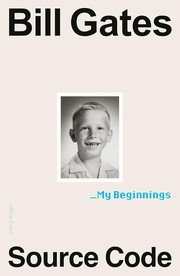
Source Code
2,473-word summary 11 min read 336 pages in the book
- First published
- 2025
- Publisher
- Alfred A. Knopf
- Pages
- 336
- ISBN
- 9780593687468
Reading options
What's inside (10 sections)
- What made me pick this up
- A project born from grief and a filing cabinet
- Gami, the crackers, and the difficult middle child
- Sneaking out to code
- December 1974 and the magazine in Allen's hands
- Kent Evans and the tragedy at the centre
- What the reviewers objected to
- Where it stops and who it is for
- Key takeaways
- FAQ
What made me pick this up
I will admit I opened this book expecting the worst kind of tech-mogul memoir: the victory lap, the tidy origin story, the billionaire explaining how ordinary his childhood was. What I found instead was a book that spends a surprising amount of time on Ritz crackers, jigsaw puzzles, and a small boy who made his mother exasperated. It is a strange thing to read Bill Gates at his most famous and find him at his least polished.
The full title is Source Code: My Beginnings, and it was published in the United States by Alfred A. Knopf on 4 February 2025, at 336 pages, with Allen Lane handling the British edition. It is the first of three projected volumes, and it stops deliberately short of the part everyone knows. The book ends just before 1980 and the MS-DOS deal. There is no Microsoft antitrust fight here, no public redemption arc, no account of the foundation or the divorce. Those are apparently for later. What is here is a childhood in Seattle, a family that loved and baffled each other, and the few years in which a boy who liked puzzles turned into a young man who believed software could remake the world.
I want to be honest about why that framing interested me. Gates is a figure about whom almost everything is already known, at least in outline. The risk in a memoir like this is that it becomes an exercise in controlling the record. Some of the critics thought exactly that, and I will get to them. But the book's best passages are unguarded in a way I did not expect. They are about domestic life, and they are specific enough to feel true.
A project born from grief and a filing cabinet
Gates says he started reflecting on his life around his seventieth birthday, which also lined up with Microsoft's fiftieth. That is a neat coincidence, the sort of milestone that usually produces a glossy coffee-table book. What actually set this one in motion was sadder. His father was in a slow decline from Alzheimer's, and Gates found himself sorting through family papers, old school reports, and printouts of code he had not looked at in decades.
I keep coming back to that image of the printouts. Here is a man who could have hired a team to assemble a polished narrative, and instead he is sitting with sheets of code from his teenage years, trying to remember what he was thinking. The project is partly an act of recovery. His father, who appears in the book as an ambitious and encouraging presence, was slipping away while his son was trying to pin down where that ambition came from. You can feel the urgency of it in the prose. This is not a retrospective written from a safe distance. It is a son writing while the person who first pushed him is no longer fully there to be asked.
That double clock, the public milestone and the private illness, gives the book its shape. It is a memoir about beginnings that is quietly also about endings. Gates does not make a grand thing of this, and I think the restraint is the right call. He mentions that he donates the proceeds from the book to United Way, a small note that sits oddly beside the rest of the story, but it is there.
Gami, the crackers, and the difficult middle child
The most vivid sections of the book are the ones about home. Gates's grandmother, known in the family as Gami, feeds him Ritz crackers with peanut butter and teaches him card games. There are jigsaw puzzles, and there are gunnysack races, the kind of slightly chaotic family game that only exists when a household is full of competitive children. These are not scenes that made him famous. They are scenes that made him.
His parents are drawn as ambitious people trying to work out what to do with a restless, difficult middle child. The boy resisted his mother's control, and the tension got bad enough that he was sent to a therapist. I found this passage the most human thing in the memoir. It is easy to retroactively give a famous person a coherent childhood, to decide that the genius was obvious from the start. Gates does not do that. He describes a kid who was hard to manage, who pushed against the person closest to him, and whose parents were not always sure how to reach him.
What is interesting is how the book handles that difficulty without turning it into a grievance. Gates is not writing to settle scores with his mother. He is writing to understand the odd combination of temperament and encouragement that produced him. The ambition in the house was real, but so was the friction. He seems to understand that both things were true at once, and he lets them sit together rather than resolving one into the other.
I noticed how much of the early book is taken up with games and food and small domestic negotiations. This is a choice, and not a neutral one. Gates is insisting that the beginning of a very large life looked like the beginning of almost any life: snacks, card tables, adults who did not always know what they were doing. It is a democratic impulse, even if the later chapters complicate it.
Sneaking out to code
The book's middle moves from the living room to the street. As a teenager, Gates describes sneaking out at night to code at a nearby computer centre. This is the part of the story where the private boy becomes the public figure, and it happens in the dark, literally. He is a kid who cannot leave a problem alone, who goes somewhere he is not supposed to be in order to keep working.
I think this is the most quietly useful detail in the memoir, because it locates the origin of the famous work ethic in something smaller than talent. Gates does not present himself as a boy who was simply born knowing. He presents himself as a boy who kept going back. The night trips say more about his eventual career than any claim about intelligence could. They show a habit, a compulsion, a willingness to be inconvenient to other people in service of a problem he could not put down.
There is a risk in how this gets told. A reader can easily turn the night trips into founding mythology, the young genius too consumed to be ordinary. Gates seems wary of that reading. He keeps the detail plain and physical: leaving the house, going to the centre, writing code. The interest is in the behavior itself, not in any claim of exceptionality.
December 1974 and the magazine in Allen's hands
The turn in the book comes with Paul Allen. Gates describes the December 1974 moment when Allen burst into his Harvard dorm room carrying an issue of Popular Electronics that convinced the two of them that software would change the world. It is the most famous scene in this stretch of his life, and Gates retells it with the clarity of someone who has replayed it many times.
What strikes me about the scene is how little of it is about a product. The argument is not about a specific machine or a business plan. It is about a conviction that a shift was coming and that they wanted to be in front of it. The founding slogan, a computer on every desk and in every home, arrives out of that moment. It is a big claim, stated simply, and the book is at its best when it shows how a slogan can be both an aspiration and a kind of blindfold. They could see the direction clearly. They could not see most of what would follow.
I want to be careful here, because this is the part of the memoir that invites the victory-lap reading. Gates knows the ending, and the retelling is shaped by it. He writes about the two of them as if the future were already visible, which is the standard risk of looking backward. But the actual content of the scene, a friend rushing into a dorm room with a magazine, is small and contingent. The rest is hindsight, and the book does not entirely hide that.
Allen's treatment in the memoir has been a point of criticism, which I will return to. In this early section, though, the two are presented as partners in a shared realization. The dorm-room scene is generous to Allen. It gives him the active role, the one who brings the news. That fairness is worth noting, because it is not the whole story of how these two men would eventually be remembered.
Kent Evans and the tragedy at the centre
The book's central tragedy is the death of Gates's close friend Kent Evans in a mountain-climbing accident when Gates was sixteen. This is the passage that gives the memoir its weight. Everything before it is a story about possibility, about a boy with a stubborn streak and a family that could not quite contain him. Evans's death introduces the fact that a life can simply stop, and that no amount of aptitude or ambition protects against it.
Gates writes about this loss without trying to make it do too much work. He does not, as far as the book shows, convert it into a lesson about seizing the day or an explanation for his later drive. It sits in the narrative as a hard, unassimilated fact. That is, to me, the right decision. When a memoir tries to extract a moral from a friend's death, the friend tends to disappear behind the moral. Here the death stays a death.
The placement matters too. The accident comes after the early coding years and around the period when Gates's world was expanding beyond the family. The book is structured so that the widest emotional loss arrives just as the external story is about to accelerate. It is a way of saying that the person who became famous was also a person who was grieving, and that those two things overlap in time without one causing the other in any clean way.
I found this section the least guarded in the book. Not because Gates says more, but because he says less, and lets the bare facts carry it. The few words about the accident do more than pages of reflection would. It is the one place where the memoir trusts silence.
What the reviewers objected to
The reception was mixed, and the objections are worth taking seriously. Jennifer Szalai, writing in The New York Times, liked the rendered details but found that for the first fifty pages or so there was hardly any narrative tension. I understand that complaint. The early chapters are rich in texture and light in momentum. If you are looking for the engine of a story, the opening can feel like an extended description of a very comfortable childhood. If you are looking for a portrait of a particular household, it is exactly right. Which book you want determines whether those fifty pages work.
Dana McKay, in The Conversation, argues that the memoir shows a life of consistent privilege, barely mentions Gates's sisters, stays largely uncritical of his own path, and that any attempt at rehabilitation rings hollow. That is a sharper charge, and it goes to the ethics of the form. Gates's family was comfortable, his parents connected and ambitious, and his access to early computing was extraordinary. The book does not hide this, exactly, but it also does not interrogate it hard. The sisters are largely absent, which is a real omission in a memoir about family. McKay's point is that a life shaped by advantage cannot be fully told by dwelling on the difficulties of being a difficult child, however genuine those difficulties were.
Grace Byron, writing in Defector, calls the book a bland attempt at damage control, which is the most skeptical reading available. It suggests that the whole exercise is reputation management dressed as reflection. I think that is too cynical for the early chapters, which are often awkward in ways that a damage-control book would not allow. A book designed to flatter its author would not linger on the therapist or the mother's frustration. But Byron's criticism has force when applied to what is missing. Reviewers broadly note that Microsoft's later legal battles and Gates's treatment of Allen are left for future volumes. That is a very convenient thing to leave for future volumes, and a reader sensitive to self-serving omissions will feel it.
I would put my own criticism like this. The memoir is strongest when it is describing a room and weakest when it is describing a significance. Gates is excellent on crackers and cards, on the irritation of a mother, on the feel of a dorm room in December. He is much less good on what any of it means, because the meaning he offers is already the official one by now. The book knows its own place in the legend.
Where it stops and who it is for
The decision to end just before the MS-DOS deal is both honest and strategic. Honest, because it does what the subtitle promises: these are the beginnings. Strategic, because it lets the book avoid the complicated decades. If you want the whole account of Microsoft, this is not it, and it does not pretend to be. The three-volume plan makes that explicit.
So who is this for? I think it works best for two kinds of readers. The first are people who genuinely like family memoirs and the small textures of a particular childhood, because that is where Gates writes with the most freedom. The second are readers interested in the prehistory of the personal computer who want the human story behind the founding slogan, and who are patient with a slow opening. If you want accountability, a full account of Allen, or a reckoning with the company's later conduct, you will need the later volumes, and you may be impatient with this one.
What I took from it is smaller than a thesis. The myth of Gates is so large that it flattens the boy into the outcome. This book restores a little of the mess: a child who resisted his mother, a grandmother with crackers, a friend who died on a mountain, a night spent sneaking out to write code. None of that explains the billions. All of it makes the beginning worth reading about on its own terms.
FAQ
Where does Source Code end, and what does it leave out?
It stops just before 1980 and the MS-DOS deal, so Microsoft's later legal battles, the fuller story of Paul Allen, and Gates's treatment of him are left for future volumes.
Is this a complete account of Bill Gates's life?
No. It is the first of three projected volumes, covering his Seattle childhood and early adulthood up to the eve of the MS-DOS deal, with most of the space given to family and beginnings.
Why did Gates write this memoir now?
He began reflecting around his seventieth birthday and Microsoft's fiftieth, while his father was slowly declining from Alzheimer's and he sorted through family papers and old printouts of code. He donates the book's proceeds to United Way.
Similar books

The Glass Castle
Jeannette Walls's memoir of a childhood spent hungry and moving, from a stove fire at three to a Bronx apartment and parents on the street.
2,255-word summary · 10 min read
Taste: My Life Through Food
Stanley Tucci's memoir traces his life through food, from a Calabrian family kitchen in Katonah to film sets, marriage and a cancer fight that cost him his…
2,503-word summary · 11 min read
Mother Mary Comes to Me
Arundhati Roy's memoir circles her mother, Mary Roy, a formidable Kerala school founder whose love and cruelty made her the writer she became and then resented…
2,413-word summary · 11 min read
Careless People
A former New Zealand diplomat recounts seven years at Facebook, from a Myanmar launch to a hospital bed where the job followed her between contractions.
2,413-word summary · 11 min read
Too Much and Never Enough: How My Family Created the World's Most Dangerous Man
Mary L. Trump's 2020 memoir traces how a cold, zero-sum Queens household shaped her uncle, and uses family tax documents to challenge his self-made story.
2,059-word summary · 9 min read
Beautiful Boy: A Father's Journey Through His Son's Addiction
David Sheff recounts watching his son Nic slide into meth addiction, and his own desperate, humbling search for how to help without destroying them both.
2,076-word summary · 9 min read

The Magnolia Story
How Chip and Joanna Gaines met, closed their first shop, nearly lost everything in a housing development, and built Fixer Upper.
2,994-word summary · 13 min read
Open
Tennis star Andre Agassi recalls hating tennis, falling to No. 141, and rebuilding his life on his own terms.
2,352-word summary · 10 min read
Hidden Valley Road: Inside the Mind of an American Family
The Galvin family raises twelve children while six sons develop schizophrenia across decades of shifting science.
2,492-word summary · 11 min read

Calypso
Sedaris buys a Carolina beach house, grieves his sister Tiffany, tends his aging father, and turns illness and marriage into dry family comedy.
2,835-word summary · 13 min read
Zen and the Art of Motorcycle Maintenance
Father and son ride west while lectures on Quality and past madness intrude.
2,180-word summary · 10 min read
Naked
Growing up odd in Carolina, working bad jobs, and learning to watch people closely and kindly.
2,020-word summary · 9 min read

Dress Your Family in Corduroy and Denim
Sedaris on snow days, rental houses, Dutch Christmas, and the family that made him funny.
3,098-word summary · 14 min read
The Last Lecture
Dying professor Pausch lectures really achieving childhood dreams.
2,579-word summary · 11 min read
A Child Called It
Dave survives his mother games of hunger and cold in Daly City until teachers and foster care step in.
2,326-word summary · 10 min read
Educated
Educated retold: Idaho scrapyard, no school, BYU, Cambridge, break with father and brother.
1,931-word summary · 9 min read
Survival in Auschwitz
A chemist deported from Turin records ten months in Auschwitz with a restraint that makes the horror impossible to look away from.
2,177-word summary · 10 min read
Motherland: A Feminist History of Modern Russia, from Revolution to Autocracy
A feminist history of modern Russia told through women's lives, from the revolutionaries of 1917 to Pussy Riot and the politics of today.
2,191-word summary · 10 min read

I Feel Bad About My Neck: and Other Thoughts on Being a Woman
In short, funny essays written just after her sixty-fifth birthday, Nora Ephron takes on aging, vanity, a White House summer, and the daily upkeep of looking…
2,099-word summary · 9 min read
How to Change Your Mind
Pollan blends the history of psychedelic research, his own guided trips, and current neuroscience to ask what these drugs reveal about consciousness.
2,466-word summary · 11 min read
Dad Is Fat
A comic essay collection about raising five kids in a two-bedroom New York apartment, delivered in Gaffigan's dry, deadpan voice.
2,196-word summary · 10 min read
The Princess Diarist
Built from diaries Fisher kept at nineteen while filming the first Star Wars movie, this 2016 memoir revisits her affair with Harrison Ford and the strange…
2,360-word summary · 10 min read
Flash Boys: A Wall Street Revolt
Michael Lewis follows a Canadian trader and his band of Wall Street outsiders as they discover how speed was used to rig the stock market, then build an…
3,009-word summary · 13 min read
Digital Minimalism: Choosing a Focused Life in a Noisy World
Cal Newport argues that willpower cannot beat an attention economy designed against you, and offers a thirty day reset to rebuild your digital habits around…
2,701-word summary · 12 min read
Death of the Author
Okorafor's Africanfuturist novel follows a disabled Nigerian American writer whose blockbuster novel and its robot characters force her to ask who really owns…
2,468-word summary · 11 min read
Breakneck: China's Quest to Engineer the Future
Dan Wang argues that America is run by lawyers and China by engineers, from a bicycle ride through Guizhou to the human cost of the one-child policy.
2,281-word summary · 10 min read
Apple in China
A former Financial Times reporter argues that Apple poured about $275 billion into China, training a generation of engineers and leaving itself dependent on…
2,094-word summary · 9 min read
An Unquiet Mind: A Memoir of Moods and Madness
A clinical psychologist's memoir of bipolar disorder, written from both sides of the desk, about mania, lithium, the death of a lover and the cost of hiding a…
2,013-word summary · 9 min read

All Things Bright and Beautiful
Linked memoirs from a young vet in the Yorkshire Dales, moving between difficult farmers, beloved animals and the household above the surgery at Skeldale House.
2,004-word summary · 9 min read
107 Days
Kamala Harris's memoir of the 107 days between Biden's withdrawal and Election Day, drawn from a journal kept during a campaign she believes she was best…
2,132-word summary · 9 min read