
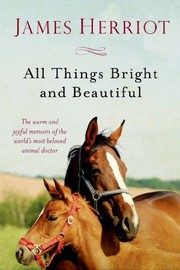
Reading options
What's inside (8 sections)
Rooms above the surgery
This is not a novel with a plot. It is a memoir built from linked stories, and the first thing to understand about it is that the episodes do not add up to a single journey. James Herriot, called Jim in the book, is a young veterinary surgeon recently married to Helen. They live in modest rooms above the surgery at Skeldale House in Darrowby, the fictional town drawn from Thirsk, Richmond, Leyburn and Middleham in the Yorkshire Dales.
The book was published in 1974 in the United States, where it combined two British volumes from 1973 and 1974, with a few chapters omitted. The common claim that it is a simple retitled edition of one of them is wrong. It is the second volume in the five-book American sequence that begins with All Creatures Great and Small. I am not assigning it a series on the site, to stay consistent with the existing post for that earlier book. The distinction matters mainly to bibliographers. For a reader, what matters is that the same household, the same colleagues and the same landscape are back.
I picked it up because the first book is on the site, and because these memoirs have a quality that is hard to find in contemporary writing. They are funny, unsentimental and full of physical detail. Herriot writes about bodies, animal and human, with a doctor's precision and a storyteller's timing.
The work
The opening winter night call takes Jim to the drunken farmer Harold Ingledew, whose ewe is struggling to give birth. Jim delivers the lambs, then returns to Helen and contrasts the chaos of the call with the warmth of his new home. That movement, from cold barn to warm room, is the book's basic rhythm. Almost every chapter follows a version of it.
There is an injured foal. There is a rejected lamb nicknamed Herbert, which Jim saves by placing it with a ewe that has lost her own. That kind of improvised foster work is a recurring pleasure of the book. The veterinary practice in the Dales is full of solutions that a textbook would not recognize, and Herriot describes them without condescension.
At the surgery, Jim, Tristan and Siegfried Farnon all hesitate to examine the ill-tempered Clancy. The standoff over who has to handle the animal is comic, and it establishes the household's dynamic. Siegfried is flamboyant and unpredictable, Tristan is young and perpetually evasive, and Jim is the one who usually ends up doing the work. Farmer Pickersgill resists Jim's advice about his cows' sore udders until Jim links the problem to rough milking and suggests that Pickersgill's daughter Olive take over the job. The solution is practical, and it is also a small social revolution in a farming household.
Herriot keeps returning to the economics of the practice. These are people who cannot always pay, and the question of money sits behind many of the stories. He is careful never to make the farmers into villains. They are proud, frightened of vets, and often kind in ways that surprise him.
One of the reasons these stories hold together is the household at Skeldale House. Siegfried Farnon is not the stern figure a reader might expect from a practice owner. He is mercurial, generous, occasionally furious and often away. Tristan is his younger brother, a perpetual student of everything except veterinary medicine, who is always looking for a way to avoid an early call. Helen runs the home and does much of the administrative work, and the book's affection for her is quiet but unmistakable.
The relationship between the three men is the comic engine of the book. They argue about money, about who did what, about whose turn it is to go out in the rain. Beneath the arguments there is a genuine loyalty. When Siegfried gives Jim money in the guise of repaying a debt, the gesture only works because the book has spent hundreds of pages showing how incapable these men are of saying something directly.
The failures
One of the best flashbacks recalls Jim's courtship of Helen. A cow dies despite his treatment, and he is convinced he has ruined his chances with her. The scene is funny in retrospect and painful at the time. It also tells you something important about the book. Herriot includes his failures as readily as his successes, and the failures are often the better stories.
There is the time he drinks too much wine and is called out to deliver a calf in a storm. There is the Darrowby show, where he judges family pets by how well their owners care for them and awards a prize to a goldfish, earning complaints. His car will not start as Helen leaves with another man. These are not heroic anecdotes. They are the stories a vet tells over a drink, and Herriot knows exactly how to pace them.
The heavier losses arrive without warning. Widow Dalby's herd falls ill, and twelve cattle die before Jim identifies copper deficiency while visiting other animals on later rounds. Frank Metcalfe, a former steel worker who invested everything in a dairy farm, watches repeated cattle abortions defeat Jim's efforts and is forced to sell. That story is one of the most affecting in the book because the veterinary problem is solvable in principle and was not solvable in time. Herriot does not soften the ending. Frank's life is broken by something no one intended.
An old farm horse dies of tetanus, and Jim registers the fading role of working horses in modern farming. That is the book's quieter subject. Every call is taking place at the end of an era, and Herriot understood it even while he was living through it.
The absurd cases
The comedy is at its best when the animals are least cooperative. At Christmas, Jim is called to a choking goat and removes a farmer's underwear from its mouth. A quack takes credit for a treatment Jim actually performed. Mrs Bond's cat Boris escapes, and a visit to her house turns into a chaotic stampede of cats. Jim treats a dog named Percy for a tumour, hesitating until the owner consents, and a drug used in treatment has the side effect of attracting other dogs to the house.
Granville Bennett, a skilled small-animal surgeon, impresses Jim with operations beyond his experience. Their meals and drinks leave Jim repeatedly sick and embarrassed in front of Granville's wife Zoe. The valuable bull Monty turns out to be dangerous once grown, a reminder that this work carries physical risk. Jim treats an animal with real affection and is still sensible enough to be afraid of it.
Richard Carmody arrives as a student observer with book learning but little field sense, and the unruly farm animals test his confidence. That contrast, between theoretical knowledge and practical judgment, is one of the book's enduring themes. Herriot is not opposed to education. He is in favor of knowing which end of the animal to stand at.
There are gentler cases too. Jim secretly gives an ailing ewe time to rest and is relieved when she recovers. A poodle survives a period of deep sleep. When a budgie dies during treatment, he quietly replaces it for its elderly owner. That last story is the one I keep returning to. It is a small deception, and Herriot does not apologize for it. The book's morality is practical rather than abstract.
I want to say a word about the title. It comes from a hymn, and the book uses the phrase without irony. Herriot genuinely thinks the world he is describing is bright and beautiful, even when he is covered in mud at three in the morning. That might have been sentimental in less capable hands. Here it feels like an accurate report. The beauty is in the work and in the place, and the book has earned the right to name it.
The animal characters are drawn with remarkable economy. Clancy the difficult bull, Boris the escaping cat, Herbert the rejected lamb, Monty the dangerous bull and the unnamed budgie are each given a few precise details that make them memorable. Herriot does not anthropomorphize them. He describes what they do and how they respond, and lets the reader supply the affection.
Helen and the war
The domestic chapters are woven through the cases. In a memory of the Daffodil Ball, Jim sees Helen with Richard Edmundson and kisses her after she leaves the dance floor with him. They go together to help a dog deliver puppies, and Jim realizes she is now his girlfriend. The Dimmock family becomes part of his life after he treats their dog, and their daughter Nellie later brings him a puppy named Toby whose condition requires Granville's surgery.
Siegfried charges Walt Barnett an unexpectedly high fee for gelding horses and then loses the cheque. Helen becomes pregnant, and Jim worries about money. Siegfried, called away to the RAF, gives him money under the cover of repaying a debt. That gesture is typical of the book. The people in it are often awkward about kindness, so they disguise it.
As war approaches, Tristan departs for military service, and an outbreak among Mr Clark's cattle responds to a new drug, prompting Jim to reflect on the promise of changing veterinary medicine. The ending arrives on Jim's birthday with his own RAF call-up. After setting a sheepdog's dislocated elbow on his final visit, he drives through the countryside thinking about Darrowby, says goodbye to Helen and leaves.
That final chapter turns a collection of episodes into a farewell. Everything the book has been accumulating, the barns, the farmers, the difficult animals, the rooms above the surgery, is suddenly a thing being left behind. Herriot does not make a speech about it. He describes a drive and a goodbye, which is what actually happened.
The book was first published in the United States in 1974, where it combined two earlier British volumes. That history explains why some editions have different chapter lists and page counts. The American book omits a few chapters from the originals. None of that changes the experience of reading it, but it is worth knowing if you are comparing copies.
Why these books last
The memoir is modest about its own achievements. It does not claim that the Yorkshire Dales were special or that veterinary work is noble. It simply records what happened, and the record is funny and precise. The humor depends on embarrassment rather than mockery. Herriot is as often the fool as anyone else, and he never makes an animal ridiculous for its own sake.
The book's length, around four hundred pages depending on the edition, suits its structure. It is a book to dip into rather than read straight through, though it rewards reading in order. The stories accumulate into a portrait of a place at a particular moment, just before the war changed everything. That is the quiet design behind the episodic form. The last chapter works because you have spent hundreds of pages learning what he is leaving.
The edition details are worth a note for anyone cataloguing it. The first British sources were two separate books, one published in 1973 and one in 1974, and the American publisher combined them. Page counts vary from roughly 378 in a 1976 paperback to around 384 in later editions. The story is the same whichever copy you find, though a few chapters present in the British originals are missing from the combined volume.
I finished it wanting to spend more time in Skeldale House, which is the usual response to these books. The vets are not idealized. They get tired, make mistakes, drink too much and worry about money. That is why the kindness lands. It is offered by ordinary people who are often exhausted, and it does not require them to be better than they are.
FAQ
Is All Things Bright and Beautiful a novel?
No. It is a memoir built from linked stories, with no single continuous plot. It can be read straight through or dipped into in any order.
How does it relate to All Creatures Great and Small?
It is the second volume in the five-book American sequence that begins with All Creatures Great and Small, combining two earlier British books from 1973 and 1974.
Where is Darrowby?
It is a fictional town based on Thirsk, Richmond, Leyburn and Middleham in the Yorkshire Dales, where James Alfred Wight, the real James Herriot, practised.
Similar books
Fantastic Mr. Fox
Mr. Fox raids three cruel farmers to feed his family, then outdigs tractors and a siege to host a feast underground.
2,910-word summary · 13 min read
All Creatures Great and Small
Young vet Herriot learns lambing, Tricki Woo, and Darrowby life.
2,327-word summary · 10 min read
Dad Is Fat
A comic essay collection about raising five kids in a two-bedroom New York apartment, delivered in Gaffigan's dry, deadpan voice.
2,196-word summary · 10 min read
Taste: My Life Through Food
Stanley Tucci's memoir traces his life through food, from a Calabrian family kitchen in Katonah to film sets, marriage and a cancer fight that cost him his…
2,503-word summary · 11 min read
Make Way for Ducklings
A pair of mallards raise eight ducklings on the Charles River and lead them across Boston to the Public Garden, with a little help from a friendly policeman.
2,044-word summary · 9 min read
Caps for Sale
A peddler balances his caps on his head, naps under a tree, and wakes to find monkeys wearing his stock in this 1940 picture book.
2,787-word summary · 12 min read
Holidays on Ice
Six Christmas pieces, from a Macy's elf stint to a feral family newsletter. Sedaris at his sharpest and most sentimental.
2,410-word summary · 11 min read
The Twits
Mr. and Mrs. Twit trade vile pranks and torment caged monkeys until the birds and monkeys flip the house on them.
2,864-word summary · 13 min read
Let's Explore Diabetes with Owls
Sedaris gets French dental work, feeds a kookaburra in Australia, shops for a stuffed owl in London, and survives China, airports and a colonoscopy.
2,538-word summary · 11 min read
Curious George
Curious George retold: a monkey sails from Africa to the city, phones the fire station, floats off on balloons, and finds home.
2,979-word summary · 13 min read
Calypso
Sedaris buys a Carolina beach house, grieves his sister Tiffany, tends his aging father, and turns illness and marriage into dry family comedy.
2,835-word summary · 13 min read
Sh*t My Dad Says
A comedy writer moves home and writes down his blunt fathers funniest lines with love.
1,961-word summary · 9 min read
Furiously Happy: A Funny Book About Horrible Things
Jenny Lawson mixes blunt talk about depression with wild stunts and taxidermy to argue for grabbing joy on purpose.
2,963-word summary · 13 min read
Let's Pretend This Never Happened: A Mostly True Memoir
The Bloggess turns a strange Texas childhood and anxious adult life into a funny, warm memoir about family.
2,479-word summary · 11 min read
When You Are Engulfed in Flames
In twenty two essays Sedaris tries to quit smoking in Japan, buys a skeleton, fights spiders in Paris, and files dry reports from France on family, country…
2,974-word summary · 13 min read
Are You My Mother?
A newborn bird falls from the nest and asks a kitten, a hen, a dog, a cow, a plane and a giant Snort if any will be his mother.
2,351-word summary · 10 min read
Naked
Growing up odd in Carolina, working bad jobs, and learning to watch people closely and kindly.
2,020-word summary · 9 min read
Dress Your Family in Corduroy and Denim
Sedaris on snow days, rental houses, Dutch Christmas, and the family that made him funny.
3,098-word summary · 14 min read
Running with Scissors
A boy sent to live with his mother's psychiatrist grows up in a chaotic house with no rules.
2,036-word summary · 9 min read

Marley & Me
A young couple learns marriage, parenthood, and goodbye through thirteen years with Marley, their wild and loving Labrador.
2,167-word summary · 10 min read
A Light in the Attic
Silverstein's attic poems and line drawings turn chores, monsters, and homework into jokes and small rebellions.
2,998-word summary · 13 min read
Winnie-the-Pooh
Edward Bear comes downstairs bump-bump-bump and into the Hundred Acre Wood for honey, hunneys, and heffalumps.
2,068-word summary · 9 min read
The House at Pooh Corner
Tigger bounces into the Hundred Acre Wood while Pooh builds Eeyore a house and Piglet does a grand thing.
2,022-word summary · 9 min read
Me Talk Pretty One Day
Sedaris on French classes, family chaos, and learning to speak badly in two languages.
2,111-word summary · 9 min read
Matilda
Brilliant Matilda Wormwood teaches herself to read, faces her crooked parents and the fearsome Miss Trunchbull, and finds Miss Honey.
2,296-word summary · 10 min read
The Trumpet of the Swan
A mute trumpeter swan learns to read, write, and play a stolen trumpet to win a mate, in E.B. White's quiet 1970 tale of a boy who watches.
2,309-word summary · 10 min read
The Rest of Our Lives
A law professor drives his daughter to college, then heads west instead of home, testing a private promise he made twelve years ago.
2,238-word summary · 10 min read

The Nix
A stalled novelist and community college professor goes looking for the mother who left him and finds a radical activist whose rock thrown at a governor made…
2,214-word summary · 10 min read
The Long Haul
Greg Heffley's summer road trip goes sideways with a towed boat, a live pig, and a family in a purple van.
2,311-word summary · 10 min read
Only Son
A brief, funny, melancholy debut about a boy whose father dies in 1982 Florida, and the man he becomes, still trying to read the mystery of that loss.
2,170-word summary · 10 min read