
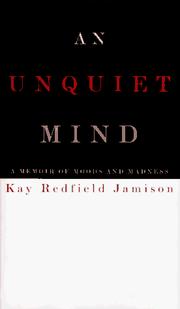
An Unquiet Mind: A Memoir of Moods and Madness
2,013-word summary 9 min read 223 pages in the book
- First published
- 1995
- Publisher
- Alfred A. Knopf
- Pages
- 223
- ISBN
- 9780679443742
Reading options
What's inside (7 sections)
The house with the wild blue yonder
The book begins with a childhood that sounds happy, and then gradually reveals that it was not quite what it seemed. Jamison grows up in a military family, moving from base to base. Her father is charismatic and creative, a man of strong moods and considerable charm. Her mother is resourceful and steady. For years the home is warm and supportive. Then the family moves to California, and at roughly the same time her father's depression gets worse. The timing is never made explicit as a cause, but the association is there, and a child notices these things.
She is drawn to science and medicine early, then shifts toward psychology. In her senior year of high school she has a hypomanic episode, a period of unusual energy and confidence, followed by a depression. Nobody around her notices. That is the first important fact of the memoir. The illness was present before anyone had a name for it, and it was invisible to the people who knew her best.
The book is divided into four parts, each with a title that sounds almost jaunty until you have read the chapter it contains. "The Wild Blue Yonder" covers the early years, "A Not So Fine Madness" the manias, "This Medicine, Love" the relationships, and "An Unquiet Mind" the later reckoning with the illness and its name. The structure is chronological but not simply so. Each part circles back to the same question from a different angle: how does a person live with a mind that is unreliable in exactly the area where she needs it most? The opening title, taken from a piece of military aviation language, is about her father's world as much as her own. He was a pilot, and the phrase suggests a kind of freedom that also implies altitude and risk.
Jamison goes to UCLA for her undergraduate degree, committed to clinical psychology. She earns her PhD there and becomes a professor in the university's Department of Psychiatry. This is worth stating plainly because it is easy to forget while reading: the person describing the madness is also a trained clinician and an established academic. She knows the literature. She has taught it. That double position is the source of the book's unusual authority and its unusual pain. She can diagnose herself with precision, and the precision does not help her.
A not so fine madness
The second part, titled "A Not So Fine Madness," is an account of the manias. Jamison describes the seductive side first. There is heightened energy, social ease, a sense that she can do anything and do it brilliantly. Professional efficiency soars. She can work for long stretches without sleep and feel better than she has ever felt. Then the other side arrives. She becomes irritable in her marriage. She spends recklessly, to the point that her brother has to untangle the consequences. She cannot finish reading a paragraph or get through a song because her mind will not stay with one thing.
A colleague suggests lithium. She begins work with a psychiatrist, and psychotherapy becomes a permanent part of her routine. The drug works, in the sense that it levels the extremes. But she repeatedly stops taking it against medical advice. Sometimes it is the side effects. More often it is denial. She does not want to be the person with the diagnosis, and the mania, when it arrives, does not feel like an illness. It feels like herself, only more so. This is the hardest thing about the book to read, because she understands exactly what she is doing while she is doing it.
The effect on her work is complicated. Mania makes her feel enormously productive, and some of that productivity is real. She writes, she teaches, she thinks at a speed that other people cannot match. But the inability to finish a paragraph means that projects collapse at the moment they might have come together. She describes stacks of notes and unfinished plans, the residue of a mind that starts far more than it can complete. This is one of the reasons the memoirs of mental illness written by academics are so valuable. The damage is measured not only in anguish but in wasted labor, in the specific shape of a career bent by the illness.
In one severe depression she attempts suicide by overdosing on lithium. She survives because a brother telephones, notices her slurred speech and calls for help. The passage is short and unsentimental. There is no drama, no account of what she was thinking in the moment beyond what she can honestly reconstruct. The accident of the phone call is what saved her. Months later she founds the Affective Disorders Clinic at UCLA and successfully applies for tenure. The sequence is deliberately unglamorous: a near death, then a clinic, then a faculty appointment. Recovery in this book is administrative as much as emotional.
This medicine, love
The third part is about love and loss. After her first marriage ends, Jamison falls in love with David, a psychiatrist in the British Army Medical Corps. They have days together in Los Angeles and then weeks in London, which she says reminded her how important love is to life. He is posted to a Hong Kong army hospital and plans for her to join him. Then a diplomatic courier arrives with the news that David has died suddenly of a massive heart attack.
She describes her grief in stages, and the stages are physical. At the funeral in London she is numb. Later, at a British Airways counter, the clerk asks the reason for her trip and she breaks down. Over time the loss changes shape. She comes to remember David with fondness rather than regret over the future they did not get. This section is the emotional center of the memoir, and it is written with a restraint that makes the pain more legible, not less. She does not turn the death into a lesson. It is simply something that happened, and she had to keep living afterward.
What is striking about the grief is how little it resembles the depression. She is devastated, but the descriptions are clear-eyed and often funny. She writes about the practical humiliations of loss, the forms, the counter at the airline, the way strangers handle a death by avoiding your eyes. The memoir's great subject is not that suffering makes a person insightful. It is that a person can be analytically intact while being emotionally destroyed, and that those two states can coexist without either one being denied.
Back home, a lithium dose adjustment reduces the side effects without losing the medicine's effect. She later meets Richard Wyatt, her second husband, and leaves her UCLA tenure to live with him in Washington, D.C. The move matters because it shows a life being built around the illness rather than in spite of it. She keeps working, keeps treating patients, keeps writing. The memoir does not end with a cure, because there is no cure. It ends with a person who has learned to live with something that will not leave.
Naming the illness
The fourth part takes up the renaming of manic-depressive illness as bipolar disorder. Jamison resisted the change. She thought the new term was less descriptive and that it falsely separated the depressive and manic poles of the illness. This is not a pedantic objection. Her whole experience of the condition is that the poles are one thing, a single moving disturbance in which the highs and lows generate each other. A name that splits them misrepresents what it feels like from inside.
She recalls the first evidence of a genetic component to bipolar illness, including conversations about mood disorders and family trees with Jim Watson. There is a moment in the book where she describes her anguish at not having children, including a physician's advice against it because of her illness, and calls childlessness the single most intolerable regret of her life. She cherishes her niece and nephew, but the regret is not softened by them. It is one of the few places where the book allows itself an unguarded statement of loss.
At Johns Hopkins Medical School's Department of Psychiatry she fears disclosing her illness to colleagues. She does it anyway, to protect patients and to make her superiors aware of the legal risk of letting her practice without accommodation. What she finds is acceptance and support rather than the ruin she expected. It is a quiet climax to the professional half of the story. The person who spent years hiding her diagnosis is finally able to say it in a room full of doctors, and the room does not empty.
The double perspective
The memoir closes on an optimistic note about the future of the illness and about what it means to be both healer and patient. That dual perspective is the book's real subject. Jamison can describe a mood from the inside with a precision that no case study could match, and she can also describe it from the outside with the vocabulary of a clinician. The two voices do not always agree, and the book does not force them to.
The Guardian called it unmatched in honesty, and NPR's Melody Moezzi called it the most brutally honest book she had read about bipolar disorder. Both judgments seem right. What makes the honesty unusual is that Jamison does not reserve it for the suffering. She is equally candid about the seductions of mania, about the pleasure of the reckless spending and the effortless charm, and about why she kept going off the medicine that helped her. A less honest memoir would have made those into symptoms. She makes them into choices, which is much harder to write and much harder to read.
There is a fair question about how representative any one person's experience can be. This is a memoir by an accomplished woman with access to excellent care, and the arc of her life, UCLA, tenure, Johns Hopkins, a second marriage, is not the arc of most people diagnosed with bipolar disorder. The book does not claim otherwise. It is one life, and the value is in the particularity. If you want an overview of the illness, there are other books. If you want to know what it feels like to be brilliant and terrified and unable to trust your own judgment, this is the account.
The book also changed the vocabulary available to patients. By putting a clinician's name and a patient's history on the same page, it made a kind of disclosure thinkable that had previously been discouraged. Jamison does not argue for this explicitly. She simply does it, and the example is more persuasive than any campaign.
The title deserves a word. An unquiet mind is not a mind that is simply ill. It is a mind that will not settle, that moves too fast and then too slow, that cannot be trusted to report accurately on its own state. The phrase is modest, almost gentle, and that is what makes it more disturbing than a clinical label. Jamison is describing a condition of being awake in her own head, and the book's achievement is to make the reader feel the instability from the inside without ever losing the thread of the argument.
I finished it with a great deal of respect for the decision to write it at all. There was no professional advantage in disclosing the diagnosis in 1995. There were obvious risks. Jamison took them because the silence around mental illness in medicine was itself a problem, and because she had a story that only she could tell. The book is not easy. It is often very sad. But it is one of the clearest accounts I know of what it means to have a mind that is both the instrument you think with and the thing that needs treatment.
FAQ
What is An Unquiet Mind about?
It is a 1995 memoir by Kay Redfield Jamison, a clinical psychologist, about living with bipolar disorder. It covers her manias, a suicide attempt, the death of her partner David, and her decision to disclose her diagnosis to colleagues.
Why did Jamison object to the term bipolar disorder?
She thought it was less descriptive than manic-depressive illness and falsely separated the depressive and manic poles. In her experience the two are one disturbance, with each pole generating the other.
Is An Unquiet Mind a clinical book?
No. It is a personal memoir, though its author is a clinician and the book is praised for its unusual honesty. A reviewer at the Guardian called it unmatched in honesty, and NPR's Melody Moezzi called it the most brutally honest book she had read on the subject.
Similar books
Reasons to Stay Alive
Matt Haig's memoir of the breakdown that nearly killed him at twenty four and the three years of unglamorous recovery that followed.
2,065-word summary · 9 min read

Hidden Valley Road: Inside the Mind of an American Family
The Galvin family raises twelve children while six sons develop schizophrenia across decades of shifting science.
2,492-word summary · 11 min read
How to Change Your Mind
Pollan blends the history of psychedelic research, his own guided trips, and current neuroscience to ask what these drugs reveal about consciousness.
2,466-word summary · 11 min read

Sybil
A 1973 case study of a woman treated for multiple personalities, and the book that made dissociative identity disorder a household phrase.
2,054-word summary · 9 min read
What Happened to You?
Oprah Winfrey and psychiatrist Bruce Perry explain how early experience shapes the brain, and why asking what happened to someone works better than asking what…
2,238-word summary · 10 min read

Too Much and Never Enough: How My Family Created the World's Most Dangerous Man
Mary L. Trump's 2020 memoir traces how a cold, zero-sum Queens household shaped her uncle, and uses family tax documents to challenge his self-made story.
2,059-word summary · 9 min read

Beautiful Boy: A Father's Journey Through His Son's Addiction
David Sheff recounts watching his son Nic slide into meth addiction, and his own desperate, humbling search for how to help without destroying them both.
2,076-word summary · 9 min read
Smoke Gets in Your Eyes: And Other Lessons from the Crematory
A young medieval history graduate takes a job at an Oakland crematory and becomes a mortician, confronting the physical reality of death and the funeral…
2,003-word summary · 9 min read
The Choice
Auschwitz survivor and therapist turns prison into a guide for healing.
2,472-word summary · 11 min read
10% Happier
An ABC newsman panics on air, then finds meditation without losing his edge.
2,590-word summary · 12 min read
The Happiness Project
Gretchen Rubin spends a year testing monthly resolutions on energy, marriage, work, parenting, and play, tracking small habits to build a happier ordinary…
3,516-word summary · 16 min read
The Body Keeps the Score
A psychiatrist explains how trauma lives in the body and what helps people recover, from EMDR to movement and connection.
2,172-word summary · 10 min read
Maybe You Should Talk to Someone
Therapist Lori Gottlieb counsels John, Julie and Rita while seeing her own therapist Wendell after a breakup.
2,234-word summary · 10 min read
The Defining Decade: Why Your Twenties Matter - and How to Make the Most of Them Now
A clinical psychologist argues that the twenties are not a holding pattern and urges readers to build skills, ties, and commitment now.
2,443-word summary · 11 min read
Survival in Auschwitz
A chemist deported from Turin records ten months in Auschwitz with a restraint that makes the horror impossible to look away from.
2,177-word summary · 10 min read

Motherland: A Feminist History of Modern Russia, from Revolution to Autocracy
A feminist history of modern Russia told through women's lives, from the revolutionaries of 1917 to Pussy Riot and the politics of today.
2,191-word summary · 10 min read
I Feel Bad About My Neck: and Other Thoughts on Being a Woman
In short, funny essays written just after her sixty-fifth birthday, Nora Ephron takes on aging, vanity, a White House summer, and the daily upkeep of looking…
2,099-word summary · 9 min read

Women Who Run with the Wolves
A Jungian analyst reads fairy tales as maps to a woman's instinctual self, from La Loba to Bluebeard and Vasalisa.
2,331-word summary · 10 min read

Wild at Heart: Discovering the Secret of a Man's Soul
Why do men feel bored and tame? John Eldredge argues a man's heart is wild by design, and that recovering it means facing the wound and the question of whether…
2,289-word summary · 10 min read
The Princess Diarist
Built from diaries Fisher kept at nineteen while filming the first Star Wars movie, this 2016 memoir revisits her affair with Harrison Ford and the strange…
2,360-word summary · 10 min read
The Power of Your Subconscious Mind
Joseph Murphy argues that the subconscious accepts whatever the conscious mind repeats, so worry and confidence quietly grow into very different lives.
2,259-word summary · 10 min read
The Miracle Morning
Hal Elrod argues that the first hour of the day sets its tone, and offers six short practices, silence, affirmations, visualization, exercise, reading and…
2,240-word summary · 10 min read

Taste: My Life Through Food
Stanley Tucci's memoir traces his life through food, from a Calabrian family kitchen in Katonah to film sets, marriage and a cancer fight that cost him his…
2,503-word summary · 11 min read

Source Code
Bill Gates's first memoir retells his Seattle childhood, from a grandmother's Ritz crackers to nights sneaking out to code. It stops just before the MS-DOS…
2,473-word summary · 11 min read
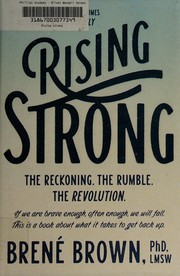
Rising Strong: The Reckoning. The Rumble. The Revolution.
Brené Brown's 2015 book asks what happens after we fall, and argues that examining the stories we invent about failure and heartbreak is the path to getting…
2,271-word summary · 10 min read

Mother Mary Comes to Me
Arundhati Roy's memoir circles her mother, Mary Roy, a formidable Kerala school founder whose love and cruelty made her the writer she became and then resented…
2,413-word summary · 11 min read

Ikigai: The Japanese Secret to a Long and Happy Life
Two Spanish writers explain the Japanese idea of a reason for being, drawing on Okinawan centenarians, flow, friendship and the acceptance of imperfection.
2,030-word summary · 9 min read
Getting to Yes: Negotiating Agreement Without Giving In
Fisher and Ury propose negotiating on interests rather than positions, using fair standards and a clear alternative if no deal is reached.
2,231-word summary · 10 min read
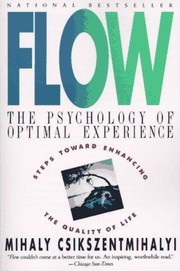
Flow: The Psychology of Optimal Experience
Csikszentmihalyi's 1990 study of optimal experience asks when people feel most alive and finds the answer in a balance of challenge and skill. Drawing on…
3,073-word summary · 14 min read
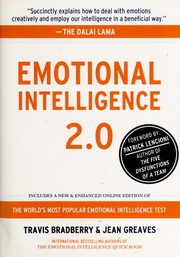
Emotional Intelligence 2.0
Bradberry and Greaves turn emotional intelligence into four learnable skills, a self-assessment and dozens of strategies, while their headline numbers rest on…
3,276-word summary · 15 min read