
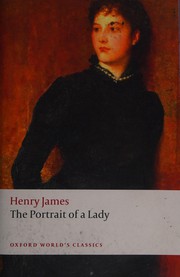
The Portrait of a Lady
2,903-word summary 13 min read 634 pages in the book
- First published
- 1881
- Publisher
- Oxford University Press
- Pages
- 634
- ISBN
- 9780199536184
Reading options
What's inside (10 sections)
I came to this book expecting a quiet nineteenth-century novel about a woman who makes a bad marriage, and I found something more unsettling than that. Henry James published it in 1881, after running it as a serial in The Atlantic Monthly and Macmillan's Magazine through 1880 and 1881, and he framed the whole thing around a phrase from his notebook: a young American woman "affronting her destiny." That phrase kept echoing for me. It sounds brave, almost heroic, but the book spends more than six hundred pages showing what happens when a person treats her own life as something to be boldly sampled rather than carefully chosen. Isabel Archer is not a fool. She is curious, intelligent, and determined to be free, and James makes all of those qualities part of the problem.
Gardencourt, and a girl from Albany
Isabel Archer is twenty-three when the novel opens, a young woman from Albany, New York, whose father has recently died. Her maternal aunt, Lydia Touchett, has invited her to England to meet Lydia's husband, Daniel, a rich banker who lives at Gardencourt, an estate near London. Isabel arrives and finds a household that is both welcoming and slightly odd. Mr. Touchett is warm and generous. Her cousin Ralph, his son, is a sickly, clever young man who is drawn to Isabel almost immediately and becomes her quiet champion. There is also Lord Warburton, the robust neighbor with an estate of his own and a title that makes Isabel's American imagination prickle.
James is interested less in what happens to Isabel than in how she sees the world. She has read a great deal, she has opinions, and she believes that a person ought to sample as much of life as possible. She tells people she wants to know the world, and she means it. This is why the phrase "affronting her destiny" fits her so well. She does not wait for life to come to her. She goes to meet it, convinced that she can keep her independence intact no matter what she tries.
What I liked early on is that James does not mock this. Isabel's confidence is attractive, and the people around her respond to it. Even the satirical strokes, like the portrait James draws of the American journalist Henrietta Stackpole, Isabel's forthright friend, are affectionate. Henrietta bustles through the early chapters, full of opinions about Europe and marriage, and she acts as a loud, practical counterweight to Isabel's romantic appetite for experience. Through Henrietta, you can hear another version of the American woman abroad, less refined but just as determined to make her own way.
Gardencourt itself does a lot of work. It is a comfortable English house with gardens and a certain settled ease, and it represents the Old World in its most seductive form. Isabel is charmed by it, and James lets us feel the charm before he shows us the cost. The estate is where she first brushes up against the idea that a woman might trade her freedom for a place in polished society. It does not happen all at once. It arrives through invitations, conversations, and the slow pressure of people who assume they know what is best for her.
The men she turns away
The first serious test comes when Lord Warburton proposes. He is an English nobleman, intelligent and apparently sincere, and the match would give Isabel position, wealth, and a place in the life she has been admiring. She refuses him. Her reason is not that she dislikes him. It is that accepting would mean surrendering the shape of her own life, and she is not ready to hand it over. She wants to be free, and she says so.
Then there is Caspar Goodwood, the son of a wealthy Boston mill owner, a forceful American who follows her to England and later to Italy. Isabel is drawn to him, and James takes care to show that she is not indifferent. Caspar represents energy, youth, and a directness that she finds exciting. She still says no. She senses that a marriage to him would demand a kind of surrender she is unwilling to make, and her commitment to her independence wins out. I found this part of the book the most sympathetic. Isabel's refusals are not coyness. They are the decisions of someone who genuinely believes a person should not be absorbed into another person's life.
The point James is making is delicate, and he refuses to make it easy for us. Lord Warburton and Caspar Goodwood are both decent men, and neither is a villain. If they were monstrous, Isabel's choice would be simple and the novel would be a different, smaller thing. Because they are appealing, her refusals cost her something. She is turning down real possibilities, and the reader is left to wonder whether her standard of freedom is too exacting to be livable.
That question hangs over everything that follows. Isabel believes she can keep her independence while still entering the arrangements of the world, and the novel is built to test whether that belief can survive contact with a clever, polished man who knows exactly how to flatter a young woman's sense of her own powers.
An inheritance, and the trap in Florence
The turning point is an inheritance. Mr. Touchett falls ill, and Ralph, who knows his father is dying, persuades him to leave a large part of the estate to Isabel. The money is meant to make her free. Ralph's reasoning is that a woman with an independent fortune can afford to follow her own judgment, and he believes Isabel will use it well. It is a generous gesture, and it is also the seed of the trap. James is very good on the irony here: the gift intended to secure Isabel's independence becomes the thing that makes her a target.
With the money, Isabel travels on the Continent. In Florence she meets two Americans who will shape the rest of her life. One is Madame Merle, an accomplished, worldly expatriate whom she first encountered at Gardencourt and who is smooth, charming, and far more calculating than Isabel can imagine. The other is Gilbert Osmond, an aesthete living in Florence with his young daughter, Pansy. Osmond is refined, composed, and apparently devoted to his daughter and his collection of beautiful things. He treats Isabel as an equal, talks to her about art and life, and seems to want nothing from her. That last point is the crucial one.
Isabel accepts his proposal. She does so partly because she believes she is choosing freely, and partly because she mistakes his stillness for depth. James is unsparing about the machinery behind the match. Madame Merle has actively promoted it. The reader is allowed to suspect, well before Isabel does, that the marriage has been arranged. This is one of the novel's quiet cruelties: we watch a smart woman walk into a room whose doors have been held open for her, and we can see the hands on the doors even though she cannot.
I found this section painful in a way I did not expect. Isabel is not stupid, and that is exactly why it hurts. Her mistake is not a failure of intelligence but a failure of suspicion. She has been trained to value candor and independence, and she cannot imagine a person who would use those virtues against her.
Rome, and a husband's small cruelties
After the marriage, Isabel and Osmond settle in Rome, and the change in him is gradual enough to be convincing. He does not become a brute. He becomes a man who needs everything arranged around his own taste and comfort, and who treats his wife as an ornament that has failed to be sufficiently ornamental. His egotism is not loud. It is expressed in the way he corrects her, in his cold approval, in the way he uses silence to make her feel that she has disappointed him. James is at his best here, because the damage is done in drawing rooms rather than in fights.
Isabel's chief consolation is Pansy, Osmond's daughter from a previous marriage. Pansy is gentle, sheltered, and has been raised in a convent, and Isabel wants to protect her. When Pansy expresses a wish to marry Edward Rosier, a young art collector with modest means, Isabel supports her. Osmond, who is snobbish and calculating about his daughter's future, prefers a grander match. He floats the idea of Lord Warburton, the same man Isabel had refused years before, and a tense contest begins over the girl's future.
This is where the marriage shows its true shape. Osmond wants Isabel to use whatever influence she still has with Warburton to bring about the match, and he demands that she do it. Isabel, meanwhile, suspects that Warburton's interest in Pansy is not entirely honest, and that he may be circling back toward her. She resists her husband's demand, and the resistance fills their life together with a strained, watchful hostility. James lets this play out over long, patient scenes of conversation and implication, and the effect is claustrophobic. You begin to understand why Isabel's mind keeps returning to the idea of a trap.
What struck me on rereading is how little is said outright. Osmond rarely states his cruelty as a principle. He simply assumes that Isabel exists to further his plans, and he is puzzled and offended when she does not fall in with them. That quiet assumption is more frightening than any shouted threat.
The long night in the chair
The famous center of the book is a chapter in which Isabel sits alone late into the night and thinks. There is almost no action. She has returned from a visit, the household is asleep, and she remains in a chair with her thoughts. James gives us her mind at length: her shame, her anger, her sense of having been used, and her dawning knowledge that the freedom she prized has been quietly taken from her.
This chapter is the reason the novel has lasted. James pushes the analysis of consciousness further than most of his contemporaries, and he does it without melodrama. Isabel does not sob or vow revenge. She tries to be fair. She asks herself what she actually knew, whether she was flattered into blindness, and whether her pride is now her only remaining possession. She recognizes that she has been ground in the mill of the conventional, to borrow James's own description of her, and the recognition arrives too late to save her the marriage.
I should be honest that this chapter can be slow going. It is a sustained interior passage, and if you are reading for incident you will feel the drag. But it is also the book's moral center, and James thought highly enough of it to say, in his preface to the 1908 New York Edition, that the best scene in the novel was simply Isabel sitting motionless in a chair. When a writer points at a passage like that, he is telling you where he believes the truth of the book lives. I think he was right, even though the stillness asks something of the reader.
What comes out of the night is not a decision. It is a clearer, harder knowledge. Isabel sees that she is caught, and she begins to understand that whatever she does next will have to be done with her eyes open.
Pansy's secret and the journey to England
The plot tightens when word comes that Ralph is dying at Gardencourt. Isabel wants to go to him, and Osmond objects, going so far as to threaten retaliation if she leaves. Her husband's concern is not for her cousin but for the control he expects to keep over her. The dispute sharpens something in Isabel, and soon afterward she learns the truth about Pansy from one of her husband's relatives: the girl is not Osmond's daughter by a first wife at all, but the child of Madame Merle, who has had a long adulterous relationship with Osmond.
The revelation reorganizes everything Isabel thought she knew. Madame Merle, the charming woman who had smoothed her path into the marriage, had been placing her own daughter in a convenient household. Isabel goes to see Pansy, who has been sent away to a convent as a demonstration of her father's authority, and the girl begs her to come back someday. Isabel promises that she will, reluctantly, because she does not know whether she can keep the promise. A meeting with Madame Merle confirms the suspicion, and the two women face each other with an honesty that is uncomfortable on both sides.
Isabel then leaves for England without telling Osmond. She reaches Ralph before he dies, and for the first time she tells him the truth about her marriage. Ralph has kept her confidence until then, and his grief is complicated. He was the one who arranged the inheritance that made her rich and therefore, as he now sees it, made her vulnerable to men like Osmond. He tells her, though, that she is still young and may yet recover some of the freedom she gave up. That conversation is one of the saddest in the book, because it is a man admitting that his best act of generosity may have ruined the person he meant to help.
I found the pacing here much brisker than in the middle chapters, and the shift is welcome. The long conversations about art and society give way to decisions with consequences.
Goodwood's kiss, and the road back to Rome
While Isabel is at Gardencourt, Caspar Goodwood finds her. He has never stopped wanting her, and he begs her to leave Osmond and come away with him. In one of the most discussed scenes in the novel, he embraces and kisses her, and the force of it shakes her. James makes the moment physical and sudden, and the effect on Isabel is unmistakable. She is roused as she has not been in years. And she flees.
The next day Goodwood looks for her again and learns she has already set off for Rome. That decision is the one readers argue about, and it is the reason the novel still provokes strong reactions. On the surface, Isabel appears to be returning to the husband who has used and diminished her, and to the house in Rome that James describes with images of dumbness and suffocation. Feminist critics have pressed hard on this ending, asking whether James can justify sending his free-spirited heroine back into a bad marriage. Some argue that she returns out of a promise to her stepdaughter Pansy, or that she means to put herself in a stronger position to defy Osmond. Others think the book cannot fully explain the choice, and I am inclined to agree.
James revised the final scene for the 1908 New York Edition, and many readers think the later version improves it. He made Isabel's disturbance more explicit without saying anything shocking, which was a way of obeying the conventions of the time while sidestepping them. The ambiguity is deliberate, but a deliberate refusal to explain is not the same as a satisfying answer. I closed the book wanting more clarity about what Isabel intended, and I doubt I was alone in that.
What to make of Isabel
So what is the book actually saying? I think it is a novel about the difficulty of knowing yourself, and about the way a person can be undone by the very qualities that made her interesting. Isabel's imagination is her gift and her weakness. She wants to experience life fully, and she assumes that her intelligence will protect her. James respects her for that, and he also watches her stumble with a kind of patient sorrow.
The New World versus Old World theme runs through the whole thing. Isabel brings American candor and confidence to a Europe that is older, more polished, and far more skilled at hiding its motives. James generally gives the advantage to the Old World in these encounters, often to the detriment of his American characters, and this book is no exception. Madame Merle and Osmond are expatriates, Americans who have learned European manners and turned them into weapons. Isabel's innocence, which is her strength, is no match for people who have made sophistication their profession.
Is this a book for everyone? Probably not. It is long, it is dense with conversation, and it expects you to sit with a woman's thoughts for pages at a time. A reader who wants a quick plot or a clear moral will be frustrated. But for anyone interested in how a novel can hold a single consciousness up to the light, it is hard to beat. I would hand it to a reader who likes to argue about characters, because Isabel Archer is built to be argued about. Whether she is a victim or someone trying to act with honor in a narrow set of choices is a question the book refuses to close down, and that refusal is both its strength and, for many readers, its irritation. I keep thinking about her sitting in that chair, wide awake at last, with a decision ahead of her that the book will not make for her.
FAQ
When was The Portrait of a Lady published?
It ran as a serial in The Atlantic Monthly and Macmillan's Magazine in 1880 and 1881, then appeared as a book in 1881. The edition cited here is Oxford University Press's 2008 Oxford World's Classics volume, 634 pages, ISBN 9780199536184.
Why does Isabel go back to Osmond at the end?
James leaves it deliberately open. Some readers see a promise to her stepdaughter Pansy, while others think she wants a stronger position from which to defy him. The book never settles the question.
Is this a difficult book to read?
It is long and dense with conversation, and one central chapter stays inside Isabel's thoughts for pages. Readers who want a quick plot may struggle, but anyone interested in consciousness will find the stillness rewarding.
Similar books

Revolutionary Road
A Connecticut couple who believe they are too good for the suburbs plan to move to Paris, and the plan slowly exposes everything they cannot say to each other.
2,085-word summary · 9 min read
The House of Mirth
Lily Bart, beautiful and penniless at twenty-nine, navigates New York's marriage market until a Dorset yacht scandal strips her of the only currency she has.
2,468-word summary · 11 min read
Ethan Frome
In snowy Starkfield, farmer Ethan Frome falls for his wife's young cousin Mattie, and one sled ride ends any hope of escape.
2,558-word summary · 11 min read
Madame Bovary
Emma Rouault marries Charles Bovary for romance, then seeks lovers and luxury until debts ruin them both.
2,400-word summary · 11 min read

Medea
A wronged wife in Corinth loses her husband to a royal bride and asks for one day of grace, which she spends planning revenge.
2,310-word summary · 10 min read
American Pastoral
Roth's Pulitzer winner follows a Newark glove maker's son whose perfect family life is broken by his daughter's antiwar bombing, retold by a narrator who…
2,660-word summary · 12 min read

Howards End
Forster's 1910 novel follows two families, a house in Hertfordshire, and a burned note, asking whether money and feeling can ever be connected.
2,187-word summary · 10 min read

Sophie's Choice
A young Southern writer in 1947 Brooklyn befriends a brilliant, unstable couple and slowly learns the story of the Polish Catholic woman at the center of their…
2,798-word summary · 12 min read

Wide Sargasso Sea
Jean Rhys gives the first Mrs. Rochester a Caribbean childhood, a marriage built on money and suspicion, and a voice that Charlotte Bronte left in the attic.
2,021-word summary · 9 min read
The Heart is a Lonely Hunter
A deaf man becomes the quiet center for lonely souls in a small Georgia mill town.
2,000-word summary · 9 min read
Lady Chatterley's Lover
A baronet's wife, starved in a marriage the war broke, takes the gamekeeper as her lover. Lawrence's banned 1928 novel of class and touch.
2,566-word summary · 11 min read
Tender Is the Night
Dick Diver marries his patient Nicole, and their Riviera marriage slowly breaks apart in Fitzgerald's 1934 novel of money, care, and drinking.
2,607-word summary · 12 min read

A Doll's House
Nora forges a loan to save Torvald, then walks out on doll life at Christmas.
2,468-word summary · 11 min read
Middlemarch
Idealistic Dorothea marries dry scholar Casaubon while ambitious doctor Lydgate marries Rosamond, and a Midlands town watches both marriages strain.
2,883-word summary · 13 min read

Stoner
William Stoner trades farm life for literature, then endures a cold marriage and petty campus wars in John Williams's quiet classic.
2,282-word summary · 10 min read
The Awakening
Edna Pontellier summers on Grand Isle and starts to want a life beyond marriage and motherhood.
2,262-word summary · 10 min read
The Yellow Wallpaper and Other Stories
A young mother confined for her health fixates on yellow wallpaper, plus 39 other Gilman stories on marriage and work.
2,989-word summary · 13 min read
Anna Karenina
Anna leaves Karenin for Vronsky while Levin seeks faith and farming outside Moscow.
3,942-word summary · 18 min read
Wuthering Heights
Emily Bronte's Wuthering Heights retold: Heathcliff and Cathy on the moors, two houses, two generations.
2,056-word summary · 9 min read
The Great Gatsby
The Great Gatsby through Nick Carraway: Gatsby's parties, the green light, Daisy and Tom, and why Fitzgerald's 1925 novel ends as a judgment on the American…
2,501-word summary · 11 min read

The Wilderness
Four Black women move through twenty years of friendship in Angela Flournoy's discontinuous, widely praised second novel.
2,141-word summary · 10 min read
The Rest of Our Lives
A law professor drives his daughter to college, then heads west instead of home, testing a private promise he made twelve years ago.
2,238-word summary · 10 min read
The New York Trilogy
Three linked novels turn a wrong-number call into a puzzle about names, authorship, and the stories people tell to stay sane.
2,259-word summary · 10 min read

The Land in Winter
In the West Country during the Big Freeze of 1962, two young couples are shut in together, and the cold draws out every buried want.
2,265-word summary · 10 min read

Of Love and Other Demons
In colonial Cartagena, a twelve-year-old girl bitten by a rabid dog is locked in a convent, where the priest sent to exorcise her falls in love.
2,258-word summary · 10 min read
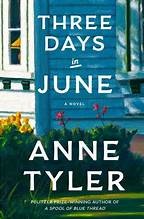
Three Days in June
A Baltimore mother loses her job, and her ex-husband turns up with a rescue cat, in Anne Tyler's short, funny novel about the three days around her daughter's…
2,867-word summary · 13 min read

The Zahir
A bestselling novelist's wife vanishes from their Paris home, sending him on a search that becomes a reckoning with his own marriage and attention.
2,433-word summary · 11 min read
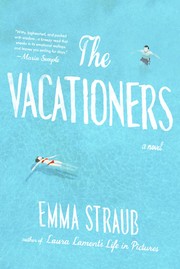
The Vacationers
A New York family's two-week stay in Mallorca turns into a comedy of exposed secrets when a magazine editor's affair and a son's debts come to light.
2,324-word summary · 10 min read

The Tunnel
A painter in a Buenos Aires prison recounts the glance, the woman and the jealousy that led him to murder the only person who understood him.
2,313-word summary · 10 min read
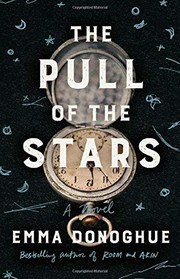
The Pull of the Stars
Over three days in a Dublin maternity ward in 1918, a nurse, a suffragette doctor on the run and a young volunteer face the flu, childbirth and unexpected love.
2,578-word summary · 11 min read