
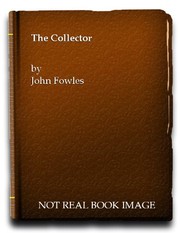
The Collector
2,618-word summary 12 min read 305 pages in the book
- First published
- 1963
- Publisher
- Little, Brown and Company
- Pages
- 305
- ISBN
- 9780316290968
Reading options
What's inside (9 sections)
I came to this book after years of hearing people argue about the 1965 film, and I expected a compact thriller about a man who locks a woman in a cellar. What I found was slower and stranger than that. John Fowles published it in 1963 as his first novel, and the English edition from Jonathan Cape ran 283 pages while the American one from Little, Brown ran longer. It is a short book that spends a great deal of time inside two people's heads, and by the end I cared less about what happened next than about how two people could be so certain of entirely different things. The edition I read was the Little, Brown text at 305 pages, and I kept flipping back to check whose version of a scene I had just accepted.
The premise can be said in one sentence. A lonely city hall clerk who collects butterflies wins a fortune on the football pools, buys an isolated house in Sussex, and kidnaps an art student so he can keep her as a specimen and wait for her to love him. Fowles wrote the book between November 1960 and March 1962, and it appeared in May 1963 with a jacket designed by Tom Adams. I mention the dates because the result feels so sure of its own shape that it is easy to forget this was a debut. Both the parts I admired and the parts that irritated me carry the marks of a writer finding out what he wanted to do before he had learned to hide the joins.
A clerk with a net and a jar
Frederick Clegg works as a clerk in a city hall and keeps butterflies in his spare time. The opening section belongs entirely to him, and Fowles lets him explain himself in a flat, careful, faintly formal voice that is one of the great achievements of the book. Clegg is lonely and socially underdeveloped. He admires Miranda Grey, a middle-class art student at the Slade School of Fine Art, from a distance, and he cannot think of a single ordinary way to approach her. He watches. He wants. He has no idea what to do with either feeling.
When he wins a large prize on the football pools, his life changes in the most literal way. He quits his job and buys an isolated house in the Sussex countryside near Lewes. Now he has money, privacy, and a place big enough for a project. The project is Miranda. He decides to add her to his collection of pretty, preserved objects, reasoning that if he keeps her captive long enough she will grow to love him. Fowles does not pause to label this as madness. He lets Clegg arrive at it by the same small steps that might lead a man to buy a better display case.
That quiet logic is what makes the first section work. A collector wants to keep what he has found, and Clegg has finally found something he wants to keep. The class difference is there from the start, though Clegg never frames it that way. Miranda has a life full of people, art school, opinions, and a future. Clegg has a ledger, a jar of specimens, and a house with a cellar. The critic Hayden Carruth argued that Fowles is preoccupied with reshuffling classes under British socialism, and this pairing of a working-class clerk with a bourgeois art student is where that preoccupation begins.
Alan Pryce-Jones, reviewing the novel for The New York Times, wrote that there was "not a false note in his delineation of Fred." That seems right. Clegg never sounds like a villain giving a speech. He sounds like a man writing things down carefully so that they come out reasonable. Fowles asks the reader to sit with that voice for a whole section before he gives us any other one, and the discomfort of that arrangement is the point.
Chloroform and the promise of a month
After careful preparation, Clegg drugs Miranda with chloroform and locks her in the cellar of the house. He is convinced that she will come to love him in time. When she wakes and confronts him, he is embarrassed rather than triumphant. He promises to let her go after a month. He pledges to show her every respect, swears he will not sexually molest her, and offers gifts and the comforts of home. There is one condition attached to all of it. She cannot leave the cellar.
The scene is chilling because of its manners. This is not a captor who wants to hurt anyone. Clegg wants to be thanked. He has imagined a version of captivity in which politeness and presents will do the work of a relationship, and he cannot see that the locked door cancels every kindness he offers. Fowles keeps the practical side thin. The abduction itself gets far less space than the conversations that follow it, and I think he knows that the mechanics are the least interesting part. A man this awkward pulling off a careful kidnapping is not quite believable, but the book is not asking us to admire his skill.
What interests Fowles is the bargain. Clegg offers safety, comfort, and a time limit, as though imprisonment were a service he is performing. Miranda has to live inside a promise she has no reason to trust. The month becomes a clock running in the background of everything she writes later, and every time Clegg refuses to honour it, the reader understands a little more clearly what his respect actually means.
Miranda's diary and the man called G.P.
The second section changes hands completely. Miranda narrates it in fragments from a diary she keeps during her captivity. She writes to her sister and, more often, to a man she calls G.P., an artist she respected and admired. Through these entries we get her life before the cellar, and we also learn that G.P. eventually fell in love with her and then cut off all contact. That history matters, because Miranda spends a great deal of this section trying to understand why people who claim to care about her leave.
At first she assumes Clegg has sexual motives. As his character becomes clearer, she realises that is not it, and she begins to pity him. She compares him to Caliban in Shakespeare's The Tempest, the hopeless figure obsessed with Miranda. Clegg, for his part, tells her that his first name is Ferdinand, the man who wins Miranda's love in the same play. I found this detail almost too neat, and also very good. The two of them are reading the same story and assigning themselves opposite roles. She gives him the part of the slave. He gives himself the part of the lover. Neither is entirely wrong, which is what makes the comparison sting.
The diary form does something else as well. It arrives after Clegg's account, so everything he said about the situation has to be reread. We get small physical details from both of them that agree, and reactions that do not. The scholar Shyamal Bagchee noted that the two narrations frequently agree about what happened while showing how differently the same events strike two people. That mirror work is the structural spine of the novel. It also means that the reader spends the middle of the book doing what Miranda does, which is trying to work out what another person actually intends.
I will say that this section tests patience in a way that seems partly deliberate and partly not. Pamela Cooper, in The Fictions of John Fowles, described the book as a Gothic-inspired work that insists on the tedium of Miranda's ordeal. That is accurate. The repetition of days, the small negotiations, the same wall and the same ceiling, all of it accumulates. Some of that dullness is the point, because boredom is part of what captivity is. Some of it felt to me like Fowles lingering a little too long in a room I already understood.
Escape attempts and the wish to kill him
Miranda tries to leave several times and Clegg stops her each time. She tries to seduce him, hoping he will let her go afterwards. The attempt fails because Clegg is impotent and sexually inexperienced, and the result is that he becomes confused and angry rather than compliant. This is one of the places where the book's irony tightens. Every move Miranda makes to free herself makes her captor more bitter and more fixed in his purpose. Bagchee called this the novel's greatest irony, that Miranda seals her own fate by continuing to be herself.
As Clegg keeps refusing to release her, she starts to imagine killing him. She makes an attempt and fails. Afterwards she enters a period of self-loathing and decides that to kill him would lower her to his level, so she stops trying. That decision is rendered without any speech about dignity. It is simply a line she draws, and the book respects it. Before she can try to escape again, she becomes seriously ill and dies.
Her death is handled in a few plain sentences, and I still think it is the cruelest thing in the book. There is no dramatic final confrontation, no last letter that explains everything, no justice. The woman at the centre of the novel is simply gone, and the narrative moves on. Carruth praised Fowles for knowing how to evoke what he called the oblique horror of innocence as well as the direct horror of knowledge. This is that oblique horror. Nothing about the death is staged for effect, and that is exactly why it lands.
The last section, told by Clegg
The third section returns to Clegg. He finds Miranda dead and at first wants to kill himself. Then he reads her diary and learns that she never loved him. His response is not grief but relief. He decides that he is not responsible for what happened and that he is better off without her. He buries her body in the garden of the house he bought for her. The book closes with him thinking about kidnapping another girl.
I want to be careful here, because the ending is easy to describe badly. Fowles does not let Clegg be arrested or punished or even seriously troubled. The man walks away from a death he caused and starts looking for a replacement specimen. That refusal to deliver justice is the hard truth of the book, and a reader looking for moral balance will not find it. But it follows from Clegg's voice. He has never once accepted that other people are real in the way he is real, so why would he suddenly accept it on the last page? The ending is consistent, which does not make it comfortable.
Bagchee described the world of the novel, especially towards the end, as not our world but similar to the view of the world we have in our darkest hours, and he compared it to the absurd worlds of Kafka and Beckett. That fits the cold, chancy quality of the last pages. Events hinge on accidents. A locked door, a bout of illness, a diary left where it can be read. Nobody gets what they deserve. The ironies keep operating after the story has stopped.
Class, Caliban, and the machinery of the book
The scholars who write about The Collector keep returning to two arguments. The first is class. Cooper read the novel as a clash between a socially entrenched, wealthy middle class and an underprivileged but upwardly mobile working or lower middle class. Critics have also compared the struggle between Frederick and Miranda to the Hegelian master and slave dialectic, in which each holds power over the other even though their social positions differ. Clegg has the physical power. Miranda has the education, the culture, and the certainty that she is better than him. Neither escapes the other.
The second argument is about irony and idealisation. Cooper treated the book as a critique of masculine sexual idealisation, and she paired photography with collecting as twin obscenities, two ways of turning a person into an object for a man's private use. Bagchee pointed out that Miranda's growth in captivity is a paradox. She learns about choice at the very moment when she has almost none, and she comes to understand herself when her life has stopped moving. Katarina Držajić called the novel one of the prominent works of the twentieth century and said it can be read as a psychological thriller, a Jungian study, or a modern and postmodern piece of literature. All of those labels fit, though none of them explains why the book is so hard to put down.
The structure deserves its own mention. We begin with Clegg, move to Miranda's diary, and then return to Clegg. Ending inside the mind we most want to escape is a brave choice, and it is why the book stays with me. Fowles refuses to give the reader the satisfaction of a final perspective that sorts everything out. He gives us the two voices, lets them overlap, and leaves the argument open. The 1965 film starring Terence Stamp and Samantha Eggar was nominated for an Academy Award, and I can see why filmmakers were drawn to a story with two such strong parts, but the novel's real engine is the way those parts refuse to agree.
What works and what grates
The language is the thing that carries this book. Clegg's voice is precise, restrained, and terrible in its reasonableness. Miranda's diary has a different texture, more alive and more uncertain, and the shift between them is immediate. Fowles was still writing his first novel and already had more control of tone than most writers manage in a career. The short opening and the short closing are both excellent, and the cellar scenes are uncomfortable in exactly the right way.
The middle is harder to defend. The tedium that Cooper identified is a real feature, and I found myself skipping a few stretches of Miranda's reflections on G.P. because I had understood the point before the book finished making it. The class argument also gets pressed fairly hard, and Clegg's education and Miranda's background are sometimes made to stand in for a whole social analysis. A reader who wants the story to move will feel the drag. A reader who wants every button explained will feel the same drag for a different reason.
There is also the matter of belief. The abduction depends on a coincidence, the captivity depends on Clegg being more capable than he sounds, and the ending depends on Miranda dying at exactly the wrong moment. Fowles seems to know this and to have decided that such coincidences belong in a novel about a world run by chance. I accepted most of them while reading and questioned them afterwards, which is probably the reaction he wanted.
I would hand this to a reader who enjoys a book that argues with itself and who can stand an ending that offers no comfort. I would be cautious with a reader who needs the villain to be caught or the captive to be rescued. What stays with me is not the plot but the voice of a man who can describe locking a woman underground in the same careful tone he uses for his butterflies, and a diary that keeps insisting, page after page, that this is not love. Fowles never lets those two accounts settle, and the book is at its best when it refuses to choose between them.
FAQ
Who narrates The Collector?
The novel has three sections. Clegg narrates the first and last in a flat, self-justifying voice, while Miranda's middle section is made up of diary entries addressed to her sister and to an artist called G.P.
Does Clegg get caught or punished?
No. After Miranda dies, Clegg reads her diary, decides he is not responsible, buries her in the garden, and begins considering another girl.
When was The Collector published, and by whom?
It appeared in 1963, published by Jonathan Cape in Britain and Little, Brown and Company in the United States. The edition cited here is the Little, Brown first edition, which runs 305 pages.
Similar books
The Tunnel
A painter in a Buenos Aires prison recounts the glance, the woman and the jealousy that led him to murder the only person who understood him.
2,313-word summary · 10 min read
The New York Trilogy
Three linked novels turn a wrong-number call into a puzzle about names, authorship, and the stories people tell to stay sane.
2,259-word summary · 10 min read

The Zahir
A bestselling novelist's wife vanishes from their Paris home, sending him on a search that becomes a reckoning with his own marriage and attention.
2,433-word summary · 11 min read
The Portrait of a Lady
A young American woman inherits a fortune, refuses two suitors, and marries a polished expatriate who makes her independence a trap. James watches her mind at…
2,903-word summary · 13 min read
The Obsession
After a childhood in the shadow of her serial killer father, photographer Naomi Carson puts down roots in a coastal town, only to face a copycat killer…
2,230-word summary · 10 min read
The Luminaries
Eleanor Catton's Booker-winning novel drops a young prospector into an 1866 New Zealand gold town where twelve men untangle a web of hidden gold, murder and…
2,949-word summary · 13 min read
The Cellar
Abducted in her small English town, sixteen-year-old Summer is locked in a cellar with three other girls. Their captor calls himself Clover and wants a perfect…
2,551-word summary · 11 min read
The Bonfire of the Vanities
Tom Wolfe's first novel follows a Wall Street bond trader whose life unravels after a hit-and-run in the Bronx, in a satire of 1980s New York money, race and…
2,268-word summary · 10 min read
Possession: A Romance
A London Library discovery sends two scholars chasing a secret Victorian love affair, in a Booker-winning novel of invented letters, poetry and the race to own…
2,394-word summary · 11 min read
Oranges Are Not the Only Fruit
An adopted girl in a strict Pentecostal household learns to read the Bible, preach sermons and love women, then faces her church and mother for it.
2,384-word summary · 11 min read
Hidden Bodies
Joe Goldberg flees to Los Angeles chasing the woman who robbed him, falls for a wealthy grocery heir, and finds the bodies he buried in New York resurfacing in…
2,247-word summary · 10 min read
American Pastoral
Roth's Pulitzer winner follows a Newark glove maker's son whose perfect family life is broken by his daughter's antiwar bombing, retold by a narrator who…
2,660-word summary · 12 min read
A Passage to India
Forster's 1924 novel follows two Englishwomen, an Indian doctor and a schoolmaster whose lives collide at the Marabar Caves, where a moment of panic exposes…
2,332-word summary · 10 min read

The Wonder
In 1850s Ireland, an English nurse is hired to watch an eleven-year-old girl who claims to live on manna, and finds a child dying in plain sight.
2,298-word summary · 10 min read

Invisible Cities
Marco Polo describes fifty-five impossible cities to Kublai Khan, and each one turns out to be a way of talking about memory, desire and the place we call home.
2,465-word summary · 11 min read
Dead Souls
A charming stranger buys the rights to serfs who have died but remain on the census rolls, and a whole province turns against him.
2,255-word summary · 10 min read

The Crying of Lot 49
A California woman named executor of her ex-lover's estate follows a muted post horn into a possible centuries-old postal conspiracy, and Pynchon refuses to…
2,003-word summary · 9 min read
Silas Marner
A falsely accused weaver hoards gold in Raveloe until a stolen hoard and an abandoned child remake his narrow life.
2,699-word summary · 12 min read
Revolutionary Road
A Connecticut couple who believe they are too good for the suburbs plan to move to Paris, and the plan slowly exposes everything they cannot say to each other.
2,085-word summary · 9 min read

Howards End
Forster's 1910 novel follows two families, a house in Hertfordshire, and a burned note, asking whether money and feeling can ever be connected.
2,187-word summary · 10 min read

Sophie's Choice
A young Southern writer in 1947 Brooklyn befriends a brilliant, unstable couple and slowly learns the story of the Polish Catholic woman at the center of their…
2,798-word summary · 12 min read

Fathers and Sons
Arkady brings the nihilist Bazarov home to his father's estate, and a generational argument turns into love, a duel, and an early death.
2,192-word summary · 10 min read
Naked Lunch
Burroughs's banned 1959 collage novel follows Bill Lee through addiction, Tangier, and the nightmare bureaucracy of the Interzone.
2,082-word summary · 9 min read

The Chosen
A shattered pair of glasses in a 1944 Brooklyn softball game starts a friendship between a Hasidic boy and his Orthodox neighbor, and their fathers pull them…
2,443-word summary · 11 min read
The Dharma Bums
Ray Smith rides freight trains, climbs Matterhorn Peak and argues about Zen with the poet Japhy Ryder in Kerouac's 1958 road novel.
2,729-word summary · 12 min read

Still Missing
A realtor is abducted at a Vancouver Island open house and held for more than a year. Told through therapy sessions, the novel follows her escape and the hunt…
2,466-word summary · 11 min read

Ivanhoe
A disinherited Saxon knight, a great tournament, a besieged castle and a trial by combat. Scott's most famous novel, set in England in 1194.
2,834-word summary · 13 min read
Wide Sargasso Sea
Jean Rhys gives the first Mrs. Rochester a Caribbean childhood, a marriage built on money and suspicion, and a voice that Charlotte Bronte left in the attic.
2,021-word summary · 9 min read
The Gambler
Dostoevsky's roulette novella: Alexei loses Polina, wins a fortune, loses everything, and promises himself one more bet tomorrow.
2,022-word summary · 9 min read
The Ex
Cassie thinks her new boyfriend's ex is the woman harassing her, but Freida McFadden's thriller keeps rearranging who the ex actually is.
2,103-word summary · 9 min read