
Reading options
What's inside (9 sections)
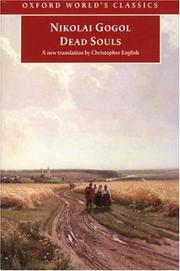
I read Dead Souls in the Oxford World's Classics edition, translated and edited by Christopher English, published by Oxford University Press in 1998, a paperback of 448 pages. The novel itself first appeared in 1842 in Moscow, in Russian, under the title Мёртвые души, or Myortvye dushi. The first edition carried a much longer title, roughly The Adventures of Chichikov, or Dead Souls, A Poem, and was printed at the Moscow University Press in a run of about 2,400 copies. Gogol called the book a poem in prose, planned it as the first of three volumes, burned the manuscript of the second part shortly before his death in 1852, and left the surviving text breaking off in mid-sentence. That strange publication history is not a footnote. It shapes the whole experience of reading the book.
The scheme
Pavel Ivanovich Chichikov arrives in a small provincial town in a carriage, with a driver and a valet, and immediately sets about making himself agreeable. He calls on the important officials and then on the landowners in the surrounding countryside. He is unfailingly polite, vague about his past, and careful never to state his business plainly. The townspeople take him for a man of means and grow eager to know what he wants.
What he wants is dead people. Before the emancipation of the serfs in 1861, a serf was counted as a soul and treated as the property of his landowner. Souls could be bought, sold, and mortgaged like any other chattel. Taxes were assessed from revision lists, the census documents that were updated only at long intervals, so a landowner often kept paying tax on serfs who had died since the last revision. These dead souls existed on paper and nowhere else. Chichikov proposes to take them off the landowners' hands and relieve them of a useless burden.
Nothing in the arrangement requires the dead serfs to exist. They survive as entries in a document, and that document is enough for the law. Gogol keeps returning to the gap between the paper record and the living world, and once you notice it the joke stops being only a joke. A whole society is shown conducting its serious business through fictions that everybody agrees to honor.
The narrator eventually lets us in on the real plan. Chichikov is a former mid level government official who was dismissed for corruption and narrowly escaped prison. Buying dead souls is another get rich quick scheme. Once he has accumulated enough of them, he intends to borrow a large sum against them and walk away with the money. Nobody he deals with quite understands this, which is the point. The whole town is so busy with its own small appetites that a man walking around with a legal claim to four hundred corpses can pass for a respectable visitor.
The landowners
The heart of the book is Chichikov's tour of the estates, and Gogol makes each stop a separate comic nightmare. He begins with Manilov, a sentimentalist with pursed lips and a manner so sugary it curdles. Manilov agrees to almost anything, talks in flowing generalities, and seems to regard the visit as an opportunity for elegant friendship rather than business. Chichikov leaves with a promise and very little else.
Madame Korobochka, a widow, is the opposite. She is suspicious of everything, fussily careful about the paperwork, and convinced that she is being cheated no matter what price is named. She haggles over dead serfs as if they were a sack of flour. The scene is funny on the surface and quietly horrible underneath, because the transaction only makes sense in a world where a human being has already been reduced to a line in a ledger.
Nozdryov is a bully and a bully's cousin, a liar, a brawler, and a cheat. He proposes schemes, tells extravagant stories, tries to make Chichikov gamble, and generally treats the visit as an excuse to impose his will on everyone in the room. He is also the source of the rumors that later destroy Chichikov in town, which gives the episode a delayed payoff.
Sobakevich is strong, silent, and economical. He drives a famously hard bargain and talks about his peasants as a farmer might talk about his cattle, with blunt attention to their useful qualities. Chichikov expects ignorant provincials to hand over dead souls for a song. Instead he meets greed and suspicion at every door, and the negotiations drag on. By the end of his tour he has acquired roughly four hundred souls, sworn each seller to secrecy, and worn himself out doing it.
The darkest stop is Plyushkin, the miser. His estate has gone to ruin, his serfs look half starved, and the man himself is a shrunken parody of a gentleman, suspicious of his own household and incapable of ordinary kindness. Critics have noted that Plyushkin breaks the pattern of the other landowners. They are complacent, wrapped up in their own pretensions. He is miserable and knows it. Visiting him feels less like watching a comic type and more like walking into a house where something has been dying for years.
Back in town
With the purchases recorded legally, Chichikov returns to town and finds himself treated like a prince. Officials who barely noticed him before now compete for his company. A celebration is thrown in honor of his acquisitions, and the same people who would not give him the time of day a week earlier are eager to be seen at his side.
Then the mood turns. Rumors begin to circulate that the serfs he bought are all dead, and that he is planning to elope with the governor's daughter. The gossip grows more elaborate as it travels. One theory has him as Napoleon in disguise. Another casts him as the notorious vigilante Captain Kopeikin. The townspeople, who were presented a moment ago as solid citizens, reveal themselves as a crowd of anxious, suggestible people who would rather believe a wild story than an ordinary explanation.
The speed of the reversal is startling. Officials who toasted Chichikov now cross the street to avoid him, and nobody seems to have the nerve to ask him a direct question. A woman who was ready to flirt with him a chapter earlier now warns her friends in whispers. Gogol is not interested in fairness here. He wants to show how quickly a crowd turns when a story arrives that lets it feel superior to the man it was courting.
Chichikov is cut socially, then ostracized altogether, and finally has no choice but to flee. The carriage that brought him into town leaves it again at speed.
Book Two and the burning
The second part picks up in another part of Russia, with Chichikov still trying to make his scheme work. He involves himself with an idle landowner named Tentetnikov, hoping to help him win the favor of General Betrishchev so that Tentetnikov can marry the general's daughter, Ulinka. That means visiting a string of the general's relatives, beginning with Colonel Koshkaryov, and the estate hopping starts over again with new eccentrics.
Chichikov eventually buys an estate from a destitute man named Khlobuyev. Somewhere in the missing chapters he is arrested for attempting to forge the will of Khlobuyev's wealthy aunt. He is pardoned through the intervention of a kindly figure named Mourazov, but he has to flee the village all the same. The surviving text ends in mid-sentence, in the middle of a grand speech by a prince who has arranged the arrest and who rails against corruption in the Russian government.
Gogol burned the manuscript of this second part in 1852, ten days before his death, after years of religious anxiety and creative paralysis about what the ending should be. Modern editions usually print what survives of Part Two, reconstructed by editors from notebooks and fragments. There is a serious scholarly argument, associated with Susanne Fusso, that Gogol meant Part One to stand complete and only agreed to write a sequel because readers expected one. If that is right, the broken ending is less an accident than the logical result of a writer trapped by his own promise of more.
What Gogol was doing
Gogol described the book as an epic poem in prose, and the label is stranger than it sounds. The plot was suggested by his friend Alexander Pushkin, and the structure owes something to the picaresque tradition, with a roguish traveler moving from one episode to the next. Reviewers have compared it to Don Quixote and to Dickens's Pickwick Papers, comparisons that point to the loose, accumulating form as much as the humor.
The target of the satire is a Russian word that resists translation: poshlost. It suggests vulgarity and commonplace thinking, moral and spiritual cheapness, a middle class pretension to significance that has no substance behind it. Nearly everyone Chichikov meets is a variation on it. Manilov's sweetness, Korobochka's fussing, Nozdryov's bluster, and Sobakevich's bluntness are different surfaces over the same emptiness. The title works on two levels at once. The dead souls are the serfs on paper, and they are also the spiritual condition of the living people who own them.
Vladimir Nabokov famously rejected the idea that Dead Souls is chiefly a reformist or satirical work. He thought the plot scarcely mattered, that the whole notion of buying dead people was ridiculous on its face, and that the book's real achievement was in the prose, its descriptive power, and its refusal of novelistic cliches. That reading has its limits, but it is a useful corrective when the catalogue of greed starts to feel heavy handed. Gogol is not writing a tract. He is making a strange, loud, beautiful object out of a society he found both comic and frightening.
The narrator's voice
A large part of what makes the book strange is the narrator. He is not a quiet presence who reports the action and then withdraws. He interrupts himself, addresses the reader directly, promises revelations that he postpones, and wanders into long digressions on Russian habits, on the nature of the landowner, on the right way to describe a lady, and on the small details of travel. At times he seems to be improvising in front of you, which is part of the design. The book was meant to feel spoken rather than written, a storyteller's performance with the weave left showing.
That voice can be exhausting. The narrator is fond of elaborate comparisons and of circling a subject before he names it, and whole pages can pass with very little forward motion. Gogol was working against the tidy realism of the conventional novel, and the mess is deliberate, but a reader used to a calm reliable guide may find the constant aside irritating. There is a difference between a voice that draws you in and one that keeps clearing its throat. Dead Souls does both, sometimes in adjacent paragraphs.
Then there are the passages where the comedy tips into something else. The description of Plyushkin's ruined village, the sketches of rural poverty around his estate, the moments when Chichikov's driver and valet are treated as more than props: these show a writer who could not be contained by the comic frame he had chosen. The book keeps threatening to become a different, darker novel, and then pulls back into farce. That instability is the source of much of its power, and also of the feeling that something was left unresolved.
What works and what does not
The middle of the book can be a slog. Once you understand the scheme, the estate visits repeat their pattern, and the long descriptions and lists slow the pace considerably. The satire is broad enough that characters sometimes arrive as types rather than people, and the narrator's habit of addressing the reader directly can feel arch when the joke has already been made. The unfinished ending is a genuine frustration even if you accept the argument that Part One is complete. You cannot finish this novel with the feeling that you have been given a whole thing.
Translation matters more than usual here, because so much of the effect depends on rhythm and on the specific absurdity of Russian speech. English versions run from Isabel Hapgood's in 1886 and Constance Garnett's in 1922 through David Magarshack's Penguin translation of 1961, the Pevear and Volokhonsky version of 1996, Robert Maguire's Penguin edition of 2004, and Donald Rayfield's of 2008. Each gives you a different Gogol. The English one I read is careful and readable, with the introductions and notes that this edition supplies, but a book this dependent on voice rewards shopping around.
This is not the novel for someone who wants a tidy plot, a clear moral, or emotional intimacy with a protagonist. Chichikov is a crook with almost no redeeming interior life, and the people he meets are grotesques. The pleasure is in the velocity of the invention, the narrator's digressions, the sudden shifts from farce to something close to pity, and the unnerving sense that the paper souls in the revision lists are the only things anybody in this world treats as solid.
I kept returning to Plyushkin's village, and to the way his neglected serfs and his ruined house sit inside a book that is otherwise so determined to be funny. Chichikov's carriage rolls on, collecting its worthless property, while the living people around him cling to their titles and their dinner parties and their paper certainties.
FAQ
When was Dead Souls first published?
It first appeared in Russian in 1842 in Moscow. This summary cites the 1998 Oxford World's Classics edition, translated and edited by Christopher English.
Why does Dead Souls end so abruptly?
Gogol intended three volumes and burned the manuscript of the second part in 1852, shortly before his death. Modern editions print the surviving fragments.
Do I need to know Russian history to enjoy it?
A little helps. The joke depends on the old practice of counting serfs as souls on tax rolls, which the book explains as it goes.
Similar books
Still Life with Woodpecker
An environmentalist princess and an outlaw bomber fall in love, then argue about freedom, sacrifice, and a pack of Camel cigarettes.
2,061-word summary · 9 min read
Naked Lunch
Burroughs's banned 1959 collage novel follows Bill Lee through addiction, Tangier, and the nightmare bureaucracy of the Interzone.
2,082-word summary · 9 min read
If on a Winter's Night a Traveler
You, the Reader, chase a defective novel through bookshops and translators while ten other novels keep interrupting. Calvino's famous puzzle about the act of…
2,173-word summary · 10 min read
Post Office
Chinaski drifts through postal shifts, cheap rooms, horse tracks and rough love in Bukowski's 1971 debut about work, drink and survival.
2,444-word summary · 11 min read
Breakfast of Champions
A Pontiac dealer breaks down while a broke sci-fi writer brings the book that tells him others are robots.
2,013-word summary · 9 min read
The Master and Margarita
Devil Woland visits 1930s Moscow while Master writes Pilate and Margarita bargains.
2,535-word summary · 11 min read
Catch-22
Yossarian tries to survive Pianosa bombing runs while the catch traps him.
3,764-word summary · 17 min read
The Pelican Child
Twelve short stories by Joy Williams, where talking dogs, bleak comedy, and the nearness of death mark a late-career stylist at work.
2,415-word summary · 11 min read
The Bonfire of the Vanities
Tom Wolfe's first novel follows a Wall Street bond trader whose life unravels after a hit-and-run in the Bronx, in a satire of 1980s New York money, race and…
2,268-word summary · 10 min read

The Crying of Lot 49
A California woman named executor of her ex-lover's estate follows a muted post horn into a possible centuries-old postal conspiracy, and Pynchon refuses to…
2,003-word summary · 9 min read
The Gambler
Dostoevsky's roulette novella: Alexei loses Polina, wins a fortune, loses everything, and promises himself one more bet tomorrow.
2,022-word summary · 9 min read
A Connecticut Yankee in King Arthur's Court
Hank Morgan, a Connecticut factory man, wakes in King Arthur's England, rises to chief adviser, and rebuilds the kingdom until his own inventions turn on him.
2,193-word summary · 10 min read
I Capture the Castle
Cassandra journals six months of love and money trouble in a castle.
2,402-word summary · 11 min read
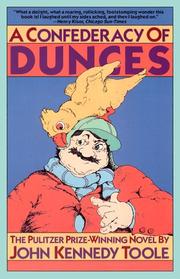
A Confederacy of Dunces
Ignatius J. Reilly, jobless and full of opinions in New Orleans, meets work, his mother, and the law in Toole's posthumous Pulitzer winner.
3,089-word summary · 14 min read
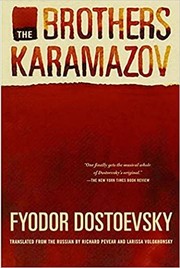
The Karamazov Brothers
Dmitri, Ivan, and Alyosha Karamazov face their father, murder, faith, and doubt in Dostoevsky's final novel.
2,512-word summary · 11 min read
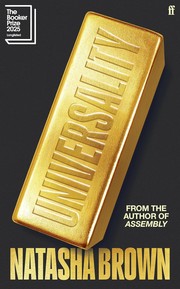
Universality
Natasha Brown's short second novel turns a lockdown fracas over a gold bar into a sharp satire of money, identity and public argument.
2,302-word summary · 10 min read
The Rest of Our Lives
A law professor drives his daughter to college, then heads west instead of home, testing a private promise he made twelve years ago.
2,238-word summary · 10 min read
The Nix
A stalled novelist and community college professor goes looking for the mother who left him and finds a radical activist whose rock thrown at a governor made…
2,214-word summary · 10 min read
The New York Trilogy
Three linked novels turn a wrong-number call into a puzzle about names, authorship, and the stories people tell to stay sane.
2,259-word summary · 10 min read
Only Son
A brief, funny, melancholy debut about a boy whose father dies in 1982 Florida, and the man he becomes, still trying to read the mystery of that loss.
2,170-word summary · 10 min read

When the Moon Hits Your Eye
The Moon turns into cheese, and a loose collection of stories follows how institutions, billionaires, pastors and ordinary people respond to the impossible.
2,002-word summary · 9 min read
Three Days in June
A Baltimore mother loses her job, and her ex-husband turns up with a rescue cat, in Anne Tyler's short, funny novel about the three days around her daughter's…
2,867-word summary · 13 min read
The Vacationers
A New York family's two-week stay in Mallorca turns into a comedy of exposed secrets when a magazine editor's affair and a son's debts come to light.
2,324-word summary · 10 min read
The Tunnel
A painter in a Buenos Aires prison recounts the glance, the woman and the jealousy that led him to murder the only person who understood him.
2,313-word summary · 10 min read
The Rachel Incident
A funny, sharp novel about two twenty-somethings in recession-era Cork whose bookshop friendship, tangled romance and a married professor's lie leave a secret…
2,346-word summary · 10 min read
The Portrait of a Lady
A young American woman inherits a fortune, refuses two suitors, and marries a polished expatriate who makes her independence a trap. James watches her mind at…
2,903-word summary · 13 min read
The Luminaries
Eleanor Catton's Booker-winning novel drops a young prospector into an 1866 New Zealand gold town where twelve men untangle a web of hidden gold, murder and…
2,949-word summary · 13 min read
The Collector
A lonely clerk wins the football pools, buys a Sussex farmhouse, and kidnaps an art student he hopes will love him. Fowles's debut splits the story between…
2,618-word summary · 12 min read
Soul Music
A harpist from Llamedos brings rock music to Ankh-Morpork, and a primordial force takes hold of the city, pulling Susan Sto Helit and Death into a fight over…
2,406-word summary · 11 min read
Shadow Ticket
Pynchon's tenth novel, his first in twelve years, sends a Milwaukee detective across 1932 Europe after a cheese heiress, a clarinetist, and a very strange lamp.
2,348-word summary · 10 min read