
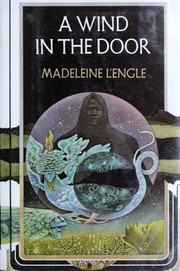
A Wind in the Door
2,214-word summary 10 min read 224 pages in the book
- First published
- 1973
- Publisher
- Farrar, Straus and Giroux
- Pages
- 224
- ISBN
- 9780374384432
- Series
- A Wrinkle in Time Quintet (#2)
Reading options
What's inside (7 sections)
I came to this one straight after A Wrinkle in Time and expected more of the same, more tessering across planets and another showdown with a giant brain. This book is stranger and smaller and, to me, more moving. Madeleine L'Engle published A Wind in the Door in 1973 with Farrar, Straus and Giroux. The Square Fish paperback most kids meet runs 224 pages, while the first edition ran 211. It is the second book in the series her publisher calls A Wrinkle in Time Quintet, followed by A Swiftly Tilting Planet. Full spoilers here, because the plot turns on secrets inside a body and there is no clean way to retell it without them.
The setup stays close to home. Meg Murry is in high school now, still prickly, still bad at hiding what she feels. Her little brother Charles Wallace is six, brilliant, odd in the way gifted kids can be, and miserable at school. The other children bully him. The new elementary principal is Mr. Jenkins, the same man who used to discipline Meg in high school, and Meg is sure he dislikes the whole family. At home their mother, a working microbiologist, notices something scarier than bruises. Charles Wallace tires fast and breathes wrong. Something is failing inside him at a level no ordinary doctor visit will fix.
L'Engle wrote the book after a physician friend sent her articles about mitochondria, the small structures inside cells that turn food into energy. She gave herself what she called a crash course in cell biology with help from her daughter, and the story moved from outer space into inner space. That sounds like a gimmick. On the page it feels like the point. The first book asked what holds the universe together. This one asks what holds a single small body together, and whether hate can unmake it cell by cell.
A sick brother and a strict principal
Charles Wallace's illness drives everything, and L'Engle writes sick-kid dread with restraint. He does not collapse in a dramatic scene. He fades. He sits out games. He breathes like each breath costs him. Their mother examines him with professional calm and maternal fear running underneath, and the combination is worse than either alone. She finds the trouble in his mitochondria, in tiny fictional structures she calls farandolae, and her theory is that they are failing to root and ripen. A child can die because pieces of him smaller than sight decide not to belong.
School makes it worse. Charles Wallace refuses to hide who he is, answering teachers with sentences too advanced for the room, and the other kids punish him for it. Meg wants to storm the building and fight everyone. She settles for an appointment with Mr. Jenkins that goes badly. He is dry, rule bound, unimaginative in exactly the way Meg despises. She leaves convinced he is the enemy. The book will spend its whole length proving her half right and half wrong, which is one of its bravest moves. Jenkins is not secretly warm. He is exactly as rigid as he seems. The question is whether rigidity is all he is.
Calvin O'Keefe returns, now sixteen, tall and still a little neglected by his own big family, and still anchored to the Murrys. His role here is steadier than in the first book. He believes Meg when she sounds wild. He shows up at night when asked. He stands next to Charles Wallace at school when standing there costs him. If Meg is fire, Calvin is the hand that keeps the fire pointed at the right thing. There is a quiet scene where Calvin admits he envies the Murrys their closeness even with all their shouting, and it reframes his courage. He is not brave because he has nothing to lose. He is brave because he found people worth losing for.
A note on age and audience. The publisher aims this at ages ten and up, and the reading level fits that. The ideas do not always. L'Engle mixes prayer, physics, and poetry without slowing to explain, and younger readers may bounce off the middle chapters. That is not a flaw so much as a warning. This is a children's book that trusts children to sit with confusion.
Dragons in the garden
The wonder breaks in through the vegetable garden. Charles Wallace tells Meg there is a drive of dragons out back, using the old term for a flock the way only he would. Meg follows him and finds a pile of strange metallic feathers, cold and bright, clearly not from any bird. Then she meets something worse. A copy of Mr. Jenkins appears to her, wrong in a way she feels before she can name, cruel where the real man is merely stiff. It scares her badly, and she runs.
That night the truth lands with the other children present. The dragons are one creature, an extraterrestrial cherubim named Proginoskes, called Progo for short. He is singular, one of a kind, made of wings and eyes and flame and smoke, constantly moving, not always visible. He studies under a vast calm being called the Teacher, Blajeny, who recruits the three children for a purpose. The universe has a rot in it called the Echthroi, the haters, the unmakers. They show up wherever love thins out. Wars, cruelty, bullying, and now, inside Charles Wallace, where they whisper to his farandolae that rooting is pointless and growing is a trap.
Progo is the book's great gift. He is funny and fierce and vain about his wings, tender with Meg in a way that never turns cute. He is also a Namer. In L'Engle's cosmos, naming is power. To know a thing's true name is to love it into being itself. Progo once learned the names of all the stars, and he tries to teach Meg the smaller version of the skill. Name what is real. Refuse the false copy. Say the thing until it stands.
Meg resists him at first, which I loved. She has met angels before, more or less, in the Mrs Ws of the first book, and she is in no mood for riddles while her brother struggles to breathe. Progo does not flatter her. He corrects her pronunciation, so to speak, until she starts to hear the difference between knowing about someone and knowing them.
The three Mr. Jenkinses
Meg's first trial sounds simple and plays hard. The next day she must pick the real Mr. Jenkins out of three. Two are Echthroi copies wearing his shape. One is the actual stiff, rule-bound principal. She cannot use logic alone, because the copies have studied him. She has to find something in him worth loving and let that recognition guide her.
This is where the book shows its teeth. Meg hates Jenkins. He embarrassed her for years. He doubts Charles Wallace. Everything in her wants to fail the test on purpose and call it honesty. Progo pushes her to look past the grudge at the lonely man underneath, the one who chose rules because people scared him. Meg finds it. Barely. A flicker of decency, a tired man doing a hard job without imagination but also without malice. She names it. The copies cannot hold against being truly seen, and the real Jenkins steps forward into a story much larger than school discipline.
What follows is my favorite turn in the whole quintet. Jenkins joins the quest. Not as comic relief, not as a convert who suddenly sparkles, but as himself. He brings skepticism and procedure into cosmic war, and both prove useful. He asks the plain questions nobody else thinks to ask. He refuses to pretend he understands. His presence also changes Meg. She has to cooperate with someone she despises, and the book refuses to make it easy or quick. They snap at each other inside a miracle. It feels honest.
L'Engle is doing theology here without hiding it. The Echthroi are unbeing, cold, the insistence that nothing matters and nobody belongs. Jenkins at his worst serves them by accident, through dismissal and small unkindness. At his best he fights them by the same small scale, showing up, listening, staying. The cosmic battle never leaves the human one. That is the whole argument of the book in one school hallway.
Inside Charles Wallace
The center of the novel goes where few children's books dare. Guided by Blajeny and Progo, Meg and Calvin kythe with each other, which means a deep kind of shared thinking, closer to prayer than to phone calls, and travel inward. They go inside Charles Wallace's body, into a mitochondrion, to speak with a young farandola named Sporos who refuses to mature.
Sporos is not evil. He is scared and proud, a child refusenik. The Echthroi have told him that rooting means death, that becoming part of a larger pattern means ceasing to be himself. He repeats their slogans with the confidence of someone quoting older kids. Meg argues, loses patience, argues again. She tries reason. She tries orders. Nothing lands, because Sporos hears every adult as a jailer. Calvin steadies her through kything, lending strength when her own runs thin. Jenkins watches, out of his depth, refusing to leave.
The danger is real and weirdly frightening. Meg pushes so far into the small places that she nearly gets Xed, unmade, erased from being. L'Engle describes the cold of it, the thinning, the temptation to stop trying because stopping would be restful. It is one of the best passages she ever wrote, quiet where the first book was loud. No pulsing brain, no chanting crowds. Just a girl getting thinner and thinner while a frightened speck of life refuses her hand.
Progo saves them at a cost that still stings. To fill the emptiness the Echthroi leave, which nothing can oppose except fullness willingly given, he pours himself into the void. The cherubim who named stars gives his own being so a child can breathe. Charles Wallace lives. The garden goes quiet. Meg understands, without anyone spelling it out, that love here is not a feeling that fixes things. It is a substance someone spends.
Readers should know the science is invented. Farandolae do not exist. Mitochondria do, and L'Engle's crash course gave her real vocabulary, but she builds myth on top of it freely. Biologists will smile. That is fine. She never claimed a textbook. She claimed the shape of the thing, small parts choosing to belong to a whole, and used it to talk about schools, families, and nations.
Naming, love, and what drags
The ending lands softly after such height, and reactions split there. Meg comes home changed but not polished. She still snaps. Jenkins stays stiff, just kinder at the edges. Charles Wallace recovers without becoming ordinary. The Echthroi are beaten back, not destroyed. Some readers find this honest. The book refuses to pretend one victory ends hate. Others, including the original Kirkus review, found Meg's final understanding too quick, love arriving like a trick learned rather than earned. I see both sides. The last chapters move fast after the slow inward journey, and one more scene of Meg sitting with what Progo spent would have helped me. As it stands, the grief hits after the book closes, which may be the intent. L'Engle often lets meaning arrive late.
There is also the matter of pace. The middle is talky. Long dialogues about being, naming, and rooting alternate with short bursts of action, and kids raised on faster fantasy may stall around the second trial. I stalled myself on reread for about thirty pages, then the Sporos scenes grabbed me and did not let go. Going in expecting conversation rather than chase scenes helps. This is a book of arguments with a few miracles, not the reverse.
What keeps it alive fifty years on is how usable its ideas are. Naming instead of labeling. Kything instead of assuming. Rooting instead of drifting. A teacher could build a month of lessons from Progo alone. A kid getting bullied could do worse than Charles Wallace's answer, which is to stay himself without cruelty back. And Meg's growth here is plainer than in the first book. She learns to love Jenkins without liking him much, to serve Sporos without controlling him, to receive Calvin's help without keeping score. Michele Murray in the Times called it a convincing blend of theology, family life, and science fiction, and Mari Ness years later called it L'Engle at her most poetic. Both sound right to me.
I will not pretend it tops the first book in every way. A Wrinkle in Time has the cleaner plot and the bigger screen moments. But A Wind in the Door has the braver heart. It says the universe is saved the same way a sick child is saved, one small part agreeing to belong, one sister refusing to unknow her brother's name. That is a lot to ask of 224 pages. Most of the time, it carries the weight. I finished it late at night and sat quiet for a while, thinking about Progo out in the garden and the small daily choice to root where you are planted.
FAQ
Is A Wind in the Door a sequel to A Wrinkle in Time?
Yes. It is book two of A Wrinkle in Time Quintet, published in 1973 after A Wrinkle in Time (1962), followed by A Swiftly Tilting Planet. It follows Meg, Charles Wallace and Calvin.
What are farandolae?
They are invented microscopic structures inside mitochondria in the book, described as needing to root and mature. Real mitochondria exist, but farandolae are L'Engle's fiction built from articles a physician friend sent her.
What age is A Wind in the Door for?
Ages ten and up can read it, but the middle chapters mix theology, physics and poetry without slowing down. Kids who want fast chases may stall; patient readers who liked the first book will settle in.
Similar books
More from A Wrinkle in Time Quintet first, then related titles.
A Wrinkle in Time
Meg Murry, Charles Wallace and Calvin tessar past Mrs Whatsit, Mrs Who and Mrs Which to Camazotz to free Mr Murry from IT.
2,055-word summary · 9 min read
A Swiftly Tilting Planet
Charles Wallace rides time with a unicorn to stop a dictator before birth.
2,193-word summary · 10 min read

Iron Widow
Wu Zetian enlists to avenge her sister, kills her pilot, and becomes an Iron Widow in a mecha Huaxia where the machines are built to kill women.
2,444-word summary · 11 min read

Archenemies
Nova steals for the Anarchists while Adrian hides his Sentinel identity, and a serum that erases prodigy powers puts them both at risk.
2,485-word summary · 11 min read
The Borrowers
A family of tiny people live under the floorboards of an English house, borrowing what they need until a lonely boy and a suspicious housekeeper change…
2,164-word summary · 10 min read

Stars Above: A Lunar Chronicles Collection
Nine Lunar Chronicles stories fill in the histories of Cinder, Wolf, Thorne, Cress, Winter, and Jacin, and end with a wedding after the war.
2,230-word summary · 10 min read
Saga, Volume 3
Marko, Alana, and Hazel hide on the planet Quietus with the reclusive author who inspired their romance, while assassins and a prince close in.
1,989-word summary · 9 min read

Shadow Me
Kenji Kishimoto narrates for the first time as he joins Nazeera on a quiet mission after Restore Me, carrying painful secrets into Defy Me.
2,512-word summary · 11 min read
The Tombs of Atuan
Priestess Arha guards dark Tombs until wizard Ged comes to steal back ring.
2,043-word summary · 9 min read
Life As We Knew It
Sixteen-year-old Miranda keeps a diary while an asteroid strike on the moon brings tsunamis, blackouts, and a frozen year of hunger to her Pennsylvania town.
2,485-word summary · 11 min read
Among the Hidden
Twelve-year-old Luke, an illegal third child, befriends Jen and faces the cost of stepping out of hiding.
2,923-word summary · 13 min read
Fairest
Queen Levana's rise from scarred princess to Lunar ruler fills the gap between Cress and Winter.
2,983-word summary · 13 min read
The Angel Experiment
Six winged kids escape the lab that made them and fly cross country to rescue their youngest from wolf hybrids.
2,037-word summary · 9 min read
Sabriel
A girl who grew up outside the magic kingdom must take up her father's bells and sword to stop the dead from rising.
2,021-word summary · 9 min read
Winter
Scarred Princess Winter joins Cinder and her crew to stop Queen Levana's forced wedding and war between Luna and Earth.
3,179-word summary · 14 min read
Tuck Everlasting
Winnie Foster meets the immortal Tuck family in the woods and must decide whether to drink from their spring.
2,750-word summary · 12 min read
A Monster Calls
A grieving boy is visited at 12:07 by a yew tree monster whose three tales force his hidden truth about his mother's illness.
3,353-word summary · 15 min read
The Amber Spyglass
Lyra and Will cross worlds with amber spyglass to free ghosts and kill Authority.
2,252-word summary · 10 min read
Howl's Moving Castle
Cursed old by the Witch of the Waste, hatmaker Sophie Hatter talks her way into wizard Howl's moving castle and bargains with fire demon Calcifer to break the…
2,363-word summary · 11 min read
Cress
Imprisoned hacker Cress joins Cinder Scarlet Wolf Thorne to stop Levana's wedding to Kai.
2,534-word summary · 11 min read
Scarlet
Scarlet searches for her grandmother with Wolf while escaped Cinder fights Levana in the Lunar Chronicles sequel.
2,756-word summary · 12 min read
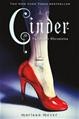
Cinder
Cyborg mechanic Cinder discovers she is Lunar royalty while plague and Queen Levana threaten New Beijing.
3,553-word summary · 16 min read
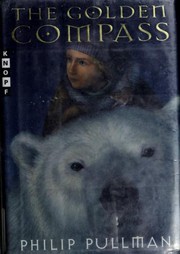
The Golden Compass
Golden Compass retold: Lyra and Pan north to save Roger, bears, Dust, bridge to new world.
2,019-word summary · 9 min read
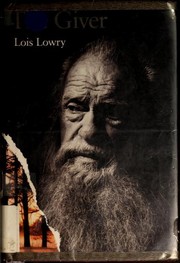
The Giver
Lois Lowry's The Giver retold: Jonas's Assignment, the memories, release, and the sled ride out.
2,510-word summary · 11 min read

What Happened to Goodbye
Mclean has reinvented herself in four towns since her parents divorced. In Lakeview she uses her real name, and for the first time staying put becomes a choice.
2,796-word summary · 12 min read
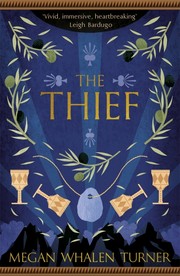
The Thief
A boastful young thief is pulled from a prison to steal a legendary stone for the king's magus, and the story he tells about himself is not the whole story.
2,514-word summary · 11 min read

The Long Winter
Dakota Territory, 1880: seven months of blizzards cut a town off from the railroad, and a family survives on twisted hay, ground wheat, and a dangerous wheat…
2,210-word summary · 10 min read
Ship of Magic
A sentient ship wakes when her captain dies, and the family that owns her starts to come apart over who gets to sail her.
2,026-word summary · 9 min read