
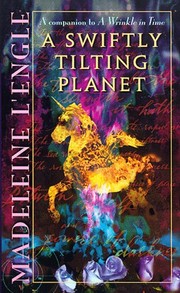
A Swiftly Tilting Planet
2,193-word summary 10 min read 278 pages in the book
- First published
- 1978
- Publisher
- Farrar, Straus and Giroux
- Pages
- 278
- ISBN
- 9780374373627
- Series
- A Wrinkle in Time Quintet (#3)
Reading options
What's inside (8 sections)
I came back to A Swiftly Tilting Planet as an adult with affection and worry. It was first published in 1978 by Farrar, Straus and Giroux, runs 278 pages in the standard hardcover, and serves as book 3 in the sequence usually called A Wrinkle in Time Quintet. I expected a cozy holiday story. What I found was a colder book about nuclear fear, family shame, and a fifteen year old boy asked to fix history from inside its sorrow.
The setup is direct. It is Thanksgiving. Meg Murry is grown and married to Calvin O'Keefe. She is pregnant, staying with her parents for the holiday. Her brother Charles Wallace is fifteen, still unusually open to other minds. Talk on television is full of a South American dictator named Madoc Branzillo, called El Rabioso by his followers, who threatens war. The Murrys feel the dread in their kitchen.
Then Mrs Whatsit appears with a request. Charles Wallace must go back through time to stop Branzillo before his line hardens into ruin. He must ride with a unicorn named Gaudior, slip into past lives, and change small choices that branch into large ones. Meg must stay home and hold him to the present by love and steady attention.
L'Engle writes this one in a softer voice, with more attention to kitchens and tired bodies. The pace swings between still domestic scenes and sudden plunges into other centuries. At its best it feels intimate and grave. At its weakest it feels tangled.
Thanksgiving under threat
The opening at the Murry house is the strongest writing in the book.
It is late November. Snow threatens but does not fall. Mr Murry and Mrs Murry are cooking and fielding calls. Twins Sandy and Dennys tease Charles Wallace and then go quiet when the news comes on. Mrs O'Keefe, Calvin mother, comes too, carrying her own silence. She is not comfortable in the warm Murry kitchen, and L'Engle treats her with care.
Meg is the emotional center though she will spend most of the book off to the side. She is newly married, newly pregnant, tired each morning, and fierce about her brother. When Mrs Whatsit explains the task, Meg protests in practical terms. Who will feed him. How will he stay warm.
The threat is drawn in broad Cold War strokes. Branzillo is a strongman with weapons that could end cities. L'Engle does not give us war room scenes. She gives us a family trying to eat pie while the radio stays on.
Mrs Whatsit, Mrs Who, and Mrs Which hover at the edge. They tell Charles Wallace that one small cruelty can echo for centuries. He agrees because he loves his family.
Gaudior and going Within
Gaudior is the figure most readers remember, and with reason.
He is a unicorn, white and large. He tells Charles Wallace that they must go Within, which means entering a person from the past so fully that Charles Wallace lives inside that skin for a while. It is closer to borrowing a life with permission, though the burden is heavy.
Their method is riding the wind. Gaudior tests the winds, finds a current, and leaps with Charles Wallace on his back. If he panics or tries to force events, the wind rejects them at once.
Charles Wallace cannot kill Branzillo as a child. He can only nudge. He can comfort a lonely boy, stop a beating, keep two people together who might otherwise part. Each small act shifts what L'Engle calls a Might Have Been.
He cannot stay long in any life. He gets sick when he returns, needing Meg voice to steady him. These constraints keep the story from feeling easy, but they also make the middle episodic.
Gaudior works because L'Engle lets him be difficult. He is not a pet at all, ever. He rebukes Charles Wallace for arrogance and admits fear when winds turn wrong.
The rune and Mrs O'Keefe
The other anchor is a rune taught by Mrs O'Keefe.
Mrs O'Keefe grew up poor and shamed. On this Thanksgiving she gives Charles Wallace an old family prayer in Welsh form, passed down through her people, meant to be said in danger.
As a tool, Charles Wallace speaks it when lost inside a past life. Meg, far away, feels the call and answers, which steadies him. As a theme, it ties Branzillo to Mrs O'Keefe own line.
L'Engle gives Mrs O'Keefe a past here. When she finally speaks the rune aloud in the Murry kitchen, her voice shakes. Mrs Murry takes her hand. It is a small scene and one of the best.
Old prayers from humble people carry weight. The book does not scorn reason. It says reason has borders, and love plus prayer can cross them.
The rune device repeats. Charles Wallace forgets it under stress, remembers it late. Still, the repetition shows how hard it is to hold onto hope when you wear another pain.
Lives in the past
The heart of the novel is a string of visits to earlier times, mostly centered on two families whose fates braid together.
One line follows the Maddox family in the 1800s. Chuck Maddox is a gentle boy in a hard house. His brother Hiram is quick and angry. Charles Wallace enters Chuck at a moment of fear, and learns how a single adult kindness can set a boy toward openness or spite.
Another line reaches back to Wales and crossings by sea. There are voyages in small ships, quarrels over land, and a fateful marriage that joins Welsh blood to a new continent. Charles Wallace lives inside a boy on a ship, cold and hungry. He lives inside a girl in a cabin, tending a fire while men argue outside.
A third thread touches the Civil War period, where a Harcel name appears. L'Engle does not stage big battles. She stages kitchens, barns, and schoolrooms. A teacher who shames a boy for his accent. A farmer who hides a neighbor.
The link to Branzillo emerges slowly. A cruel act far back plants a seed of vengeance, nursed by later slights and poverty. Madoc Branzillo inherits not only blood but a story about humiliation that must be avenged. Charles Wallace cannot erase the first cruelty. He can soften a later one, so the story loses fuel.
This is moving in outline and sometimes muddled in execution. Names pile up. Dates blur. The Welsh passages slow readers who do not know the pronunciation. Younger readers may lose the thread and need an adult to map it aloud.
There is also a fair criticism about who gets full chapters. Native peoples and Black neighbors appear at the edges, often kind, but rarely given inner lives equal to the Welsh and Maddox lines. Now it reads as thin.
Meg holding the line at home
While Charles Wallace rides, Meg waits, and L'Engle makes waiting active.
Meg sits in a warm room with a blanket, telephone nearby. She talks to him across distance in sustained attention. When he calls through the rune, she answers by naming him, reminding him who he is. Calvin holds her hand. Mrs Murry brings soup that goes uneaten.
This works because L'Engle knows how families keep vigil. Someone makes tea. Someone paces. Meg dozes and jerks awake, sure she missed a call. The scenes are short and spaced between time trips, which gives the reader rest too.
Calvin role is modest but important. He cannot follow Charles Wallace. He can keep Meg warm and stand between her and visitors. One nice beat has him reading aloud to steady her breathing.
The pregnancy is handled with frankness unusual for middle grade books of that era. Meg is sick and angry at being sidelined. She does not glow. She endures. When Meg feels the baby move during a crisis, the moment lands because it is physical.
If there is a weakness, it is that Meg now mostly reacts. Readers who loved her as the stubborn girl who saved her brother may chafe at seeing her confined to a couch.
What sings and what stumbles
What sings first is tone. L'Engle writes about home with rare warmth. The Murry kitchen, with its clutter of notebooks, soup pots, and star charts, feels like a place that could hold a frightened child or a tired adult. Holiday food is described without showing off. Coats smell of snow. People interrupt each other. Even Mrs O'Keefe stiff posture softens by degrees. Against that warmth, the cold of past lives bites harder.
I also liked how the twins are handled. Sandy and Dennys are no longer the comic relief of book 1. They are college boys who argue about grades and girls, then fall silent when Charles Wallace shakes after a trip. Their teasing covers real fear. Mr Murry tries to explain winds with chalk and diagrams. Mrs Murry checks pulses and brings blankets. The mix of lab habits and household care gives the fantasy a firm floor.
Second, the moral idea is clear without becoming a slogan. Small kindnesses matter across time. A teacher who refuses to shame, a brother who shares food, a mother who stays, these are not grand heroics. They are the material that starves future tyranny. L'Engle does not claim one kind act fixes everything. She claims neglect and cruelty compound, so care must compound too. That is a usable thought for a young reader, and for an older one.
Third, Gaudior and the wind riding give the book a lift no lecture could. The flights are brief but vivid. Cold air, far stars, the creak of unicorn wings, a boy afraid to look down. L'Engle loved stars and physics, and it shows in how she pictures light as both particle and gift. Even when the plot tangles, the image of a unicorn testing winds holds.
What stumbles is structure. The middle is a string of beads without a strong cord. Each past life is moving alone, but the connections demand close tracking. L'Engle withholds the full Branzillo genealogy until late, which means readers must trust that details will pay off. Some will. Others will drift. A short prologue mapping the bloodlines, or chapter titles with dates and names, would have eased the load without spoiling mystery.
Pace suffers too. After a strong start, the book settles into a loop. Enter a life, suffer, speak the rune, return sick, sip broth, go out again. The loop gains meaning as patterns emerge, but around page 150 I wanted a longer stay in one era to deepen attachment. We barely know Chuck before we leave him. Hiram gets a sharper sketch but still fades fast. The result is many acquaintances, few friends.
The Cold War frame has aged in mixed ways. The fear of sudden war feels current again, sadly, but Branzillo himself is thin. He appears mostly as rumor and broadcast, not as a person. That is intentional, since Charles Wallace meets his ancestors rather than the man, yet it leaves the climax abstract. We stop a future by softening its roots, which is elegant and also hard to dramatize. The final turn, when the winds shift and Thanksgiving dinner can proceed, arrives more as relief than as triumph.
Language is another split. L'Engle can write plain, beautiful sentences about soup and snow. She can also slip into lofty talk about stars, names, and participation that sounds grand without clarifying. Mrs Who habit of quoting in many tongues, charming in book 1, here feels like decoration. A young reader may skim those passages.
The school scenes deserve a note too. Charles Wallace is bright but tired, and teachers mistake his silence for pride. Classmates repeat radio slogans about Branzillo without grasping the cost. L'Engle shows how fear flattens talk in hallways and lunch lines. Those small pages help the time trips land, because we see the present that Charles Wallace hopes to keep. A longer stay with his friends would have raised the stakes further.
Should you read it. If you loved the Murrys and want to see them older, tired, and still trying, yes. If you like time travel that cares more about mercy than paradox, yes. It pairs well with A Wind in the Door, which deepens Charles Wallace, and it sets up later books about Meg children. If you need tight plotting, vivid villains on stage, or full attention to all peoples touched by the story, you may find it uneven. Read it for the kitchen scenes, for Gaudior, for Mrs O'Keefe moment of speech, and for the idea that staying with someone in pain is a form of travel too.
I closed it on a quiet note, thinking less about unicorns than about Meg with her hand on her belly, listening. The world did not end that Thanksgiving in the book. Dinner was late. Dishes piled up. People were worn out and glad to be together. That felt right. L'Engle suggests rescue looks like ordinary care repeated until the wind changes. It is not a flashy moral, but it is one I could carry into my own kitchen.
FAQ
Is A Swiftly Tilting Planet part of a series?
Yes. It is book 3 in A Wrinkle in Time Quintet, after A Wrinkle in Time and A Wind in the Door.
What age is it best for?
It was published for middle grade readers and up. Younger children may need help with the time shifts and Welsh names.
Do I need to read the first two books first?
It helps. Meg, Calvin, Charles Wallace, and Mrs Whatsit return, and their past bonds carry much of the meaning.
Similar books
More from A Wrinkle in Time Quintet first, then related titles.
A Wrinkle in Time
Meg Murry, Charles Wallace and Calvin tessar past Mrs Whatsit, Mrs Who and Mrs Which to Camazotz to free Mr Murry from IT.
2,055-word summary · 9 min read
A Wind in the Door
Meg must save Charles Wallace from a cosmic sickness by naming and loving what she fears, helped by a cherubim called Progo.
2,214-word summary · 10 min read
When You Reach Me
A sixth grader in 1970s New York gets strange notes that seem to predict the future.
2,456-word summary · 11 min read

The Field Guide
Three siblings move into a creepy Maine estate, anger a brownie, and find a forbidden guide to the fairy world in the first Spiderwick book.
2,033-word summary · 9 min read
The Time Paradox
When his mother falls ill with a fairy disease, Artemis Fowl travels back in time to find the extinct lemur that can cure her and confronts his younger self.
2,601-word summary · 12 min read
The First Fifteen Lives of Harry August
Harry August dies and is born again into the same life, again and again, until a warning from a child tells him the world is ending faster with each pass.
2,189-word summary · 10 min read
The Stonekeeper
After their father's death, Emily and Navin chase a monster into a hidden world to save their mother, and Emily's great-grandfather's amulet offers power at a…
2,753-word summary · 12 min read
The Indian in the Cupboard
Omri learns a key turns plastic Little Bear into a live Iroquois man.
2,228-word summary · 10 min read
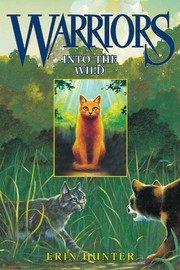
Into the Wild
Housecat Rusty joins ThunderClan and learns clan law before war.
2,597-word summary · 12 min read
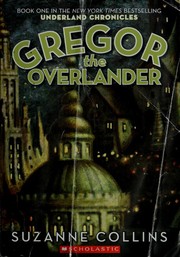
Gregor the Overlander
Gregor follows Boots down a grate into the Underland and a war prophecy.
2,516-word summary · 11 min read
The Miraculous Journey of Edward Tulane
A china rabbit lost at sea learns to love through owners kind and cruel across many years.
2,002-word summary · 9 min read
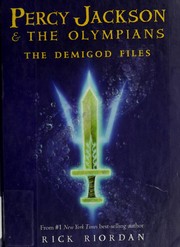
The Demigod Files
Three Percy Jackson side quests plus camp maps, cabin guides, interviews, and god profiles set before the final battle.
2,498-word summary · 11 min read
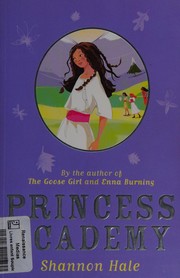
Princess Academy
Miri leaves her Mount Eskel quarry home for Princess Academy, where quarry songs, books, and a bandit siege shape her fight for fair trade, a school, and a…
2,441-word summary · 11 min read
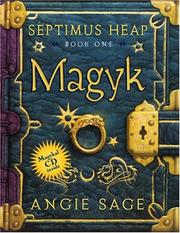
Magyk
A baby found in snow, a lost seventh son, and a run for the Marram Marshes as Marcia Overstrand shields two children from DomDaniel.
2,604-word summary · 12 min read
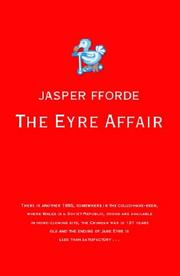
The Eyre Affair
Literary detective Thursday Next chases a villain who kidnaps Jane Eyre from her own novel in an alternate 1985 England.
1,929-word summary · 9 min read

Bone, Vol. 1: Out from Boneville
Three cartoon cousins are run out of Boneville, separated by locusts, and dropped into a valley where rat creatures and an old grudge are waiting.
2,155-word summary · 10 min read

The Icebound Land
Captured and enslaved in Skandia, Will fights a drug that erases him while Halt and Horace cut a bloody road through Gallica to bring him home.
2,088-word summary · 9 min read

Secrets of the Dragon Sanctuary
Kendra is replaced by a plant copy and held by the Society, while Seth steals a unicorn horn so the family can enter a dragon sanctuary.
2,590-word summary · 12 min read
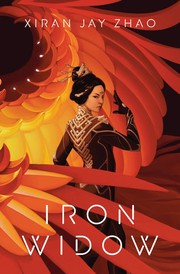
Iron Widow
Wu Zetian enlists to avenge her sister, kills her pilot, and becomes an Iron Widow in a mecha Huaxia where the machines are built to kill women.
2,444-word summary · 11 min read

Hard Luck
Rowley has a girlfriend, so Greg turns to a Magic 8 Ball, a family Easter hunt and the school yearbook for answers.
2,586-word summary · 11 min read

Archenemies
Nova steals for the Anarchists while Adrian hides his Sentinel identity, and a serum that erases prodigy powers puts them both at risk.
2,485-word summary · 11 min read
Tales from the Café
Four more visitors to a Tokyo café travel through time under strict rules, each hoping to say the thing they could not say before.
2,242-word summary · 10 min read
The Chalice of the Gods
Percy needs three recommendation letters from three gods to apply to college, so his first quest is recovering a stolen chalice from the god of old age.
2,106-word summary · 9 min read

Grip of the Shadow Plague
A plague turns Fablehaven's creatures of light into shadows while Kendra hunts an artifact in Arizona and Seth races to find the cause.
2,131-word summary · 9 min read
The Third Wheel
Greg tries to find a date for the Valentine's dance, ends up the third wheel in his own plan, and watches Rowley get the girl.
2,019-word summary · 9 min read
The Thief Lord
Orphaned brothers join a gang of Venice street kids and a masked Thief Lord, chasing a magic merry-go-round that can change a person's age.
2,040-word summary · 9 min read
The Borrowers
A family of tiny people live under the floorboards of an English house, borrowing what they need until a lonely boy and a suspicious housekeeper change…
2,164-word summary · 10 min read
The Bone Clocks
A teenage runaway, a Cambridge con artist, a war reporter and a dying novelist circle a hidden war between immortals across sixty years, with Holly Sykes at…
2,125-word summary · 9 min read
Stars Above: A Lunar Chronicles Collection
Nine Lunar Chronicles stories fill in the histories of Cinder, Wolf, Thorne, Cress, Winter, and Jacin, and end with a wedding after the war.
2,230-word summary · 10 min read
Saga, Volume 3
Marko, Alana, and Hazel hide on the planet Quietus with the reclusive author who inspired their romance, while assassins and a prince close in.
1,989-word summary · 9 min read