
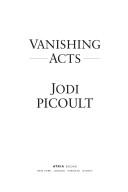
Reading options
What's inside (8 sections)
I have read a few Jodi Picoult books when I wanted family drama with a courtroom, and Vanishing Acts fits that mold closely. First published in 2005 by Atria Books at 418 pages in hardcover, it is a standalone about Delia Hopkins, a young woman in New Hampshire who finds missing people with her search and rescue bloodhound, and whose own past turns out to be missing too. I found it gripping in the middle, heavy at times, with characters I cared about even when they made frustrating choices.
Delia is twenty nine, a single mom to four year old Sophie, engaged to Eric, a lawyer, best friends with Fitz, who always loved her. She works with her dog Greta, finding lost hikers, kids, elders with dementia. She is good at it because she is calm, patient, and pays attention to small signs. A candy wrapper, a bent twig, a smell on wind. Her dad Andrew, a vet, raised her alone after her mother died in a car crash when Delia was small. Or so she thought. She has almost no memories before age six, which she always blamed on the crash and grief.
The life looks settled. Wedding plans, Sophie's preschool, search callouts, dinners with Fitz. Then a man shows up and says he is Delia's father. Not Andrew. A man named Charles Matthews from Arizona, whose daughter Elise was taken by her mother years ago and never found. He has searched for decades. DNA, photos, old records point to Delia being Elise. Police in Arizona reopen the case. New Hampshire police ask questions. Reporters call. Delia's world tilts.
Andrew is arrested for kidnapping. He says he did it to protect her from a violent drunk husband. Charles says his wife left because Andrew was the danger, and he stole a child to punish. Who hit whom. Who drank. Who left bruises. Old neighbors remember differently. Files are thin. Delia must decide who she believes while planning a wedding and raising Sophie and working searches. It is a lot, on purpose. Picoult piles pressure to force choices.
Three men, one woman
The book rotates narrators, a Picoult habit. Delia, Andrew, Eric, Fitz each get chapters in first person. That lets you hear the same event four ways. A dinner where Andrew is quiet. Eric sees a future father in law shutting down. Fitz sees a man hiding. Delia sees her dad tired. You have to weigh them. I liked this, though voices sometimes sound similar in word choice. All thoughtful, all a little literary. Still, their views differ enough to keep you guessing.
Andrew is the most sympathetic and most troubling. He raised Delia with total devotion. He taught her to ride, to care for animals, to be brave in woods. He stayed up with Sophie, he paid bills, he never dated much. He also took a child across the country, changed names, lied on forms, taught her a false story about her mother dead. He says Elise, Delia's mother, was unstable and that Charles hurt them. He says he saved her. He believes it. Whether you forgive him depends on how much you trust his memory of that night. I went back and forth. Love does not make kidnapping okay, but his love felt real, which makes it harder.
Eric is the fiance, steady, successful, a little controlling without seeing it. He loves Delia and Sophie, wants a clean wedding, a clean record, a clean story. When the case breaks, he tries to fix with lawyers and logic. He hires help, he calls contacts, he tells Delia not to talk to press. He means well. He also wants Delia to choose him over confusion, to marry fast and close ranks. His jealousy of Fitz leaks out. I felt for him. He signed up for a wedding, not a trial about who his bride is. His limits show when he cannot sit with not knowing.
Fitz is the friend who stayed. He works as a journalist, drinks too much, loves Delia since childhood and never quite told her in a way that stuck. He is funny, loyal, self destructive. He digs into old Arizona records because that is what he does, and because he hopes truth will free Delia, and maybe free him to be chosen. His chapters are the most raw about love. He knows he is second choice and stays anyway. Some readers will find him noble. Others will find him stuck. I found him both, which felt human.
Delia herself is caught between searcher and searched. At work she tells families to stay hopeful, to keep lights on, to not blame themselves. At home she cannot follow her own advice. She blames Andrew, then herself for doubting him, then Charles for returning, then her mother for leaving. Her memory gaps frighten her. She tries hypnosis, visits old houses, smells old blankets hoping for a flash. A few flashes come, a song, a desert smell, a hand too tight. They help and hurt. She is also a mother. Sophie asks where grandpa is, why police came, if they will move. Delia must answer simply while feeling anything but simple. Those scenes with Sophie are the tenderest. Small hands, big questions.
Search work and trial
The search and rescue details give the book texture. Callouts at night, grids in woods, Greta's nose and moods, radios, cold coffee, families waiting at command posts. Picoult researched this well. You learn how dogs track, how scent pools, how lost people behave. Delia is respected here, competent, unlike at home where she feels like a child again. One search for a missing boy runs through the middle and mirrors her own case. Will he be found. What will he remember. Who gets to keep him after. I liked the parallel without it being pushed too hard.
The legal thread builds slowly, then takes over. Extradition, custody of Sophie, whether Andrew can see Delia, whether Charles has rights after so long. Lawyers argue about best interests, statutes, parental rights, memory of a four year old now twenty nine. Eric argues for Delia. Arizona prosecutors argue for Charles. Fitz writes pieces that help and hurt. Picoult loves courtroom moral puzzles, and she stages them clearly. Witnesses remember differently. A neighbor saw bruises. Another saw love. A doctor saw fear. Paper is missing. Time ate proof.
Without spoiling the verdicts, I can say the book does not give a clean win. Someone is guilty under law and innocent in heart, or the reverse, depending how you read. Andrew admits what he did while insisting why. Charles admits failures while demanding rights. Delia must choose a name, a father, a story for Sophie. She chooses in a way that tries to honor both love and truth, which satisfies partly and aches partly. That ache felt right. You cannot fix a stolen childhood with a ruling.
The romance choice also resolves. Eric or Fitz. Stability or history. Picoult fans will guess, but the path has a couple of turns. A cancelled plan, a late confession, a search that forces honesty. I will not name who she picks, only that both men grow. Eric learns to listen more than fix. Fitz learns to stand sober and useful, not just witty. Delia learns to ask for what she needs instead of managing men’s feelings. That growth mattered more to me than the wedding itself.
What moves and what strains
What moves is the central question. What makes a parent. Blood, law, or care. Andrew cared daily for twenty five years. Charles searched and grieved for twenty five years. Both lost. Delia lost most, a mother, a name, a history. Picoult does not preach an answer. She lets you sit with Sophie on Delia’s lap, asking simple things, while adults argue big ones. That contrast hits. Kids need safety now, not perfect pasts.
The research shows. Dog handling, vet work, Arizona desert, New Hampshire woods, newsroom pressure, wedding planning. You feel places. The desert chapters, remembered in flashes, smell of dust and citrus. The woods chapters smell of pine and wet wool. Food appears often, casseroles for police, diner breakfasts, birthday cake uneaten. Domestic details keep the big issues human.
What strains is length and repetition. At 418 pages, with four narrators circling the same events, some scenes replay with little new. A fight at dinner told by Delia, then Eric, then Fitz. I skimmed a few repeats to get to new facts. Dialogue sometimes turns speechy, characters stating themes about family and forgiveness a bit too clearly. Picoult’s style is plain and emotional, which I usually like, but here a few lines felt written for tears. They still got me once or twice, which is annoying and effective.
Fitz’s drinking and pining also wear. He is charming, but his arc of loving from afar while numbing could have been tighter. Eric’s control could have been challenged earlier. Delia’s memory recovery is vague in places, flashes that conveniently arrive before hearings. If you need tight procedure, you may frown. This is family drama first, legal thriller second. Facts bend to feeling.
Content notes help. Kidnapping, domestic violence alleged and discussed, child endangerment, alcohol abuse, a car crash death, grief. No graphic violence on page for long, but discussion of harm to a child is central and will upset. Romance is adult but not explicit for pages. Language is mild to moderate. Parents of teens should know the themes are heavy though the prose is accessible. It is often shelved as adult fiction, suitable for older teens with care.
Who should read it
Read it if you like Picoult’s other family puzzles like My Sister’s Keeper or Nineteen Minutes but want less court and more woods. Read it if you like multiple first person voices, dogs in books, New England settings, mothers and daughters and fathers who fail. Read it when you want to feel and argue at once. Book groups will talk for hours about Andrew. Was he right. Would you forgive. What would you tell Sophie.
Skip it for now if you need fast pace or dislike rotating narrators. The middle sags with repeats. Skip if kidnapping stories are too close. This one lives inside that pain for 418 pages, even with searches that end well. It does not look away from what taking a child does to everyone, including the taker who claims love.
For me, the image that stays is Greta working. Nose down, tail up, moving through trees while humans shout theories behind her. She does not care about law or blood. She follows what is true in the air. Delia trusts her more than people for a while, and I understood why. Animals do not rewrite pasts. They find who is lost now.
Vanishing Acts asks if people can be found after years of lies and still be whole. Delia finds others for a living. Finding herself costs more. She ends with a name she chooses, a family she defines, work she loves. Not healed, but steadier. I closed it thinking about how we tell children who they are, and how those stories, true or false, shape every search after. That stayed longer than the trial, and it is why the book earns its place even when it repeats. Family is a search that never quite ends.
Sophie in the middle
I want to say more about Sophie, because four year olds in adult novels often feel like props and she does not. She asks why grandpa is gone, if he is mad, if she can send a drawing to jail. She notices Delia crying in the shower and brings a towel without being asked. She loves Greta and tries to give the dog her blanket when Greta is tired after searches. She picks favorites at preschool and unpicks them. Her language is simple and exact in the way small kids are. Where is home now. Are we still us.
Delia tries to shield her and fails in normal ways. She says grandpa is away for work. Sophie repeats it to a teacher who knows better. Delia says the wedding is just delayed. Sophie asks if delayed means cancelled like rain. Delia laughs and cries at once. Those moments hurt more than court scenes because they show cost passing down. A child learning that adults lie to protect, and learning not to trust protection. Picoult writes this without making Sophie too wise. She is four. She wants snacks, naps, stories where dogs win. The adult storm passes over her but wets her anyway.
Eric and Fitz both love Sophie, differently. Eric teaches her to stack blocks straight and to say please to waiters. He buys shoes that fit and keeps receipts. His care is practical, a little tight. Fitz tells her wild stories about Greta finding dragons and lets her eat ice cream before dinner when Delia is not looking. His care is loose, fun, unreliable. Sophie likes both and prefers whoever is present. Kids do that. Presence beats principle at four. Watching the men learn this was one of the book's quiet lessons. Show up, stay, listen. Less fixing, more floor time.
The scene where Sophie meets Charles for the first time stayed with me. He brings a gift too big, a bike with training wheels she is not ready for. She hides behind Delia. He talks too loud, then too soft. He cries and scares her. Delia steps between, kind to both, firm. Later Sophie draws three houses, one for mom, one for grandpa, one for the new grandpa who is sad. No judgment, just trying to place people on paper. That drawing says more about blended loss than any testimony. Home is not one house after a taking. It is several, all a little broken.
Searches that mirror
The parallel search for the missing boy in the woods deserves more credit. It runs for many chapters, with grids, rain, false hopes. Delia leads while her own case leaks to press. Volunteers whisper about her. A reporter asks if a kidnapper should find kids. She keeps working because work is where she is sure. Greta trusts her. The woods do not ask for ID. I liked how Picoult lets procedure breathe. How to set a perimeter, how to keep scent articles clean, how to rotate dogs, how to tell families to go home and sleep without sounding cold.
The boy's family waits at the command post the way Charles waited for years, the way Bella's mother in other books waits. Hope as work. Making coffee, charging phones, answering same questions. Delia tells the mother what she wishes someone told her own family long ago. Keep talking to him like he hears. Keep a light on. Do not blame the last person who saw him. Those lines come from her wound, not training. They land because she lives both sides now, finder and found.
When the boy is found, it is not triumphant in a simple way. He is cold, scared, angry at being lost. He clings then pushes. Delia recognizes the push. Found people need time to trust being held. She tells the parents to go slow, to let him be mad. That advice is really for herself and Charles and Andrew. Being returned does not end loss. It starts a longer search for how to belong after. The book understands this better than its courtroom parts. Finding is a moment. Belonging is years.
I also appreciated the dog writing. Greta is not a cartoon hero. She gets tired, distracted by deer, scared of loud trucks. Delia reads her body, the tail set, the nose lift, the pause. Their bond is built on thousands of training hours, treats, failures in rain. One training flashback where young Delia and Andrew teach Greta as a pup to follow a trail through mud, both laughing when she rolls instead, shows what love looked like before the case. Play as foundation for work. It made later scenes where Greta searches while Andrew sits in jail ache more. The team is split by law, but the training holds in muscle.
If the book has a soft spot, it is that searches succeed here more neatly than in life, to contrast Delia's messy past. The boy lives. Others are found. Only Delia stays lost a while. That neatness comforts, which is okay for commercial fiction, but it smooths real search grief where not everyone comes home. Picoult knows this from research and nods to it in passing, a cold case mentioned, a family who stops calling. Still, the main search line comforts more than it wounds. Readers who need hope will welcome it. Readers who lived loss may find it kind but tidy.
FAQ
When was Vanishing Acts published?
It was first published in 2005 by Atria Books at 418 pages in hardcover. It is a standalone family novel.
Who is Delia Hopkins?
Delia Hopkins finds missing people with her bloodhound. Her father Andrew, fiance Eric and friend Fitz hold secrets about her childhood kidnapping.
Similar books
Plain Truth
An Amish teenager denies a hidden pregnancy after a newborn is found dead, and a city lawyer moves to the farm to defend her.
2,669-word summary · 12 min read
Leaving Time
Thirteen-year-old Jenna searches for her mother who vanished from an elephant sanctuary ten years earlier.
3,001-word summary · 13 min read

Nineteen Minutes
Sterling High student Peter Haddon commits a school shooting and lawyer Jordan McAfee defends him while Josie Cormier hides truth.
2,267-word summary · 10 min read

Only Time Will Tell
A Bristol dockworker's son wins a scholarship, falls in love with the daughter of the family that owns the shipyard, and learns that his father's death was not…
2,082-word summary · 9 min read

The Girls in the Garden
Clare moves her daughters to a gated London garden where the community feels safe; at the midsummer party, twelve-year-old Pip finds her sister bleeding in the…
1,973-word summary · 9 min read

The Best of Friends
Three lifelong friends discover their teenage sons were hiding more than anyone knew after a night that leaves one dead, one in a coma and one silent.
2,040-word summary · 9 min read
Keep It in the Family
Mia and Finn renovate a long empty house and find seven children hidden in the attic.
2,270-word summary · 10 min read

The House at Riverton
In 1999, ninety eight year old maid Grace Bradley tapes the truth about a 1924 shooting at Riverton Manor, poet Robbie Hunter, two sisters and a lie held for…
2,433-word summary · 11 min read
The Cousins
Three cousins work at their rich grandmother island resort while digging into why their parents were cut off.
2,565-word summary · 11 min read

Pieces of Her
After her mother kills a mall shooter with shocking skill, Andy Oliver uncovers a hidden 1980s past of radicals and wealth.
2,791-word summary · 12 min read

The Storm
A struggling innkeeper, a returning murder suspect, and a true crime writer collide as another hurricane bears down on the Alabama coast.
2,349-word summary · 10 min read
The First Time I Saw Him
Five years after Owen vanished, Hannah and Bailey have rebuilt in California until Owen walks into her exhibition and danger returns.
2,407-word summary · 11 min read
Such a Clever Girl
Fifteen years after the Tanners vanished, Aubrey returns at 30 as a new disappearance forces three women to face old secrets.
2,203-word summary · 10 min read

All the Little Houses
In 1980s Longview, Texas, social queen Charleigh and daughter Nellie guard mean-mom secrets when a new family threatens their empire.
2,206-word summary · 10 min read
The Good Sister
Twin sisters share a careful arrangement until a plan to have a baby pulls old family secrets into view.
3,255-word summary · 14 min read

Still Alice
Harvard professor Alice Howland faces early onset Alzheimer's and her family must adapt as memory fades.
2,477-word summary · 11 min read

The Husband's Secret
Cecilia finds a letter meant to be opened after her husband's death, and reads it while he lives.
1,985-word summary · 9 min read

Big Little Lies
In Pirriwee three mothers collide over school, marriage, and secrets until a trivia night death forces the truth about Perry abuse, Celeste fear, and Jane past.
2,582-word summary · 11 min read

The Lovely Bones
Alice Sebold's The Lovely Bones retold: Susie watches from above as her family hunts her killer.
2,257-word summary · 10 min read
Change of Heart
Jodi Picoult's Change of Heart follows June Nealon, her ill daughter Claire, and death-row inmate Shay Bourne, whose wish to donate his heart forces a trial…
2,746-word summary · 12 min read

The Tenth Circle
After Trixie accuses Jason of rape and he dies off a bridge, parents Daniel and Laura hide guilt and grace in Alaska flight.
2,164-word summary · 10 min read

Handle with Care
Parents of brittle bone daughter Willow sue best friend OB for wrongful birth, splitting marriage and friendships.
2,231-word summary · 10 min read
A Spark of Light
A gunman takes a Mississippi abortion clinic hostage as a negotiator finds his own daughter inside.
2,486-word summary · 11 min read

The Storyteller
Baker Sage Singer is asked by old Josef Weber to kill him for his SS past, while her grandmother Minka's war story weighs on her.
2,174-word summary · 10 min read
The Pact
After Emily Gold dies from a gunshot, her boyfriend Chris Harte says it was a suicide pact and faces trial for murder.
2,873-word summary · 13 min read
My Sister's Keeper
Thirteen-year-old Anna sues her parents for medical emancipation so she can refuse to give her dying sister Kate a kidney.
2,332-word summary · 10 min read

Six Years
A professor who promised to forget the woman he loved sees her husband's obituary and discovers that the wedding, the marriage, and the woman herself may never…
2,076-word summary · 9 min read

Little Earthquakes
Four Philadelphia women meet during pregnancy and discover that new motherhood is nothing like the plan, while friendship becomes the thing that holds them…
1,997-word summary · 9 min read

Summer Island
A radio advice host hides a scandal, and the estranged daughter hired to write about it agrees to care for her at the family's island house.
2,325-word summary · 10 min read

The Rumor
Two Nantucket best friends, Madeline and Grace, watch a summer of small indiscretions get retold into gossip that reshapes both their households.
2,017-word summary · 9 min read