
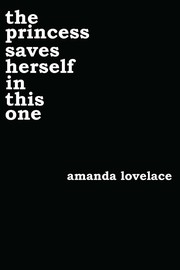
The Princess Saves Herself in This One
2,613-word summary 12 min read 208 pages in the book
- First published
- 2016
- Publisher
- Andrews McMeel Publishing
- Pages
- 208
- ISBN
- 9781449486419
- Series
- Women Are Some Kind of Magic (#1)
Reading options
What's inside (7 sections)
A friend handed me this book after a rough winter and said, read it in one sitting, you will feel less alone. I nodded politely and put it on the pile where gifted paperbacks go to wait. My hesitation had a specific shape. I had scrolled past a lot of short poems on social media, white text on plain backgrounds, and I had decided, without much evidence, that the whole wave was thin. This collection is part of that wave, and some of my suspicion survived reading it. But I also finished it in two evenings, and I kept thinking about certain pages afterward, which is more than I can say for most books I read that month.
Here is the practical background first. This is the debut collection by American poet Amanda Lovelace. She first self-published it in 2016 through CreateSpace, and then Andrews McMeel Publishing brought out the paperback in February 2017. The standard paperback runs 208 pages and carries ISBN 9781449486419. It won the Goodreads Choice Award for poetry in 2016. It is the first book in a series called Women Are Some Kind of Magic, followed by volumes centered on a witch and then a mermaid. The whole book is built in four parts: the princess, the damsel, the queen, and you. That structure is the reading path, so I will follow it in order.
The poems themselves are short. Many run a handful of lines. The diction stays plain, and the fairy tale vocabulary does heavy lifting. Princes, towers, wolves, dragons, queens. If you want dense metaphor or formal play, this is not that book. If you want a direct account of hurt and recovery told through stories you already know, the form makes sense fast.
The princess: early wounds and a locked tower
The opening section retells the author's early life through the figure of a princess, and the tone is raw from the start. The speaker describes a childhood marked by difficult family relationships and by an assault she carries with her. Lovelace does not stage these events as scenes with dialogue and setting. She states them in brief images and flat declarations, then moves on. The effect is closer to someone telling you the hard facts quickly because lingering would be worse.
What gives this section its shape is the tower. Across several poems, the princess absorbs blow after blow and finally locks herself away to wait for a prince who will come and fix everything. Reading it straight through, I felt the weariness accumulate. Each poem adds a small weight. The speaker is young, she has been hurt by people who were supposed to protect her, and she has learned the fairy tale lesson exactly as advertised. Be good, be patient, be pretty in your suffering, and rescue will arrive.
I found this the hardest section to sit with, and I mean that as praise and as warning. The plainness can feel abrupt. A poem ends before you have braced yourself. Then the next one starts. There were moments when I wanted more scene, more of the texture of the household, the school, the specific rooms where things happened. Lovelace withholds almost all of that. What she gives instead is the emotional residue. Shame. Confusion. A hungry wish for someone older and stronger to take over.
The section closes on waiting. The princess is in the tower, the door is shut, and the prince has not come. I admired the discipline of ending there instead of rushing toward hope. It would have been easy to soften the early poems with hints of the recovery to come. She does not. The stillness at the end of this part is the whole point. Waiting for rescue is its own kind of pain, and the book wants you to feel the full length of it before anything changes.
One craft note worth making early. The poems lean on a small set of images, and you will notice the repetition. Towers, locked doors, sleep, hunger. At this stage the repetition works in her favor, because a child turning the same thoughts over does sound like this. Later in the book the same habit is less effective. Here, though, the circling feels honest. Grief at that age has a short playlist.
The damsel: wolves, dragons, and fresh loss
The second section drops the waiting posture and starts naming threats. The speaker is older now, or at least less willing to be quiet, and the fairy tale figures turn menacing. The big bad wolf stands in for the person who harmed her. Dragons stand in for the larger forces that kept her frightened and small. These are not subtle symbols, and I think they are not trying to be. The bluntness is doing communicative work. A reader who has lived through assault or harassment does not need the wolf decoded. The recognition is instant.
This is also where death enters directly. The speaker writes about losing her mother and her sister, and the poems around those losses are among the strongest in the book. The language stays simple, but the simplicity stops sounding like a limitation and starts sounding like someone who has run out of decorations. She describes the strange flatness that follows a funeral, the way the world keeps asking ordinary things of you, the anger that shows up in the wrong places. One poem circles the impossibility of grieving properly while you are still in danger from the living. That idea stayed with me longer than any single image.
The damsel section confronts eating and body image pain as well, tied to the wish to be smaller, quieter, easier to overlook. I am paraphrasing rather than quoting, because the poems are so short that quoting would reproduce them whole, but the drift is clear. The speaker learned to treat her own body as a problem to solve. Hunger becomes another locked room. Reading these poems beside the wolf poems makes the pattern visible. Harm came from outside, and then the speaker carried it inside and administered it to herself.
Structurally this is the messiest part of the book, and I say that descriptively rather than as an attack. The poems jump between past harm and present grief without much transition. A wolf poem sits beside a mourning poem sits beside a poem about a cruel partner. The lack of connective tissue can feel choppy. But it also mirrors how memory actually behaves after trauma. You do not get a clean timeline. You get flashes. The damsel section reads like flashes, and once I stopped expecting a smooth narrative, the jumps bothered me less.
There is one more thing this section does that matters for the rest of the book. The speaker starts talking back. Early damsel poems still flinch. Later ones answer. The voice gets angrier and steadier by turns. She is not healed, not close, but she has stopped auditioning for rescue. The tower door is still shut, but now she is the one deciding whether it stays that way.
The queen: facing the dragon and choosing love
The third section is where the title starts paying off. The princess imagery falls away and the speaker takes up the queen figure, which in this book means a woman who confronts rather than waits. The central confrontation is with the dragon, the accumulated fear and grief she has been circling since the first page. These poems are still short, but they feel sturdier. The sentences stand up straighter.
Much of this section works through grief for her mother. The early mourning poems in the damsel part recorded shock. The queen poems record the longer labor. She writes about reaching for the phone, about advice she can no longer ask for, about becoming a woman without her mother's witness. I lost no parent at her age, and even so these poems reached me, because they are specific about the small absences rather than the large ones. Empty chairs matter more here than funerals.
Running alongside the grief is a love story, and I was braced for it to feel pasted on. It does not, quite. The speaker meets a partner who stays, who listens, who does not treat her damage as either a project or a warning sign. The poems about this relationship are tender without being elaborate. What makes them convincing is their modesty. She does not claim that love cured her. She claims something smaller and more believable. Being loved steadily made it easier to do the work herself. That distinction carries the whole section.
The dragon fight, to be honest, is more declared than dramatized. She announces that she will face what frightened her, and the poems after that announcement sound braver. If you want a blow by blow inner battle, you will not find it. I went back and forth on whether this is a flaw or a feature. On the one hand, the turn can feel quick after so many pages of pain. On the other, recovery in real life often looks like a decision restated daily rather than a single triumph. The queen section reads like restated decisions. Stand up. Grieve. Accept care. Repeat. The repetition that bothered me elsewhere feels earned here, because practice is repetitive.
This is also where the feminist argument of the book comes into focus. The early sections showed a girl raised on rescue stories. The queen section rewrites the moral. No prince arrives, and that absence stops being a tragedy and starts being information. She was never waiting for a man. She was waiting for permission to act, and the permission was hers to grant. Stated baldly it sounds like a slogan. Inside the sequence, after two sections of evidence, it lands with real force.
You: the turn toward the reader
The final section changes address. The first three parts piece together the author's life. The last part speaks to the reader directly, offering encouragement and company. The poems get shorter still, some only two or three lines, and they read like notes passed across a table. Keep going. Tell your story. You are allowed to save yourself.
I know this kind of ending can feel presumptuous, a writer who has told you her wounds now telling you what to do with yours. I braced for that reaction and then mostly did not have it. The tone stays invitational rather than instructional. She positions herself as slightly ahead on the same road, not as a guide who has arrived. The effect is closer to solidarity than advice. Readers who have underlined half the book will likely find one or two of these closing poems that sound written for them personally.
There is a craft risk in this section that is worth naming. When poems shrink to a few lines of encouragement, they can slide into sentiments that fit anywhere and therefore belong nowhere. A handful of the closing pieces do blur together in my memory. I remember the feeling, warmth and urgency, better than any particular wording. For a book about telling your own specific story, that generality is a genuine weakness. The strongest closing poems are the ones that keep a concrete detail, a tower, a scar, a phone that will not ring, alongside the comfort. The purely abstract ones float off.
Still, as an ending, the turn works. After so much inward attention, opening the door outward feels like the right gesture. The book began with a girl locked away waiting to be chosen. It ends with a woman choosing her readers, asking them to choose themselves. The symmetry is neat without being forced, and I closed the book feeling addressed rather than lectured.
What holds up and what wears thin
Let me gather the praise and the complaints honestly, because this is a book people either press on friends or dismiss, and both reactions miss something.
What holds up: the emotional honesty, the pacing of the four part arc, and the accessibility. Lovelace writes about assault, grief, disordered eating, and depression in language a teenager can follow and an adult cannot dismiss. That plainness is a moral choice as much as a style. She is refusing the idea that pain needs fancy dress to count. Readers who have felt shut out of poetry will find a door here. The fairy tale frame is doing real work too. By mapping her life onto princess stories, she shows how early those stories teach girls to wait, to shrink, to confuse endurance with virtue. You do not need a theory background to feel the critique. The sequence teaches it as it goes.
The mixed reception the book received also makes sense once you have read it. Critics who value compression, surprise, and music found little to admire. Some of that criticism carries a snobbery about poetry shared online, and I discount the snobbery. But the underlying point is fair. Many poems here are closer to statements than to crafted objects. The images repeat. Tower, wolf, dragon, crown, fire, smoke. The diction repeats. Pain, brave, magic, broken, queen. If you read the book slowly, savoring each page, the thin spots show. It reads best at the speed of feeling, fast and continuous, where momentum covers the seams.
My other complaint is about specificity. The book is semi autobiographical, and the broad strokes are clear. But I often wanted one more concrete thing per poem. A street, a season, a borrowed sweater, anything to anchor the feeling in a lived moment. The queen section understands this need better than the early sections. The grief poems name small habits and objects, and they are immediately stronger for it. I wish that habit had spread across the whole collection.
Who should read it? Anyone working through grief or the aftermath of assault who wants company rather than analysis will likely value it. Younger readers new to poetry often love it, and I understand why. It gives them language for things they have not yet learned to say. Readers who want formal range, layered ambiguity, or sustained narrative should look elsewhere, or should read this alongside collections that offer those pleasures. It pairs well, in my experience, with a frank conversation afterward. Ask what landed, ask what felt too easy, argue about whether short poems can carry heavy subjects. The book invites that kind of talk.
A practical note for collectors and rereaders. The text I read was the Andrews McMeel paperback, the widely available edition of the 2016 collection, 208 pages. Two companion volumes followed in the same series, one centered on a witch published in 2018 and one centered on a mermaid published in 2019, both from the same publisher. An audiobook read by the author appeared in early 2018. The series logic is consistent across all three. Take a familiar female figure, strip off the rescue plot, and hand her the ending. If that project appeals to you, start here, because this first book states the pattern most plainly.
I came in skeptical and left moved, with reservations I can state clearly. The poems are simple, sometimes too simple, and the middle blurs. Yet the arc from tower to queen to reader holds, the grief writing is honest, and the closing invitation earns its warmth. My copy is now marked up and lent out, which is the ending this particular book seems to want. Pass it to someone who needs the message, then talk about where the message succeeds and where it thins. That conversation is part of the work the book is trying to do.
FAQ
When was The Princess Saves Herself in This One published?
Lovelace first self-published the collection in 2016 through CreateSpace. Andrews McMeel Publishing issued the widely read paperback in February 2017, running 208 pages with ISBN 9781449486419.
Is it part of a series?
Yes. It opens the Women Are Some Kind of Magic series as book one, followed by a witch centered volume in 2018 and a mermaid centered volume in 2019.
Who will this collection suit, and who should preview it first?
It speaks plainly about assault, disordered eating, and the deaths of family members, so readers who want gentler fare or classroom verse should preview it first. Readers seeking company during grief often value it most.
Similar books
More from Women Are Some Kind of Magic first, then related titles.
the sun and her flowers
Kaur follows love and loss through wilting, falling, rooting, rising, and blooming in short illustrated poems.
2,364-word summary · 11 min read
milk and honey
Kaur's illustrated debut moves through hurting, loving, breaking, and healing in short lowercase poems.
2,006-word summary · 9 min read
Clap When You Land
Two half sisters, one in Sosúa and one in Queens, discover each other after their father dies in a plane crash, in Elizabeth Acevedo's novel in verse.
2,890-word summary · 13 min read
The One Hundred Years of Lenni and Margot
Dying teen Lenni and 83-year-old Margot paint one hundred years of stories.
2,281-word summary · 10 min read
Long Way Down
Will rides an elevator with ghosts to decide if he will avenge his brother Shawn.
2,172-word summary · 10 min read
This Girl
Honeymoon retelling as Will recalls first love, classroom ban, loss, fights, and vows that stick.
2,526-word summary · 11 min read
The Raven
A grieving student asks a midnight raven and hears only Nevermore.
2,141-word summary · 10 min read
Still Me
Lou spends a year in New York working for the Gopniks, torn between Josh, distant Sam, and the life she wants.
2,939-word summary · 13 min read
Point of Retreat
Will and Layken keep love and two brothers together through bills, jealousy, and a pregnancy scare.
2,037-word summary · 9 min read
After You
Lou grieves Will, falls from a roof, joins a group, and meets Sam and a surprise from Will's past.
2,031-word summary · 9 min read
Slammed
Grieving Layken falls for neighbor Will, then learns he is her teacher, and poems carry them.
2,793-word summary · 12 min read
Love Letters to the Dead
A fifteen-year-old writes letters to dead artists because they cannot ask questions, and slowly tells the one story she has been hiding about her sister's…
2,520-word summary · 11 min read

Lisey's Story
Two years after her novelist husband dies, Lisey Landon follows a trail of clues into his childhood and the other world that made him a writer.
1,998-word summary · 9 min read
Brown Girl Dreaming
Jacqueline Woodson retells her childhood in verse, moving from Ohio to South Carolina to Brooklyn while the civil rights movement reshapes the world around her.
2,727-word summary · 12 min read
What Happened to You?
Oprah Winfrey and psychiatrist Bruce Perry explain how early experience shapes the brain, and why asking what happened to someone works better than asking what…
2,238-word summary · 10 min read
The Once and Future Witches
Three estranged sisters bring witchcraft back to an 1893 city where magic hides in nursery rhymes and the fight for the vote is also a fight for power.
2,132-word summary · 9 min read

Iron Widow
Wu Zetian enlists to avenge her sister, kills her pilot, and becomes an Iron Widow in a mecha Huaxia where the machines are built to kill women.
2,444-word summary · 11 min read

Infidel
Ayaan Hirsi Ali's memoir of a Somali childhood, a forced marriage, a Dutch asylum claim, and the political fight that followed the murder of Theo van Gogh.
2,041-word summary · 9 min read

Sam's Letters to Jennifer
A grieving journalist reads her grandmother's letters and finds a decades-long love affair that changes how she sees her family.
2,310-word summary · 10 min read

Amy & Roger's Epic Detour
Amy Curry has not driven since the crash that killed her father. With Roger at the wheel and a box of maps between them, a cross-country trip becomes a slow…
3,034-word summary · 13 min read

We Are Okay
Marin fled San Francisco after her grandfather vanished and stopped answering anyone. When Mabel visits her college dorm, she has to say what happened.
2,253-word summary · 10 min read

Two by Two
Sparks's twentieth novel turns from first love to a marriage breaking up: Russell Green loses his wife and his job, then rebuilds his life around his…
2,192-word summary · 10 min read

One to Watch
A plus-size fashion blogger takes the lead role on a reality dating show to prove she belongs on television, and finds she might want what the cameras offer.
2,478-word summary · 11 min read
The House We Grew Up In
The Bird family of the Cotswolds breaks apart after a suicide and spends twenty years not talking about what happened.
2,198-word summary · 10 min read
The First to Die at the End
On the night Death-Cast launches, a boy with a bad heart meets a model with everything ahead of him, and one of them gets the call.
2,908-word summary · 13 min read
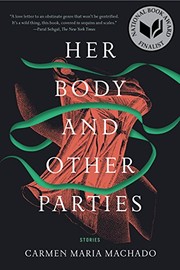
Her Body and Other Parties: Stories
Eight stories where bodies, medicine and old fairy tales get taken apart, with a green ribbon running through the whole book.
2,997-word summary · 13 min read

Dear Girls: Intimate Tales, Untold Secrets & Advice for Living Your Best Life
Ali Wong's debut collects fourteen letters to her daughters, covering sex, money, work, marriage, Vietnam, and being a working Asian American mother.
2,266-word summary · 10 min read

At First Sight
Jeremy and Lexie are married and expecting a baby when anonymous emails tell him the child may not be his.
2,317-word summary · 10 min read

A Spool of Blue Thread
Four generations of the Whitshank family in Baltimore, and the silences, resentments and quiet love they hand down without ever saying so.
2,408-word summary · 11 min read

Wide Sargasso Sea
Jean Rhys gives the first Mrs. Rochester a Caribbean childhood, a marriage built on money and suspicion, and a voice that Charlotte Bronte left in the attic.
2,021-word summary · 9 min read