
Reading options
What's inside (10 sections)
I picked this up thinking I knew it. Like most people, I had met "All the world's a stage" in a classroom long before I ever read the play it comes from, and I assumed the whole thing was a light, song-filled romp about lovers running off to the woods. That is not wrong. It is just a very small part of what is here. What I found was a comedy that keeps asking who gets to write the rules, and that hides its sharpest ideas inside a girl who spends most of the play dressed as a boy.
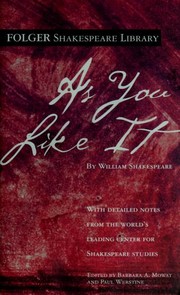
A note on the text before I go further. Shakespeare probably wrote this around 1599. It was entered in the Stationers' Register in August 1600 but was held back from publication, and it first appeared in print in the 1623 First Folio, the collected edition that John Heminges and Henry Condell put together after his death and that Edward Blount and the Jaggards printed. There is no earlier quarto of this play, so that Folio is the only early text we have. The edition I read is the New Folger Library Shakespeare paperback from Simon and Schuster, edited by Barbara A. Mowat and Paul Werstine, 263 pages of play plus a front matter that is worth reading on its own.
A brother's theft and a wrestling match
The trouble starts with a family robbery. Duke Senior, the older brother, has been pushed off his throne by his younger brother Frederick and driven into exile. His daughter Rosalind is allowed to remain at Frederick's court for one reason only: she is the closest friend of Frederick's own daughter, Celia. So she lives in the house of the man who stole her father's place, in a gilded cage built out of her cousin's affection. The play opens with her already complaining about the unfairness of it, and she has a point.
A parallel wrong is being done in another household. Old Sir Rowland de Boys is dead, and his eldest son Oliver has kept his youngest son Orlando at home like a pet, denying him the education and the horses and the company that a gentleman of his birth should have. The old servant Adam, who has stayed loyal to the family, tells Oliver plainly that this is shameful. Oliver's answer is to plot something worse.
Charles the wrestler arrives at Oliver's orchard with news of the executions he has performed at Frederick's court. Oliver tells Orlando that Charles is there to fight him, and lets him believe it is a challenge to his honour. He expects his brother to be killed. Orlando goes to the wrestling match, and to everyone's surprise he beats Charles soundly. Frederick, who is watching, is delighted until he learns that Orlando is Sir Rowland's son. The old duke had been a friend of Rowland's, and Frederick's regard cools at once.
It is at this match that Rosalind and Orlando lay eyes on each other and fall in love on the spot, in the middle of a public spectacle. The play treats this as ordinary and even inevitable. Shakespeare gives them a few moments of awkward, delighted talk and then moves on. Rosalind gives Orlando a chain from her neck, and he leaves the court a marked man. Frederick orders her banished simply for being her father's daughter, and the sentence tells you what kind of court this is. Merit counts for nothing. Blood and suspicion count for everything.
Two girls on the road to Arden
Celia will not hear of being separated from Rosalind. When her father announces the banishment, she announces that she will go too, and she points out the awkward logic of it: if Rosalind is a traitor's daughter, then so is Celia, because she is her father's daughter as well. She offers her own money and jewels for the journey. This is the moment when the play quietly decides that the bond between these two women is the most dependable relationship in it.
They need a disguise, because two noblewomen travelling alone would be stopped and returned. Rosalind dresses as a young man and takes the name Ganymede, a name with a cheeky double meaning that the play expects you to catch. Celia dresses as a poorer girl and calls herself Aliena, which is Latin for a stranger or an outsider. Touchstone, Frederick's court fool, comes along as well, because a fool in this play is freer than a courtier. He can say what he likes and get away with it.
They head for the Forest of Arden, where Duke Senior is living in exile with a handful of loyal lords. The forest is part real place and part idea. It takes its name from Thomas Lodge's romance Rosalynde, which Shakespeare used as his source and which was itself built on an older story called The Tale of Gamelyn. It also echoes the Forest of Arden near Shakespeare's own home in Warwickshire, and his mother's family name was Arden. So the setting carries a private joke as well as a literary one.
The forest, the deer, and the seven ages
When we reach Arden, the exiled duke is holding a kind of court under the trees. He opens with a line that has stayed with me: these woods are more free from peril than the envious court. He and his men eat the king's deer, which puts them in a comic legal fix, and they grumble about the cold, but they also insist that adversity has its uses. Hardship, he argues, teaches you to read the world honestly. Poverty brings a wisdom that comfort keeps out.
Jaques, one of the exiled lords, is introduced weeping over a deer that the hunters have wounded and left. He turns the animal's suffering into a long moral lecture, which is both moving and a little absurd, and the play never quite decides which. Jaques is the professional melancholic of the piece. He sees the ugliness that the others gloss over, and he also enjoys the sound of his own voice. Both things are true at once.
This is also where Amiens sings "Under the Greenwood Tree" and "Blow, blow, thou winter wind," songs that praise the open air and insist that a cold wind is kinder than a friend's ingratitude. Shakespeare used a remarkable amount of prose in this play, roughly half the text, and the songs and the prose together make it feel conversational rather than formal. The verse arrives at the moments that matter, which is why Jaques' "All the world's a stage" speech lands so hard. He describes the seven ages of man as a single long performance, from the baby mewling in a nurse's arms to the old man in second childhood, and he ends by saying that the last act is mere oblivion, sans everything. It is a bleak speech to drop into a comedy, and the play leaves it hanging rather than answering it.
Orlando reaches the forest separately, with the faithful Adam, and bursts into the duke's camp with his sword drawn, demanding food because he and his servant are starving. The duke welcomes him once he understands who he is, and father and son begin a cautious friendship that the audience can see coming long before either of them does.
Ganymede's remedy for love
Rosalind and Celia, still disguised, arrive in Arden and set themselves up as tenants. They meet Corin, a poor old shepherd, and arrange to buy a cottage and a patch of pasture from his master. It is a small, practical detail that matters, because it makes their exile feel like a life being lived rather than a holiday. Aliena handles the money, since Celia brought the jewels, and Ganymede tries to play the confident young man.
Orlando has been hanging love poems on the trees, bad ones, written in the pose of a lovesick shepherd. Rosalind finds them and knows they are for her, though he does not know she is there. When they meet, she as Ganymede offers to cure him of his obsession. The cure is a piece of theatre. Ganymede will stand in for Rosalind, she tells him, and he can come every day and practise his wooing on a substitute. She will be herself, but she will be pretending to be herself, which lets her say things that Rosalind, as a properly brought up young woman, could never say.
This is the engine of the middle of the play, and it is wonderfully strange. A boy actor is playing a girl who is disguised as a boy who is impersonating a girl. Modern critics have written a great deal about the gender reversals here, and the play invites it. The name Ganymede carried homoerotic associations for Shakespeare's audience, and the shepherdess Phebe falls hard for this apparently self-sufficient young man, which produces a triangle in which nobody wants the person who wants them. Phebe loves Ganymede, Ganymede wants nothing to do with Phebe, and Silvius loves Phebe. Rosalind, inside the disguise, uses the whole tangle to test whether Orlando's love is real.
Meanwhile Touchstone has found a country girl named Audrey and is courting her in a parody of the high-flown talk going on everywhere else. A rival named William wants her too, and Touchstone threatens to kill him in a list of ways that gets funnier each time. A curate called Sir Oliver Martext is brought in to marry them, in a scene the play treats as a joke at the clown's expense. All of this is below the main story in social rank, but it keeps reminding us that the forest has its own hierarchy and its own fool.
Four weddings and a change of heart
The last stretch of the play moves quickly, and some readers find it too quick. Orlando is late for a meeting, and a report that he has been in danger, defending his brother against a lioness, makes Rosalind faint. Oliver, the brother who treated him so badly, has been genuinely changed by the experience. He confesses his guilt, gives Orlando their father's inheritance, and then falls in love with Aliena on sight. Celia, who has spent the play as the practical one, suddenly finds herself courted, and she agrees to marry him.
That rescue is the play's main act of grace. Oliver did not earn his change of heart through argument. He simply saw his brother risk his life for him, and something in him turned. The duke's brother undergoes the same kind of conversion offstage. Frederick, on the edge of the forest with an army, is stopped by a hermit and decides to give up the world. He restores the dukedom to Duke Senior and takes to a religious life. Jaques, who has been the gloomiest voice in the play, is invited back to court and refuses. He will stay in the forest and live as a hermit too.
In the final scene the couples are assembled: Orlando and Rosalind, Oliver and Celia, Silvius and Phebe, Touchstone and Audrey. Ganymede promises that Rosalind will appear and settle the question of who marries whom. Hymen, the god of marriage, brings her in, and the disguises drop away. Four weddings are celebrated at once, and the play ends with a dance that is meant to image a restored order. Rosalind then speaks the epilogue, addressing the audience directly and joking about what she would do if she were a woman. Since her role was written for a boy, the line is a final wink at the convention the whole play has been playing with.
What the play is doing under the jokes
It is easy to leave this comedy thinking it was only a lark, and that is how some of its harshest readers have judged it. George Bernard Shaw thought Shakespeare wrote it as a crowdpleaser, and complained that the title sounded as though the playwright did not quite stand behind the thing himself. Tolstoy objected to the immorality of the characters, with Touchstone's constant clowning at the top of his list. On the other side, Harold Bloom ranked Rosalind among Shakespeare's most fully realised women, and I think he is right. She is clever, impatient, generous, and in charge of more of the action than anyone else.
The play's real subject might be freedom, and the difference between the kind you are given and the kind you take. Frederick's court has wealth and order and no justice at all. The forest has cold nights, bad poetry, and a rough sort of fairness. Nobody in Arden is safe from Jaques' jokes or Touchstone's wit, but nobody can be banished for being the wrong person's daughter, either. The men who arrive there from the court have to learn how to live without the titles they brought.
I also think the disguise is more than a plot device. It gives Rosalind a license to speak, and every time she uses it she shows how much of the social code around gender is performance. When she plays at being Rosalind, she is more herself than when she is simply Rosalind. That is a smart, subversive joke, and the play is brave enough to keep it alive right up to the epilogue. At the same time, I noticed that the ending quietly tidies everything back into place. The women marry, the fathers are restored, and Celia, who had some of the best lines in the first four acts, says almost nothing in the fifth. One reading of that is that the play's freedom is only temporary, granted for the length of a holiday and withdrawn once the marriages are secure.
Where it falls short
I want to be fair about the parts that do not work. The happy ending relies on two conversions that happen offstage and very fast. Frederick's turn in particular feels like a convenience. An army is marching to kill the exiles, and a hermit talks him out of it in a scene we are told about rather than shown. Jaques' decision to stay behind is more convincing, because his melancholy has been a choice all along.
The forest itself is prettier than it should be. Nobody really goes hungry for long, the weather is bad mostly so that characters can make jokes about it, and the hard work of living outdoors is handed to shepherds who exist to be teased. The idealisation is deliberate, but it means the play's argument about court and country is more of a mood than a case. If you want a tough look at what exile costs, this is not it.
Jaques can also grate. His "All the world's a stage" speech is famous, and earnestly so, but he has a way of turning every event into a lesson before anyone has finished feeling it. The deer scene is the clearest example. A wounded animal is in front of him, and within a few lines he is delivering a sermon. I found myself siding with the characters who roll their eyes at him.
Finally, this is a play, and a good deal of its charm is in performance. On the page, the songs stop singing and some of the wordplay looks flatter than it would in the theatre. The gender jokes depend on the audience seeing a boy play a girl play a boy. That does not make it unreadable, but it does mean that reading it is a slightly different experience from watching it, and the difference is worth keeping in mind.
Why I would hand it to someone
I finished this one glad I had gone back to it without my school-assignment eyes. It is a comedy with a serious temperature, funny on the surface and fairly hard-headed underneath about power, exile, and how people change. The comparisons between the court and the forest are not subtle, but they are carried by characters I enjoyed spending time with, especially Rosalind, who gets the best lines and the most interesting contradictions.
I would give it to a reader who wants to see why Shakespeare is still staged so often, because you can feel the machinery of a play built for actors. I would be a little careful with someone who wants a tidy moral or a dark, psychological account of love. The conversions are too quick for that, and the ending is designed to send everyone home in a good mood. What stays with me is not the four weddings but the long middle, where a clever girl in a boy's costume gets to find out whether the man she loves can see past the role she is playing. That question is still alive when the epilogue starts, and it is the reason this comedy still has some bite.
FAQ
When was As You Like It first published?
It was probably written around 1599 and first printed in the 1623 First Folio, the collection prepared by John Heminges and Henry Condell and published by Edward Blount and the Jaggards. No earlier quarto of the play survives.
Which edition does this summary follow?
It follows the New Folger Library Shakespeare paperback edited by Barbara A. Mowat and Paul Werstine, published by Simon and Schuster with ISBN 9780743484862 and 263 pages of play text.
Is As You Like It a comedy with a serious side?
Yes. It ends in four weddings and a dance, but it opens with a usurpation and keeps returning to exile, injustice, and the way power can be taken and given back.
Similar books
Twelfth Night
Viola disguised as Cesario woos Olivia for Orsino while a forged letter ruins Malvolio in Illyria.
2,546-word summary · 11 min read
The Merchant of Venice
Antonio borrows from Shylock to fund Bassanio, Portia picks suitors by chests, and a courtroom bond comes due.
2,950-word summary · 13 min read
A Midsummer Night's Dream
Four lovers flee to a forest where fairies mix them up, while workmen rehearse a play for a duke's wedding.
2,597-word summary · 12 min read
Rosencrantz and Guildenstern Are Dead
Stoppard's 1966 play retells Hamlet from the wings, where two minor courtiers wait, joke, and walk toward a death they cannot see.
2,021-word summary · 9 min read
The Taming of the Shrew
Petruchio woos sharp-tongued Kate while suitors scheme for sweet Bianca in Shakespeare's rowdy early comedy of marriage and disguise, first printed in 1623.
3,605-word summary · 16 min read
The Tempest
Prospero raises a storm to wreck his enemies on his island, where his daughter meets a prince and old wrongs face trial.
2,890-word summary · 13 min read
Julius Caesar
Brutus joins Cassius to kill Caesar for Rome, then loses Rome to Antony words and Octavius swords.
1,916-word summary · 9 min read
Othello
Iago's lies drive the Moor of Venice to murder his innocent wife in Shakespeare's tragedy of jealousy.
2,409-word summary · 11 min read
Macbeth
Macbeth hears witches hail him king and murders Duncan with Lady Macbeth pushing him on.
4,056-word summary · 18 min read
Hamlet
Hamlet sees his father's ghost in Elsinore and pretends madness to test Claudius and Gertrude while Denmark slides toward duel and death.
2,996-word summary · 13 min read
Romeo and Juliet
Shakespeare's Romeo and Juliet retold: Verona feud, balcony, Friar's plan, and why the last minutes collapse.
2,531-word summary · 11 min read
The Importance of Being Earnest
Jack and Algernon invent Ernest to court Gwendolen and Cecily until fiction collapses.
2,538-word summary · 11 min read
Sonnets & Poems
154 sonnets plus Venus and Adonis and other poems on time, love, and fading beauty.
2,341-word summary · 10 min read
The Symposium
At a banquet in Athens, seven men compete to praise Eros, ending with Socrates' account of Diotima and a drunken interruption by Alcibiades.
2,147-word summary · 10 min read

Medea
A wronged wife in Corinth loses her husband to a royal bride and asks for one day of grace, which she spends planning revenge.
2,310-word summary · 10 min read
The Gift of the Magi
A young couple with almost no money each sells the thing they treasure most to buy a Christmas present for the other.
1,978-word summary · 9 min read
A Raisin in the Sun
Lorraine Hansberry's 1959 play follows the Younger family as a $10,000 insurance check, a house in a hostile neighborhood, and a stolen investment test their…
2,444-word summary · 11 min read

Pygmalion
Higgins bets he can pass flower girl Eliza off as a duchess.
2,521-word summary · 11 min read
Faust, Part One
A restless scholar bets his soul against one perfect moment, then ruins an innocent girl in Goethe's 1808 verse tragedy.
2,568-word summary · 11 min read

The Glass Menagerie
Tom Wingfield recalls St. Louis life with his mother Amanda and shy sister Laura, until a gentleman caller comes to dinner.
2,953-word summary · 13 min read

A Doll's House
Nora forges a loan to save Torvald, then walks out on doll life at Christmas.
2,468-word summary · 11 min read
So Long, and Thanks for All the Fish
Arthur Dent finds Earth back again and meets Fenchurch, who sensed the planet's odd moment, in Adams's softer fourth Hitchhiker novel from 1984.
2,448-word summary · 11 min read
Hamlet: Screenplay, Introduction and Film Diary
Kenneth Branagh's 1996 book pairs his full four hour Hamlet screenplay with an intro on staging it uncut and a diary from the 70mm shoot at Blenheim Palace.
2,903-word summary · 13 min read
Waiting for Godot
Two tramps wait by a tree for Godot who never comes, with jokes, boots, and silence.
2,045-word summary · 9 min read

Life, the Universe and Everything
Arthur in slippers must stop cricket robots from rebuilding the Wikkit Gate.
2,216-word summary · 10 min read
The Restaurant at the End of the Universe
Arthur Dent flees Vogons, dines at Milliways at the end of time, and strands on prehistoric Earth in Adams' sharp 1980 sequel.
2,749-word summary · 12 min read
A Streetcar Named Desire and Other Plays
Blanche DuBois moves in with Stella and Stanley in New Orleans while her past closes in, plus two more Williams plays.
2,902-word summary · 13 min read
A Confederacy of Dunces
Ignatius J. Reilly, jobless and full of opinions in New Orleans, meets work, his mother, and the law in Toole's posthumous Pulitzer winner.
3,089-word summary · 14 min read
Emma
Emma Woodhouse matchmakes Harriet Smith in Highbury while missing Mr Knightley beside her.
3,369-word summary · 15 min read

The Hitchhiker's Guide to the Galaxy
Douglas Adams' Hitchhiker's Guide retold: Earth's end, Ford, Zaphod, Marvin, and the answer 42.
2,253-word summary · 10 min read