
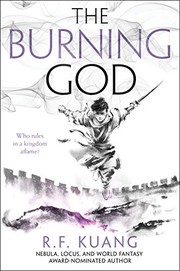
The Burning God
2,381-word summary 11 min read 622 pages in the book
- First published
- 2020
- Publisher
- Harper Voyager
- Pages
- 622
- ISBN
- 9780062662620
- Series
- The Poppy War (#3)
Reading options
What's inside (7 sections)
I finished The Dragon Republic feeling wrung out, and I still started this one the same week. That says a lot about what R.F. Kuang does with Rin. You want to look away from her and you cannot. Harper Voyager published this closing volume in 2020, and the hardcover runs 622 pages. It is the third book of The Poppy War trilogy, set after Rin broke with the Dragon Warlord, and it follows her south to raise an army of her own while Nikan splits between a republic, a warlord state, and foreign guns.
Read the first two books before this one. Nothing here will make sense without them. You need to know what Rin did with the Phoenix at the end of the first war, what she traded for Hesperian help in the second, and why Kitay, Nezha, and the Cike matter to her. Spoilers for the whole trilogy follow. I keep battle violence general, the way the earlier posts on this site did, because the body count is not the argument. The choices are.
This is grim military fantasy from start to finish. Marches, sieges, burned fields, councils that argue while villages empty. Kuang bases Nikan on China in the first half of the twentieth century, and this book leans hard into occupation, civil war, and the cost of calling on gods. If the middle of book two tested your patience with maps, this one will test your heart instead.
Rin goes south with nothing left
The book opens with Rin broken. She lost her place with the Dragon Warlord's forces after learning what his republic would cost. She is cut off from steady supply, famous in a way that brings killers, and still bound to the Phoenix, the fire god who feeds on rage. She quiets the god badly and the guilt worse. Opium helped before. Now even that brings little rest.
She heads for the south, and for Tikany, the village that was never really home. Tikany is poor, river bound, used to being promised help that never comes. Rin grew up there as an unwanted foster child before she tested into Sinegard. She returns as a rumor. Peasant girl. Soldier. Shaman. Killer of thousands. Kuang writes the return without warmth. Old neighbors stare. Some ask for protection. Some ask her to leave before soldiers follow her back. Both asks are fair.
Kitay is still with her, and he is the best part of these early chapters. He is the friend from school who learned logistics while Rin learned fire. He counts grain, reads maps, talks to headmen in their own terms. Where Rin brings fear, Kitay brings math that feeds people. Their bond holds the book together. He tells her hard truths about supply and about herself. She hears about half of them.
The Cike are scattered. The band of shamans who fought beside Rin is smaller now, tired, wary of her. Chaghan distrusts her openly. Others drift toward local bosses who pay in rice. Rin tries to gather them with speeches about a free south. Some come. Some do not. Kuang makes clear that charisma does not fill stomachs. Every recruit costs food, powder, medicine. Freedom on an empty storehouse is just a word.
A fair criticism starts here. Rin repeats an old loop. She reaches for the Phoenix, hates the price, reaches again. The cycle is honest for someone with her wounds and her power, but on the page it can feel like stalling after book two did the same. I kept waiting for Kitay to force a change. He tries. She is not ready.
The Southern Coalition and its knives
Rin finds allies in the Southern Coalition, a loose group of provincial leaders, militia heads, merchants, and old officers who hate the north and hate foreigners more. They have boats, rice stores, mountain forts, and long memories of being taxed to pay for northern wars. What they lack is unity. Each leader wants Rin's name for his own cause.
Councils fill the middle chapters. I mean that as both praise and warning. Kuang writes politics the way she writes battles, with real stakes. Who controls the river tolls. Who feeds the port towns when the blockade bites. Who gets Hesperian rifles and what the missionaries demand in return. Rin sits through meetings where men twice her age praise her as a goddess and then ignore her orders. She learns to trade. A blessing here for a battalion there. A public rite for a private loan of boats.
Tikany becomes her base and her test. She drills peasants who have never held rifles. She sets watches, digs wells, stores harvests where raiders cannot find them. Kitay builds the system behind her. He teaches clerks to keep ledgers. He pays on time, which in this world is close to a miracle. Villagers start to believe because the rice arrives, not because Rin glows. I liked that order. Belief follows bread.
But the Coalition leaks. Leaders sell information to the Dragon Republic. Smugglers sell powder to both sides. Hesperian agents offer loans with terms that read like chains. Churches, schools, ports, rail rights. Kuang draws the parallel plainly with the foreign concessions in modern Chinese history. Help arrives with paperwork that outlives the war. Rin sees it. She signs anyway when the alternative is starvation. Those scenes hurt because no choice is clean.
Nezha hangs over all of this. The Sinegard boy who once fought beside Rin now serves against her as the Dragon Warlord's heir and pilot of his own dark power. He believes in order, in a strong state that can end the chaos. Rin calls it tyranny with better uniforms. He calls her revolt banditry with gods. They were friends. Kuang never lets you forget it, which makes every clash feel like a loss before it starts.
Fire, gods, and the price going up
The middle of the book raises the cost of shamanry. The gods are not tools. The Phoenix wants burning. Other spirits want their own payments in pain, memory, or flesh. Chaghan warns Rin that each calling thins the wall between her and the god. She hears him and calls anyway when a battle turns. Kuang writes these scenes as need, not triumph. Rin burns a column to save a village and then walks through the ash counting children she did not save.
Kitay's role grows here in ways I admired. He cannot call a god, so he fights with numbers and plans. He maps Hesperian airship routes. He works out where the Republic must land supplies and where a small force can cut them. Officers twice his age start asking the thin boy from the capital what the map says. He also watches Rin slip and tries to anchor her with routine. Eat. Sleep. Write the orders. Count the boats. Love, in this book, often looks like ledgers.
The Cike fracture further. Some shamans burn out their minds reaching too often. Some refuse to fight for a south they see as just another master. One mission to break a blockade goes wrong in a way that shapes the rest of the book. I will not detail it. The result is fewer friends, less powder, and a Rin more sure that only fire can finish this. That certainty is the most frightening thing in the novel.
Kuang also shows the Hesperians more directly. They bring steel, medicine, air power, and missionaries who call shamans demons. They want Nikan open to trade, to churches, to bases. Their officers speak of order while their guns decide who eats. Rin hates them with a clarity she sometimes lacks elsewhere. It is one of the few clean feelings she has left, and the book questions even that. Hatred of occupiers is just. Feeding it to the Phoenix still poisons her.
The war crimes pile up on all sides. Republic troops punish villages that feed the south. Southern militias hang collaborators without trial. Hesperian guns fire into crowds. Kuang does not rank these horrors. She shows how each side answers the last burning with a new one. Readers who found the first books heavy should know this one stays at that level. The details stay general more often than not, but the scale is larger and the grief is constant.
One quiet chapter earned a long pause from me. Rin visits a field hospital after a river battle and tries to thank the surgeons. They are short on bandages, short on sleep, past politeness. A nurse asks her plainly whether the south will eat this winter. Rin starts a speech about freedom and stops halfway, because the woman is not asking about flags. Kitay steps in with numbers. Sacks per boat, boats per week, mouths per village. The nurse nods and goes back to work. Rin stands there holding a bowl of soup someone handed her and does not drink it. Kuang never explains the moment. She does not need to. It shows the distance between what Rin can do and what her people need, better than any council debate.
The book also returns to Sinegard in memory, and those flashes hit hard. Training yards, library dust, Jiang's dry warnings about the gods. Rin remembers teasing Kitay over exam results and Nezha showing off with a staff. Those boys are gone. The men who replaced them write orders that get villages burned. Kuang places these memories right before battles, which feels cruel in the right way. You see what the war already took before the next charge takes more.
Nezha, Kitay, and no way back
The last third narrows to people. Rin and Nezha meet between battles, sometimes in person, sometimes through messages and prisoner swaps. The old school tie pulls at both of them. They trained together. They ate together. Kitay loved them both in different ways. Now Nezha flies for the Republic and Rin burns for the south, and each sees the other as proof the war must go on. Kuang writes their talks with care. No long speeches about fate. Just tired young people who miss who they were and cannot find a road back.
Kitay tries to build that road. He drafts terms. Amnesty, shared grain, joint patrols against raiders, Hesperians out. He carries offers himself because he trusts no courier. Some talks almost hold. Then a massacre or a betrayal breaks them. Each failure costs him sleep and weight. He keeps going because stopping means admitting the math of peace does not work while gods and guns stay on the field.
I will keep the final battles general. The south risks all on a campaign to break the Republic's hold and push out foreign power. Rin calls the Phoenix at full strength. The cost is what the whole trilogy promised. Fire does not sort guilty from hungry. It takes ports, fields, ships, soldiers, and children hiding in cellars. Rin wins ground and loses the thing she claimed to fight for. Villagers who praised her hide when they hear her name. That turn is written without flinching, and it should be.
The ending is bleak and, to me, right for this story. There is no healed Nikan, no council that fixes all, no god put kindly back to sleep. There is a last meeting between Rin and Nezha that reads like an exhausted handshake between two people who already died inside. Kitay's fate lands hardest. He gave the trilogy its mind and its conscience, and the price he pays makes Rin's victory feel like ash. I closed the book angry and sad, which felt like the intended response.
Kuang's point, as I read it, is not that resistance is useless. Southern villagers feeding each other under siege matter. Kitay's ledgers matter. What she refuses is the story where one righteous fire cleans a country. Every power in this book, native or foreign, divine or human, feeds on the same villages. Rin learns to see that and still cannot stop reaching for flame. That failure is the tragedy.
Slow councils, heavy grief, and who should read it
This is the strongest and hardest book of the three for me. Strongest because the politics bite and the friendships carry real weight. Hardest because it never lets up. Book one had school scenes to breathe. Book two had Kitay's planning rooms. Here even rest feels watched. If you read for hope, this will bruise you. Kuang offers care in small acts, a shared coat, a counted sack of rice, a night without shelling, and then takes the larger hope away.
Pacing drags in the council stretch. One more merchant prince betraying the Coalition. One more debate about tolls. I understand why it is there. A people's war runs on rice and trust, and Kuang wants you to feel how thin both run. Still, about fifty pages in the middle could have been cut without losing the point. Readers who tired of war councils in book two should brace.
New readers must start at book one. This volume assumes you know the gods, the history, the debts. It also assumes you can sit with atrocity described at a distance but without comfort. Anyone who needs clear heroes should skip the trilogy. Rin does terrible things for reasons that feel human. Nezha does terrible things for reasons that feel human. The Hesperians believe their own story too. Kuang gives understanding without pardon.
What stays with me is Kitay counting. Boats, sacks, miles, pipes back in book two, graves here. He is the trilogy's memory that math is care. Rin could burn armies but could not feed one without him. The south could praise a goddess but could not hold a town without clerks who paid on time. That split between fire and food is the whole series in miniature.
If you want epic fantasy where power lifts the worthy, look elsewhere. If you want a war story that treats gods, empires, and revolutions as hungry things, and that follows one furious girl to the end of her fire, read all three in order and clear your week. You will not feel good at the end. You will feel awake. For this kind of book, awake is the praise that fits.
FAQ
When was The Burning God published?
Harper Voyager published it in 2020. The hardcover runs 622 pages and the ISBN is 9780062662620.
Do I need to read the first two books before The Burning God?
Yes. Read The Poppy War first, then The Dragon Republic. This book assumes you know Rin, Kitay, Nezha and the Phoenix bond.
Is The Burning God as violent as the earlier books?
Yes. It keeps the worst violence general, but battle deaths, reprisals against civilians, torture, addiction and occupation run through it.
Similar books
More from The Poppy War first, then related titles.
The Poppy War
A war orphan wins a place at Sinegard academy, bonds with a fire god, and faces invasion.
2,977-word summary · 13 min read
The Dragon Republic
Rin survives the last war only to join the Dragon Warlord against the Empress, trading one brutal fight for another.
2,810-word summary · 12 min read

The Blinding Knife
Kip trains to join the Blackguard while the Prism hides his true identity, loses his colors, and fights a war against a rogue drafter who wants to birth a god.
2,049-word summary · 9 min read
Homeland
Drizzt Do'Urden is born into the cruel drow city of Menzoberranzan, where his father teaches him to fight and to doubt everything his family believes.
2,303-word summary · 10 min read

Best Served Cold
Left for dead by the duke she served, mercenary general Monza Murcatto recruits a broken crew and works through a list of seven men who owe her a debt of blood.
2,108-word summary · 9 min read
Nevernight
Mia Corvere trains with a cult of assassins to avenge her murdered family, in a world where true night falls only once every few years.
2,093-word summary · 9 min read
The Tower of the Swallow
Ciri flees as a bandit while Geralt gathers allies to find her.
2,580-word summary · 11 min read
Prince of Thorns
At thirteen Jorg Ancrath rides with killers across a broken Europe, hunting Count Renar for family murder while chasing lost Builder fire and the empire throne.
2,488-word summary · 11 min read
The Black Prism
Dying Prism Gavin Guile hides a secret son while war brews over color magic in the Seven Satrapies.
2,169-word summary · 10 min read
Gardens of the Moon
Empire, gods, and mages collide over Darujhistan as Bridgeburners bleed for Empress Laseen.
2,188-word summary · 10 min read

Winter's Heart
Trapped in Far Madding without the Power, Rand baits his betrayers while Mat plots escape from Ebou Dar and Elayne fights for Caemlyn.
2,906-word summary · 13 min read
The Path of Daggers
Rand wields Callandor against Seanchan while Elayne and Egwene maneuver.
2,492-word summary · 11 min read
Knife of Dreams
Rand sets a Seanchan trap while Mat weds Tuon, Perrin storms Malden, Elayne takes Caemlyn, and Egwene defies Elaida.
2,988-word summary · 13 min read

A Memory of Light
Rand faces the Dark One at Shayol Ghul as all armies join the Last Battle.
2,165-word summary · 10 min read

Last Argument of Kings
Jezal takes the crown, Glokta serves two masters, and Logen faces Bethod as the Gurkish close on Adua.
2,479-word summary · 11 min read

Before They Are Hanged
Glokta holds Dagoska, West fights Bethod in the North, and Bayaz chases the Seed with Logen and Jezal.
2,090-word summary · 9 min read

The Blade Itself
A torturer, a barbarian, and a spoiled officer circle a wizard quest that serves banks more than heroes.
1,998-word summary · 9 min read
Tower of Dawn
Chaol and Nesryn sail to Antica for armies and healing, finding Yrene Towers and Valg darkness instead.
2,054-word summary · 9 min read

Kingdom of Ash
Aelin is chained in a glass coffin while her court fights Erawan's darkness across every front of the war.
2,078-word summary · 9 min read
A Feast for Crows
After the War of the Five Kings, Cersei seizes power while Brienne searches and the Ironborn rise.
2,085-word summary · 9 min read
A Dance with Dragons
Tyrion flees east, Dany chains her dragons in Meereen, and Jon holds the Wall as winter comes.
2,115-word summary · 9 min read
Ship of Magic
A sentient ship wakes when her captain dies, and the family that owns her starts to come apart over who gets to sail her.
2,026-word summary · 9 min read

Sophie's Choice
A young Southern writer in 1947 Brooklyn befriends a brilliant, unstable couple and slowly learns the story of the Polish Catholic woman at the center of their…
2,798-word summary · 12 min read

Magician's Gambit
Garion and his companions cross haunted Maragor and the caves beneath Rak Cthol to recover the Orb of Aldur.
2,391-word summary · 11 min read
Enchanters' End Game
Garion marches toward Torak while Ce'Nedra leads the West's army in the final Belgariad volume, where prophecy and war meet.
2,557-word summary · 11 min read

Nettle & Bone
Marra, a princess in a convent, leaves to save her abused sister, but first she must finish three impossible tasks: a bone dog, a nettle cloak, moonlight in a…
2,061-word summary · 9 min read
The Queen of the Tearling
Nineteen-year-old Kelsea leaves the woods to take her throne, ends a shipment of human captives, and draws the Red Queen's revenge.
2,357-word summary · 10 min read

Fool's Errand
FitzChivalry Farseer has lived in exile for fifteen years. When Prince Dutiful vanishes before his betrothal, Fitz returns to Buckkeep to find him, with a wolf…
2,606-word summary · 12 min read

The Sword of Shannara
A young half-Elf and a company of companions set out to recover a magic sword before the Warlock Lord destroys the Four Lands.
2,474-word summary · 11 min read

The Hazel Wood
Alice Proserpine has spent her life running from bad luck. When her mother vanishes, she follows a trail of fairy-tale clues to her grandmother's estate and…
2,064-word summary · 9 min read