

Girl in Pieces
2,730-word summary 12 min read 406 pages in the book
- First published
- 2016
- Publisher
- Delacorte Press
- Pages
- 406
- ISBN
- 9781101934715
Reading options
What's inside (8 sections)
I came to Girl in Pieces because a friend who works with teens kept mentioning it in the same breath as Speak and Girl, Interrupted. She said it was rough but worth it. She was right on both counts. The book came out in 2016 from Delacorte Press, 406 pages in the first hardcover edition, and it follows seventeen year old Charlie Davis, whose full name is Charlotte Davis, through treatment and a shaky try at starting over in Tucson. It is a standalone young adult novel. A later book by Glasgow, You'd Be Home Now from 2021, is sometimes shelved near it in stores, but it has different characters and a different town. The publisher does not list them as a series, and this book reads complete on its own.
What surprised me was how quiet much of it feels despite the heavy subject. Charlie harms herself and has tried to end her life. The book does not hide that. It also does not dwell on graphic detail. It stays close to what a day feels like when you are trying not to fall back into old habits. Work shifts. A bike ride in heat. A sketchbook filling up. A person saying the wrong thing and you having to decide what to do next.
Waking up at Creeley
The opening puts us inside Creeley Center, a treatment facility for young women who harm themselves. Charlie has arrived after being found in bad shape and left on a hospital lawn. She is bandaged and mostly silent at first. She watches more than she talks.
Creeley runs on groups, checks, meals, and small routines. Casper, the therapist who leads the group, tries breathing exercises and pushes the girls to talk about what happened without forcing it. Barbero, the night nurse, keeps order with a tired kind of care. Charlie shares a room with Louisa, who writes constantly in notebooks and is kind in a way that feels steady. There is also Blue, sharp and funny and quick to fight, who clashes with Charlie early and then recognizes something familiar in her. Jen S., another patient, breaks rules and gets discharged. The crafts teacher gives Charlie pencils and paper.
I liked how Glasgow handles this part. It would be easy to make treatment either perfect or useless. Here it is partial. Some staff listen well. Some are stretched thin. The girls help each other and also trigger each other. Charlie starts speaking again after her bandages come off. She starts drawing again. A boy from her past, Mikey, appears in the parking lot one night holding up a paper so she can read it through the window. It is a small moment, but it matters because Charlie has very few people who show up.
The reason her stay ends is blunt and familiar to anyone who knows the American system. The money runs out. Insurance stops. Her mother, who has little left to give, sends a bus ticket instead of a plan. Tucson is where Mikey is working as a roadie, and the idea is that he can look out for her. He agrees in principle. In practice he is on the road and cannot do much day to day.
Ellis, Mikey, and what broke
Glasgow feeds the backstory in pieces, which suits the title. Charlie grew up poor. Her father drank, struggled with depression, and died by drowning in a river. After that her mother turned harsh and then distant. At school Charlie felt marked by her clothes and her silence until Ellis, a new girl, befriended her.
Ellis and Mikey and Charlie spent time together listening to music and drinking and acting like normal teens for a while. Ellis later started dating an older boy Charlie thinks of as wolf boy because of his teeth. Charlie ended up living with Ellis for a stretch, then got blamed when drugs were found in the house and got kicked out. Ellis, full of guilt, harmed herself badly and ended up with a severe brain injury. Charlie carries that guilt along with grief for her father and anger at her mother.
There is also a stretch of homelessness in an underpass and in a shelter called Seed House. Two boys, Evan and Dump, look out for her there. A dealer who hangs around Seed House tries to pull Charlie into sex work. She refuses and the situation turns frightening. Later, in despair, she tries to end her life. Evan and Dump find her and get her to a hospital. That is how she ends up at Creeley.
I am keeping this vague on purpose. The book is specific about feelings and consequences, not about instructions or close detail, and a summary should do the same. What matters for the plot is that Charlie has lost housing, family support, and her closest friend, all before she is eighteen. She has learned to expect that adults will leave or hurt her. Creeley gives her a pause, not a cure.
Tucson on a bus ticket
Tucson hits Charlie Davis as bright, hot, and spread out. The Tucson desert light feels exposing after Minnesota winter and locked wards. She rents a small apartment from an old man named Leonard. It is bare and a little unsafe, but it is hers. She gets around on a bike. She shops at thrift stores. She learns which dumpsters behind food shops are usable when money runs short, which happens often.
Her mother does not come with her. That absence hangs over the middle of the book. There are phone calls that go badly. There is no foster family waiting, no caseworker smoothing the way. Charlie is technically close to eighteen and living like an adult without a safety net. The closest thing to a group home structure she has now is the loose network around work.
She finds a job washing dishes at True Grit, a coffee shop on Fourth Avenue. Julie, the owner, is large, warm, a believer in stones and small rituals. On Charlie first day Julie gives her a piece of lapis lazuli for clarity. Linus, the manager, shows her how to keep up during rush. Tanner, who waits tables and is studying to be an EMT, treats her injuries without making a show of it and teases her in a brotherly way. The shop smells like coffee and grease and cleaner. The pay is low. The routine saves her.
Ariel, who rents rooms to Mikey and his friends, is a working artist. She sees Charlie sketching and offers free lessons. That offer becomes important later. For now Charlie is focused on Mikey. She still hopes he will see her as more than a kid sister. When he comes back to town he invites her to a party. She goes with her hopes up. He introduces his girlfriend Bunny. Later they marry quickly. It lands hard.
True Grit and Riley
Riley West cooks the line at True Grit. He is Julie brother, in his late twenties, a former frontman for a local band called Long Home that had some regional buzz before falling apart. He is handsome in a worn way and pays attention to Charlie. He calls her strange girl. He slips her food when she is hungry. He talks about music. He also drinks heavily and uses drugs, vomits between orders, misses shifts, and borrows money.
Charlie latches on. Part of it is loneliness after the Bunny news. Part of it is that Riley listens when she talks about her father and about missing Ellis. Part of it is simply that he is there during long shifts while Mikey is gone. They start a sexual relationship. The book presents it as consensual but deeply unequal in age and stability. Riley is more than ten years older and in active addiction. Charlie is seventeen, newly housed, newly employed, and trying to stay away from old coping habits.
This is where my feelings about the book get mixed, and I think that is intentional. Glasgow does not present Riley as a rescue. He asks Charlie to pick up drugs from his dealer Wendy. He pulls her into his spiral. He gets jealous when she spends time on art or with Blue. He has sex with her in Julie office, which gets Charlie moved to nights after Julie catches them and accuses Charlie of stealing. He finds the small kit Charlie keeps from her old habits and reacts with anger and fear rather than care. He does seem to care for her in flashes. He also uses her.
Through Riley she meets Tiger Dean, an old bandmate who wants to get Long Home back together for a benefit show. That thread gives Riley something to aim for besides the next bottle. It also shows how addiction hollows out talent. Practices happen, then fall apart. Promises get made, then missed. Charlie hopes love will steady him. It does not. If anything, she starts drinking more, drawing less, and skipping the lessons Ariel offered. Work suffers. Her apartment gets messy. Old urges press closer.
Blue emails from Creeley and then later shows up in Tucson. Blue drinks too much and talks big, but she sees Charlie clearly. Their friendship feels real because it is not tidy. They fight. They make up. Blue pushes Charlie to submit drawings to a local gallery. The galleries in the arts area near the museum district, the small museo and studio spaces off Fourth, show local work, and one curator responds with interest. Casper had told her at Creeley to keep drawing through hard weeks, and here that advice finally lands. That outside interest helps Charlie remember that she is more than a dishwasher or someone girlfriend.
Drawing toward a show
Art is the other job in this book, alongside dishwashing. Charlie has always drawn. At Creeley the crafts teacher rekindled it. In Tucson Ariel gives her pointers on shading, on drawing hands, on sticking with a piece past the ugly middle. Charlie starts carrying a sketchbook everywhere. She draws the desert plants with their sharp edges, the regulars at True Grit, Ellis from memory, her own hands.
She decides to put together a set of drawings for a small show timed around All Souls, the Tucson procession and remembrance that fills the streets with altars, music, and painted faces. The timing fits the story. Charlie is trying to honor the dead without joining them. She works at night after shifts. She frames on the cheap. She worries her work is too sad or too plain. Blue tells her to send it anyway.
The show prep runs alongside Riley collapse. Charlie turns eighteen alone. Mikey and Bunny marriage news sinks in. Julie is still angry about the office incident. Money is tight. A few days before the opening, Blue arrives for real and needs a place to stay. Riley hates the idea of a roommate. Charlie accuses him of trying to cut her off from anyone who might tell her the truth. They are both right and both wrong, which felt true to how fights go when everyone is tired.
Then several blows land at once. Charlie learns that Louisa, her kind roommate from Creeley, died by setting herself on fire. Blue is smoking crack at Riley place when Charlie walks in, upset about Louisa and numb. Charlie then finds Riley with Wendy in the kitchen. He shoves her against a wall and tells her to see him as he is. She walks through the All Souls crowds in a daze. Back at her apartment, Wendy has trashed the place. Charlie drinks hard and harms herself and blacks out among broken glass.
I want to be clear without being graphic. Glasgow writes this relapse as frightening and sad, not as spectacle. The point is not shock. The point is that progress is not a straight line, and that being around active use while grieving can undo weeks of steady habits. What saves Charlie here is not willpower in the moment. It is other people. Linus and Tanner find her and get her to Felix, their grandfather, a successful artist living in Santa Fe.
What holds and what wears thin
Felix house in Santa Fe is quiet, full of light and paper and proper meals. He gives Charlie space to heal and a table to work at. She starts making a comic version of her life, which lets her look at hard events with a little distance. She wears short sleeves again after buying skirts and shirts at a thrift store. That small detail hit me more than any big speech. She stops hiding her arms because she is starting to feel like herself, not because the scars vanish.
She goes back to Tucson with Linus and Tanner to help Julie rebuild True Grit after damage to the shop. Blue has cleaned her apartment. They agree to try sobriety together and to act like sisters in the practical sense. Phone calls get returned. Food gets shared. Drawings get finished. Felix offers Charlie a job as his studio assistant. She accepts. She watches Riley band play the benefit from the edge of the crowd. He plays a song he wrote for her and apologizes in his way. She does not go back to him. She boards a plane to New York to meet Felix and then fly on to Santa Fe. On the plane she imagines telling Ellis about the new life. It is hopeful without pretending everything is fixed.
What holds for me is Charlie voice. She is funny in a dry way. She notices food, weather, hands, music. She loves fiercely even when she chooses badly. The work details ring true. The dish pit rush, the sore feet, the regular who wants extra foam, the manager counting tips. The art details do too. The fear of showing, the cheap frames, the way a drawing can hold a feeling you cannot say out loud. Tucson feels specific. Heat, dust, wide sky, murals, the All Souls night with its drums and candles. Glasgow lives in Tucson, and it shows in the small things rather than postcards.
What wears thin is the middle stretch with Riley. The book knows he is bad for her, and Charlie knows it too, yet the story circles the same fights about drinking, jealousy, and missed shifts for many pages. A shorter spiral would have left more room for Ariel, for Linus and Tanner, and for Blue, who are more interesting. The age gap is handled honestly as harmful, but some scenes still lean on his charm. Young readers may need an adult to talk through why attention from an older addicted musician is not love, even when it feels like rescue.
I also wanted more of Charlie mother beyond anger and absence, and more about what happens after Santa Fe. The ending is open by design. She has a job offer and a place to work, not a guarantee. That honesty suits the book. Recovery here is daily. It is dishes and drawings and showing up. It is asking for help before the night gets bad. The last image of Charlie on a plane, thinking of Ellis and of the work ahead, felt earned because so much of the book was unglamorous effort.
Readers should know the content before starting. This is a story about self harm, suicide loss, addiction, homelessness, and predatory behavior. It keeps descriptions non explicit and avoids how to detail, focusing on grief and on coping skills like talking, drawing, working, and leaning on steadier friends. It is written for older teens and adults, roughly fourteen and up, and it helps to read it when you are steady enough to sit with sad material. If you are struggling, read with someone you trust and reach out to local support or a counselor.
I finished feeling protective of Charlie and glad Glasgow gave her work and art, not just romance, as a way forward. The gallery show does not make her famous. The assistant job does not erase the past. What changes is that she has a few people who check on her, a skill she practices, and a clearer sense of when to leave a room. For a book with such a stark title, that counts as a solid kind of hope.
FAQ
When was Girl in Pieces published?
It was first published in 2016 by Delacorte Press in a 406 page first edition. The summary follows that text.
Is Girl in Pieces part of a series?
No. It is a standalone young adult novel. You'd Be Home Now by the same author has different characters and is not listed by the publisher as a series.
Is Girl in Pieces appropriate for younger teens?
It suits older teens and adults, roughly fourteen and up. It deals with self harm, suicide loss, and addiction in non graphic terms and focuses on recovery, work, and art.
Similar books
Every Last Word
A girl with OCD finds poetry and friends who know her secrets.
2,434-word summary · 11 min read
Solitaire
Gloomy Tori Spring hunts school prank group Solitaire with odd Michael Holden while brother Charlie heals.
2,068-word summary · 9 min read

Turtles All the Way Down
Aza Holmes lives with intrusive thoughts while chasing a missing billionaire with Daisy.
2,007-word summary · 9 min read

Dumplin'
Willowdean Dickson enters her town's beauty pageant as a protest and discovers that confidence is harder to keep once she lets someone close.
1,922-word summary · 9 min read

Big Swiss
A transcriptionist for a sex coach falls for one of his clients, the tall Swiss gynecologist she calls Big Swiss, in a funny novel about work and secrets.
2,523-word summary · 11 min read

Since You've Been Gone
Shy Emily spends summer finishing her vanished best friend Sloane list of thirteen dares, finding Frank, Dawn, and courage.
2,566-word summary · 11 min read
Radio Silence
Head girl Frances loves a secret podcast made by shy Aled, and both crack under A-levels in Oseman's warm 2016 story of friendship, fandom, family and choosing…
2,778-word summary · 12 min read
Queenie
Jamaican British Queenie spirals after Tom break while friends hold her.
2,056-word summary · 9 min read

I Am the Messenger
Nineteen year old Ed stops a robbery, then gets playing cards sending him to help strangers.
2,124-word summary · 9 min read
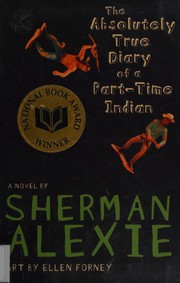
The Absolutely True Diary of a Part-Time Indian
Fourteen-year-old Junior leaves his Spokane reservation school for an all-white farm town, drawing cartoons through grief, basketball, and divided loyalty.
3,224-word summary · 14 min read
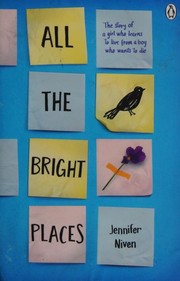
All the Bright Places
Grieving Violet and struggling Finch wander Indiana for a school project and each other.
2,208-word summary · 10 min read
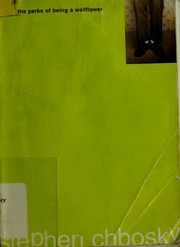
The Perks of Being a Wallflower
Chbosky's Perks retold: Charlie's letters, Sam and Patrick, first year of high school in Pittsburgh.
1,951-word summary · 9 min read

What Happened to Goodbye
Mclean has reinvented herself in four towns since her parents divorced. In Lakeview she uses her real name, and for the first time staying put becomes a choice.
2,796-word summary · 12 min read

Anya's Ghost
A lonely Russian immigrant falls into a well, befriends the ghost trapped there, and discovers that the ghost's help comes with a dangerous price.
2,001-word summary · 9 min read

Alone With You in the Ether
Two people in Chicago agree to six conversations, and the experiment becomes a love affair that is also a study of bipolar disorder, obsession, and the shape…
2,713-word summary · 12 min read
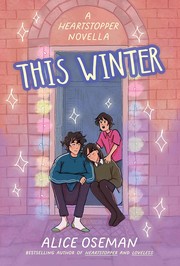
This Winter
On one difficult Christmas Day, Tori, Charlie, and Oliver Spring try to hold their family together while Charlie's eating disorder makes every tradition a test.
2,034-word summary · 9 min read

Little Earthquakes
Four Philadelphia women meet during pregnancy and discover that new motherhood is nothing like the plan, while friendship becomes the thing that holds them…
1,997-word summary · 9 min read

Wilder Girls
At a quarantined boarding school off Maine, three girls with strange mutations search for a missing friend and learn what the adults have hidden.
2,594-word summary · 12 min read

I Kissed Shara Wheeler
Shara Wheeler kisses her rival Chloe Green at prom and disappears, leaving a scavenger hunt that forces Chloe to rethink everything she knew about her.
2,083-word summary · 9 min read

Heist Society
A teenage art thief gets expelled from boarding school, then has two weeks to steal five paintings back from a London museum and clear her father.
2,781-word summary · 12 min read

Amy & Roger's Epic Detour
Amy Curry has not driven since the crash that killed her father. With Roger at the wheel and a box of maps between them, a cross-country trip becomes a slow…
3,034-word summary · 13 min read

We Are Okay
Marin fled San Francisco after her grandfather vanished and stopped answering anyone. When Mabel visits her college dorm, she has to say what happened.
2,253-word summary · 10 min read

One to Watch
A plus-size fashion blogger takes the lead role on a reality dating show to prove she belongs on television, and finds she might want what the cameras offer.
2,478-word summary · 11 min read

The First to Die at the End
On the night Death-Cast launches, a boy with a bad heart meets a model with everything ahead of him, and one of them gets the call.
2,908-word summary · 13 min read

Saving the World and Other Extreme Sports
Max and the flock split in two to take down the lab behind their lives, one half in California and the other in Europe.
2,175-word summary · 10 min read

The Second Summer of the Sisterhood
Four friends share the traveling pants through a summer of grandmothers, first loves, and mothers who are learning to let go.
2,209-word summary · 10 min read
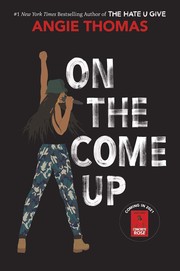
On the Come Up
Bri Jackson, a sixteen-year-old rapper in Garden Heights, chases a record deal while a viral song turns her into a symbol she never wanted to be.
2,034-word summary · 9 min read

Dash & Lily's Book of Dares
Two lonely New York teenagers trade dares in a red notebook left at the Strand, falling for each other on the page before they meet.
2,228-word summary · 10 min read

Aristotle and Dante Dive into the Waters of the World
Ari and Dante return for senior year in El Paso, navigating first love, AIDS, family grief, and the cost of being openly gay in 1987 Texas.
2,188-word summary · 10 min read

The Battle for Skandia
Will and Evanlyn are still hiding in the Skandian mountains when Halt and Horace arrive with word of a Temujai invasion that could roll on to Araluen next.
2,248-word summary · 10 min read