
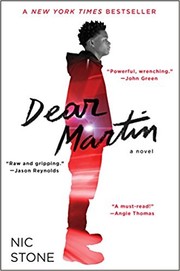
Dear Martin
2,596-word summary 12 min read 224 pages in the book
- First published
- 2017
- Publisher
- Crown Books for Young Readers
- Pages
- 224
- ISBN
- 9781101939499
- Series
- Dear Martin (#1)
Reading options
What's inside (9 sections)
I picked this up on a wet Sunday afternoon because a teacher I respect keeps putting it into the hands of teenagers who think racism ended before they were born. It is a short book, 224 pages in the Crown hardcover that came out on October 17, 2017, and it was Nic Stone's first novel. I finished it in one sitting and then sat with it for a while, which is not the same thing. The story opens with a boy doing the right thing and getting punished for it, and it never really lets him catch a break. By the last page I understood why the title is a letter rather than a slogan.
A scholarship kid in a hoodie
Justyce McAllister is seventeen, a senior at Braselton Preparatory Academy outside Atlanta, a mostly white private school he attends on a scholarship. He is fourth in his class, captain of the debate team, a runner, and a kid whose test scores make people talk about Yale. On the night the book opens, he is walking through a wealthy neighborhood in a hooded sweatshirt, going to find his ex-girlfriend Melo. She is drunk and he wants to make sure she does not drive. She tells him to go away. He takes her keys anyway and maneuvers her into the backseat of her car.
A police car pulls up. A white officer named Tommy Castillo gets out, grabs Justyce, slams his head against the car, and handcuffs him so tightly it hurts. Justyce tries to explain that he was helping Melo. Castillo punches him in the face and tells him not to say anything, calling him a punk who could not resist a pretty white girl who had locked her keys in her car. The whole encounter takes a few minutes. Justyce is eventually let go. It changes the rest of his year.
The details Stone gives him are the point of the scene. Justyce's mother has raised him on a list of rules for encounters with police: be respectful, keep your anger in check, make sure the officers can see your hands. He has followed those rules his whole life. He has also absorbed the promise that achievement is a kind of armor. If you get good grades and go to a fancy school, if you speak well and dress well, the thinking goes, you will be treated differently from the boys in the neighborhood you grew up in.
The arrest punctures that belief. In his first letter to Dr. Martin Luther King Jr., Justyce introduces himself with all of his credentials, then writes that none of it mattered that night. He mentions a boy named Shemar Carson, an unarmed Black teenager shot by a white officer in Nevada, and the grand jury that declined to indict that officer. The letter is addressed to a man who has been dead for decades, but it reads like a note to a parent: look what I did, look what happened anyway.
I found this part moving because it is so exact about the small arithmetic of a teenager's life. Justyce is not a saint. He gets annoyed, he sulks, he drinks more than he should, and he makes bad decisions later in the book. But he is careful in public in a way the white kids around him never have to be, and the story keeps showing how little that care buys him. Stone wrote the book partly in response to the 2012 killing of Jordan Davis and the 2014 shooting of Michael Brown, and that lineage is visible in the traffic-light scene that comes later.
Ten letters to a dead man
The letters are the spine of the book. There are ten of them, set between chapters, each one addressed to King and each one testing an idea Justyce has picked up from him. He wants to know what King would do if he were alive now. He wants to believe in nonviolence and in judging people by character rather than by skin color. He also wants to know why those beliefs seem to fail him every time he tries to use them.
The question is never abstract for long. Justyce asks himself whether King, for all his goodness, would still have been killed, and the answer he reaches is bleak. He says as much to a teacher after the shooting that comes later. He is not rejecting King. He is trying to work out what to do with a philosophy that asks a man to turn the other cheek while the world keeps hitting him.
What I liked is that Stone lets the letters stay unfinished. Justyce never resolves the argument. He writes, he gets a little calmer, he writes again. The letters give the book its rhythm, a pause between the scenes of school politics and sudden violence where the reader can hear what he is actually thinking. They also explain the title in the plainest possible way. This is a boy writing to a mentor he never met, because the living adults around him cannot answer the question he has.
There is a limit to the device, and I felt it about halfway through. Once you know the letters are coming, you can predict the mood of each one before you read it. A few of them circle the same ground, and the book has only 224 pages to work with. Still, the form is doing real work. It keeps Justyce's interior life in view even when the plot is pulling him toward the next disaster.
Colorblind talk at Braselton Prep
Most of the book happens at school, and the school functions as a character. In Societal Evolution class, their teacher, whom the students call Doc, asks whether the United States has achieved racial equality. Jared Christensen, Justyce's closest friend there, says yes and calls people who complain about racism divisive. Sarah-Jane Friedman, who goes by SJ and partners with Justyce on the debate team, argues that Jared only thinks this because he has never lived the other side of it. Jared pushes back. SJ presses again.
After class, Jared keeps talking with Manny and a group of white boys that includes Blake Benson. They describe a colorblind society, and though Manny is hesitant, they talk him into chanting with them about equality. Justyce hears it and goes home angry, and the person he is angriest at is Manny. That is one of the smarter choices in the book. The hurt comes from a friend who should know better, not from a cartoon villain with a swastika armband.
Halloween makes things worse. Jared suggests the group dress as stereotypes. Justyce agrees and goes as a thug, Manny goes as the token black guy, Jared picks yuppie politician, and Blake arrives in what looks like a genuine Ku Klux Klan outfit. Justyce stays quiet because he does not want to be called sensitive. At a party they run into young men from his old neighborhood, members of a group called the Black Jihad, and one of them punches Blake. A guy named Trey recognizes Justyce and calls him out for leaving the neighborhood and sitting with people like Blake.
Then there is Yale. Justyce is accepted early, and SJ is the first person he tells. The next day Jared argues in class that affirmative action discriminates against the majority and that Justyce only got in because of his race. They compare scores and discover they are about the same. Jared still insists there must be a quota. It is a nasty scene, and Stone is clearly done being gentle with him.
Justyce's feelings for SJ complicate everything. They win the debate tournament together, and backstage he leans in to kiss her. She pulls away and avoids him for weeks. He tells himself that his mother would never approve of him dating a white girl, but the real ache is simpler and harder to say: he no longer knows where he belongs. He is too Black for Braselton and too schooled for the neighborhood he came from.
A punch, a car, and a traffic light
The book changes temperature when Justyce goes with Manny to a party at Blake's house. He has been drinking after hearing that another unarmed Black teenager has been killed by a police officer. Blake's home is full of minstrel decorations, and Blake makes racist remarks to Manny and Justyce. Jared jokes that Justyce had better watch out because he is from the hood. Justyce hits him. Manny is drawn into the fight, and afterward Justyce yells at Jared for letting his white friends off the hook every single time.
Manny and Jared are both absent from school for a while after that. Justyce finds Manny in his dorm room and the two make up. Manny explains that he went to quit the basketball team because he never liked basketball. He played only because he was the tall Black kid at school and people expected it. When he went to the coach's office, Jared was there and joked that Manny could not quit until Massah set him free. Manny punched him. It is a small scene, but it shows how the pressure to perform a role wears on both of them.
The next weekend Manny picks Justyce up. They plan to hike but end up driving around in Manny's Range Rover, listening to hip-hop. At a stoplight, an angry white man in the next car glares at them. Justyce turns the music down because he is nervous. Manny turns it back up. At the next light the man tells them to turn it down, Manny turns it up again, and the man shouts a racial slur. Manny shouts back. The man pulls a gun and fires into the car. Manny is killed and Justyce is wounded.
The shooter turns out to be Garrett Tison, an off-duty police officer. Stone builds this section like a news package, with transcripts from evening broadcasts appearing between chapters, and the effect is cold and deliberate. This is the moment the book stops being a thought experiment. A boy who has spent the year writing to King because he wants to be good is lying in a car next to his dying friend, and his goodness has not stopped the bullet.
Martel's house
After Manny's funeral, his parents invite Justyce over. They tell him that their nephew Quan, the boy who shot Officer Castillo after Justyce's arrest, wants to see him. Quan tells Justyce that Tison was Castillo's partner. Then he urges Justyce to join the Black Jihad and hands him the number of its leader, Martel.
Justyce resists for a while. SJ is still not speaking to him, and he has nowhere else to turn, so he takes a bus to Martel's house. He meets members of the group and listens to Martel talk about what it means to be Black in America. It all makes sense to him until he spots a sawed-off shotgun and understands that joining would mean a life of violence. Just then other members rush in with news that Blake has gone on television claiming Justyce attacked him at his party. Justyce is mortified and leaves.
He goes straight to SJ's room and tells her he almost joined a gang. She lets him weep on her shoulder. He finally says that he has feelings for her, and she says she feels the same. It is the first hopeful thing to happen in a long stretch of the book, and Stone earns it by letting him be honest about how close he came to walking away from the letters entirely.
Quan's role here is the most contested part of the story. He lives by a rule he states plainly: where he comes from, resistance is existence. Justyce does not buy it, and Quan answers with the only evidence that matters to him, that Justyce's way got him shot and Manny killed. The scene is meant to trouble the reader, and it does. It also, as critic Adrienne Green pointed out, risks stacking the deck so that the polite, scholarship boy is the one we are asked to pity most.
The trial and the letters after
The media settles on a thug narrative about Manny and Justyce. Members of the Black Jihad burn Tison's house down, and several of them say Justyce helped, though investigators do not believe them. Justyce has to testify. Tison's lawyer asks about the party where he got drunk and hit Jared and Blake, and about his visit to Martel. The questions are calculated to make him look dangerous, and they work. Tison is convicted on three of the four charges against him, with the jury leaving out the most serious one, felony murder. A few days later, other prisoners kill him in jail.
Justyce goes to Yale in the fall. His roommate is pretentious and quietly racist. SJ is at Columbia and they are together. Jared is also at Yale, but Justyce never sees him until Christmas, when they run into each other at Manny's grave. Jared says how much he misses Manny and tells Justyce he has decided to become a civil rights lawyer. Justyce suggests they spend time together back at school. In the final letter, written from his dorm room, he admits that he feels out of place at Yale and cannot really remember what the letters were supposed to achieve.
That ending is the most honest thing in the book. There is no tidy conclusion and no speech that settles the argument. King is not a magic key, and neither is an Ivy League acceptance letter. The best Justyce can do is keep noticing what is in front of him, which is a modest thing to ask of a hero and a fair thing to ask of a reader.
What works and what grates
I would hand this to a sixteen year old who has been told that being respectful is the same as being safe, and to any adult who needs a reminder of how much that advice asks children to carry. The voice is immediate, the scenes are clean, and Justyce's confusion feels lived in rather than written to a lesson plan. Stone, who worked with teenagers before writing the novel, understands how much of school life is code switching between worlds that do not know about each other.
The criticism I have is real. The book leans on Justyce's elite education and his bright future, and that narrows its reach. King's lessons are tested here only on a boy with a scholarship and a debate trophy, so the question of how those lessons hold up for young people with fewer options mostly goes unanswered. Some of the white characters, especially Blake, behave so badly that they feel like arguments rather than people. The news transcripts slow the middle of the book down, and several chapters repeat the same argument between Jared and Justyce with new scenery.
Those complaints did not stop me from caring about what happened. Dear Martin is a debut, and it shows the habits of a debut: a little too sure of its structure, a little too neat in who deserves sympathy. It is also direct, angry without being cruel, and willing to leave its central question open. The letters never become answers. They stay letters, sent to a man who cannot write back, by a boy who has to decide what to do with the silence.
FAQ
Is Dear Martin based on real events?
It is a work of fiction, but Stone began writing it after the 2012 killing of Jordan Davis and the 2014 shooting of Michael Brown, and the police encounters in the book echo those cases.
Who is Manny in Dear Martin?
Manny is Emmanuel Rivers, a friend of Justyce at Braselton Prep and the cousin of Quan. He is killed by an off-duty police officer, Garrett Tison, after an argument over music at a traffic light.
Does the book say what Dr. King would do?
No. The ten letters stay unresolved, and in the final one, written from his Yale dorm room, Justyce admits he cannot remember what he had hoped the letters would achieve.
Similar books
More from Dear Martin first, then related titles.
Today Tonight Tomorrow
On the last day of senior year, academic rivals Rowan Roth and Neil McNair team up for a citywide Seattle scavenger hunt and start seeing each other…
2,233-word summary · 10 min read

Dumplin'
Willowdean Dickson enters her town's beauty pageant as a protest and discovers that confidence is harder to keep once she lets someone close.
1,922-word summary · 9 min read
On the Come Up
Bri Jackson, a sixteen-year-old rapper in Garden Heights, chases a record deal while a viral song turns her into a symbol she never wanted to be.
2,034-word summary · 9 min read

Since You've Been Gone
Shy Emily spends summer finishing her vanished best friend Sloane list of thirteen dares, finding Frank, Dawn, and courage.
2,566-word summary · 11 min read
I Am the Messenger
Nineteen year old Ed stops a robbery, then gets playing cards sending him to help strangers.
2,124-word summary · 9 min read
The Absolutely True Diary of a Part-Time Indian
Fourteen-year-old Junior leaves his Spokane reservation school for an all-white farm town, drawing cartoons through grief, basketball, and divided loyalty.
3,224-word summary · 14 min read

The Wilderness
Four Black women move through twenty years of friendship in Angela Flournoy's discontinuous, widely praised second novel.
2,141-word summary · 10 min read
The Distance Between Us
Seventeen-year-old Caymen Meyers distrusts rich people, then a wealthy boy keeps proving her wrong while her mother's doll shop struggles to survive.
2,231-word summary · 10 min read
The Rachel Incident
A funny, sharp novel about two twenty-somethings in recession-era Cork whose bookshop friendship, tangled romance and a married professor's lie leave a secret…
2,346-word summary · 10 min read
Pumpkinheads
Deja and Josiah have worked the Succotash Hut together every autumn. On their last Halloween shift, she pushes him to chase a crush and they discover something…
2,409-word summary · 11 min read
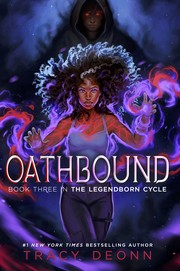
Oathbound
Bree Matthews has exiled herself from the Legendborn Order to protect the people she loves, but an unbreakable bargain with a shapeshifting demon has bound her…
2,751-word summary · 12 min read
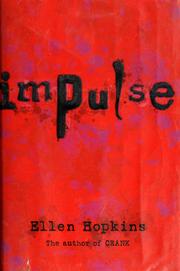
Impulse
Three teenagers in a Reno residential hospital tell in free verse how they arrived there after suicide attempts and what recovery costs.
2,030-word summary · 9 min read
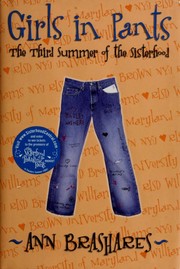
Girls in Pants: The Third Summer of the Sisterhood
The four friends face their last summer before college, with art school, an old flame, a guilty conscience and a new baby in the balance.
2,382-word summary · 11 min read
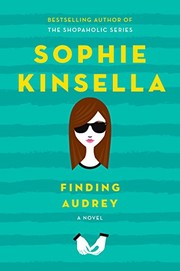
Finding Audrey
A fourteen-year-old who cannot leave the house or remove her dark glasses finds her way back through therapy, a film project and a patient new friend.
2,559-word summary · 11 min read
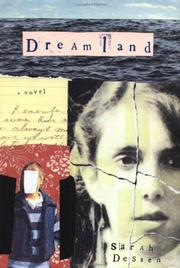
Dreamland
A teenager slips out of her perfect sister's shadow and into a relationship that turns from thrilling to dangerous, in Sarah Dessen's dark 2000 novel about…
2,823-word summary · 13 min read
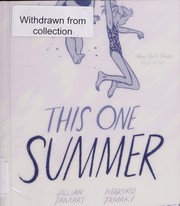
This One Summer
Mariko Tamaki and Jillian Tamaki's graphic novel about two friends at a lake town, where a mother's grief and a pregnant teenager reshape one summer.
2,324-word summary · 10 min read
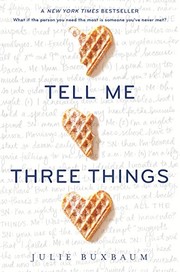
Tell Me Three Things
A grieving Chicago teen lands in her new stepfamily's Los Angeles mansion, then gets anonymous emails promising to guide her through a brutal private school.
2,292-word summary · 10 min read
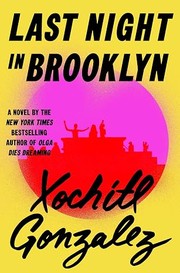
Last Night in Brooklyn
A copywriter in 2005 Fort Greene trades a scripted engagement for a bar crowd, a rising designer, and a neighborhood being remade around her.
2,540-word summary · 11 min read

What Happened to Goodbye
Mclean has reinvented herself in four towns since her parents divorced. In Lakeview she uses her real name, and for the first time staying put becomes a choice.
2,796-word summary · 12 min read

Anya's Ghost
A lonely Russian immigrant falls into a well, befriends the ghost trapped there, and discovers that the ghost's help comes with a dangerous price.
2,001-word summary · 9 min read
The Power of One
A boy in apartheid South Africa decides to become welterweight champion of the world, and the novel follows every mentor, fight, and loss that gets him there.
2,145-word summary · 10 min read

The Second Summer of the Sisterhood
Four friends share the traveling pants through a summer of grandmothers, first loves, and mothers who are learning to let go.
2,209-word summary · 10 min read

Aristotle and Dante Dive into the Waters of the World
Ari and Dante return for senior year in El Paso, navigating first love, AIDS, family grief, and the cost of being openly gay in 1987 Texas.
2,188-word summary · 10 min read

Someone Like You
Halley and her best friend Scarlett face a summer of grief, a surprise pregnancy, and Halley's dangerous first romance in Sarah Dessen's 1998 young adult novel.
2,218-word summary · 10 min read
Luster
Edie, twenty-three and adrift in New York, falls into an affair with an older white archivist in an open marriage, and into the orbit of his wife and adopted…
2,049-word summary · 9 min read
Loveless
Georgia starts university sure she wants love, then learns she is aro-ace.
2,539-word summary · 11 min read
Every Last Word
A girl with OCD finds poetry and friends who know her secrets.
2,434-word summary · 11 min read
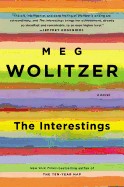
The Interestings
Meg Wolitzer follows Jules Jacobson from 1974 arts camp into middle age, as friendship with Ethan and Ash turns into envy, money gaps, marriage strain, and…
2,990-word summary · 13 min read
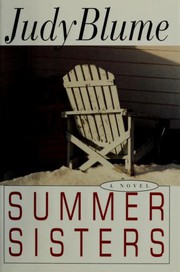
Summer Sisters
Vix and Caitlin share Martha's Vineyard summers from age twelve into adulthood, through first love, grief, marriage, and a disappearance that still haunts Vix.
3,633-word summary · 16 min read
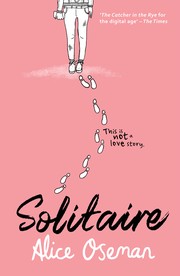
Solitaire
Gloomy Tori Spring hunts school prank group Solitaire with odd Michael Holden while brother Charlie heals.
2,068-word summary · 9 min read