
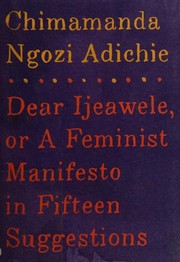
Dear Ijeawele, or A Feminist Manifesto in Fifteen Suggestions
2,609-word summary 12 min read 63 pages in the book
- First published
- 2017
- Publisher
- Alfred A. Knopf
- Pages
- 63
- ISBN
- 9781524733131
Reading options
What's inside (10 sections)
- A letter that started as an email
- The two tools that come before the fifteen
- The early suggestions: work, chores and nonsense
- Feminism Lite, books and the words we use
- Marriage, likeability and a sense of self
- Appearance, biology and talking about sex
- Romance, saints and difference
- The parts that grated, and who it is for
- Key takeaways
- FAQ
I picked this up after finishing We Should All Be Feminists, assuming it would be more of the same short, sharp argument. It is short, and it is sharp, but it is also stranger and warmer than I expected, because it is a letter rather than a speech. The whole thing runs to 63 pages in the first Knopf edition, published in 2017, and most of those pages are one woman talking to a friend who has just had a baby. By the end I felt I had been sitting in the room while the advice was given, which is a different experience from reading a manifesto at arm's length.
A letter that started as an email
The story behind the book is almost as good as the book. A childhood friend of Adichie's, a new mother, wrote to ask how she might raise her baby girl to be a feminist. Adichie's first thought, as she says in the introduction, was that she did not know. She had spoken publicly about feminism, and that seems to have made the friend assume she was an expert. She had also babysat, helped raise nieces and nephews, and done a good deal of watching and thinking. So she wrote a letter, honest and practical, meant partly as a map of her own thinking. That letter circulated on her Facebook page in October 2016 and was turned into a book, published in print on 7 March 2017.
The friend is given the name Ijeawele, and the baby is Chizalum Adaora. The husband is Chudi. These are real people with details changed, as Adichie notes, and the letter opens with pure delight: what joy, what lovely names, a week-old baby already curious about the world. This is not a book that begins with a thesis. It begins with a friend congratulating another friend and then admitting that she took the request seriously, that the note made her cry, and that she gets foolishly emotional sometimes. That small admission sets the tone better than any formal statement of purpose could. The whole thing is guided by love for a child, and Adichie says as much near the start.
One thing worth knowing before you read: Adichie has resisted calling this a parenting book. She says she could do all the suggestions and Chizalum might still turn out differently from what she hoped, because life does its thing. What matters is trying, and trusting your own instincts above all else. That is a modest claim for a book with such a grand subtitle, and it made me like it more.
The two tools that come before the fifteen
Adichie does not start with the list. She starts with what she calls two feminist tools. The first is a premise, a belief you start from and do not bend: I matter. I matter equally. Not "if only," not "as long as." I matter equally, full stop. The second is a question you can apply to almost anything: can you reverse X and get the same result?
She demonstrates the second tool with a marriage. If Chudi sleeps with another woman and you forgive him, would the same be true if you slept with another man? If the answer is yes, then forgiving him can be a feminist choice, because it is not shaped by inequality. If the answer is no, then the phrase "men will be men" is doing the work, that odd idea that men get a lower standard. I found this the most useful part of the book. It gives a person something to actually do with a bad situation instead of a rule to memorize. Adichie is careful to say that feminism is contextual for her, that she has no set-in-stone rule, and that these two tools are the nearest thing she has to a formula. That honesty keeps the later advice from feeling like doctrine.
The early suggestions: work, chores and nonsense
The first suggestion is to be a full person. Motherhood is a gift, Adichie writes, but do not define yourself only by it. She brings in Marlene Sanders, the American journalist who was the first woman to report from Vietnam and who had a son, and her advice to a younger journalist: never apologize for working, because loving what you do is a great gift to give your child. Adichie adds that you do not even have to love the job itself. You can love the confidence and self-fulfillment that come from doing it and being paid.
A lot of this suggestion is aimed at the people around the new mother. Her sister-in-law says she should be a traditional mother and stay home, since Chudi earns enough. Adichie's reply is that people use "tradition" to justify whatever suits them, and that a double income is arguably the true Igbo tradition, since mothers farmed and traded before British colonialism and in parts of Igboland trading was done only by women. There is a flash of snark here, aimed at a sister-in-law who would know this if reading books were not alien to her, and Adichie admits the snark was meant to cheer Ijeawele up. It is a glimpse of the friend behind the author.
The rest of the suggestion is practical and a little scolding in a kind way. Ask for help, expect to be helped, give yourself room to fail, and do not assume you will know how to calm a crying baby. There is no Superwoman. She also complains that "parent" has been turned into a verb, and blames that for the anxious middle-class habit of treating parenting as one long journey of guilt. She rejects the debate about whether women can do it all, because that debate assumes caregiving and housework belong to women in the first place. The better question is how to support parents in their duties at work and at home.
The second suggestion, do it together, follows straight from that. Adichie wants Chudi to do everything that biology allows, which is to say everything except breastfeeding. She also wants Ijeawele to stop calling it "helping," because that word quietly makes childcare the mother's job and the father's participation a favour. The third is blunt: teach Chizalum that gender roles are nonsense, and never tell her she cannot do something because she is a girl. These three suggestions are the most concrete in the book, and the ones I would hand to a new parent first.
Feminism Lite, books and the words we use
The fourth suggestion warns against what Adichie calls Feminism Lite, the idea of conditional female equality. Her line about it is blunt: being a feminist is like being pregnant, you either are or you are not. I can see why this line gets quoted so often, and I also see why it could irritate someone who thinks equality is a matter of degree in practice. Adichie's point is that there is no halfway version you can claim while still keeping the old arrangements.
The fifth is to teach Chizalum to read and to love books, because books help a person question the world, express herself, and become whatever she wants. The sixth is to teach her to question language, which Adichie calls the place where our prejudices, beliefs and assumptions are stored. She points, elsewhere in the book, to the way Hillary Clinton's Twitter account once listed "wife" as a title, as though that were a job description. These two suggestions are short in the text but carry a lot of weight, and they are the ones I have thought about most since finishing.
The sequence matters here. Adichie moves from the mother's own life, to the couple's shared work, to what they tell the child, and only then to the ideas the child will meet in the wider world. It is not a random order. The book keeps returning to the idea that a child learns from what she sees before she learns from what she is told.
Marriage, likeability and a sense of self
The seventh suggestion is never to speak of marriage as an achievement. A marriage can be happy or unhappy, Adichie writes, but it is not something a person achieves. This is aimed at the way a girl's wedding gets treated as the payoff of her life, and at the question a mother gets asked about when her daughter will be married. The eighth is to teach her to reject likeability. Her job is not to make herself pleasant to everyone. Her job is to be her full self, honest and aware that other people have equal humanity. Adichie knows how hard this is. The world rewards women for being liked and punishes them for being difficult, so telling a girl to stop trying is easier said than done.
The ninth suggestion is to give Chizalum a sense of identity. Adichie wants her to grow up thinking of herself as, among other things, a proud Igbo woman, and to take the parts of Igbo culture that are beautiful while refusing the parts that are not. This is where the book's Nigerian setting does its most important work. The advice is not imported from somewhere else and dropped into a Nigerian home. It argues that a girl can be rooted in a culture and still free to reject what is unjust in it. The Guardian reviewer Tessa Hadley picked up on this, and it seems to me the part of the book that is most specific to its author and least like a generic self-help pamphlet.
Appearance, biology and talking about sex
The tenth suggestion asks Ijeawele to be deliberate about how she engages with Chizalum and with her appearance. Adichie wants her daughter to see non-white women and women who are not thin treated as beautiful, and to grow up protected from looking at her own reflection with dissatisfaction. She knows that children absorb what is praised in the house, so the comments a mother makes about her own body matter more than any speech about confidence. This suggestion is careful and practical, and it avoids the easy route of pretending appearance has no effect on a girl's life.
The eleventh is to question the culture's selective use of biology as a reason for social norms. Adichie's example is the way biology gets called in to explain why women should cook or why men should not change nappies, when the same biology is ignored the moment it would be inconvenient. This one is less fully worked out on the page than the earlier suggestions, and I found myself wanting another page or two of examples. The twelfth is to talk to Chizalum about sex and to start early. Adichie admits it will probably be awkward and says it is necessary anyway. The point is to make the subject ordinary before it becomes urgent, so that a girl has language for her own body and her own choices.
Romance, saints and difference
The thirteenth suggestion surprised me. Romance will happen, Adichie writes, so be on board. After a book full of warnings about marriage as achievement and likeability as a trap, this reads like a concession, and that is what it is. She is not telling Ijeawele to police her daughter's feelings or to treat a crush as a betrayal. She wants the mother to be someone the daughter can talk to when romance does arrive, rather than someone who has made the subject unspeakable. It is the warmest and least doctrinal suggestion in the book.
The fourteenth is a warning about how oppression gets taught. When you teach Chizalum about oppression, Adichie says, be careful not to turn the oppressed into saints. Saintliness is not a condition of dignity. People who are unkind or dishonest are still human and still deserve to be treated with dignity. I thought about this one for a while, because it cuts against a habit that is common on all sides. A woman who does something wrong is treated as proof that her whole sex is flawed, while a man who does the same is treated as an individual. Adichie wants a girl to be able to hold both ideas at once: that a person can be flawed and still be owed fairness.
The fifteenth, which closes the list, is to teach her about difference and not to attach value to it. Difference is the reality of the world, Adichie writes, and teaching a child to live with it equips her to survive in a diverse world. The Guardian's review, again Tessa Hadley's, said the book reclaims the word feminism from its abusers and argues that the only universal is difference. That is a fair reading of the ending. The book does not finish with a rule to remember. It finishes with an idea about how to live among people who are not like you.
The parts that grated, and who it is for
I want to be honest about the limits. This is 63 pages of advice, and some of the suggestions are too short to do their subject justice. The one about biology in particular felt like a headline waiting for an essay. Others, like reject likeability and do it together, are more command than argument, though Adichie's dry wit makes them easier to take than they would be in a lesser writer's hands. The Village Voice review noted that the suggestions range from the obvious to the bold, and that seems right. If you have already read a great deal about gender, a fair amount of this will be familiar.
There is also the question of audience. Adichie wrote to one friend, a mother of a daughter, and the letter keeps that frame. Yet the book has been read far beyond that circle. The Village Voice pointed out that fathers of daughters could benefit, and that parents in general might raise children who never need to read it at all. NPR put it on its list of great reads for 2017, and the Harvard Crimson said it set a standard for feminism. I would add a caveat from the book itself. Because the advice is so direct and so certain, it can read as scolding if you are not in the mood for it. The snark about the sister-in-law is funny, but it assumes you are on Adichie's side before you start.
Hadley wrote in the Guardian that it would be difficult not to like the book, that it shines with Adichie's warmth and forthrightness, and that some suggestions make mountains of difficulty look simple, which is what manifestos are for. That last point is both a defence and a criticism. The simplicity is the whole appeal, and it is also where the book runs thin. A manifesto can tell a mother to ask for help. It cannot tell her what to do when no help is coming.
What I took away was not a sentence I could quote but a small shift in how I listen to everyday talk. Adichie keeps asking the reader to notice the little words, help, tradition, likeable, wife, and to notice who they quietly serve. That is a modest thing for a book to do, and it is done well. I finished it in an afternoon and found myself hearing the letter's questions in conversations that had nothing to do with raising a child. That is probably the highest praise I can give a book this short.
FAQ
Is Dear Ijeawele a parenting book?
Adichie has rejected that label. She wrote it as a letter to one friend, says she might still raise her daughter differently, and frames the suggestions as things to try rather than rules that guarantee an outcome.
What are the two feminist tools at the start of the book?
One is the premise that a person matters equally, with no conditions attached. The other is a test: if you reverse a situation and the result changes, the original was shaped by inequality.
Who was Ijeawele and why was the letter written?
Ijeawele is a childhood friend of Adichie's and a new mother who asked how to raise her daughter Chizalum as a feminist. Adichie's email reply was posted online in 2016 and published as a book in 2017.
Similar books
We Should All Be Feminists
Adichie turns her 2012 TEDx talk into a short sharp essay on gender, using stories from Lagos and America to argue equality helps everyone.
2,625-word summary · 12 min read
Men Explain Things to Me
A short collection of essays that begins with a man explaining Solnit's own book to her and expands into an argument about who gets believed, who gets heard…
2,019-word summary · 9 min read

Dear Girls: Intimate Tales, Untold Secrets & Advice for Living Your Best Life
Ali Wong's debut collects fourteen letters to her daughters, covering sex, money, work, marriage, Vietnam, and being a working Asian American mother.
2,266-word summary · 10 min read
How to Be a Woman
Moran mixes girlhood and work stories into plain feminist advice.
2,600-word summary · 12 min read
Bad Feminist
Gay mixes memoir and pop culture criticism to argue for imperfect feminism, from Sweet Valley to Django to Fifty Shades.
2,493-word summary · 11 min read
Not That Kind of Girl: A Young Woman Tells You What She's Learned
Girls creator Lena Dunham's essays on work, bodies, love, and family, frank and funny with uneven edges.
2,156-word summary · 10 min read
Motherland: A Feminist History of Modern Russia, from Revolution to Autocracy
A feminist history of modern Russia told through women's lives, from the revolutionaries of 1917 to Pussy Riot and the politics of today.
2,191-word summary · 10 min read

I Feel Bad About My Neck: and Other Thoughts on Being a Woman
In short, funny essays written just after her sixty-fifth birthday, Nora Ephron takes on aging, vanity, a White House summer, and the daily upkeep of looking…
2,099-word summary · 9 min read

Women Who Run with the Wolves
A Jungian analyst reads fairy tales as maps to a woman's instinctual self, from La Loba to Bluebeard and Vasalisa.
2,331-word summary · 10 min read
Careless People
A former New Zealand diplomat recounts seven years at Facebook, from a Myanmar launch to a hospital bed where the job followed her between contractions.
2,413-word summary · 11 min read

Infidel
Ayaan Hirsi Ali's memoir of a Somali childhood, a forced marriage, a Dutch asylum claim, and the political fight that followed the murder of Theo van Gogh.
2,041-word summary · 9 min read

Why I'm No Longer Talking to White People About Race
Reni Eddo-Lodge traces black British history and shows how institutions, culture, and everyday assumptions keep producing racial inequality.
2,071-word summary · 9 min read
Scrappy Little Nobody
Anna Kendrick's essays trace her path from a Portland childhood and Broadway to Hollywood, with jokes, anxiety, and a refusal to pretend fame fixed her.
2,092-word summary · 9 min read
All About Love: New Visions
bell hooks borrows a definition of love as an action rather than a feeling, then spends thirteen chapters showing how hard it is to practice.
2,385-word summary · 11 min read
What the Dog Saw and Other Adventures
Nineteen New Yorker essays on pitchmen, ketchup, Enron, profiling, late bloomers and the limits of prediction, arranged in three parts.
2,049-word summary · 9 min read
The Fire Next Time
Baldwin writes his nephew and faith on race in America.
2,463-word summary · 11 min read
So You Want to Talk About Race
Oluo gives plain rules for talking about race at work and home.
2,597-word summary · 12 min read
My Horizontal Life: A Collection of One-Night Stands
Handler turns dating disasters and family chaos into brash comic essays about single life in Los Angeles.
2,304-word summary · 10 min read
Eats, Shoots & Leaves
Truss defends commas with jokes about pandas and posters.
2,423-word summary · 11 min read
Hunger
Roxane Gay traces how assault at twelve shaped her body, appetite, and daily life as a fat Black woman refusing shame.
2,583-word summary · 11 min read
Tiny Beautiful Things: Advice on Love and Life from Dear Sugar
Dear Sugar answers letters on love, grief, and work with tough empathy drawn from her own losses.
2,253-word summary · 10 min read
The Girl with the Lower Back Tattoo
Amy Schumer mixes raunchy jokes with frank essays on family, dating, body image, and the shooting that pushed her into gun control advocacy.
2,259-word summary · 10 min read

PostSecret
Warren curates anonymous postcard secrets into art about love and shame.
2,001-word summary · 9 min read
Invisible Women: Data Bias in a World Designed for Men
Data treating men as default harms women in medicine, work, transit, and design, with fixes from studies worldwide.
2,316-word summary · 10 min read
The Anthropocene Reviewed: Essays on a Human-Centered Planet
John Green reviews ordinary parts of human life on a five-star scale, turning geese, keyboards, and sunsets into a warm memoir about attention.
2,982-word summary · 13 min read
Reading Lolita in Tehran: A Memoir in Books
Seven women meet in secret in Tehran to read Lolita, Gatsby, and Austen while revolution presses in.
2,916-word summary · 13 min read
On Morrison
Serpell reads Morrison novel by novel, from The Bluest Eye to Beloved, showing how her sentences, plots, and jokes really work.
2,306-word summary · 10 min read
Football
Klosterman asks why America worships football on Sunday television and argues the sport will lose its crown within sixty years.
2,219-word summary · 10 min read

Calypso
Sedaris buys a Carolina beach house, grieves his sister Tiffany, tends his aging father, and turns illness and marriage into dry family comedy.
2,835-word summary · 13 min read

Three Women
Three American women tell years of desire, grooming, marriage and arrangement.
1,983-word summary · 9 min read