Reading options
What's inside (8 sections)
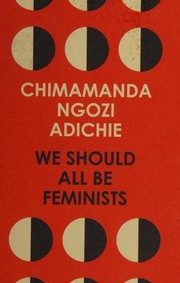
I picked this one up because it is short and I kept seeing the title on shirts and reading lists. The book itself is a standalone essay, 52 pages in the 2014 Fourth Estate edition, adapted from the TEDx talk Adichie gave in London in December 2012. I thought I could finish it in one sitting on a Saturday morning. I did, and then I spent the rest of the weekend thinking about parking attendants and waiters and things people said to me years ago that I had brushed off.
That is the strange power of a very short book. There is no plot to hide behind. Adichie just talks, the way she talked on that stage, about growing up in Nsukka and Lagos, living part time in America, and noticing how differently men and women are treated in small daily moments. She is funny in places and blunt in others. She admits she is angry. By the end I did not agree with every line, but I had a clearer picture of what she means when she calls herself a feminist, and why she thinks the word still matters.
If you have seen the talk online, much of the book will sound familiar. That is intentional. The essay follows the talk closely, with some extra sentences and a calmer pace for print. If you have not seen it, the book works fine on its own. You do not need background. You just need patience for someone telling personal stories to make a larger point.
The boy who first called her a feminist
She opens with Okoloma. He was one of her greatest childhood friends. He lived on her street and looked out for her like a big brother. If she liked a boy, she would ask Okoloma what he thought. She remembers him as funny and intelligent, a guy who wore cowboy boots with pointy tips. In December 2005 he died in the Sosoliso plane crash in southern Nigeria. She says it is still hard to put into words how she felt. He was someone she could argue with and laugh with and really talk to.
He was also the first person to call her a feminist. She was about fourteen. They were at his house, arguing, both full of half formed ideas from books they had read. She does not remember what the argument was about. She remembers that as she kept pushing her point, Okoloma looked at her and said, you know, you are a feminist. It was not meant kindly. She could tell from his tone. It sounded the way someone might say, you support terrorism.
She did not actually know what the word meant at the time, and she did not want him to know that. So she kept arguing. The first thing she planned to do when she got home was look it up in the dictionary.
Years later, in 2003, she published her first novel, Purple Hibiscus, about a man who among other things beats his wife, and whose story does not end well. A dear friend, an academic she respected, told her people were saying the novel was feminist. He was shaking his head sadly as he spoke. His advice was that she should never call herself a feminist, because feminists are women who are unhappy because they cannot find husbands.
She writes that a lot of this was said with humor, but the weight around the word was real. Feminist meant you hate men, you hate bras, you hate African culture, you do not wear makeup, you do not shave, you have no sense of humor, you do not use deodorant, you are always angry. She decided to answer the caricature by adding qualifiers. So she called herself a Happy Feminist. Later, when people said feminism was un-African, she called herself a Happy African Feminist. At one point the full label in her head ran longer, a happy African feminist who does not hate men and who likes lip gloss and high heels for herself and not for men.
Reading that now, the joke lands and also stings. She has to list all those details just to be allowed to say she believes women and men should be equal. That need to explain herself becomes one of the main threads of the essay.
Louis and the parking man in Lagos
I love the Lagos stories because they are so concrete. Adichie says she often makes the mistake of thinking something obvious to her is obvious to everyone else. Her friend Louis is her example. Louis is brilliant and progressive, a man she likes and respects. For a long time he would tell her, I do not know what you mean by things being different or harder for women. Maybe in the past, but not now. She could not understand how he could miss what seemed so clear.
Then one evening they go out with friends in Lagos. Anyone who knows Lagos will recognize the scene. The city has almost twenty million people. Parking in the evening is hard. Around restaurants and clubs there are young men who make a living by finding spots and guiding you in with big gestures, then promising to watch your car until you return.
That night Adichie was impressed by the theatrics of the man who found them a spot. When they left, she decided to tip him. She opened her bag, took out money she had earned from her own work, and gave it to him. He was happy and grateful. He took the cash from her hand, looked across at Louis, and said, thank you, sir.
Louis was surprised. He asked, why is he thanking me, I did not give him the money. Then she watched understanding settle on his face. The man assumed whatever money she had must have come from Louis. Because Louis is a man.
She pairs that with another Lagos habit. Each time she walks into a Nigerian restaurant with a man, the waiter greets the man and ignores her. She does not think the waiters mean harm. She thinks they are products of a society that taught them men matter more.
Shrinking, marriage, and who gets to want things
The middle of the essay moves from stories to the messages girls absorb. This is the part Beyonce later sampled, and you can hear why. The lines are short and quotable, but they come from longer passages about family and school.
Adichie says we teach girls to shrink themselves, to make themselves smaller. We tell girls, you can have ambition, but not too much. You should aim to be successful, but not too successful, otherwise you will threaten the man. I read that twice. It reminded me of advice I heard in my teens, always phrased as kindness. Be smart, but do not show off. Speak up, but stay likable.
Marriage gets a long passage. Because she is female, she is expected to aspire to marriage. She is expected to make life choices always keeping in mind that marriage is the most important thing. She is clear that marriage can be a source of joy and love and mutual support. Her question is why we teach girls to aspire to marriage and do not teach boys the same. Boys learn to aim for work or purpose or adventure. Girls learn to aim for a wedding, and then to shape jobs and moves around that goal.
She extends that to how girls are taught to view each other. We raise girls to see each other as competitors, not for jobs or accomplishments, which she thinks could be healthy, but for the attention of men.
Sex gets a frank paragraph too. We teach girls they cannot be sexual beings in the way boys are. If we have sons, we do not mind knowing about their girlfriends. If we have daughters, their boyfriends are a scandal. God forbid, she writes, echoing parents she knows. Then when the time is right, those same parents expect the daughters to bring home the perfect man to marry. Girls get shame first and pressure later, with no space to learn what they want.
Her definition sits in the middle of all this, plain and short. A feminist is a person who believes in the social, political, and economic equality of the sexes. She repeats versions of that sentence because she wants to strip away the extra baggage. It is not about hating men or hating culture or refusing lipstick. It is about whether women count as full people in pay, in law, in family decisions, in daily respect.
She also turns to boys. She says we do a great disservice to boys in how we raise them. We put them in a hard cage of masculinity. We teach them to be hard, to hide fear, to prove manhood by control and money and toughness, to see softness as failure. That harms them, and it harms everyone around them. She says we do an even greater disservice to girls, because girls get the cage plus fewer doors out. I found that section fair. She does not excuse bad behavior by men. She tries to show where some of it is learned.
Anger, culture, and raising kids another way
Near the end she talks about anger. Not long before the talk she wrote an article about being young and female in Lagos. The printers called it angry. She answered, of course it was angry. Gender as it functions today is a grave injustice. She is angry. She thinks we should all be angry. Anger has a long history of bringing about positive change.
I liked that she does not apologize for tone. She keeps the edge. At the same time she stays warm toward individuals. The waiters, Louis, even the friend who warned her not to call herself a feminist, none are painted as villains.
Culture comes up a lot. People told her feminism is un-African, a Western import that does not fit Nigeria. She answers that culture does not make people, people make culture. If a custom hurts half the population, we can change it and still love our history.
Biology gets a clear passage as well. Men and women are different. Hormones differ, bodies differ, women can have babies and men cannot, at least not yet. She does not deny that. Her argument is that difference does not have to mean hierarchy. Being able to carry a child should not decide who speaks in meetings or who gets paid more or who is expected to cook. Too often we take a physical fact and stretch it into a social rule.
From there she moves to practical wishes. She wants us to raise daughters differently. Teach them to take up space, to ask for what they need, to see marriage as a choice rather than a prize. And raise sons differently too.
Some readers will want more policy. She does not give a plan for parental leave or pay audits or quotas. That is a limit of the form. At 52 pages she is aiming for a shift in attitude, not a bill. I wished for one chapter with examples of schools or workplaces that tried another way. But I also see why she stayed personal. A list of reforms would date quickly. Stories about a parking tip and a waiter stay readable.
What happened after the talk
Part of why this short essay carries weight is what happened after December 2012. The talk sat on the TEDx site and spread by word of mouth. Then in December 2013 Beyonce released her self titled visual album. The song called Flawless samples Adichie at about a minute and a half in. You hear the lines about teaching girls to shrink themselves, about ambition and success and threatening the man, about marriage expectations, about girls seen as competitors for men, about sexuality, ending with the definition of feminist. The Guardian and the TED blog both wrote about it within days. Adichie was credited as a featured voice on the track.
That moment sent millions of people to search for the full talk, which is thirty minutes and much richer. The book then gave those viewers something to hold and share.
In December 2015 the Swedish Women's Lobby, with publisher Albert Bonniers and partners including the UN Association of Sweden and others, gave the book to every 16 year old in Swedish high schools as a gift. The goal was to prompt discussion about gender equality in classrooms.
In September 2016 Maria Grazia Chiuri, the first woman to lead Dior women's collections, opened her debut Spring Summer 2017 show with a white T shirt reading We Should All Be Feminists. Vogue noted that Beyonce's Flawless played during the show and Adichie sat in the audience.
The book also kept a quieter life in schools and book clubs. Teachers use the parking story and the waiter story because students get them right away.
Where it shines and where it falls short
What shines for me is clarity. Adichie takes a word many people avoid and gives it a plain meaning tied to lived scenes. Her humor helps. Lines about lip gloss and high heels, about aunties quick with unsolicited advice, keep the tone human.
The length helps too. You can read it in an hour and lend it. I handed my copy to my sister with two pages folded down. That is rare for me. Most nonfiction I read gets returned to the shelf with good intentions. This one moved from my desk to someone else's bag the same day.
The limits are real and worth naming. If you have read widely in feminist thought, little here will be new. Readers looking for data will not find charts or studies. She argues from experience, not surveys.
The talk to book path is both a strength and a weakness. The prose keeps the rhythm of speech, which makes it easy to hear her voice. It also repeats. If you watched the video first, the book adds only small touches.
A few examples lean heavily on Lagos middle class life, restaurants, conferences, flights, drivers. That is honest to her life, and she names it. Still, a nurse working nights or a trader managing market stalls might not see her day reflected. Adichie would likely say the principle travels even when details differ. I think that is true, but the jump is left to the reader.
None of those points stopped me from recommending it. I would hand it to a teenager, to Louis types who say things are fine now, to friends who flinch at the word feminist but live by its meaning. I would pair it with something longer and more systemic afterward, maybe a history or a memoir from another region, to fill in what a 52 page essay cannot carry. Short books should not have to do everything.
I closed my copy thinking about Okoloma again. A boy teases a girl for arguing well, she looks up a word in the dictionary, and twenty years later that word is on shirts in Paris and in classrooms in Sweden. That arc sounds neat, but the essay earns it by staying close to ordinary scenes. A tip passed hand to hand. A greeting that misses you. Advice to aim high but not too high. Adichie asks us to notice those moments and then to act a little differently at home. That is a modest ask for such a loud title, and that modesty is why I kept turning pages and why I will keep thinking about it.
FAQ
Is We Should All Be Feminists a book or a TED talk?
Both. She gave the TEDxEuston talk in London in December 2012, then published it as a book-length essay in 2014 with Fourth Estate in Britain and later with Vintage and Anchor in America.
Why was Beyonce involved with this essay?
Beyonce sampled passages from the talk in her 2013 song Flawless, including lines about shrinking and marriage and the definition of feminist, with Adichie credited as a featured voice.
Why do schools in Sweden give out this book?
In December 2015 the Swedish Women's Lobby and partners gave it to every 16-year-old high school student to prompt classroom discussion about gender equality.
Similar books
More like We Should All Be Feminists →
Dress Your Family in Corduroy and Denim
Sedaris on snow days, rental houses, Dutch Christmas, and the family that made him funny.
3,098-word summary · 14 min read

The Testaments
Aunt Lydia, Agnes and Nicole conspire to bring down Gilead fifteen years later.
2,516-word summary · 11 min read

The Prince
Machiavelli advises Lorenzo on rule through fear and love, fortune, cruelty and mercy.
2,204-word summary · 10 min read

Between the World and Me
Coates writes to his son about the Black body in America, from Howard to the loss of Prince Jones.
2,234-word summary · 10 min read

Yes Please
Amy Poehler moves from Boston childhood through UCB and SNL to Parks and Recreation in this 2014 memoir. Funny essays on work, motherhood, divorce, and saying…
2,668-word summary · 12 min read

Bossypants
Tina Fey moves from Pennsylvania childhood through improv and SNL to 30 Rock in this funny 2011 memoir. Expect backstage stories, jokes about work and…
2,301-word summary · 10 min read