
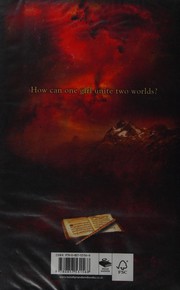
Seraphina
2,246-word summary 10 min read 480 pages in the book
- First published
- 2012
- Publisher
- Random House
- Pages
- 480
- ISBN
- 9780375866562
- Series
- Seraphina (#1)
Reading options
What's inside (9 sections)
I started this expecting a standard dragon-in-disguise fantasy with a murder investigation attached. What I got was a sixteen-year-old court musician who has to help solve a royal killing while keeping the truth about her own body hidden. Rachel Hartman published Seraphina in July 2012 through Random House, and the first United States hardcover runs 480 pages. It won the 2013 Morris Award for a debut and picked up a long list of other nominations, including a finalist spot for Canada's Governor General's Award. What holds it together is Hartman's voice, which is by turns pedantic, frightened, dryly funny, and fierce. It is a debut that never mistakes density for depth, even when it piles on the conventions.
Goredd, forty years into an uneasy peace
The kingdom of Goredd sits in the Southlands beside Ninys and Samsam. To the north lie the Tanamoot, the dragons' homeland, and the independent city-state of Porphyry. Forty years before the book opens, a long war between humans and dragons ended with the Comonot Treaty. Dragons may now come to Goredd in human form, called saarantras, provided they wear a bell so humans know what they are, though exemptions exist. They attend court as ambassadors and lend their rational, mathematical minds to universities as scholars and teachers. A subspecies called quigutl cannot transform at all. They look like large iguanas with an extra pair of limbs and are perfectly capable of hiding in a cellar.
None of this has made anyone comfortable. Dragons can take human shape but find human emotions baffling, and Hartman uses that gap for both comedy and dread. A dragon describing people as interesting in the way a person might describe cockroaches is funny until you remember who has the bigger teeth. Goredd also has a religion of patron saints, assigned to infants when a dropped psalter falls open. Seraphina's psalter reveals the heretical St. Yirtrudis, who denied the existence of Heaven, and the priest hastily declares it must be St. Capiti, patroness of scholars. Her nurse glues the pages of the heretic together, a practice her father has ordered. The detail says more about Goredd's peace than any treaty discussion: everyone is carefully gluing down the parts they do not want to read.
A group called the Sons of St. Ogdo, named for the saint of warriors, harasses a young dragon named Basind until Prince Lucian Kiggs, captain of the Queen's Guard, scatters them. Basind is a newskin, awkward at human form, and he has been assigned to the dragon Orma for instruction. What Seraphina does not know at first is that Basind is actually a Censor, sent to judge whether Orma has spent too long among humans and needs excision, a procedure that strips away human feeling. The peace is kept by watching everyone, including the watchers.
Seraphina Dombegh's private garden
Seraphina is sixteen and serves as assistant to the court composer, Viridius. She is unusually gifted, and her music is the reason she is at court at all. The prologue goes somewhere unusual: she remembers her time in her mother's womb and fragments of her own birth, during which her mother died. Her father, Claude Dombegh, married again soon after to cover the loss, and moved the family back to Lavondaville. The open secret is that Seraphina is half dragon. She hides her scales and tail behind a glamour, and the hiding is not vanity. Discovery could mean her life, because she is an abomination to humans and dragons alike.
Her dragon blood brings visions. She sees other half-dragons, called ityasaari in Porphyrian, as grotesques in her mind, and the visions can strike without warning. On Orma's advice she builds a mnemonic garden, giving each grotesque an avatar and a space of its own that she tends daily. It is a strange and lovely piece of worldbuilding, a mental filing system that lets a girl keep seventeen other people from invading her thoughts. The garden also gives Hartman a way to make the book's large cast feel known before they appear in the flesh. When Seraphina spots Miss Fusspots at Princess Glisselda's soiree in the Blue Salon and recognizes Dame Okra Carmine, the Ninysh ambassador, the reader understands that the garden was never a fantasy. Those grotesques are real people like her.
Orma is her uncle, a dragon in human form who has saved her life three times despite having no soul by the church's reckoning. He wears a bell like the other saarantras when he walks among people, and his standing at court depends on the Censors deciding that living with humans has not made him unpredictable. Their scenes are the warmest in the book, and they are also the most dangerous, because every kindness he shows her tightens the Censors' case against him. When the truth of Seraphina's parentage comes out, Orma is ordered to report for excision in a week. He refuses to let memories of his sister Linn and of Seraphina be cut out of him, and he prepares to run south. Giving Seraphina back the earring she used to contact him is his farewell.
A prince with his head cut off
The murder that drives the plot happens just before the fortieth anniversary of the treaty. Crown Prince Rufus is found decapitated in a manner that looks draconian, and anti-dragon feeling rises immediately. Seraphina draws attention at his funeral by playing, and soon after she speaks up for the dragons when the Sons of St. Ogdo cause trouble. Prince Lucian Kiggs notices both the music and her knowledge of dragon affairs, and his interest is professional before it becomes personal. Kiggs is the princess's betrothed, a fact that hangs over every later scene between them, and he is dangerously perceptive about everyone except himself.
At Glisselda's soiree, Seraphina overhears the Earl of Aspig recounting the day of the killing and asks how he can be so certain a dragon did it. Kiggs hears the question and realizes she might help. A coin that Orma received at the funeral turns out to come from the hoard of General Imlann, a dragon with a history of treason, and Orma sends Seraphina to tell Kiggs. She bluffs her way into questioning knights who claim to have seen a rogue dragon, gathering better evidence than a coin, and Kiggs catches her at it. He agrees to go with her to the valley of the Mews River, where Rufus was hunting.
They find crows and what looks like a dragon's cesspit, and Kiggs recovers two horse medals from Rufus's horse. In a cave they meet Sir James Peascod, who confirms that the rogue dragon is Imlann. Imlann has burned a barn nearby to test the knights, who practice dracomachia, the martial art St. Ogdo invented for fighting dragons. The scene is vivid, but it is also a reminder that this peace has never stopped anyone from training for the next war. On the ride back, snow begins to fall and Imlann himself appears in dragon form. He smells a saar, which is Seraphina, and understands Mootya, the language of dragons, when she speaks it. She talks her way out with Orma's help, but Kiggs now suspects her of possessing a draconian device.
The investigation turns ugly after that. Kiggs arrests Orma and Basind for unauthorized transformation and Seraphina for involvement with dragons. Princess Dione and Lady Corongi slash her arm to test her blood, expecting silver, and get red instead. Viridius, her employer, admits he knew all along that she was Linn's daughter. A man named Thomas Broadwick, who once threatened her over prohibited draconian devices, stabs her in the scales inside a church, and the Ardmagar, Comonot, kills him. The court's trust in Seraphina wears thin exactly as the need for her grows.
Treaty Eve and the people behind the masks
The truth is that Lady Corongi, Glisselda's governess, is Imlann in disguise. Working with the twelve generals who have turned against the treaty, he means to kill the co-founders of the peace on Treaty Eve. Princess Dione drinks poisoned wine and utters Aspig's name before she faints; Lady Corongi takes Glisselda and flees, transforming into a dragon with the princess on her shoulder. Queen Lavonda drinks a sip and later falls into a coma. The plot has been hiding in plain sight behind the titles and teacups of a court that spends its evenings toasting the peace it refuses to defend.
Seraphina chases them, shouting that Imlann is her grandfather and that she will take Glisselda's place. Lars, a musician and one of her grotesques, plays his great war pipes to distract the dragon. Abdo, an eleven-year-old dancer, climbs onto Imlann's neck and keeps his mouth shut. Kiggs stabs Imlann in the foot to free Glisselda. Orma answers Seraphina's call and fights his own father in dragon form, which is the emotional climax the book has been saving. The Censors arrive and set Imlann on fire, and Orma is badly hurt. Dione dies of the poison. The generals seize control of the Tanamoot and demand Comonot's return, and the novel's last chapters move quickly toward a war none of the characters want.
What truth costs, and what it buys
Claude Dombegh finally admits that he married a dragon, which reframes everything the reader thought about Seraphina's childhood. The meeting that follows brings in dignitaries from Goredd, Samsam, Porphyry, and Ninys, and they agree to fight the Tanamoot together. Glisselda takes the throne while her mother is dead and her place in the succession is settled. Comonot pardons Orma, but the Censors still want him, so he leaves with Eskar, a former Censor, and goes into hiding. Seraphina, now known to be half dragon, prepares to travel in search of the other ityasaari. Kiggs tells her that he was lost until he heard her sing at her father's wedding, and the two sing that song again in his tower. He kisses her scales, and she kisses him. They agree to put their feelings aside because he may have to marry Glisselda, because a war is coming, and because she is leaving. Hartman lets the ending sit with that restraint rather than a declaration.
The music is the argument
Hartman writes about music with the same care she gives to dragons, and Seraphina's gift is never treated as a pretty accessory. It comes from her dragon half, which means the thing the court most admires in her is the thing she most fears. That tension runs through every rehearsal. Viridius knows what she is and keeps her close anyway, and when she plays at Prince Rufus's funeral the performance makes her visible to Kiggs and to the court at the exact moment she most wants to disappear. Her father's wedding is where Kiggs first hears her sing, which turns a family occasion into the start of the investigation.
The practice scenes slow the book down in a good way. Hartman describes sound in physical terms, as something a body produces and other bodies feel, and she links it to the way dragons think in patterns. Seraphina's talent is mathematical and emotional at once, which is the bridge her whole world refuses to build. When she and Kiggs sing the old song again at the end, the scene works because the reader has heard how carefully she constructs a phrase. It is not a magical confession. It is two people who have been listening to each other for hundreds of pages finally making a sound together.
The folktales and songs threaded through the chapters do similar work. Hartman is a storyteller who clearly loves the small tales people tell to explain themselves, and the book is full of saints with strange histories and songs with stranger verses. A reviewer at Quill and Quire noted how well the language and music themes sit with the prose, and that is exactly right. The invented world feels lived in because people in it sing about it.
Where the book strains
The complaint I have is not about the dragons. It is about the number of moving parts. The Censors, the quigutl, the Sons of St. Ogdo, the patron saints, the knights, the generals, and the half-dragons all arrive with their own vocabulary, and Hartman sometimes asks a reader to hold too much at once. The investigation also leans on disguises and poisons that feel convenient when they resolve, and the ending deliberately leaves the war for the sequel, which can read as a dodge if you came for a complete mystery. Eight review sites gave it starred reviews and the Washington Post praised the way it refreshed a tired trope, so most readers forgave the density.
What I keep returning to is the voice. Seraphina is pedantic about music and dragons because those are the subjects she knows, and lonely in a way she tries to hide with precision. The book is long at 480 pages, and the middle can drag when the court intrigue stacks up, but the scenes with Orma and the moments in the practice room are worth the patience. The final scene does not tie things up. It puts a girl who spent her whole life hiding in front of people who know exactly what she is, and lets her decide what to do next. That is a better place to leave a first novel than a tidy victory.
FAQ
Is Seraphina a standalone novel?
No. It is the first book of the Seraphina duology, followed by Shadow Scale in 2015.
What is the book's central secret?
Seraphina is half dragon, which explains both her musical gift and the fear that discovery could kill her.
When was Seraphina published and by whom?
Random House published it on July 10, 2012; the first US hardcover is 480 pages with ISBN 9780375866562.
Similar books
More from Seraphina first, then related titles.
Wild Magic
A thirteen-year-old orphan in the kingdom of Tortall learns to live with the gift of speaking to animals, and discovers that the creatures she loves are not…
2,056-word summary · 9 min read
The False Prince
A nobleman buys four orphans and tells them only one will survive to impersonate the missing prince. The narrator, a defiant thief named Sage, has other plans.
2,044-word summary · 9 min read
The Woman Who Rides Like a Man
Newly knighted, Alanna heads south into Tortall's desert, where a broken sword and a dead shaman leave her responsible for a rebel tribe and three Gifted…
2,894-word summary · 13 min read

Just One Day
A carefully planned European tour unravels when a Dutch actor takes Allyson to Paris for one day and vanishes, leaving her a year of searching for answers.
2,561-word summary · 11 min read
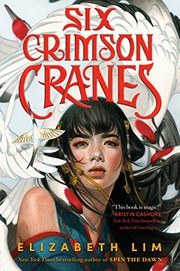
Six Crimson Cranes
A princess who loses her voice when a curse turns her six brothers into cranes must work in secret, trust a dragon, and speak a name she does not know.
2,214-word summary · 10 min read

Ms. Marvel, Vol. 1: No Normal
Kamala Khan, a Jersey City teenager and Carol Danvers fan, gains shapeshifting powers and has to decide what kind of hero she wants to be.
2,579-word summary · 11 min read
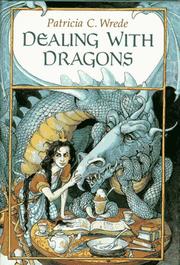
Dealing with Dragons
A princess who hates embroidery runs away to become the cook and librarian for a dragon, then has to outthink wizards, knights, and a plot against the dragon…
2,563-word summary · 11 min read
The House of the Scorpion
A clone raised in a drug lord's poppy fields learns what he was made for and chooses what to do with the life he was given.
2,527-word summary · 11 min read
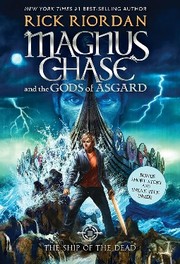
The Ship of the Dead
Magnus and his crew sail to the edges of the Norse worlds to stop Loki from launching Naglfar, the ship of the dead.
2,426-word summary · 11 min read
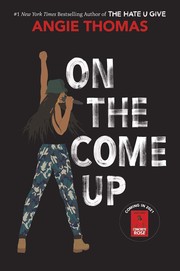
On the Come Up
Bri Jackson, a sixteen-year-old rapper in Garden Heights, chases a record deal while a viral song turns her into a symbol she never wanted to be.
2,034-word summary · 9 min read
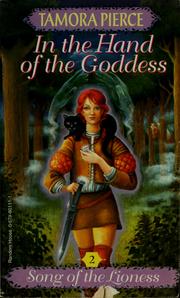
In the Hand of the Goddess
Alanna, still disguised as a boy, survives war, court plots, and a death duel as the Goddess's chosen warrior in the second Song of the Lioness book.
2,018-word summary · 9 min read
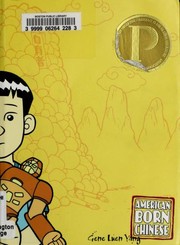
American Born Chinese
Three stories, a monkey king, a Chinese-American boy and a sitcom cousin, converge in a graphic novel about shame, assimilation and learning to accept yourself.
2,107-word summary · 9 min read
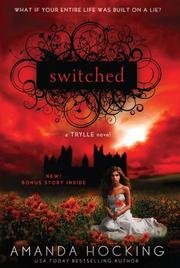
Switched
A Minnesota teenager who can make people obey her discovers she is a changeling troll princess, and the hidden kingdom she came from wants her back.
2,131-word summary · 9 min read
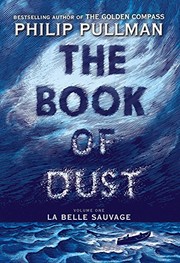
La Belle Sauvage
Philip Pullman's prequel to His Dark Materials follows eleven-year-old Malcolm Polstead as a secret message, a hunted baby, and the flood of the century carry…
2,530-word summary · 11 min read
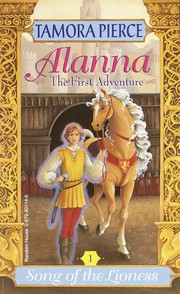
Alanna: The First Adventure
Twins swap roles so Alanna trains as boy page Alan for knighthood while Thom studies sorcery.
2,107-word summary · 9 min read
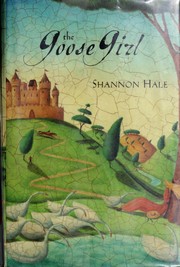
The Goose Girl
A shy princess loses her name on the road to her wedding and must earn it back as a palace goose girl in this Grimm retelling.
2,357-word summary · 10 min read
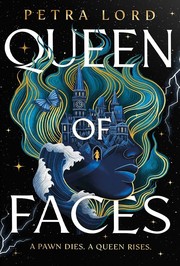
Queen of Faces
Anabelle Gage is dying in a body that is not hers. To live, she must steal a new face and kill for the school that caught her.
2,103-word summary · 9 min read
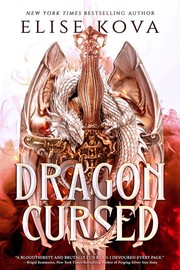
Dragon Cursed
Isola survived a dragon attack as a child and became a hero, but she fears her rare magic is a curse turning her into a beast.
2,436-word summary · 11 min read
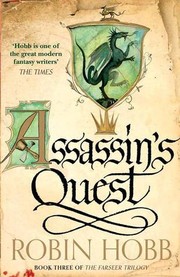
Assassin's Quest
Fitz returns from death with Nighteyes, walks the Skill road to Verity, and wakes stone dragons at a hard price.
3,081-word summary · 14 min read
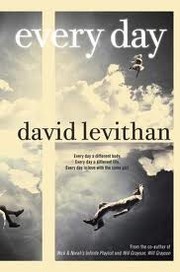
Every Day
A wakes in a new teen body daily until falling for Rhiannon breaks rules.
2,215-word summary · 10 min read
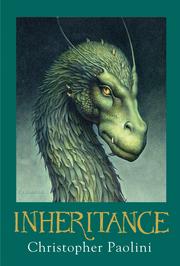
Inheritance
Eragon and Saphira march on Uru'baen to end Galbatorix, with hidden hearts and hard goodbyes.
3,160-word summary · 14 min read
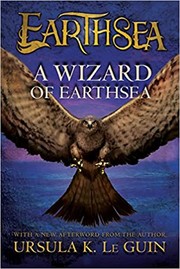
A Wizard of Earthsea
A proud goatherd becomes the wizard Ged, looses a shadow at Roke, and must hunt it across Earthsea to name it. Le Guin's lean 1968 series opener.
2,972-word summary · 13 min read
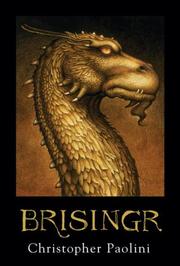
Brisingr
Eragon rescues Katrina, backs a dwarf king, and earns a burning sword.
2,214-word summary · 10 min read
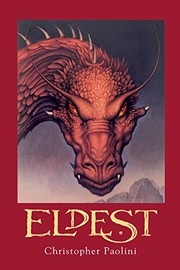
Eldest
Eragon trains with Oromis in Ellesmera while Roran defends Carvahall and Nasuada leads the Varden toward war.
2,652-word summary · 12 min read
Eragon
Paolini's Eragon retold: a farm boy, a blue stone, Saphira the dragon, and the road to the Varden.
1,996-word summary · 9 min read
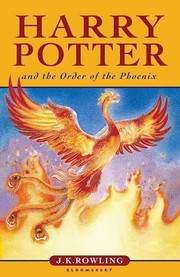
Harry Potter and the Order of the Phoenix
Harry Potter and the Order of the Phoenix explained: the D.A., Umbridge's regime, the Department of Mysteries, and the loss that changes the series.
2,249-word summary · 10 min read
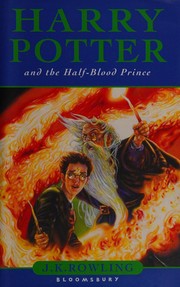
Harry Potter and the Half-Blood Prince
Harry Potter and the Half-Blood Prince explained: the Pensieve, Tom Riddle's past, Slughorn's memory, and the ending that sets up the last book.
2,018-word summary · 9 min read
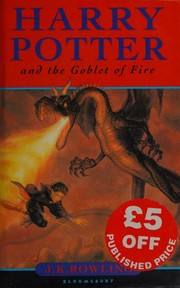
Harry Potter and the Goblet of Fire
Harry Potter and the Goblet of Fire explained: the Triwizard Tournament, the graveyard, Bertha Jorkins, and the point where the series stops being a school…
2,199-word summary · 10 min read
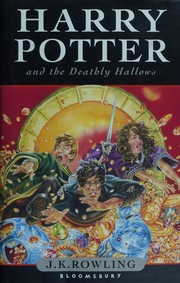
Harry Potter and the Deathly Hallows
Harry Potter and the Deathly Hallows explained: the hunt for Horcruxes, the Resurrection Stone, Snape's memories, and how the series ends in the forest.
2,218-word summary · 10 min read
Harry Potter and the Philosopher's Stone
How Harry Potter and the Philosopher's Stone introduces Hogwarts, the Dursleys, Quidditch, and Voldemort: the first book's plot, its quiet setup, and why the…
2,165-word summary · 10 min read