
Reading options
What's inside (9 sections)
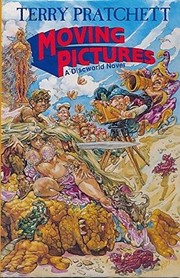
I came to this book through the dog. A friend told me that Discworld had a novel in which a dog talks and nobody thinks that is remarkable, and that was enough to make me pull Moving Pictures off the shelf. It turned out to be the tenth Discworld novel, published in 1990 by Victor Gollancz, with 279 pages in the first UK hardcover and a cover painted by Josh Kirby. It is also a book about the movies, about Hollywood, and about what happens to a world when belief starts producing things that were not there a moment before. That is a larger subject than a talking dog, but the dog is how I got in, and I suspect that is how Pratchett expected most of us to arrive.
The last man who remembered a hill
The book opens with a death on a hill. Deccan Ribobe is the last member of an ancient order whose duty is to "remember" Holy Wood by chanting, keeping something in place through the sheer act of naming it. When he dies, that duty lapses, and an influence that had been held at bay gets out. Pratchett gives this only a few pages at the start and then steps away from it for most of the novel, which is a patient way to plant a problem. The reader files it away and waits for it to matter.
Some months later, the alchemists of Discworld invent moving pictures. The technology is pure Pratchett: cameras contain imps who paint the frames on a substance called octo-cellulose and blow them dry very fast, salamanders provide the light, and the audience eats "banged grains" instead of popcorn. The whole industry is named after the sound the machines make, so movies become "clicks." A sandy valley called Holy Wood begins to draw hopefuls, attracted by the sunlight and by something the book refuses to name plainly.
The idea underneath all of this is one of Pratchett's favorites, and it is the engine of the book. On Discworld, belief is a force. If enough people believe in a thing, the world accommodates them. A god needs worshippers to stay alive; a story repeated often enough starts to arrange events around itself. Holy Wood is a place where people come to dream stories in public, and the stories begin to push back. That is funny for a while. It stops being funny when the stories turn out to be doorways.
A dropout, a waitress and a salesman
Into Holy Wood come the three people who will carry the book. Victor Tugelbend, also called Victor Maraschino, is a dropout from Unseen University who wants to be a star. His own summary of his talents is the joke the author kept using on the dust jacket: "Can't sing. Can't dance. Can handle a sword a little." Theda Withel, a waitress from "a little town you've probably never ever heard of," reinvents herself as Ginger, and sometimes as Delores de Syn, and wants the same thing. Neither of them has much. What they have is the conviction that the camera will notice them.
The third is Cut-Me-Own-Throat Dibbler, the Disc's most famous seller of sausages in buns, who sees a crowd and immediately works out how to sell to it. Dibbler becomes a producer and brings commerce into the equation, which in Pratchett's world is both a blessing and a kind of invasion. Around them are the alchemists, with Thomas Silverfish, president of the Alchemists' Guild, standing in for the studio moguls. The studios have names that tell you what Pratchett is doing: Untied Alchemists, Century of the Fruitbat, Fir Wood Studios, Microlithic Pictures and Floating Bladder Pictures.
The early chapters are a joyous scramble. There are screen tests, contracts, bad auditions and worse costumes, and Victor and Ginger slowly become genuine stars. Pratchett is very good on the mechanics of a dream that everyone is chasing at once. He understands that the people who flock to a new industry are not usually the most talented ones but the ones who can least afford to go home. Ginger's recurring dream, which mixes a woman holding a torch and a roaring lion, is a neat piece of shorthand for what she actually wants, and it is also a joke about two real film studios. The book assumes you will catch the joke. If you do not, the dream still reads as a strange and slightly scary image, which is fair enough.
The dog, the dog and the troll
Gaspode is a small, smelly, foul-mouthed dog who talks in what the book calls Basic Canine. He is sentient, sarcastic and completely unfazed by his own gift, and nobody pays him much attention. Pratchett uses him as a chorus and as a lever: Gaspode can go places people cannot, say things people will not, and notice things the plot needs him to notice. He is the best thing in the book, and I say that as someone who generally distrusts comic animals.
His running gag concerns Laddie, a dog whom everybody regards as the real Wonder Dog. Laddie is beautiful, famous and almost entirely empty between the ears. Gaspode, who can think, ends up as Laddie's manager, negotiating his contracts and trying to keep him from eating the furniture. The arrangement is funny because it is so recognizable: the star cannot look after himself, and the clever one does the deals. Under Holy Wood magic, other animals gain speech and reason too, and when the magic drains away at the end they lose it again, which gives Gaspode's story a small, quiet sadness.
Holy Wood itself is briefly a happy place. Humans, dwarfs, alchemists, demons and trolls live and work together, and the demons are not monsters but the little creatures inside the cameras doing the painting. Detritus the troll is there, along with actors such as Galena, who tries on stage names the way a troll might try on rocks. There are parody films everywhere: a Chaplin-like short called High Jinks at the Store, a Conan sendoff starring Cohen the Barbarian, and a dwarf picture that sends up Snow White with a song about going home from the mine. A perfume called Passion's Plaything and a book tied to a hit film, the "Boke of the Film," fill out the joke. This is the part of the book I enjoyed most, and also the part most likely to leave a reader cold, because a lot of it depends on knowing old movies. A joke about instant film tie-ins is only as good as your memory of instant film tie-ins.
When the pictures start eating the world
The mood changes once Victor finds Deccan Ribobe's body and the old records of the order that served Holy Wood. At the same time, the wizards back in Ankh-Morpork notice that reality is developing disturbances. They have a device for this, the Resograph, a "thingness-writer" that measures trouble in the fabric of things. This is where Ponder Stibbons makes his first appearance in Discworld, and where Mustrum Ridcully, the Bursar and the Dean get their chances to be solemn about nonsense. Windle Poons rolls around in his wheelchair and is, as ever, older than anyone expects.
Ginger begins to act strangely, possessed by something the book never names. She and Victor uncover an ancient, hidden cinema under Holy Wood, and in it a portal to the Dungeon Dimensions. Those Dimensions are a bad neighborhood in Pratchett's cosmology, a place of raw possibilities and hungry things waiting for an opening. The idea is that the "could-have-beens, the might-bes and the never-weres" have started to ferment, and the movies are the ferment. Clichés and beliefs take on shape. A story about dwarves singing on their way home from work does not stay a story once enough people have filmed it.
This is where the book's two halves join. The comedy of the first part was about people pretending to be something they are not. The second part discovers that pretending, on Discworld, is a dangerous physical act. Pratchett leaves the Cthulhu flavoring vague, which I think was the right call; naming the horror too precisely would have flattened it. What stays with me is the image of a whole industry cheerfully making stories while a seal somewhere quietly comes undone.
A screening, a monster and a statue
The crisis arrives at the first screening of Blown Away in Ankh-Morpork, with the senior wizards of Unseen University in the audience. The film is a parody of Gone with the Wind, billed as "A Passionate Saga set Against the Background of a World Gone Mad! With a Thousand Elephants!" and the production genuinely did involve elephants, imported at absurd expense by dealers with names built out of clicks. It is the kind of joke Pratchett loves, where a throwaway line in an advertisement turns out to have required a whole plot to arrange.
During the screening, a creature from the Dungeon Dimensions breaks through. Victor fights it, and in doing so works out the rule that saves him: if a camera is pointing at him, he can use the conventions of a click, and the magic of Holy Wood, to make the story go his way. The result is a King Kong parody that involves the Librarian of Unseen University and an ape on a tower, and it is exactly as silly as it sounds. I laughed. I also noticed that the book is asking a real question underneath, which is whether a person becomes freer or less free when their life turns into a narrative that other people are watching.
After the creature is beaten, Victor and the Librarian realize that this is not over. The things will keep trying to come through, and they understand, a little late, that Ginger's possession was not an invitation but a blockade. She was holding the door shut, perhaps because she is descended from the ancient High Priestess of Holy Wood. That twist reframes everything that came before. The strange behavior was protection, and the woman everyone thought was a star playing up for the cameras was doing a lonely job that nobody thanked her for.
Back at the ancient cinema, Victor and Ginger watch a golden statue of a warrior come to life and pass through the screen to deal with the remaining creatures. The statue is a parody of an Academy Award, called Oswald in the book and also Osric and Osbert, and there is something wonderfully fitting about an Oscar being the thing that saves the world. Pratchett has spent two hundred pages making movies into a kind of religion, so having the religion's little gold man step down off the altar to fight the monsters makes a strange kind of sense.
What the ending takes away
Once the danger is over, the Patrician and the wizards make it clear that no more moving pictures will be produced on the Disc. The industry ends almost as quickly as it began. The dwarfs go back to mining but find themselves singing "Hihohiho" as they work, and the book even has a character snap at someone named Dozy, which is a reference I did not need in order to get the point. The point is that belief leaves a residue even after the belief is withdrawn.
The animals lose what Holy Wood gave them. Gaspode stops being a talking dog and becomes an ordinary dog again, and the book does not make a speech about it. I found that harder than the monster. Victor and Ginger have a last conversation about Holy Wood, about fame and about what it meant to be a star there, and Pratchett closes on a poetic image about the fragility of dreams made in that place. The ending is bittersweet without being grim. Magic has been here, and magic has gone, and the people who lived through it are left with ordinary lives.
What holds up and what sags
The book is not flawless. It is quite episodic, and the shift from a bright comedy about aspiring actors to a portal-and-monster plot feels abrupt on a second reading, even if it surprised me the first time. The second half is busier than it needs to be, with wizards, statues, elephants and Dimensions all competing for space, and some of the best jokes from the early chapters get crowded out. There is also a limit to how far the film parodies travel. The dream about a woman with a torch and a roaring lion, the instant film book, the Open University-style pottery film, all of these depend on a shared memory of twentieth-century cinema. I caught most of them and enjoyed them. A younger reader, or one without that particular shelf of references, will miss a layer without the book suffering too much, because the underlying scenes still work as scenes.
For all that, the central idea is one of Pratchett's strongest. The notion that a story told often enough becomes a physical force, and that a whole city can be changed by acting as if it were a film, is exactly the kind of joke that turns into something serious five chapters later. Gaspode is a great creation, and the Laddie partnership is the funniest thing Pratchett gave this book. Detritus and the troll actors have a warmth that keeps the Holy Wood sections from being a stream of in-jokes. If you already read the Discworld novels, this one sits neatly between Eric and Reaper Man, and it gives Ponder Stibbons his first outing. If you are new, it works on its own, because it explains the wizards and the Patrician as it goes.
I closed it thinking about the dog. Not the statue, not the monster, not the golden Oscar coming through a screen, but a small dog who could talk for a while because people believed in a place, and then could not. That is the book's real argument, and it is much smaller and better than the plot sometimes suggests.
FAQ
Where does Moving Pictures fit in the Discworld series?
It is the tenth Discworld novel, published in 1990, set between Eric and Reaper Man. It also gives Ponder Stibbons his first appearance among the Unseen University wizards.
Do I need to know the other Discworld books or old movies to enjoy it?
No prior Discworld reading is required, since the book explains the wizards and the Patrician as it goes. Many film jokes do depend on classic Hollywood references, though the story still works if you miss them.
Who is Gaspode and why does he matter to the plot?
Gaspode is a small, foul-mouthed dog who talks in Basic Canine and manages the dim but famous Laddie. He can think and investigate where people cannot, and his later loss of speech gives the ending its quiet sting.
Similar books
More from Discworld first, then related titles.
The Color of Magic
A failed wizard guides a tourist across a flat world on a turtle, with comic fantasy chaos.
2,032-word summary · 9 min read
The Light Fantastic
Rincewind and Twoflower fall off the world while wizards race a red star.
1,974-word summary · 9 min read
Equal Rites
A dying wizard passes his staff to a baby girl, and Granny Weatherwax escorts Esk to Unseen University in Pratchett's third Discworld book.
2,871-word summary · 13 min read
Mort
Death hires apprentice Mort in this 1987 Discworld comedy, where a spared princess splits reality and duty bends for love, with no Rincewind.
2,386-word summary · 11 min read
Sourcery
A dying wizard hides his soul in a staff, his eighth son becomes a sourcerer strong enough to break the world, and Rincewind is sent to stop him with a sock.…
2,404-word summary · 11 min read
Wyrd Sisters
Three Lancre witches rescue a murdered king's baby, hide Lancre's future, and trap a guilty duke with a play in Ankh-Morpork.
3,085-word summary · 14 min read
Pyramids
A prince raised by assassins comes home to a desert kingdom where the high priest rules and a spitefully huge pyramid starts bending time.
2,441-word summary · 11 min read
Guards! Guards!
A drunk captain, his last two guards, and an earnest recruit face a summoned dragon in Ankh-Morpork in Pratchett's funny eighth Discworld book.
2,307-word summary · 10 min read
Reaper Man
Death gets fired and farms while Windle Poons refuses to die.
2,579-word summary · 11 min read
Witches Abroad
Three Lancre witches fly to Genua to stop a fairy godmother from forcing a servant girl into a storybook marriage, and find a city arranged around a happy…
2,651-word summary · 12 min read
Small Gods
God Om trapped as a tortoise must convince novice Brutha to save Omnia from its own church.
2,063-word summary · 9 min read
Lords and Ladies
The elves are coming and Lancre is not ready. Pratchett's 1992 novel sends Granny, Nanny and Magrat into a cruel, glittering invasion that spoofs A Midsummer…
2,476-word summary · 11 min read
Men at Arms
The City Watch gets new recruits and a murder case when the Disc's only handgun turns up in Ankh-Morpork, in the fifteenth Discworld novel.
2,216-word summary · 10 min read
Soul Music
A harpist from Llamedos brings rock music to Ankh-Morpork, and a primordial force takes hold of the city, pulling Susan Sto Helit and Death into a fight over…
2,406-word summary · 11 min read
Feet of Clay
A clay golem goes mad and a Patrician is poisoned as Vimes and the Watch untangle a murder plot in the nineteenth Discworld novel.
2,308-word summary · 10 min read
Hogfather
Death fills in for a missing Father Christmas, Susan Sto Helit hunts the Hogfather, and the twentieth Discworld novel turns Santa into a management problem.
2,871-word summary · 13 min read
Night Watch
Vimes is thrown back in time and must train his young self through a revolution.
2,003-word summary · 9 min read
The Wee Free Men
Nine-year-old Tiffany Aching teams with the Nac Mac Feegle to rescue her brother from the Fairy Queen.
2,600-word summary · 12 min read
Going Postal
A hanged con artist must revive Ankh-Morpork's dead Post Office and outwit a murderous rival in Pratchett's 33rd Discworld novel.
2,228-word summary · 10 min read
The Magician's Land
Exiled from Fillory, Quentin takes a teaching job at Brakebills, joins a crew of magical thieves, and must help rebuild a dying world to finish the trilogy.
2,204-word summary · 10 min read
The Iron Trial
Call Hunt tries to fail the entrance tests for the Magisterium, only to be chosen and drawn into a secret about the war that killed his mother.
2,248-word summary · 10 min read
The Demon King
A thief steals an amulet once owned by a legendary sorcerer, while a princess flees a forced marriage in the first volume of Cinda Williams Chima's high…
2,371-word summary · 11 min read
Jade City
On an island where jade grants power, two clans fight over the mineral, the family name, and the right to decide what loyalty costs.
2,403-word summary · 11 min read
Forced Bonds
The Sanctuary's shield is down and the Resistance is inside. Oli must complete her bond group, including the hostile Nox, before the war costs her everything.
2,316-word summary · 10 min read
Wings
A homeschooled fifteen-year-old grows a blue flower from her back and learns she is a faerie sent to guard a hidden gate. Pike's debut makes plant lore feel…
2,506-word summary · 11 min read
Wild Magic
A thirteen-year-old orphan in the kingdom of Tortall learns to live with the gift of speaking to animals, and discovers that the creatures she loves are not…
2,056-word summary · 9 min read
Water Moon
A woman inherits a Tokyo pawnshop that trades in regrets, finds her father gone and one glowing bird freed, and crosses into another world to learn what her…
2,087-word summary · 9 min read
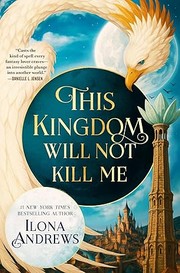
This Kingdom Will Not Kill Me
A grocery delivery driver wakes in a fantasy capital she knows from an unfinished trilogy, only to discover she cannot die.
2,339-word summary · 10 min read
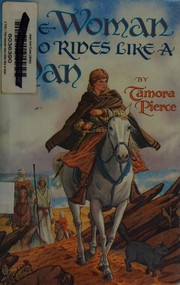
The Woman Who Rides Like a Man
Newly knighted, Alanna heads south into Tortall's desert, where a broken sword and a dead shaman leave her responsible for a rebel tribe and three Gifted…
2,894-word summary · 13 min read
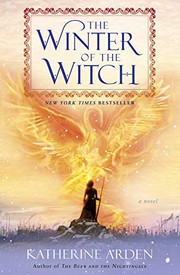
The Winter of the Witch
Vasya returns to a burning Moscow, bargains with the Bear and the spirit of Midnight, and leads the old spirits into the battle that will decide Russia.
2,000-word summary · 9 min read