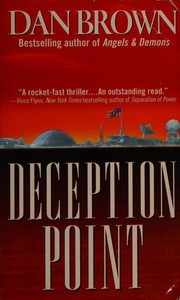
Deception Point
1,923-word summary 9 min read 372 pages in the book
- First published
- 2001
- Publisher
- Pocket Books
- Pages
- 372
- ISBN
- 9780671027377
Reading options
What's inside (10 sections)
I read Deception Point as a Da Vinci Code fan and found the prototype fascinating. Dan Brown published it with Pocket Books in 2001, a 372 page hardcover thriller, his third novel, written before Langdon made him famous. White House analyst Rachel Sexton verifies a NASA meteorite in Arctic ice that may prove alien life. Assassins hunt her team across the ice. Her estranged father runs against the president. The formula that would conquer the world is all here, science, conspiracy, chases, twists. Without Langdon's symbology, it runs leaner and meaner. Fans of the later books should visit the workshop.
Rachel Sexton is Brown's most capable early heroine. Smart, professional, emotionally guarded, daughter of a senator running for president against her boss. Her father issues complicate every loyalty. Michael Tolland, oceanographer turned TV science star, provides charm and expertise. Their partnership follows Brown's established rhythm. Professional respect becoming attraction under fire. Shared competence as courtship. The Arctic setting strips civilization quickly. Survival chemistry replaces dinner dates. It works precisely because both are adults doing jobs. Competence is sexy here. Brown knows his audience.
The meteorite MacGuffin drives everything. NASA, reeling from failures and budget wars, announces fossil evidence in Arctic ice. Proof of extraterrestrial life. Political salvation for the space agency and its presidential patron. Rachel's verification team includes scientists across disciplines. The discovery scenes crackle with wonder. Fossils in ice. Impossible biology. History pivoting. Then anomalies surface. Data that does not fit. Details wrong in ways only experts catch. The wonder curdles into suspicion. Brown paces the reversal expertly. Amazement first. Doubt second. Terror third.
Ice, assassins, and election politics
The Arctic survival chapters are Brown's best action writing pre-Langdon. Kill teams with classified tech hunt scientists across ice shelves. Helicopters. Submarines. Improvised weapons from research gear. The cold itself kills as efficiently as bullets. Brown researched Arctic survival thoroughly. Hypothermia timelines. Ice physics. Every escape uses real constraints. The action feels physical in ways his later puzzles sometimes do not. Bodies suffer here. Fingers freeze. Lungs burn. Survival costs visibly.
The assassin team, Delta Force operatives gone private, provides faceless menace done well. No monologues. No mistakes until plot requires. Professional killers as force of nature. Their pursuit sustains the middle act relentlessly. Rachel's team flees across ice, sea, and air with shrinking options. Each escape narrows the next. Brown's short chapters and cliffhangers, already perfected, make the sequence unputdownable. Critics mock the style. Readers devour it. The style serves story at speed. That is the whole point.
Election politics poison every discovery. President Herney needs NASA vindicated. Senator Sexton, Rachel's father, needs it debunked. Father-daughter estrangement mirrors national division. Private pain inside public stakes. Brown weaves campaigns through chases without slowing either. Debates reference the meteorite. Polls shift with news. The thriller becomes civics lesson disguised as chase. Readers absorb space-policy debates while fleeing assassins. Education through adrenaline. Brown's signature move, present from early on.
The fraud and its architect
The meteorite's falsity, revealed mid-book, reframes everything brilliantly. The fossils were planted. The ice hides fraud, not aliens. Discovery becomes conspiracy. Who benefits from fake proof? The question redirects the thriller from survival to investigation. Rachel's team must expose the deception while hunted by its architects. The pivot is Brown's best structural trick here. Wonder inverted into paranoia. Readers must reevaluate every earlier wonder. That reevaluation is the pleasure. Rereading becomes mandatory. Clues were planted fairly. Check them.
The architect's identity lands with proper shock. Brown plays fair with foreshadowing while misdirecting skillfully. The villain's motives mix ideology with grievance recognizably. Power sought through deception. The finale confronts conspiracy with evidence rather than force. Documents defeat assassins. Truth outguns bullets. That resolution suits Brown's worldview. Knowledge saves. Ignorance kills. The thriller argues for expertise throughout. Scientists as heroes. Research as weapon. In 2001, that argument felt fresh. It still does.
The father-daughter resolution provides emotional payoff beyond plot. Senator Sexton's arc, ambition curdling into complicity, forces Rachel to choose truth over blood. Their confrontation scenes carry real pain. Political thrillers rarely manage family feeling. Brown manages it here through sustained attention. The Sextons' damage predates the meteorite. The crisis exposes, not creates. Resolution requires honesty neither finds easy. The personal stakes ultimately exceed the cosmic ones. Aliens matter less than fathers. Brown knows. Readers feel it.
Pre-Langdon Brown and the formula
This novel shows Brown's formula crystallizing. Short chapters. Cliffhangers. Expert protagonists. Conspiracies with historical roots. Science versus secrecy. Romance under fire. Twists every fifty pages. All present here without Langdon's art-history lectures. The leanness benefits pacing. At 372 pages it moves faster than the bloated later volumes. Fans exhausted by Inferno's tourism will find relief. Deception Point runs like a bullet. Arctic air suits Brown's style. Cold, clean, fast.
The science holds up better than the symbology, mostly. Meteorite fraud mechanics check out. Arctic survival details convince. Oceanography informs action authentically. Tolland's expertise never feels pasted on. Brown researched like a journalist, his original trade. The technology, dated in spots, still functions dramatically. Early-2000s tech constraints actually help tension. No smartphones to solve problems. Isolation is total. Modern thrillers struggle to disconnect characters. This one disconnects by geography. Ice as Faraday cage.
Comparisons to later Brown favor this book's efficiency. Da Vinci Code sprawls across Paris with lectures. Deception Point sprints across ice with action. Both thrill. The earlier book wastes less motion. Readers discovering Brown should start here or with Angels & Demons. The Langdon books get the fame. The standalone shows the craft unadorned. Prototype as pure form. That purity is this novel's lasting appeal.
Rachel's competence and Brown's women
Rachel Sexton deserves appreciation as Brown's best early heroine. Professional without being cold. Vulnerable without being weak. Smart in her domain while learning others. Brown writes working women with respect rare in thrillers. Her intelligence drives plot, not decorates it. She deciphers, deduces, survives through competence. Romantic interest develops alongside, never replacing, professional identity. Readers tired of decorative heroines find relief here. Rachel works for a living. The living is thrilling.
Her father issues add depth without defining her. Senator Sexton's shadow shaped her career and wounds. Working for his opponent compounds every loyalty. Brown handles the family politics with unusual care for his bibliography. Fathers and daughters recur in his work, often simplistically. Here the dynamic earns complexity through sustained attention. Ambition versus affection. Duty versus blood. Rachel navigates both without easy answers. Her final choice costs her the father she wanted. Truth demands orphans. She pays.
Brown's women generally deserve defense against critics. Sophie, Vittoria, Sienna, all competent professionals who drive plots. Detractors cite formula, brilliant beauty aiding heroes. Supporters cite respect, agency, expertise. Rachel fits the pattern's best version. Her intelligence analysis carries scenes independently. Tolland assists rather than leads. The partnership balances unusually well. Neither dominates. Both contribute. Egalitarian thriller romance, competently executed. That competence is Brown's feminism, limited but real.
The meteorite science and its plausibility
The fossil fraud mechanics deserve geeky attention because Brown researched thoroughly. Allan Hills 84001, the real Martian meteorite with possible microfossils, inspired everything. Composition analysis. Ice core dating. Biological signatures. The novel's science reads plausibly because much of it is real. Readers learn meteoritics through thriller osmosis. Education disguised as entertainment, Brown's standard trick, works especially well here. Space rocks fascinate inherently. Fraud mechanics intrigue further.
The planting methodology holds up under scrutiny better than most thriller science. How to fake fossils convincingly. What experts would check. Where forgers err. Brown details the deception's construction fairly. Rereaders can spot the tells. That fairness distinguishes quality mysteries. Clues present but misdirected. Solutions surprising yet inevitable. The meteorite chapters reward technical readers without alienating others. Jargon serves story, not showing off. Science as plot engine, not decoration.
The political science intrigues equally. NASA funding wars. Presidential campaigns weaponizing discovery. Space policy as electoral football. Brown's civics, simplified but sound, educates while thrilling. Readers absorb budget politics through chase scenes. The 2001 context, post-Challenger caution, pre-Columbia tragedy, dates the material specifically. Space enthusiasm cycled since. The novel captures a moment when NASA desperately needed wins. That desperation drives villains and heroes both. Institutions under pressure produce drama naturally.
The Delta Force and faceless menace
The assassin team deserves analysis as thriller machinery perfected. No names that matter. No motives beyond orders. Professional killers as environmental hazard. Brown strips villainy to function. They hunt. They kill. They fail only when plot demands. That facelessness frightens more than monologues. Readers cannot negotiate with professionals. Survival requires outthinking systems, not people. The Delta operators represent institutional violence personalized barely. Men with guns following orders. Ancient story. Modern tech.
Their tech advantages create delicious asymmetry. Classified aircraft. Advanced surveillance. Weapons Rachel's team cannot match. The scientists survive through improvisation, not firepower. Brains versus hardware. That dynamic favors Brown's themes. Expertise defeats equipment. Knowledge outmaneuvers force. Each escape uses science the assassins lack. Oceanography. Meteorology. Physics. The eggheads outwit the operators repeatedly. Readers cheer intellect over intimidation. Nerds win. Satisfying always.
The team's end, when it comes, satisfies through irony. Professionals undone by variables they dismissed. Weather. Improvisation. Their targets' refusal to die conveniently. Brown stages the downfall with action-movie flair. Competence punished by chaos. Thematically apt. Systems fail. People persist. Assassins are system parts. Heroes are anomalies. Anomalies win in thrillers. Reality differs. But fiction's justice comforts. The Delta Force falls. Rachel stands. Order restored through disorder survived.
Herney, Sexton, and the presidency
The political duel deserves attention as more than backdrop. President Herney, decent and desperate, bets his reelection on NASA vindication. Senator Sexton, Rachel's father, bets his campaign on debunking. Father against employer. Family against duty. Rachel stands between powers literally embodied by men she loves and serves. Brown stages democracy as personal crisis. Elections have daughters. Policies have families. The abstraction bleeds.
Sexton's arc from principled critic to compromised conspirator unfolds with tragic logic. Ambition corrodes incrementally. Each compromise enables the next. By the finale he is unrecognizable to himself, or finally recognizable. Brown writes political corruption as slippery slope, not sudden fall. Small deals. Big consequences. Rachel watching her father dissolve adds heartbreak to thriller mechanics. Politics destroys personally before nationally. The Sextons prove it.
Herney's decency gets tested equally. A good man using questionable discovery desperately. His willingness to exploit NASA's find mirrors Sexton's willingness to destroy it. Both use truth instrumentally. Neither seeks it purely. Rachel alone pursues facts over advantage. That solitude defines heroism here. Integrity amid instrumentalism. Brown's civics lesson lands cleanly. Power corrupts inquiry. Individuals resist. Sometimes. Barely. Enough for fiction. Reality varies.
What works and what drags
What works is pace, place, and pivot. The Arctic chapters grip relentlessly. The fraud reversal reframes brilliantly. Rachel and Tolland charm as competent adults. At 372 pages it never sags. The election stakes ground spectacle in civics. Pure thriller mechanics executed cleanly.
What drags is familiarity and thinness. The formula shows its seams. Characters sketch rather than deepen. Dialogue serves plot exclusively. The villain's reveal strains belief slightly. And Brown's prose, functional at speed, offers no lingering pleasures. Readers wanting depth should look elsewhere. Thrills are the whole menu.
Still, Deception Point is Brown's tightest thriller, the machine before the mythology. Read it for Arctic chases and honest twists. The meteorite lies. The book does not. It promises speed and delivers. Before Langdon ran through Rome, Rachel ran across ice. The ice run holds up. Lace boots. Trust no fossil.
FAQ
When was Deception Point published?
Pocket Books published it in 2001. The hardcover runs 372 pages and the ISBN is 9780671027379.
Who are the main characters?
Rachel Sexton, White House intelligence analyst, and Michael Tolland, the oceanographer turned TV scientist, plus President Herney and Senator Sexton.
Is it part of a series?
No. It stands alone among Brown's pre-Langdon thrillers with Digital Fortress.
Similar books
More like Deception Point →
Origin
Robert Langdon chases Edmond Kirsch's lost discovery through Bilbao and Barcelona to answer where we come from and where we are going.
2,604-word summary · 12 min read

Inferno
Dan Brown's Inferno retold: Robert Langdon wakes in Florence with lost memory, follows Dante's clues with Sienna Brooks from Palazzo Vecchio to Venice and…
2,395-word summary · 11 min read

The Lost Symbol
Langdon races through Washington to save Solomon from a tattooed killer seeking an ancient Masonic secret.
2,145-word summary · 10 min read

The Da Vinci Code
Dan Brown's The Da Vinci Code retold: a Louvre murder, Sophie Neveu, the Grail cryptex, and the chase to Rosslyn.
2,590-word summary · 12 min read

Angels & Demons
Dan Brown's Angels & Demons explained: a murdered physicist, the Illuminati, four missing cardinals, and Robert Langdon racing through Rome to stop an…
2,548-word summary · 11 min read

The Pelican Brief
Law student Darby Shaw writes a brief on murdered justices and becomes a target, fleeing with a reporter.
2,994-word summary · 13 min read