
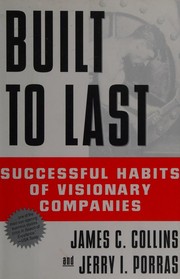
Built to Last: Successful Habits of Visionary Companies
2,132-word summary 9 min read 322 pages in the book
- First published
- 1994
- Publisher
- HarperBusiness
- Pages
- 322
- ISBN
- 9780887306716
Reading options
What's inside (9 sections)
A former manager of mine used to end meetings with the phrase "clock building, not time telling." I nodded along for a year without knowing where it came from. When I finally picked up the book, I found the 1994 HarperBusiness first edition, 322 pages, written by Jim Collins with Jerry I. Porras. The source of that phrase turned out to be a six year research project at Stanford, and the argument behind it is stranger and more careful than the slogan suggests. This is a book about companies that lasted, not a book about the people who happened to run them.
Eighteen companies and eighteen rivals
Collins and Porras did not begin with a list of firms they admired. They began with a question: what makes a truly exceptional company different from a good one? Their team spent six years at the Stanford Graduate School of Business comparing pairs of companies. On one side were eighteen firms they called visionary, with an average age of close to a hundred years at the time of writing. On the other side was a competitor from the same industry and era for each one. The matching matters. Studying a great company alone tells you very little, because every company has a story it can tell about itself.
The eighteen included 3M, American Express, Boeing, Citicorp, Disney, Ford, General Electric, Hewlett Packard, IBM, Johnson and Johnson, Marriott, Merck, Motorola, Nordstrom, Philip Morris, Procter and Gamble, Sears, and Wal-Mart. The pairings put each of them next to a company that was also successful but not quite as durable. The authors looked at these firms from their beginnings through the early 1990s, through start up, midsize, and large company stages. They reported that the visionary group had outperformed the general stock market by a factor of fifteen since 1926. That number is the hook, and it is also the thing I would treat with the most caution, for reasons I will get to.
The comparisons are the part of the research I would keep if the rest were cut. The book is at its best when it shows two companies facing the same market at the same moment and making different choices. One takes a long view on research, the other reaches for the quick win. One promotes from within, the other brings in a famous name from outside. Over twenty or thirty years those small differences add up to a completely different kind of organization. That is a more useful story than a list of traits, because it lets you watch a decision instead of admiring a result. I found myself pausing at those pairs and asking which of the two I would rather work for, which is a question no chart of stock returns can answer.
What impressed me was the restraint of the method. They were not asking which company had the best product at a single moment. They were asking which ones kept their character across decades while competitors came and went. They read annual reports, trade histories, and accounts of decisions that seemed minor at the time and turned out to be defining. That longer view is why the book still gets read by people running organizations, even though the data stop more than thirty years ago.
The leader is not the whole story
The opening idea is a deliberate attack on a familiar story. When a company does well, we tend to credit a charismatic chief executive with a grand vision. Collins and Porras argue that this gets the order wrong. Their visionary companies were often built by leaders who were quiet, stubborn, and unglamorous. The durable achievement was the organization itself, something that could keep going long after any one person left. That is the clock. A time teller is the person who happens to be holding it at a given hour.
I found this genuinely useful. It changes what you pay attention to. Instead of asking who the brilliant person is, you start asking what the place does on an ordinary Tuesday when nobody famous is in the room. The book is full of examples of companies that made a defining choice under a leader who was not especially visionary in the public sense, then kept that choice alive through successors who were equally plain spoken. Leaders still matter, of course. What the authors insist is that a company which depends on one person to be itself has built a fragile thing.
There is a section on succession that I marked up heavily. The visionary firms tended to grow their own leaders, promote from within, and take the long view when choosing who came next. Home grown management, as the authors call it, is not about nepotism. It is about a company knowing its own values well enough to recognize them in a person who has been inside the culture for years. I have worked in places that hired a celebrated outsider to fix everything, and I could see exactly why those stories end badly.
A core that stays and a drive that does not
The phrase I had heard for a year sits near the center of the book. Preserve the core, stimulate progress. A durable company holds tight to a small set of values and a purpose that are not about making money, while being willing to change almost everything else about how it operates. Profit is necessary, in the authors' framing, but it is not the reason the place exists. They call this more than profits, and they insist that the best companies had an ideology that employees could name without looking it up.
The companion idea is what they call the tyranny of the OR. A weak organization says it must choose between stability and change, or between profit and purpose, or between discipline and freedom. The visionary companies refused the choice. They treated both sides as requirements. I have seen this work in small ways: a team that keeps a fixed standard for quality while completely changing its tools, or a business that holds a fixed promise to customers while rewriting its pricing. The book gives this a name, and naming it made it easier for me to spot in my own work.
This is where the book gets its reputation as a source of grand statements. Each chapter ends with a tidy summary of the finding, and the language can sound like a poster on an office wall. I found that the concrete stories carry more weight than the slogans. When the authors describe how a company argued about a decision for months, the idea becomes real. When they state the idea in the abstract, it starts to sound like something a consultant would sell.
Big goals and strange cultures
The authors give a lot of space to big hairy audacious goals, usually shortened to BHAGs. These are goals so large that they feel almost reckless, and they work because they are clear enough that everyone in the company can picture them. The Boeing decision to build the 707 is one of the stories that stuck with me. The company was doing well with propeller aircraft and chose to gamble on a jet airliner that could make its existing products obsolete. That is the logic of the BHAG: you set a target that forces you to become a different company.
Paired with this is what the book calls a cult like culture. The word is intentionally provocative. Collins and Porras mean that strong companies are demanding places, with high expectations, clear rituals, and a kind of pressure that outsiders find uncomfortable. You either fit the culture or you do not. I read this chapter with mixed feelings. On one hand, it explains why some workplaces feel intensely loyal and why they also burn people out. On the other, the word has aged badly, and I would not want to hand it to a manager without a conversation about where firm belief becomes groupthink.
Try a lot of stuff and keep what works is the more practical version of the same point. The visionary companies ran many small experiments and kept the ones that succeeded, rather than betting everything on a single master plan. 3M is the usual example, with its tolerance for ideas that fail cheaply. The authors describe a company where a person with an odd idea can find a little money and a little time to test it, and where failure is treated as information instead of a career ending event. I have worked in organizations where the opposite was true, where one failed attempt made people cautious for years. Reading the contrast made me see how much of a company's future is decided by what it allows an ordinary employee to try on a Tuesday. Good enough never is adds the discipline side. The book argues that these companies treated a decent result as a stage, not a finish line. Together the two ideas describe a place that experiments freely and then holds the winners to a high standard. I found that combination more believable than either idea alone.
The end of the beginning
The last chapters pull the findings together under the title Building the Vision, and the subtitle of the closing chapter admits the job is never complete. The visionary company is not a finished object. It is a set of habits that have to be practiced again by each generation of employees. The authors write that the end of the beginning is where the real work starts, because a company that has been successful has to resist the temptation to coast on its own story.
I appreciated that ending. Too many business books promise a state you can reach and then stop. This one is honest that the habits are maintenance, not a cure. I also appreciated that the writing stays calm. There is no breathless tone, no claim that the authors have found a secret that nobody else knows. They found patterns, wrote them down, and let the companies speak for themselves most of the time.
Where the argument gets thin
Now the fair criticism, which matters here more than with most books. The biggest problem is survivorship bias. Collins and Porras chose companies that had already lasted, then looked for the habits they shared. That method can tell you what long lived companies had in common, but it cannot tell you whether those habits caused the longevity. A company that did the same things and failed in 1970 is not in the sample. I kept thinking about this every time a chapter said visionary companies do X.
The timing is the second problem. The research ends in the early 1990s, and several of the eighteen later stumbled badly. Sears declined into irrelevance. Citicorp needed a rescue. Motorola lost its position in mobile phones. Ford had years of trouble. Philip Morris faced a different kind of reckoning as the health costs of tobacco became impossible to ignore. None of that proves the findings wrong, but it does show that a hundred year run is not a permanent licence. A reader in 2026 should treat the list as a historical group, not a set of companies to copy.
There is also a question about how visionary was defined. The authors picked the companies first, using reputation and longevity, and then described the traits. That is reasonable research, but it leaves room for hindsight to creep in. A company that made a lucky bet in 1955 looks brilliant in 1990, and the book can make the bet sound like a principle. The writing sometimes repeats itself, and the chapter summaries pile up until I wanted the next story instead of another motto.
What I actually used
I finished the book thinking about the difference between admiring a company and working in one. The value for me was in the questions, not the checklist. What does this place believe when nobody is watching? Which parts of it must stay the same while everything else changes? Are we promoting people who carry the culture, or importing someone to save us? Those questions travel well, even if the fifteen times market return does not.
I also changed one small habit after reading it. I stopped treating a strong quarterly result as proof that the underlying system was sound. The book's plainest lesson is that durable organizations are built in the ordinary weeks, by people who know what the place stands for and are allowed to improve it without waiting for permission from a star. That is a quieter idea than the phrase I had been repeating at meetings for a year, and it has been more useful to me.
FAQ
Who wrote Built to Last?
Jim Collins wrote it with Jerry I. Porras, drawing on a six year research project at the Stanford Graduate School of Business.
What does clock building, not time telling mean?
It means building a durable organization that keeps its character, rather than relying on a charismatic leader to guide every hour.
Which edition does this summary cite?
It follows the 1994 HarperBusiness first edition, 322 pages, ISBN 9780887306716.
Similar books
Good to Great: Why Some Companies Make the Leap... and Others Don't
A five-year study of 11 companies that leapt ahead shows Level 5 leaders, right people, hedgehog focus and flywheel momentum explain lasting gains.
2,374-word summary · 11 min read
Blue Ocean Strategy: How to Create Uncontested Market Space and Make the Competition Irrelevant
Two INSEAD professors argue that companies win by creating uncontested markets rather than fighting rivals, and give managers tools to do it.
2,333-word summary · 10 min read
The Magic of Thinking Big
Schwartz's 1959 self-help classic argues that success follows from the size of your thinking, supported by sales anecdotes, vocabulary drills and goal setting.
2,579-word summary · 11 min read
Creativity, Inc.: Overcoming the Unseen Forces That Stand in the Way of True Inspiration
Pixar's president on why the studio that made Toy Story nearly broke itself, and the daily habits that kept the creativity coming.
2,179-word summary · 10 min read
The Hard Thing About Hard Things
A founder and CEO writes about the parts of running a company that no framework can fix, from layoffs and demotions to the loneliness of the job.
2,161-word summary · 10 min read
The Five Dysfunctions of a Team
New CEO Kathryn unites warring execs through trust, conflict, and care.
2,029-word summary · 9 min read
Emotional Intelligence 2.0
Bradberry and Greaves turn emotional intelligence into four learnable skills, a self-assessment and dozens of strategies, while their headline numbers rest on…
3,276-word summary · 15 min read
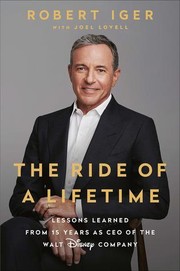
The Ride of a Lifetime: Lessons Learned from 15 Years as CEO of the Walt Disney Company
Bob Iger's 2019 memoir on leading Disney through Pixar, Marvel, Lucasfilm and a global rebuild, told through the lessons he learned along the way.
2,475-word summary · 11 min read
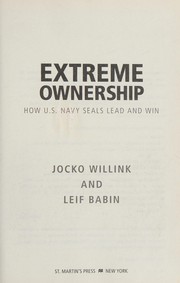
Extreme Ownership: How U.S. Navy SEALs Lead and Win
Two retired Navy SEALs turn their Ramadi combat experience into a blunt leadership creed: the leader owns everything, and the team follows when the why is…
2,368-word summary · 11 min read
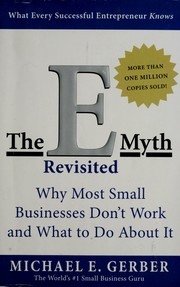
The E-Myth Revisited
Gerber argues that most small businesses are run by technicians who own a job rather than a business, and that the fix is a system that runs without them.
2,169-word summary · 10 min read
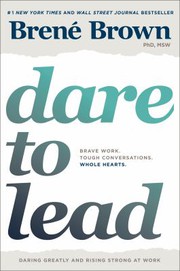
Dare to Lead
Research on courage shows how leaders build trust through vulnerability and clear values.
2,442-word summary · 11 min read
Think Again
Adam Grant argues for holding views loosely and testing them like a scientist, moving past preacher, prosecutor, and politician habits at work and in debate.
3,204-word summary · 14 min read
The One Minute Manager
A young seeker learns three one minute habits from a plainspoken boss: clear goals, quick praise, and fast fair correction.
2,997-word summary · 13 min read
David and Goliath: Underdogs, Misfits, and the Art of Battling Giants
Gladwell argues disadvantages can become advantages, from biblical sling to dyslexia and class size.
3,197-word summary · 14 min read
Lean In
Sit at the table, negotiate, share home load, and change offices while knowing advice skews elite.
2,005-word summary · 9 min read
Think and Grow Rich
Hill teaches desire, faith and autosuggestion, distilling lessons from Carnegie interviews into thirteen principles for success.
2,458-word summary · 11 min read
The Lean Startup
Ries lays out Build-Measure-Learn, MVPs, pivots and validated learning for building companies under extreme uncertainty.
2,581-word summary · 11 min read
Outliers: The Story of Success
Success comes from practice, timing, and hidden chances more than talent alone.
1,934-word summary · 9 min read
Getting to Yes: Negotiating Agreement Without Giving In
Fisher and Ury propose negotiating on interests rather than positions, using fair standards and a clear alternative if no deal is reached.
2,231-word summary · 10 min read
Flash Boys: A Wall Street Revolt
Michael Lewis follows a Canadian trader and his band of Wall Street outsiders as they discover how speed was used to rig the stock market, then build an…
3,009-word summary · 13 min read
Careless People
A former New Zealand diplomat recounts seven years at Facebook, from a Myanmar launch to a hospital bed where the job followed her between contractions.
2,413-word summary · 11 min read
Apple in China
A former Financial Times reporter argues that Apple poured about $275 billion into China, training a generation of engineers and leaving itself dependent on…
2,094-word summary · 9 min read
107 Days
Kamala Harris's memoir of the 107 days between Biden's withdrawal and Election Day, drawn from a journal kept during a campaign she believes she was best…
2,132-word summary · 9 min read
The Total Money Makeover: A Proven Plan for Financial Fitness
Dave Ramsey lays out seven Baby Steps, from a $1,000 starter fund to a paid-off house, with the debt snowball at the center.
2,663-word summary · 12 min read
Made to Stick: Why Some Ideas Survive and Others Die
The Heath brothers break down why some ideas vanish on contact while others lodge in memory, tracing six traits that make a message stick.
2,527-word summary · 11 min read

The Magnolia Story
How Chip and Joanna Gaines met, closed their first shop, nearly lost everything in a housing development, and built Fixer Upper.
2,994-word summary · 13 min read

The World Is Flat: A Brief History of the Twenty-first Century
Thomas L. Friedman's 2005 bestseller argues that technology, trade, and open borders leveled the global playing field, and it names the ten forces that did it.
2,369-word summary · 11 min read
The Black Swan
Taleb argues rare shocks shape history more than models admit, and urges safer exposure over prediction.
2,588-word summary · 12 min read
Essentialism
McKeown argues for less but better: discern the vital few, refuse the trivial many, and use buffers, small wins, and steady routines so key work gets done well…
2,421-word summary · 11 min read
Empire of Pain: The Secret History of the Sackler Dynasty
How the Sackler family sold OxyContin and shaped an overdose crisis while giving to museums.
2,048-word summary · 9 min read