
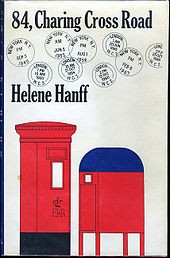
84, Charing Cross Road
2,343-word summary 10 min read 97 pages in the book
- First published
- 1970
- Publisher
- Grossman Publishers
- Pages
- 97
- ISBN
- 9780670290734
Reading options
What's inside (9 sections)
I came to this book through a used paperback with a cracked spine that a neighbor left on my porch, and I finished it in two sittings on a rainy weekend. It is slight in the hand, barely ninety seven pages in the first American edition from Grossman Publishers in 1970, but it holds twenty years of a friendship carried entirely by post. Helene Hanff was a working writer in New York who could not afford the books she wanted, and Frank Doel was the chief buyer for Marks and Co, a secondhand bookshop at 84 Charing Cross Road in London. What begins as an order for a few out of print classics becomes one of the oddest and warmest correspondences in modern letters. I retell it front to back here, ending included.
The ad in the Saturday Review
Hanff was in her thirties and trying to make a living as a playwright in New York when she spotted a small advertisement in the Saturday Review of Literature. Marks and Co claimed to specialize in hard to find British books, and Hanff, who had educated herself in libraries after leaving Temple University when the money ran out, had a list. She wanted the editions she had read about but could never find on the shelves near her: Chaucer in an old Longmans translation, Izaak Walton's The Compleat Angler, the essays of Charles Lamb and William Hazlitt, John Donne's sermons, Virginia Woolf's The Common Reader. Her first letter, written in 1949, is brisk and funny and slightly demanding. She asks for prices and names the exact printings she wants.
The tone matters, because this is not a book about a woman who writes deferential fan mail. Hanff is a New Yorker with a sharp tongue and very specific taste. She writes from a small apartment that is too hot in summer and too cold in winter, and she describes the city to the shop as if the clerks might one day need a map. She signs her letters and waits.
There is a version of this story in which a lonely writer reaches out to a faraway stranger and finds kindness. That is not quite what Hanff is doing. She wants books, she wants them badly, and she is willing to bargain for them. The friendship grows out of a transaction, which is one of the reasons it feels so sturdy. Neither person is performing.
Frank Doel answers
The reply comes from Frank Doel, the man whose job is to hunt down the books on her list and decide whether Marks and Co can sell them cheaply enough. Doel is not a flashy correspondent. He is careful, a little formal, and quietly pleased that someone across an ocean wants the sort of dusty volumes he spends his days among. He explains what he can find, what he cannot, and what a book will cost in pounds and shillings. He apologizes when a title is beyond them. Over time his letters loosen. He begins to include news of the shop, of the other people who work there, and of his own life.
Doel is the anchor of the book, and Hanff knows it. She teases him about his English restraint, prods him about his health, and scolds him when the shop seems slow to answer. He is patient with all of it. Their letters build a rhythm: her long, lively, impatient notes, his shorter, steadier ones, each written in the gap between a working day and a post. Neither of them is writing for publication, and that is part of why the collection still reads well. The voices are unguarded.
I should be honest about a limit here. Because the book is an edited selection of letters written by several hands, the story arrives in fragments. We get Hanff in full voice and Doel in his own, and then other people step into the correspondence for a paragraph or two before vanishing. Readers who want a conventional narrative with a single point of view will find the form uneven. That unevenness is also the point. This is a record of a relationship, not a novel shaped for a reader.
Parcels across the Atlantic
By the early 1950s Britain is still living with rationing and shortages, and Hanff learns from Doel's letters how thin the pickings are in the staff's kitchens. She starts sending food parcels. Coffee, bacon, eggs, canned goods, and small luxuries go into boxes addressed to 84 Charing Cross Road, to be divided among the people who work there. In return come letters of thanks that are almost comically formal at first, then warmer. Doel writes that the parcels are shared out. Hanff writes back that she does not want thanks, she wants them to eat properly.
This is the stretch of the book where the friendship stops being about books alone. Hanff begins to ask after the staff by name. Nora Doel, Frank's wife, starts writing to her, and her notes are as practical and dry as Frank's, full of household detail and quiet gratitude. Other members of the shop add their own lines. Hanff sends gifts at Christmas and for birthdays. The correspondence becomes a small, irregular household spread across an ocean, with Hanff as its noisy American cousin.
The parcels also say something plain about the years. This is a postwar story, and the austerity in the background is real. Hanff has money worries of her own and is not sending luxuries from a position of ease. She sends them because she has decided these people are hers to look after. The act is practical rather than grand, which fits the whole book. Affection here arrives in a cardboard box with customs forms stuck to it.
Sermons, pudding, and the Dodgers
One of the pleasures of the book is how ordinary the talk becomes. Hanff and Doel argue about the price of a first edition. They discuss the sermons of John Donne, which Hanff wants for her own education, and they trade recipes. Hanff asks how to make Yorkshire pudding and reports back on her attempts in a New York kitchen. She follows the Brooklyn Dodgers and writes about games and players. When Elizabeth II is crowned in 1953, the letters record the excitement in London from the inside, and Hanff reads it the way only someone who has never been able to afford the trip can.
The books keep arriving. A Hazlitt here, a Walton there, a Chaucer that turns out not to be the printing she hoped for. Hanff's responses are never neutral. She tells Doel exactly what she thinks of a binding, a typeface, a slipcase. She says plainly when a volume disappoints her. Doel accepts the criticism because he knows she cares about the books for their own sake. Their arguments about editions are funny, but they are also the substance of the friendship. They have something real to disagree about, and neither has to pretend.
Hanff's hunger for these books is worth pausing on, because it explains the whole correspondence. She never had the money for university beyond a single year at Temple, and she built her education out of library shelves and secondhand lists. Arthur Quiller Couch, the scholar she chased through Marks and Co, became the subject of a later book of hers, called Q's Legacy. When she tells Doel which edition she wants, she is not being fussy for its own sake. She is trying to own a piece of the learning that was kept from her. That is the engine under all the jokes about bindings and prices.
I found this section the most satisfying part of the book, and also the easiest to skim. If a long discussion of a 1934 Longmans Chaucer sounds dry to you, some of these pages will be. Hanff's wit carries most of it, but the letters were written to a bookseller, not to a general reader, and the book never fully hides that. There are stretches where you can feel the compiler arranging the material, choosing which note to print next so the joke lands.
The years pass and the tone changes
As the 1950s turn into the 1960s, the letters grow further apart. Hanff's television work dries up as production moves to California, and she stays in New York, writing for magazines and slowly becoming the writer she wanted to be. Doel's life at the shop continues. The exchange is less frequent now, but the familiarity is deeper. They write about birthdays, about illness, about the small annoyances of work. Hanff keeps promising to visit. She keeps not going. The reasons are money and a fear of travel, and she says so with her usual frankness.
Hanff's own life in these years is easy to miss because she keeps it in the margins. She had written for early television, including scripts for The Adventures of Ellery Queen, and she kept trying to get a play onto Broadway without success. She described her own plays as exercises in plotless charm, which tells you both how funny she was about herself and how much she wanted the thing she could not have. When the television work moved west and she stayed in New York, the letters became one of the main outlets for that voice. The book she would be famous for came out of a search for books she could not afford to buy.
The book does not announce its turn. It arrives in a shorter letter, then in one from Nora. Frank Doel died in December 1968, of peritonitis after a burst appendix. Hanff had never met him. The letters she writes after that are different: still funny, still warm, but addressed now to Nora and to Doel's daughter Sheila, and to the memory of a man who had become a daily presence in her imagination. Marks and Co itself closes in December 1970, the year the collection is published.
This is the part of the book that caught me off guard. I had been reading for the jokes about puddings and book prices, and suddenly the whole correspondence is over, cut short by an ordinary illness. There is no big scene. There is a note, and then another note in a different hand. The effect is quieter and harder than any dramatic farewell could have been. Hanff's humor does not desert her, and that is what makes those last pages sting. She keeps being herself when there is no longer any reason to perform for him.
What happens after the last letter
Hanff finally gets to London in the summer of 1971, two years after Doel's death and after the shop has shut. She stands outside 84 Charing Cross Road and finds the premises empty. She records that trip in her 1973 follow up, The Duchess of Bloomsbury Street, where she meets Nora and Sheila and the friends the letters had promised her. In the original book the visit is only a coda, a few lines that bring the correspondence to a physical address. The shop's site is still marked today by a brass plaque, and the building has passed through a series of tenants over the decades.
Stage and screen versions arrived later and made the story famous. Hugh Whitemore adapted it for British television in 1975, a stage version followed in 1981, and a film with Anne Bancroft and Anthony Hopkins came out in 1987. The 1987 film, with Anne Bancroft as Hanff and Anthony Hopkins as Doel, widens the cast to include Hanff's New York friends and Doel's wife Nora, played by Judi Dench. It is a good film, and it gave the book a second life, but it makes the meeting feel like the destination. In the letters the trip is an afterthought, a few lines written after the person who mattered most is gone. Hanff's 1973 sequel, The Duchess of Bloomsbury Street, is the book where she finally walks those streets and meets the people who had only been names in a letter. Read together, the two books give you both the correspondence and the homecoming.
Those adaptations lean into the romance of the meeting that never happened. The book itself is content to leave the friendship unconsummated, which I think is why it holds up. Nothing has to be resolved. The letters are the whole event.
The fair reading
For all its charm, this is a small book, and it knows it. The format borrows trouble. Because the letters are arranged by Hanff from both sides of the correspondence, we only ever see Doel as she chose to present him. His side of the exchange is real, but it has been edited into a supporting role. The book also repeats itself. Variations on the same jokes about food parcels and book prices recur across nearly two decades, and a reader going straight through will feel the loop. Some of the spelling out of Hanff's self education, especially her enthusiasm for Arthur Quiller Couch, can feel like homework assigned by the author to herself.
Those complaints are minor beside what the book does well. Hanff writes about wanting things she cannot have with a precision that is rarely sentimental. The books she orders are a way of claiming an education that money and circumstance kept out of reach. The parcels are a way of caring for people she cannot touch. When she writes to Nora after Doel's death, the voice is the same as ever, and that steadiness is the point. A friendship conducted through the post can be as particular and as stubborn as any other, and it can be just as easily interrupted.
I closed the book wanting to write letters, which is probably the highest compliment a collection of letters can earn. It is not a guide to London and not quite a memoir. It is twenty years of two people being themselves at a post office desk, and the small, stubborn fact that they kept writing.
FAQ
Is 84, Charing Cross Road a novel or a true story?
It is nonfiction, assembled from real letters. Hanff corresponded with Frank Doel and the staff of Marks and Co from 1949 into the late 1960s, and she edited the exchange into this book.
Did Helene Hanff ever meet Frank Doel?
No. Doel died in December 1968 before she could make the trip. Hanff visited the closed shop in 1971 and described that journey in her 1973 book The Duchess of Bloomsbury Street.
What kind of books does Hanff order from London?
She hunts for out of print British classics, including Chaucer, Izaak Walton, John Donne's sermons, Hazlitt, Lamb, and Virginia Woolf, usually in a specific printing.
Similar books
Stories I Only Tell My Friends
Rob Lowe's 2011 memoir runs from an Ohio lumberyard to the Oval Office, through Brat Pack fame, a public scandal, sobriety and a television comeback, told with…
2,234-word summary · 10 min read
The Reading List
A lonely widower and a teen library worker connect through a mysterious list of books.
2,810-word summary · 12 min read
The Bromance Book Club
A Nashville pitcher joins a secret romance book club to save his marriage after his wife Thea asks for divorce. He trades pride for listening, chores, and…
2,932-word summary · 13 min read
Ghosts
At 32, food writer Nina Dean faces ghosting by Max and her father's dementia in London.
2,677-word summary · 12 min read
Everything I Know About Love
Dolly Alderton recalls bad dates flatshares and female friendship in her twenties memoir.
2,194-word summary · 10 min read
The Long Haul
Greg Heffley's summer road trip goes sideways with a towed boat, a live pig, and a family in a purple van.
2,311-word summary · 10 min read
The Last Bookshop in London
A woman who has never cared for reading takes a job in a dusty London bookshop as the Blitz begins, and finds her place in it.
2,264-word summary · 10 min read

I Feel Bad About My Neck: and Other Thoughts on Being a Woman
In short, funny essays written just after her sixty-fifth birthday, Nora Ephron takes on aging, vanity, a White House summer, and the daily upkeep of looking…
2,099-word summary · 9 min read
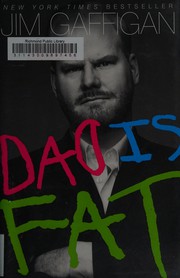
Dad Is Fat
A comic essay collection about raising five kids in a two-bedroom New York apartment, delivered in Gaffigan's dry, deadpan voice.
2,196-word summary · 10 min read
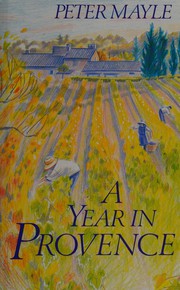
A Year in Provence
Peter Mayle's first year in a Luberon farmhouse, told through mistral winds, difficult builders, long lunches and local rules nobody warned him about.
2,209-word summary · 10 min read
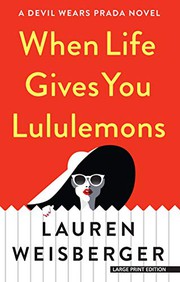
When Life Gives You Lululemons
Emily Charlton leaves Runway for Hollywood and ends up in Greenwich, where a supermodel's DUI and a senator husband's ambitions draw three women into a…
2,028-word summary · 9 min read
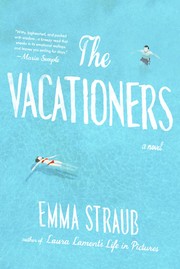
The Vacationers
A New York family's two-week stay in Mallorca turns into a comedy of exposed secrets when a magazine editor's affair and a son's debts come to light.
2,324-word summary · 10 min read
The Rachel Incident
A funny, sharp novel about two twenty-somethings in recession-era Cork whose bookshop friendship, tangled romance and a married professor's lie leave a secret…
2,346-word summary · 10 min read

The Princess Diarist
Built from diaries Fisher kept at nineteen while filming the first Star Wars movie, this 2016 memoir revisits her affair with Harrison Ford and the strange…
2,360-word summary · 10 min read
The Impossible Fortune
Osman gathers the Coopers Chase pensioners for a fifth mystery that opens on a quiet year, a wedding, a vanishing guest and a code worth a fortune in Bitcoin.
2,685-word summary · 12 min read

Taste: My Life Through Food
Stanley Tucci's memoir traces his life through food, from a Calabrian family kitchen in Katonah to film sets, marriage and a cancer fight that cost him his…
2,503-word summary · 11 min read

Nick and Norah's Infinite Playlist
Rachel Cohn and David Levithan trade chapters as two music-obsessed teenagers spend one long New York night together, from a five-minute fake date to something…
2,355-word summary · 10 min read
Everyone Worth Knowing
A young woman quits her banking job after a friend's engagement and lands in a New York PR firm where everyone is paid to know everyone.
2,360-word summary · 10 min read

El Deafo
A deaf girl in a world of rabbits turns her bulky Phonic Ear hearing aid into a superhero identity while searching for a true friend.
2,515-word summary · 11 min read
Chasing Harry Winston
Three friends turn thirty in Manhattan and make a wild pact: Emmy will sleep her way around the world, Adriana will settle down, and Leigh watches from the…
2,185-word summary · 10 min read

All Things Bright and Beautiful
Linked memoirs from a young vet in the Yorkshire Dales, moving between difficult farmers, beloved animals and the household above the surgery at Skeldale House.
2,004-word summary · 9 min read
Wishful Drinking
Carrie Fisher's 2008 memoir, drawn from her one-woman show, tells her story with sardonic jokes about Hollywood parents, Princess Leia, bipolar disorder, and…
2,341-word summary · 10 min read
Have a Little Faith: a True Story
Asked to deliver his childhood rabbi's eulogy, Albom interviews the man and a Detroit pastor serving the homeless, and finds two very different models of faith.
2,339-word summary · 10 min read
Same Kind of Different as Me
An art dealer and a formerly homeless sharecropper tell the story of the friendship that began at a Fort Worth mission and the woman who insisted on it.
2,023-word summary · 9 min read

Hard Luck
Rowley has a girlfriend, so Greg turns to a Magic 8 Ball, a family Easter hunt and the school yearbook for answers.
2,586-word summary · 11 min read
Five Point Someone: What Not to Do at IIT
Three friends at IIT drift to a five-point GPA, mock the system, and break into a professor's office for an exam paper.
2,458-word summary · 11 min read
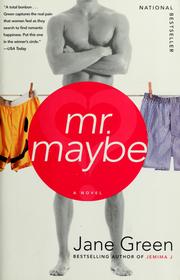
Mr. Maybe
Libby Mason wants a rich husband, but the wealthy man who proposes is dull and the broke writer she cannot forget is not offering forever.
2,322-word summary · 10 min read

Heist Society
A teenage art thief gets expelled from boarding school, then has two weeks to steal five paintings back from a London museum and clear her father.
2,781-word summary · 12 min read
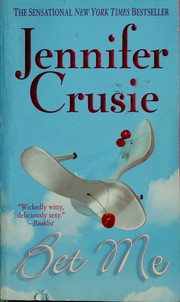
Bet Me
A sharp actuary agrees to dinner with a charming serial bettor, then spends the next month pretending the wager does not matter.
2,710-word summary · 12 min read
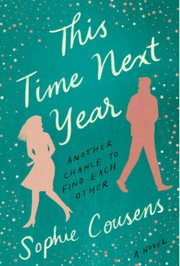
This Time Next Year
Two women give birth minutes apart on New Year's Day 1990, and one takes the other's lucky name. Thirty years on, their children meet again.
2,194-word summary · 10 min read