
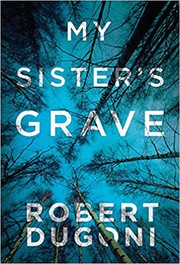
My Sister's Grave
2,084-word summary 9 min read 424 pages in the book
- First published
- 2014
- Publisher
- Thomas & Mercer
- Pages
- 424
- ISBN
- 9781477825570
- Series
- Tracy Crosswhite (#1)
Reading options
What's inside (8 sections)
- Why Tracy Crosswhite Pulled Me In Fast
- Cedar Grove, Sarah’s Last Night, and the Man in Prison
- Digging Up the Past and Losing Control of the Present
- Threats, Lies, and a Killer Still Living Nearby
- Justice, Family, and What Tracy Chooses to Carry
- Why This Procedural Works and Where It Could Sharpen
- Key takeaways
- FAQ
Why Tracy Crosswhite Pulled Me In Fast
I grabbed this because I wanted a police procedural that actually cares about its people, and the first Tracy Crosswhite book delivered. My Sister’s Grave came out in 2014 from Thomas and Mercer, 424 pages, ISBN 9781477825570, and it opens with a wound that never closed. Twenty years ago in the small town of Cedar Grove, Washington, Tracy’s eighteen year old sister Sarah vanished after a night out. Her car was found, her room left waiting, her family split open. A local man named Edmund House was convicted of her murder, though her body was never found. Tracy became a Seattle homicide detective partly to live with that loss and partly to outrun it. Now new evidence may free the man she believes killed her sister.
What hooked me was Tracy herself. She is smart, controlled, physical, good with a gun and better with a file, but not cold. She runs to think, keeps her apartment spare, trusts her work partner more than her feelings. She loves her father, who still lives near Cedar Grove and still aches, and she carries guilt about leaving home and about surviving. Dugoni gives her a believable work life in Seattle, with banter, paperwork, chain of command friction, and cases that do not pause for personal crises. I liked her from the first interview scene, where she listens more than she talks and notices what others miss.
I will be honest about my taste. I get tired of detectives who are walking disasters, and Tracy is not that. She is competent and ethical, which some readers may find less flashy, but I found it refreshing. The opening chapters move fast without feeling rushed, cutting between past and present, town and city. My small gripe is that the early pages stack a lot of names at once, cops, lawyers, old classmates, and I had to keep a mental list. Stick with it. Once the dig starts, the story locks in. The empty grave question drives everything, and it is a strong engine.
Cedar Grove, Sarah’s Last Night, and the Man in Prison
To feel this story, you have to picture Cedar Grove, a rainy logging and farming town where everyone knows whose truck is whose. Sarah Crosswhite was bright and restless, working, dating, planning more than Cedar Grove could hold. On the night she vanished after a dance and a party, she was last seen with people who each remember a little differently. Her boyfriend, her friends, a teacher, a stranger at the edge of the lights, all become important. Tracy was home that summer, young and looking up to her big sister, and her memory of that night is both sharp and full of holes, which feels true.
Edmund House was convicted on thin but emotional evidence. He was odd, lived on the fringe, said strange things, had no solid alibi, and a jury in a grieving town wanted an answer. No body meant no certainty, yet the state got its verdict and the town got closure of a sort. Tracy built her adult belief around that verdict. If House did it, then the world still makes a kind of sense, and her sister can rest in story if not in ground. Dugoni shows how that need can shape a cop’s judgment. Tracy is usually fair, but on this she starts closed. I understood her and also worried for her.
What I appreciated is how Dugoni lays out the old case like a real file. Witness statements that do not quite match, timelines off by minutes, a car found in a place that raises questions, forensic limits from twenty years ago, rumors that hardened into fact. Dan O’Leary, Tracy’s former teacher turned lawyer, pushes for new DNA testing and a hearing, and he is not painted as a sleazy activist but as a stubborn believer in process. The scenes where Tracy rereads transcripts at her kitchen table rang true to me. You can feel her cop brain fighting her sister brain. If you like careful case work over car chases, you will enjoy this stretch.
Digging Up the Past and Losing Control of the Present
The present day plot kicks hard when a court orders new testing and a body is finally found in a remote spot Tracy knows too well. I will keep the exact location vague to save some surprise, but the discovery flips the case. Forensic detail matters here, soil, water, damage over time, what a body can and cannot tell after twenty years. Tracy wants in, but Seattle tells her she is too close. She goes anyway in the ways good cops go, asking for leave, calling in favors, driving to Cedar Grove with a bag and a file. Her captain is not thrilled. Her partner worries. Her father tries to be strong and fails in quiet ways that hurt to read.
Cedar Grove does not welcome her questions. Old friends have become cops, clerks, business owners with reputations to protect. Sheriff’s people close ranks. The prosecutor who built his name on the House verdict watches every move. Tracy teams with Dan and with a local investigator, and they re interview witnesses who have aged, married, drunk, sobered, lied, forgotten, or decided to finally talk. There is a strong scene in a kitchen where a woman who partied that night remembers a car detail she buried for years, and Tracy has to stay still and let it come. Dugoni is good at those still moments between knocks on doors.
My fair criticism is that the middle has a lot of driving and door knocking, which is realistic but can feel samey if you read fast. A few interviews repeat the same warning to leave it alone. I found it helped to track each talk as Tracy does, asking what changed, who benefits, what fear is speaking. The tension builds not from big action but from small refusals, a file that goes missing, a lab result delayed, a friendly deputy suddenly cold. The river search chapters are the exception, muddy and urgent, and they reset the pace. By the time Tracy realizes the danger is current, not just historical, I was fully alert.
Threats, Lies, and a Killer Still Living Nearby
Halfway through, this stops being only a cold case and becomes a live threat. Tracy gets followed, her father’s house is watched, warnings turn from gossip to menace. Someone does not want the House conviction undone or redone correctly. They want it left alone. Dugoni handles this shift well. He does not turn Cedar Grove into a cartoon of evil. He shows how ordinary self interest, love for a son, fear of shame, loyalty to a badge, can push people to hide one more fact, move one more paper, tell one more lie that felt small twenty years ago and now has grown teeth.
Without naming the killer outright here, I can say the solution plays fair. Clues about vehicles, access to places, knowledge of Sarah’s habits, and physical strength line up if you pay attention. Dugoni plants details early that look like color, a hunting trail, a work schedule, a jealous remark, a teacher’s kindness, a cop’s shortcut, then calls them back when it counts. Tracy makes mistakes, misreads a friend, trusts process too much once, goes alone when she should wait, and those mistakes cost her. That kept her human for me. She is not a genius who sees all. She is a good detective under personal strain, sharper for caring yet duller at the edges for the same reason.
If I have a quibble, it is that one late villain reveal leans on a burst of explanation. The motive makes sense, rooted in possessiveness and panic and years of cover, but the final talky scene runs a bit long while danger waits in the next room. Fans of the genre will not mind much, since Dugoni earns it with groundwork, yet I wanted the action to breathe more and the speech to tighten. Still, the last thirty pages move fast, with a confrontation that uses rain, mud, and close quarters well. I held my breath through the final struggle and believed the cost. Tracy’s choice to save the living rather than avenge the dead felt right for who she is.
Justice, Family, and What Tracy Chooses to Carry
What stayed with me after the reveal was not just who did it but what justice can and cannot do. Edmund House spent twenty years in prison for a crime the new evidence says he did not commit in the way the town believed, and no ruling gives those years back. Sarah cannot come back. Tracy’s father cannot get back the marriage and ease that vanished with his daughter. Dugoni does not pretend a correct verdict heals all. He shows paperwork, compensation fights, apologies that help and apologies that insult, neighbors who still whisper. Tracy has to face that her certainty helped keep a wrong story standing, and that reckoning is written without flinching.
Family is the other core. Tracy and her father have a tender, awkward love built on shared loss and different ways of coping. He stayed in Cedar Grove among memories. She left for Seattle and work. They talk around Sarah until they cannot, then talk through tears and anger and finally with more honesty. Tracy’s relationship with Dan is also well drawn, former student and teacher now uneasy allies with old affection and new friction. Jenny, Tracy’s friend, and colleagues in Seattle remind her she has a life beyond the grave. I liked that Dugoni lets Tracy accept help without making her weak. She calls for backup, she leans, she still leads.
The ending sets up the series without cheating this book. Tracy returns to Seattle changed but steady, more open to doubt, more careful with certainty, still a homicide cop who runs too early in the morning and cares too much about victims. Some readers may want a warmer wrap with Cedar Grove, but I found the restraint honest. Not everyone forgives. Not every friendship survives new truth. What matters is that Tracy learns to hold two ideas at once, love for her sister and duty to facts, even when they pull apart. That growth is why I went straight to book two.
Her sister never came home, so she learned to find answers for other families while fearing her own truth.
Why This Procedural Works and Where It Could Sharpen
As a series starter, this does a lot right. The hook is clear, the detective is likable without gimmicks, the town feels real, the legal mechanics around post conviction DNA and hearings are explained in plain language, and the plot balances file work with field danger. At 424 pages, it reads fast for its size because chapters are short and scenes end on turns. Dugoni, himself a lawyer, writes court and cop talk with ease, and his action is clean and spatial. You always know where people stand, what they hold, which door is open. That clarity matters in the final confrontation.
Where it could sharpen is in side characters and repetition. A few Seattle colleagues blur together in book one, serving mostly as sounding boards or obstacles, and a couple of Cedar Grove figures exist mainly to stonewall until the plot needs them to talk. Tracy’s internal loop about guilt and duty, while true to grief, repeats in similar words a few times. I would have trimmed a few of those passages to give more room to Sarah as a person rather than a photo and a file. We get flashes of her humor and hunger for life, and I wanted more, so her loss would ache even deeper.
Even with those notes, I recommend this warmly to crime readers who like smart, decent leads and careful plotting over gore. It is not the darkest procedural out there, though the crimes are grim and the danger is real. It is steady, humane, and satisfying, with a solution that reframes earlier scenes in a way that made me want to reread the first hundred pages. Tracy Crosswhite earns her badge and her grief, and Cedar Grove earns its place on my mental map of fictional towns I do not want to visit but cannot forget. I closed it glad House got a real hearing and sad for all the years no hearing can return.
FAQ
Must I read prequels first?
No, book one explains Seattle, the cold case, and Tracy past as it goes.
Does it resolve the case?
Yes, it closes the sister case while leaving Tracy career and family open.
Similar books
More from Tracy Crosswhite first, then related titles.
Presumed Innocent
Rusty Sabich must solve coworker Carolyn Polhemus's murder while hiding his affair with her, then stands accused himself in Turow's 1987 Kindle County debut.
2,726-word summary · 12 min read

What She Knew
Rachel lets her eight-year-old son run ahead in a Bristol park, and the nine-day search turns her into a suspect in the public eye.
2,952-word summary · 13 min read

The Beach House
A young valet is beaten to death at a Hamptons party, and his law-student brother spends a year building a case against the family that covered it up.
2,049-word summary · 9 min read

Six Years
A professor who promised to forget the woman he loved sees her husband's obituary and discovers that the wedding, the marriage, and the woman herself may never…
2,076-word summary · 9 min read

The Trespasser
A Dublin Murder Squad detective investigates a staged dinner-party killing and finds a cover-up that reaches into her own department.
2,051-word summary · 9 min read

Rules of Prey
Minneapolis detective Lucas Davenport hunts a killer who leaves a new rule at every scene and treats murder as a game of wits.
1,914-word summary · 9 min read

The Late Show
Exiled to the LAPD night shift after accusing her supervisor, Renée Ballard keeps two cases that were meant to be handed off at dawn: a brutal assault and a…
2,563-word summary · 11 min read

4th of July
Lindsay Boxer shoots two armed teenagers in self-defense, faces a wrongful-death trial, and spends her leave chasing a string of throat-slashing murders in…
2,192-word summary · 10 min read

The Camel Club
Four Washington misfits witness a murder on Roosevelt Island and stumble into a conspiracy that reaches the Oval Office, with a hostage president and a nuclear…
2,354-word summary · 10 min read

61 Hours
A bus crash strands Jack Reacher in a snowbound South Dakota town where a drug gang, a corrupt police force, and a single witness are on a collision course.
2,227-word summary · 10 min read
The Last Mile
Melvin Mars is hours from execution for his parents' murder when another man confesses, and FBI cold case detective Amos Decker goes looking for the trap.
2,746-word summary · 12 min read

Still Missing
A realtor is abducted at a Vancouver Island open house and held for more than a year. Told through therapy sessions, the novel follows her escape and the hunt…
2,466-word summary · 11 min read

Bad Luck and Trouble
A deposit of $1,030 summons Jack Reacher back to his old army unit, which is being picked off one name at a time.
2,366-word summary · 11 min read

3rd Degree
The third Women's Murder Club novel follows a San Francisco terror cell and a three-day killing schedule, and it costs the club a member.
2,685-word summary · 12 min read

Worth Dying For
Reacher stops for one night in rural Nebraska and finds a family that runs the county, a missing girl and a shipment worth killing for.
2,021-word summary · 9 min read

Say You're Sorry
A widowed prosecutor defends the teenager accused of killing her babysitter, uncovering a small town's secrets and a killer hiding in plain sight.
2,116-word summary · 9 min read

Finlay Donovan Knocks 'Em Dead
Someone has put a contract on Finlay Donovan's ex-husband, and the novelist and her nanny have to find the hitman before the school pickup.
1,990-word summary · 9 min read

Echo Burning
Reacher hitches a ride with a Texas woman who wants her abusive husband killed, then has to prove she did not murder him when he comes home.
2,209-word summary · 10 min read
The Survivors
Kieran Elliott returns to Evelyn Bay twelve years after a storm killed his brother, and a young woman's murder forces the town to face what it has concealed.
2,571-word summary · 11 min read

Girl, Forgotten
A rookie US marshal guards a judge with a stalker and ends up reopening the 1982 prom-night murder of the judge's pregnant daughter.
2,111-word summary · 9 min read

The Woods
Twenty years after two teenagers were murdered and two vanished at summer camp, prosecutor Paul Copeland identifies a fresh corpse as one of the missing.
2,490-word summary · 11 min read
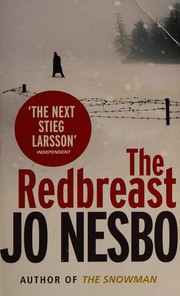
The Redbreast
Harry Hole chases an ageing sniper through modern Oslo while two Norwegian volunteers on the Eastern Front carry a fifty-year-old betrayal toward a royal…
2,453-word summary · 11 min read

The Poet
A crime reporter investigates his twin brother's apparent suicide and uncovers a killer who leaves Edgar Allan Poe quotes behind, in the novel that took…
2,020-word summary · 9 min read

The Boy from the Woods
Wilde, found feral in a New Jersey forest in 1986, hunts for a missing teenager while a senator's secrets tear a wealthy town apart.
2,270-word summary · 10 min read

Razorblade Tears
Two ex-con fathers, one Black and one white, hunt their murdered sons' killers in a Richmond that never gave the boys a fair shake.
2,880-word summary · 13 min read
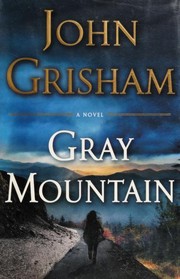
Gray Mountain
A Manhattan associate furloughed after the financial crash takes a year of unpaid legal aid work in Appalachian coal country, and finds the case of her life…
2,026-word summary · 9 min read

Broken Harbor
A family is found slaughtered in a half-built Dublin estate where no one broke in, and star detective Scorcher Kennedy must explain the holes in the walls.
2,308-word summary · 10 min read
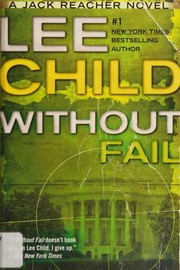
Without Fail
Reacher is asked to test vice presidential security by planning to kill.
2,084-word summary · 9 min read
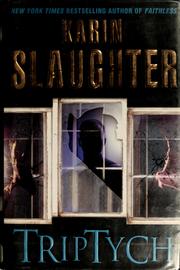
Triptych
A GBI agent with dyslexia hunts a rapist while two Atlanta cops hide pasts.
2,576-word summary · 11 min read
Things We Do in the Dark
A comedian kills her husband, then a podcaster digs up her teen murder past.
2,427-word summary · 11 min read