
Women
2,124-word summary 9 min read 290 pages in the book
- First published
- 1978
- Publisher
- Black Sparrow Press
- Pages
- 290
- ISBN
- 9780876853917
Reading options
What's inside (9 sections)
fifty years old
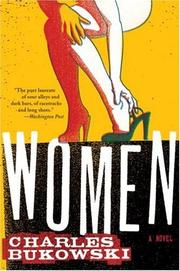
The opening line is famous. "I was 50 years old and hadn't been to bed with a woman for four years." That is Henry Chinaski, Bukowski's semi-autobiographical alter ego, speaking in the first person. The book that follows is a novel, not a collection of stories, though its episodic structure often reads like one. It was published in 1978 by Black Sparrow Press in Santa Barbara, with an Australian edition appearing at the same time from Wild and Woolley. Bukowski himself drew the cover portrait of a woman.
Chinaski is a celebrated writer now, which is a deliberate contrast with the man of Post Office and Factotum. In those books he was a dead-end postal worker drinking himself through a life of small humiliations. Here, fame has arrived late, and he is determined to make up for the deprived decades. He drinks, by his own estimate through "three hundred hangovers a year," and he works his way through a remarkable number of women. The book is an account of that rampage, told in the same flat, unapologetic voice that made the earlier novels distinctive.
I picked this up because it is one of the most controversial books in Bukowski's catalog, and because the title is so disarmingly plain. Women is not a book with a thesis. It is a book with an appetite, and the question it raises is whether appetite can be written honestly without becoming an apology for it.
The life he left
Chinaski keeps measuring his present against his past. Even in bed with two women whose combined ages are less than his own, he imagines what his old co-workers at the post office would think if they could see him. It is a comic image, and a sad one. The man who was invisible for twenty years cannot quite believe that he is now desirable, and he keeps checking the evidence against the memory of the people who used to dismiss him.
That contrast gives the book its energy. Bukowski is not writing a redemption story. Chinaski never becomes a better man, and he never stops being the man who worked the mail route. He simply has a different set of problems now: groupies, hangovers, women who want something from him, and the growing suspicion that he is hurting people. The prose is at its best when it holds the comedy and the suspicion in the same paragraph.
The drinking is not incidental to any of this. Chinaski measures time in hangovers, and the alcohol is both the cause of his worst behavior and the lens through which he remembers it. Bukowski writes drunk scenes with a physical precision that is hard to fake. The mornings, the shaking hands, the bottles, the ability to keep working while thoroughly wrecked, all of it is described from the inside. It is one of the reasons his novels have lasted. He is not romanticizing the drinking, exactly, but he is not lecturing about it either. It is simply the weather of this life.
That weather extends to the writing career. Chinaski is invited to readings, gets letters from fans, and is treated as a figure by people who have read only a fraction of what he has written. He is suspicious of the attention and thoroughly enjoys it at the same time. Bukowski is very good on the particular loneliness of late success. The man who wanted to be somebody for decades finally is, and the discovery does not make him any less alone.
Lydia
The most sustained relationship in the book is with Lydia Vance, based on Bukowski's real-life girlfriend, the sculptor and poet Linda King. She recurs through phone calls and thoughts, and their last face-to-face encounter is a disaster. Lydia breaks into his house, destroys his paintings and books, and is arrested. Chinaski refuses to press charges, because she is fighting for custody of her children. The moment she is released, she calls and threatens him again.
It is a strange, painful episode, and the book does not explain it away. Lydia is neither a villain nor a victim in Chinaski's account. She is a woman with a life he can only partly see, and the one thing he knows about her, the custody fight, is the reason he lets her go twice. That is one of the few moments in the book where his behavior looks like something other than appetite. He does not press charges because there is a child involved, and the fact that he can be moved by such a thing complicates the portrait.
The long list
The women who pass through the book are catalogued with a precision that is both funny and dispiriting. Dee Dee is a successful Jewish music executive, and Chinaski mutters a sarcastic aside about "the fatherland" while he is with her. Tammie is an immature twenty-year-old speed addict. Iris is an Indian-Canadian belly dancer he meets while giving a reading in Canada. Debra runs a court-documents company and works as a paralegal. Laura is a Texas woman he renames Katherine because she resembles Katharine Hepburn. Sara works in a health-food store. Cassie is rejected outright when he phones and hears a man's voice answer.
Tanya is a twenty-three-year-old promiscuous mother, a "tiny girl-child" of ninety pounds, and his pen pal. Their weekend affair later inspired the chapbook Blowing My Hero, written under the pseudonym Amber O'Neil. Rochelle appears only on the second-to-last page, the woman he rejects so that his final relationship can grow. Valerie is the girlfriend of his musician friend Bobby. Tessie is one of Debra's subordinate clerks. Many of the women are fans who write admiring letters, often enclosing photographs.
The letters from fans deserve a mention. Women write to Chinaski because they have read his books and recognize something in them, and many enclose photographs. He keeps the photographs. The dynamic is unequal in a way the book never examines: a famous man receives the admiration and the invitations, and the women who send them become part of his collection. When he describes Tanya as a pen pal and then as a weekend affair, the shift is presented as natural. It is the book at its most revealing about the privilege it does not want to discuss.
Rochelle, who appears on the second-to-last page, exists to be rejected so that the final relationship can develop. That is a functional role, and it shows how little room the novel gives its women as people. They arrive with a description and a purpose, and they leave when the plot no longer needs them. The exceptions are Lydia and, in a different way, Debra, whose professional life is given some substance. Even there, the substance is mainly a way of contrasting Chinaski's chaos with someone else's competence.
The list is the point. Chinaski is not looking for a single great love. He is collecting experiences, and the book treats the collection with the same deadpan tone it would use for a shopping list. That is what makes the reading uncomfortable. There is no narrator winking at us, no suggestion that this is all a joke. It is simply what he says happened.
The world around the bed
The setting is mostly Los Angeles. Chinaski derides his poor, unsafe neighborhood, notes the easy availability of prostitution and observes that "all American women wear pants." He travels to New York, Canada and Paris for readings and assignments, and the same appetite follows him. The encounters are described bluntly and sometimes violently, including an episode of rape. Bukowski mixes dark comedy with a gritty honesty that refuses to look away, but it is important to be clear about what that honesty is. It is honesty about desire and behavior. It is not honesty about the women, who are mostly denied interior lives.
The book's treatment of sex is the part that has aged worst, and it is worth saying so plainly. A contemporary reader will find misogyny in these pages, and the fact that the narrator is semi-autobiographical does not excuse it. What Bukowski does is present a man's appetites without the usual literary filtering, and the result is a document of a particular kind of male loneliness and rage. Whether that document is valuable depends on whether you think unfiltered is the same thing as truthful.
There are small pleasures in the background. Dinky Summers, the washed-up folksinger, is based on the real singer Bob Lind. Chinaski's nickname, Hank, was one of Bukowski's own nicknames. The cover portrait was drawn by Bukowski himself, probably influenced by a trip to Paris to meet a woman and learn painting. These are the details that make the book feel like a document of a life rather than a fantasy.
Guilt
Beneath the episodes runs a developing guilt complex. Chinaski gradually realizes that he is not good for the women he sleeps with, that he has hurt them, and that he pushes good women away. It is the closest thing the book has to an emotional arc. He does not stop. He simply becomes aware of what he is doing while he is doing it, which is a small and rather terrible kind of knowledge.
His self-excuse is a familiar one. He claims he was not loved enough as a child and that he was emotionally and sexually inept in his twenties and thirties, having married a sexless woman who was thirty-five when he was twenty-five. The excuse is presented as fact, not as an argument, and the book never asks us to accept it. Bukowski is too honest a writer to let a man off the hook just because he had a bad childhood.
In recurring interview scenes, Chinaski names his favorite novelists evasively. He first says Knut Hamsun, then admits he was deliberately misleading a questioner who failed to follow up. Later he says "Fante," meaning John Fante, a major influence. Finally he names several authors without choosing a single best. The scene is funny, and it is also a statement of method. He is not going to give you a clean answer about what he loves, and he enjoys watching people fail to notice that he has avoided the question.
Bukowski's prose here is characteristically short and hard. He writes in sentences that arrive like punches, and he is not interested in the soft transitions of conventional fiction. A scene will end abruptly and another will begin without a bridge. The effect can be exhilarating, because it gives the book the speed of a man who is not stopping to explain himself. It can also be exhausting, because the lack of reflection means that the most troubling moments are simply left lying on the page. That is a deliberate choice, and it is the source of both the book's power and its difficulty.
The cover portrait is worth noting. Bukowski drew it himself, probably after a trip to Paris where he went to meet a woman and to learn painting. It is a simple line drawing of a woman's face, and it is more tender than much of the prose inside. That gap between the cover and the book is not something the author ever addressed, and I am not sure he noticed it.
What the book is
I should be clear about the publication history because it affects how the book should be read. Black Sparrow published the first edition in 1978, and the novel has been reprinted by Ecco and HarperCollins in later years. The Ecco reissue calls it "A Novel," which settles a question that sometimes comes up given its loose structure. It follows Factotum and precedes Ham on Rye in the Chinaski continuity. There were attempts to adapt it, including a screenplay by Polly Platt in the 1990s and a later project involving James Franco and a script by Ethan Furman, but neither reached the screen.
The book is hard to recommend in the ordinary way. It is brilliant in its voice, brutal in its honesty about one man, and largely indifferent to the humanity of the women he describes. If you can read it as a document of a particular kind of life, it is a powerful and often very funny book. If you want a novel that treats its female characters as people, you will not find one here. I finished it without liking Chinaski very much, which I suspect is the correct response. The book is not asking to be liked. It is asking to be believed, and there is a difference.
FAQ
Is Women a novel or a short story collection?
It is a novel, first published by Black Sparrow Press in 1978. Its loose episodic structure makes it read like a series of encounters, but the Ecco reissue explicitly subtitles it A Novel.
Who is Henry Chinaski?
He is Charles Bukowski's semi-autobiographical alter ego, appearing in Post Office, Factotum and Ham on Rye. In Women he is about fifty, a celebrated writer drinking through 'three hundred hangovers a year.'
Who is Lydia Vance based on?
She is based on Bukowski's real-life girlfriend Linda King, a sculptor and poet. Their relationship ended with her breaking into his house and destroying his paintings and books.
Similar books
Left Neglected
A busy mother suffers left neglect after a car crash, forcing her family and her own attention to rebuild a slower life.
2,201-word summary · 10 min read
Release Me
A guarded engineering graduate newly arrived in Los Angeles is used as bait at an art gala, then offered a million dollars to pose for a powerful man's private…
2,070-word summary · 9 min read
The Gambler
Dostoevsky's roulette novella: Alexei loses Polina, wins a fortune, loses everything, and promises himself one more bet tomorrow.
2,022-word summary · 9 min read
Men Without Women
Seven stories about men living after women leave, die, or stay distant.
2,673-word summary · 12 min read
House of Sand and Fog
A foreclosed California house pits recovering addict Kathy against Iranian immigrant Behrani, with a deputy whose obsession turns fatal.
2,008-word summary · 9 min read
Ham on Rye
Henry Chinaski grows up rough in Depression Los Angeles and finds writing.
2,244-word summary · 10 min read
Post Office
Chinaski drifts through postal shifts, cheap rooms, horse tracks and rough love in Bukowski's 1971 debut about work, drink and survival.
2,444-word summary · 11 min read
The Defining Decade: Why Your Twenties Matter - and How to Make the Most of Them Now
A clinical psychologist argues that the twenties are not a holding pattern and urges readers to build skills, ties, and commitment now.
2,443-word summary · 11 min read
Misinterpretation
An unnamed Albanian interpreter in New York is drawn into the trauma of a Kosovo war victim, and the empathy she brings home begins to undo her marriage.
2,546-word summary · 11 min read
Theft
Gurnah traces three linked lives in Tanzania, where a servant's accusation of theft opens a family history of love, duty and quiet betrayal.
2,454-word summary · 11 min read
The Zahir
A bestselling novelist's wife vanishes from their Paris home, sending him on a search that becomes a reckoning with his own marriage and attention.
2,433-word summary · 11 min read
The Reluctant Fundamentalist
In a Lahore cafe, Changez tells a nervous American how Princeton and a New York career gave way to anger after September 11.
2,340-word summary · 10 min read
The Housekeeper and the Professor
A single mother becomes housekeeper to a mathematician who can remember nothing for more than eighty minutes, and builds a life with him around baseball and…
2,141-word summary · 10 min read
The Emperor of Gladness
Ocean Vuong's second novel follows a young addict pulled back from a bridge in a dying Connecticut mill town and into the home of an elderly immigrant woman…
2,693-word summary · 12 min read
The Children Act
A High Court family judge weighs whether a dying teenage boy can refuse a blood transfusion while her own marriage quietly comes apart.
2,399-word summary · 11 min read
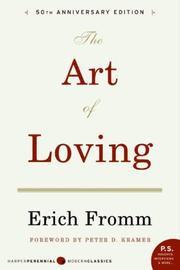
The Art of Loving
Fromm argues that love is an art requiring care, responsibility, respect and knowledge, not a feeling we simply fall into. A short, stern classic of 1950s…
3,175-word summary · 14 min read
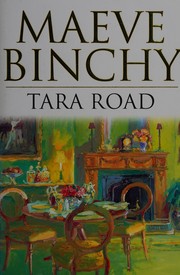
Tara Road
After her husband admits to an affair, a Dublin woman swaps houses for the summer with a grieving American, and each begins to heal inside the other's life.
2,020-word summary · 9 min read
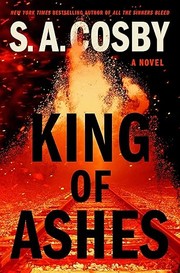
King of Ashes
A Virginia crematorium, a debt owed to the Black Baron Boys and a family secret pull Roman Carruthers back into a war where everything burns.
2,229-word summary · 10 min read
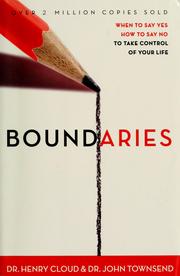
Boundaries: When to Say Yes, How to Say No to Take Control of Your Life
A Christian self-help book that treats a boundary as a personal property line and applies the idea to family, friendship, marriage, work and the self.
2,047-word summary · 9 min read
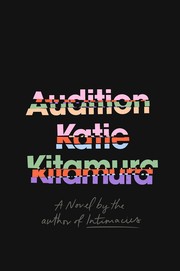
Audition
Kitamura's Booker-shortlisted fifth novel tells the same lunch twice, with a young film student who believes he is the actress narrator's son. Two versions…
2,315-word summary · 10 min read
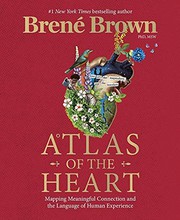
Atlas of the Heart: Mapping Meaningful Connection and the Language of Human Experience
Brené Brown maps 87 emotions and experiences into thirteen 'places we go,' arguing that precise language changes what we can ask for and how we connect.
2,491-word summary · 11 min read

All Adults Here
A widow in upstate New York reconsiders the parent she was after a neighbor's death, then gathers her three grown children for a season of uneasy truths.
2,171-word summary · 10 min read
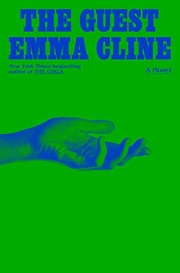
The Guest
Cast out of her wealthy boyfriend's Hamptons house, twenty-two-year-old Alex spends five days talking her way through other people's homes and accounts.
2,165-word summary · 10 min read

Less Than Zero
Clay returns to Los Angeles for Christmas and drifts through parties, drugs, and old friends, including one who is selling himself to survive.
1,926-word summary · 9 min read
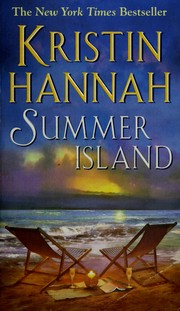
Summer Island
A radio advice host hides a scandal, and the estranged daughter hired to write about it agrees to care for her at the family's island house.
2,325-word summary · 10 min read
Infinite Jest
A film that kills its viewers, a tennis academy, a halfway house for addicts, and a future America where corporations name the years, all tangled together.
2,084-word summary · 9 min read
In an Instant
After a family camper crashes down a snowy mountain, sixteen-year-old Finn watches from the afterlife as survivors make impossible choices and try to live with…
2,130-word summary · 9 min read

Attached
A psychiatrist and a psychologist explain adult attachment styles and show how anxious, avoidant, and secure patterns shape dating, conflict, and the search…
2,157-word summary · 10 min read
The Orphan Master's Son
Adam Johnson's Pulitzer-winning novel follows Pak Jun Do from a North Korean orphanage to a deadly identity swap, under a state whose loudspeakers never stop…
2,219-word summary · 10 min read
Olive, Again
Elizabeth Strout returns to Crosby, Maine, as Olive Kitteridge marries Jack Kennison, confronts her son, and faces old age, grief, and small-town judgment.
2,333-word summary · 10 min read