
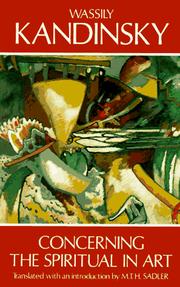
Concerning the Spiritual in Art
2,289-word summary 10 min read 96 pages in the book
- First published
- 1911
- Publisher
- Dover Publications
- Pages
- 96
- ISBN
- 9780486234113
- Original title
- Über das Geistige in der Kunst
Reading options
What's inside (9 sections)
A short book with a very large claim
Concerning the Spiritual in Art is a small book that made an enormous promise: that painting, like music, could stop describing the visible world and speak directly to the soul. Wassily Kandinsky wrote it in 1910 and it appeared in German in 1911 under the title Über das Geistige in der Kunst. The English text that most readers know is the translation by M. T. H. Sadler, first published in 1914 as The Art of Spiritual Harmony and reissued by Dover Publications in 1977. If you read it now, you are reading a manifesto that helped talk artists into abstraction, and also a document whose certainties have not aged well.
I want to be honest about what kind of book this is before getting into the argument. It is not a history of art and it is not a manual of technique. It is a work of theory and prophecy, written by a man who had spent his childhood staring at colour and who came to painting only at thirty, after a career in law and economics. That late start matters. Kandinsky argues as someone who had to decide what art was for, rather than as someone who simply inherited a tradition.
The inner need
The book's central idea is usually translated as "inner necessity" or "inner need." Kandinsky's claim is that genuine art comes from a compulsion inside the artist, a need to give form to something that cannot be said in ordinary language. He calls the artist who follows this compulsion a prophet, and he sets that figure against two enemies.
The first enemy is art that merely imitates nature. If a painting's only job is to reproduce what the eye already sees, Kandinsky argues, then it is redundant. A camera or a careful copyist can do that. The second enemy is art for art's sake, the idea that the value of a work lies in its own formal perfection and nowhere else. To Kandinsky, both positions share a flaw: they treat art as a closed game with its own rules, cut off from the life of the spirit.
What he wants instead is an art that participates in what he calls the spiritual life of the age. He believed that his own time was moving toward a new kind of awareness, and that the artist's job was to give that awareness visible form. This is where the book becomes more than a defence of abstraction. It is a theory of history, or at least a theory of where history was heading.
He is especially hard on the idea that an artist can be morally neutral. A painting that has no spiritual content is not, for Kandinsky, a harmless decoration. It is a symptom of an age that has forgotten what art is for. This is why the book keeps returning to the word responsibility. The artist who follows fashion or the market is answerable for the emptiness he produces, in Kandinsky's view, because he had it in him to do something else. It is a demanding standard, and one that flatters the artist who claims to meet it.
The idea is thrilling when stated this broadly. It is also slippery. "Inner necessity" is a phrase that can mean anything from the genuine pressure of an emotion to a convenient excuse for whatever an artist chooses to do. Kandinsky never quite closes that gap, and later readers have had to decide for themselves whether the phrase is a useful test or a rubber stamp.
The triangle
The most famous image in the book is a diagram, a triangle with its point at the top. The triangle stands for the spirit, or the receptive human soul, and the arts are placed on it in relation to how directly they can reach that point. Music sits highest, because Kandinsky believes it acts on the soul without needing to pass through the visible world. Painting, sculpture, architecture, literature, and the dance are arranged below it, each with a different kind of access. The point of the triangle is the place where the artist stands at a given moment, trying to pull the whole structure upward.
Kandinsky borrows this way of thinking from theosophy, the spiritual movement that taught that the universe unfolds in geometrical stages from a single point. He had read Annie Besant and Charles Webster Leadbeater's Thought-Forms, and he joined the Theosophical Society in 1909. The triangle is not just a pretty drawing. It is a claim that the arts are not equal in their spiritual reach and that the history of art is a movement from the material toward the immaterial.
That claim is the part of the book that now reads most clearly as period thinking. The theosophical scaffolding is doing a lot of work, and if you do not accept the premise that the world is a geometrical progression of spiritual planes, the diagram starts to look like an illustration of a private belief system rather than an argument. Even so, the image has survived because it captures something real about how the arts differ. Music really does bypass description in a way that a novel cannot, and Kandinsky was among the first to make that difference the basis of an argument about painting.
The diagram also does something subtler. It makes the artist's task a matter of position. You are not simply inside or outside the spiritual life; you are somewhere on the ladder, and the work is to move up it. That is a consoling idea for an artist, because it turns every canvas into an attempt at ascent. It also sets up an implicit ranking of whole cultures and periods, with the material ages lower and the spiritual ones higher. Kandinsky's history is a ladder, and his own moment is the rung from which the next climb begins.
Colour as a keyboard
The second half of the book turns to the elements of painting, and this is where Kandinsky is at his most specific and his most vulnerable. His starting point is that colour can be treated as a language. "Colour is the keyboard, the eyes are the harmonies, the soul is the piano with many strings," he writes. "The artist is the hand which plays, touching one key or another, to cause vibrations in the soul." The metaphor is musical because music was his model: just as a composer does not need a bird to write a birdsong, a painter does not need a tree to paint a colour.
He then sorts colours by temperature and by what he takes to be their psychological effect. Yellow is warm, loud, and restless; it pushes outward and can unsettle. Blue is cool and receding, pulling the eye inward toward depth. Green he treats as calm and self-satisfied, a colour that asks nothing of you. Red has weight and physical life, and can tip into violence. Black and white frame the scale as extremes, one an absence and the other a kind of silence. He compares colours to instruments, so that a yellow is like a brass call and a blue like a low string.
Some of this is wonderfully observed. Anyone who has stood in front of a Kandinsky knows that he understood how a patch of yellow can raise the temperature of a whole canvas. But the confidence of the psychological claims is another matter. When he says that a particular shade produces a particular state of mind, he is asserting rather than demonstrating, and modern colour psychology does not support the neat correspondences he sets out. Read the colour passages as the notes of a working painter trying to explain his own intuitions, not as findings, and they remain lively. Read them as science and they will irritate you.
It helps to notice how the book is built. The first part argues for the spiritual freedom of art; the second part tries to supply the grammar that will make that freedom usable. This is why the colour chapter matters so much. If colour can be systematized, then an artist can construct a painting with a predictable effect on the viewer, much as a composer builds a piece from known harmonic relationships. Kandinsky wants a language, not just a mood. Whether a language of colour can ever be as precise as he hoped is the unresolved question hanging over the whole project.
Form, dissonance, and the last chapter
Kandinsky does not simply say that colour is everything. He devotes real attention to the question of form, and to the argument about whether line or colour should lead. His answer is that both are valid paths, but that the artist must choose and then build a whole language from the choice. A painting made from pure colour and one built from drawn forms can each be true to the inner need. What matters is that the work has an inner logic, not that it resembles something.
His most interesting idea here is dissonance. In music, a discord is not simply an error. It can create tension that makes the resolution meaningful, and modern composers had been using it deliberately for decades. Kandinsky asks why painting cannot do the same thing. A clash of colours or forms, handled with purpose, might produce a vibration that a harmonious arrangement cannot. This is the part of the theory that has aged best, because it describes something anyone can see in modern art.
The book ends on a stranger note. Kandinsky describes an age of materialism in which art has been dragged down to the level of use and profit, and he turns from anger to something close to dread. He speaks of fear, of a present that feels empty, and of the possibility that the spirit is about to reassert itself. The final pages are not a summa but a cry. For a book that has spent so long constructing a system, it is oddly moving to find it end in uncertainty.
The case against the book
The fair criticism is not that Kandinsky was wrong to want abstraction. History has settled that argument in his favour. The criticism is that he got there by way of a system that will not bear much weight. Theosophy, the triangle, and the idea of art as a ladder toward the spirit are all matters of faith. When he writes as a prophet, readers who do not share that faith are being asked to accept a great deal on confidence.
There is also a problem with the tone. This is a book of altitude, and altitude can become contempt. Kandinsky writes about whole eras as if he had reviewed them, and about artists who disagree with him as if they were backwards. The materialists he attacks are largely straw figures. Few painters have ever believed that art is only a mirror of nature, and fewer still have set out to make something spiritually empty. The polemic is more vivid than the target.
The colour theory has the same weakness in a smaller form. It works as autobiography and fails as instruction. If you try to paint a picture by following the rules about yellow and blue, you will quickly discover that the rules do not survive contact with an actual canvas. Kandinsky himself painted far more freely than his system suggests. The gap between the theory and the practice is not a secret, but it is worth naming.
Finally, the translation matters. Sadler's English, made in 1914 and revised over the decades, is elegant and occasionally over-systematic. Readers who want the exact German will find a different book, one that is a bit rougher and less categorical. That is worth knowing if any of the grander claims start to feel too smooth.
There is one more difficulty, and it is the most basic. The book was written in the shadow of a widespread fear in European culture that art had reached a dead end, that the old forms were exhausted and something new had to come or the whole enterprise would collapse. Kandinsky shares that anxiety and turns it into a promise of rebirth. Once you remove the anxiety, which was specific to a time and place, the promise loses some of its urgency. What remains is a set of observations about colour and form that do not need a theory of history to be true.
How to read it now
Read Concerning the Spiritual in Art as two books bound together. One is a defence of abstraction written at the moment abstraction was becoming possible, and it is indispensable for understanding why modern art took the shape it did. The other is a statement of faith from a particular time, complete with occult furniture and a theory of history that nobody now accepts.
You do not have to buy the second to learn from the first. The idea that a painting can act on the viewer the way music does, that a colour can carry meaning without depicting an object, and that a work of art needs an inner logic rather than a recognizable subject, all of that is still live. So is the warning underneath it: that art which only reproduces what we already see has given up part of its power.
The book is short, and it rewards a slow read. Skim the triangle and the historical chapters if the theosophy grates. Spend your time on the pages about colour, dissonance, and the inner need. Those are the pages that made painters pay attention in 1911, and they are the ones that still have something to say.
FAQ
What language was Concerning the Spiritual in Art originally written in?
Kandinsky wrote it in German as Über das Geistige in der Kunst, and it was first published in 1911. The English text most readers know is the 1914 translation by M. T. H. Sadler.
Is this a book about how to paint?
No. It is a work of theory and argument about why art should free itself from description, with passages on colour and form rather than step-by-step technique.
Do I need to accept Kandinsky's theosophy to get anything from it?
No. The spiritual system dates the book, but the arguments about colour, dissonance, and the inner need can be read on their own.
Similar books
The Pursuit of God: The Human Thirst for the Divine
Ten short chapters on wanting God rather than merely knowing about him, from a pastor who wrote the book in a single night on a train.
2,014-word summary · 9 min read
The Power of Your Subconscious Mind
Joseph Murphy argues that the subconscious accepts whatever the conscious mind repeats, so worry and confidence quietly grow into very different lives.
2,259-word summary · 10 min read
As a Man Thinketh: A book that will help you to help yourself
In seven short chapters, James Allen argues that character and circumstance grow from thought, and that changing how you think is the practical route to…
2,673-word summary · 12 min read
The Road Less Traveled: A New Psychology of Love, Traditional Values and Spiritual Growth
M. Scott Peck argues that maturity begins with accepting difficulty, then builds discipline, love, and spiritual growth through honest, often painful work.
2,200-word summary · 10 min read
Letters to a Young Poet
Rilke's ten letters to a young officer cadet refuse easy criticism and ask whether he must write, offering patience and solitude as a way of life.
2,530-word summary · 11 min read
The Untethered Soul
Singer names the noisy inner voice and shows how watching thoughts, loosening old hurt, and keeping the heart open through surrender can ease daily suffering…
2,752-word summary · 12 min read
The Art of Happiness
The Dalai Lama and psychiatrist Howard Cutler link lasting happiness to training the mind, human warmth, compassion, and basic spiritual values for daily life.
3,394-word summary · 15 min read
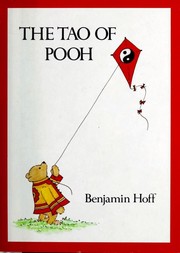
The Tao of Pooh
Hoff explains Taoism through Pooh, Piglet, and Eeyore in gentle chats.
2,006-word summary · 9 min read
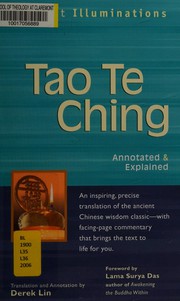
Tao Te Ching: Annotated & Explained
Eighty one brief verses on the Way and effortless action, with Lin's translation and facing notes.
2,140-word summary · 10 min read
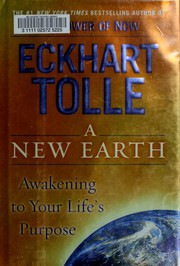
A New Earth
Tolle maps ego pain and shows how presence can loosen roles, thoughts, and suffering.
1,909-word summary · 8 min read
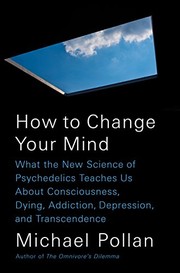
How to Change Your Mind
Pollan blends the history of psychedelic research, his own guided trips, and current neuroscience to ask what these drugs reveal about consciousness.
2,466-word summary · 11 min read
Eating Animals
A new father's question about what to feed his son becomes a wide-ranging investigation of factory farming, food labels, and the stories we tell about meat.
2,100-word summary · 9 min read
Brief Answers to the Big Questions
A short posthumous collection in which Hawking answers ten big questions about God, the universe, time, and humanity's future.
2,464-word summary · 11 min read
You Can Heal Your Life
Louise Hay's 1984 bestseller argues that thoughts and beliefs shape the body, pairing a mirror-and-affirmation workbook with an A to Z list of ailments and…
3,672-word summary · 16 min read
Women Who Run with the Wolves
A Jungian analyst reads fairy tales as maps to a woman's instinctual self, from La Loba to Bluebeard and Vasalisa.
2,331-word summary · 10 min read
My Utmost for His Highest
A posthumous collection of 366 daily devotional readings assembled from Oswald Chambers's sermons, built around surrender, discipleship and the gap between…
2,015-word summary · 9 min read
Ikigai: The Japanese Secret to a Long and Happy Life
Two Spanish writers explain the Japanese idea of a reason for being, drawing on Okinawan centenarians, flow, friendship and the acceptance of imperfection.
2,030-word summary · 9 min read
Flow: The Psychology of Optimal Experience
Csikszentmihalyi's 1990 study of optimal experience asks when people feel most alive and finds the answer in a balance of challenge and skill. Drawing on…
3,073-word summary · 14 min read
Digital Minimalism: Choosing a Focused Life in a Noisy World
Cal Newport argues that willpower cannot beat an attention economy designed against you, and offers a thirty day reset to rebuild your digital habits around…
2,701-word summary · 12 min read
Captivating: Unveiling the Mystery of a Woman's Soul
A Christian companion to Wild at Heart in which John and Stasi Eldredge argue that women carry three God-given desires that wounds can bury. Warm, scriptural…
2,722-word summary · 12 min read
Brida
A young Irishwoman convinced she has a spiritual Gift seeks out a forest Magus and a Dublin witch, and learns that her gift is to bridge the visible and…
2,012-word summary · 9 min read
The Prayer of Jabez: Breaking Through to the Blessed Life
A tiny 2000 devotional built on two verses in Chronicles became a publishing phenomenon and a lightning rod for criticism.
2,296-word summary · 10 min read
The Obstacle Is the Way: The Timeless Art of Turning Trials into Triumph
A 2014 Stoic self-help book arguing that perception, action and will can turn setbacks into fuel, told through historical anecdotes.
2,669-word summary · 12 min read
The Autobiography of Benjamin Franklin
Franklin writes his own life in four parts, from a Boston boyhood and a runaway apprenticeship to printing, science, and public service, while keeping careful…
2,259-word summary · 10 min read
Have a Little Faith: a True Story
Asked to deliver his childhood rabbi's eulogy, Albom interviews the man and a Detroit pastor serving the homeless, and finds two very different models of faith.
2,339-word summary · 10 min read
Everything is F*cked: A Book About Hope
Manson argues that hope, built on control, values, and community, keeps despair at bay, then takes apart the stories and diversions we use to sustain it.
2,789-word summary · 12 min read
The Courage to Be Disliked: The Japanese Phenomenon That Shows You How to Change Your Life and Achieve Real Happiness
A philosopher and an angry young man argue over five nights about Adlerian psychology, trauma, approval, and the freedom to be disliked.
2,054-word summary · 9 min read
Love Does
A lawyer and activist tells stories of saying yes, showing up, and loving people through ordinary, often ridiculous actions.
2,411-word summary · 11 min read
Four Thousand Weeks: Time Management for Mortals
Oliver Burkeman turns the whole productivity project on its head, arguing that a human lifespan of roughly four thousand weeks is not a problem to optimize…
2,447-word summary · 11 min read
Art & Fear: Observations on the Perils (and Rewards) of Artmaking
Two working photographers write a short, blunt book about why people stop making art, and how to keep going when the work is going badly.
1,994-word summary · 9 min read