
Reading options
What's inside (9 sections)
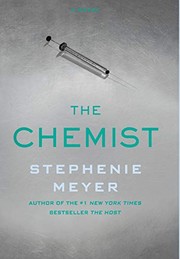
Stephenie Meyer spent a decade selling vampire romance to teenagers, and then in 2016 she wrote a spy thriller with no vampires in it at all. The Chemist came out from Little, Brown and Company on November 8, 2016, a hardcover of 528 pages with ISBN 9780316387835. I picked it up expecting Twilight with the fangs filed down and got something stranger: a procedural about interrogation, a manufactured bioterror plot and a woman who has been professionally invisible for years. It is not Meyer's best book. It is also the one where she sounds most like a novelist and least like a franchise.
A woman who does not exist
The first thing the novel does is withhold her name. She is calling herself Chris Taylor when we meet her, and she is living the way you live when the people you worked for have decided you are a liability. Her rented house is wired with gas traps. She sleeps in the bathtub wearing a gas mask because that is the room with the ventilation she trusts. She drives hours out of state to check an anonymous email account on a public library computer, then drives hours back. She does not use the same name twice.
Underneath all of that is a professional. She was an interrogation specialist for a division of the United States government so off the books that the book will not even give it a name, and she was recruited out of medical school at Columbia when her research caught somebody's attention. Her teacher and mentor, Dr. Joseph Barnaby, was murdered, and there have been attempts on her life since. What she wants, more than revenge, is to stop running.
Meyer writes this material with real care. The details are specific and slightly domestic: the motel she retreats to, the way she chooses the library computer in a town where she knows the layout, the compulsive cleaning of a life that could be taken away. In the first hundred pages The Chemist is tense in a way that is new for Meyer, and the opening has a cold efficiency to it that has nothing to do with vampires or high school.
Carston's offer
The break comes as an email with the subject line "Tired of running?" It is from Carston, her former handler, and it is the sort of message that is also a trap, because that is what a handler does. They agree to meet in Washington, at an outdoor cafe where they first worked together. Carston says the department needs her, that a biological weapon could kill hundreds of thousands of Americans, and that only she can extract what is needed from the man they have in mind. He also says the people responsible for Barnaby's murder have fallen out of favor, which is the kind of reassurance that should make you stand up and leave.
She goes anyway, because there is a version of her that still believes in the work. The file arrives through an elaborate handoff, she burns the originals in a motel room, and she reads what she has been given. The target is Daniel Nebecker Beach, twenty-nine, a high school teacher in Washington. Both parents dead in a drunk driving crash. A brother named Kevin who died in prison. Forensic accounting shows ten million dollars in offshore accounts, and photographs of Daniel with Enrique de la Fuentes, a Mexican drug lord who works with a terrorist group called the Serpent. The claim is that Daniel will release a lab created influenza virus called TCX-1 in four American cities, killing perhaps a million people. She has two days to find out what he knows, and then she is free.
Everything up to here is tight, watchful and smart, and the reader is as engaged as Alex is. The file is also doing exactly what a thriller file does, laying out a villain, a virus and a deadline so that the investigation has a shape.
The barn in West Virginia
Alex watches Daniel for several days and decides the file is worth believing. She rents a farmhouse in rural West Virginia, turns the barn into an interrogation room, and arranges a fancy-dress party so the target will be alone. On the Metro she jams a needle into him and empties a drug she and Barnaby nicknamed Follow the Leader, something that takes away a person's will and leaves the body walking. He comes off the train with her, gets driven to the farmhouse, and gets strapped to a table.
Then it goes wrong in the best way. Daniel takes the chemical injections and does not break. He keeps saying that the man in the photographs is not him, while obviously protecting somebody. He will not give her what she came for. The scene is genuinely hard to sit with, because the book is describing torture as a job with techniques, and Meyer does not flinch from the mechanics of it.
The interruption comes through the roof. A heavily armed man breaks in with a black German shepherd named Einstein, tackles Alex hard enough to break her nose, and whispers Daniel's name before Alex's booby-trapped computer floods the room with knockout gas and drops both men. When they come to, Alex finds combat scars and a story that rearranges everything. The intruder is Kevin Beach. Kevin is not dead. He is Daniel's identical twin, a former black ops officer whose death was faked so he could keep working for the CIA, and he had spent years hunting the people who had put the two of them in this situation.
Scorpions in a jar
The truth is uglier than the file. Kevin had already shut down the de la Fuentes operation six months earlier. The drug lord is dead. The threat was solved before Alex ever met Daniel. Her own agency and the CIA built the scenario on purpose, using Daniel as bait to draw Kevin out of hiding, and their real purpose was to put two dangerous people in a room and hope one of them killed the other. Alex thinks of it as two scorpions in a jar, and she uses the phrase for what it is: a way to spend disposable operatives. Daniel proposes the fourth option, that the two of them stop fighting and start working together. Kevin does not like it and agrees to it.
They go to Kevin's ranch in rural Texas, a razor wire compound where he trains attack dogs and where a former criminal named Arnie keeps the books. Kevin leaves for Washington to watch Carston. Alex and Daniel get closer, slowly, with the awkwardness of two people who have only ever been careful around each other. She tells him about Columbia and about how she was recruited. They kiss. She admits to herself that she is having feelings she has never had before.
Then the CIA flushes Kevin out by putting Daniel's face on the news as a missing man, and a team of assassins comes to the ranch in the night and kills Arnie. What follows is the most fun stretch of the book. Einstein leads Alex and Daniel across the property in Kevlar lined fur coats that Kevin designed as camouflage, and the kennel dogs take the attackers in the dark while the two of them shoot. They escape to a hidden arsenal barn, load an armored Humvee, and go back. Alex interrogates the lead assassin, learns the crew was hired in Miami through an intermediary, and watches him cut her jaw open with a blade he had hidden, which she answers by shooting him. Daniel kills the last one. They burn the ranch and leave.
Washington and the last three enemies
Kevin is still in the capital, watching Carston, and he calls them in. They hide with Val, who works as an escort and who has a complicated history with Kevin. Sitting with old surveillance footage and her own coded notes, Alex finally sees the shape of it. The virus in the file was a cover for something older: the Tacoma Plague, a weaponized virus developed in a United States military laboratory. The man who authorized it is Senator Wade Pace, a former lieutenant general and a front runner for the vice presidency, and he has been ordering murders to keep his name off it. Pace, the deputy director of the CIA, Deavers, and Carston. Three enemies.
Alex poisons Pace with a compound absorbed through a nicotine patch that Kevin plants in the man's medicine cabinet, and Pace dies in a way the newspapers can report as an aneurysm. She decides to do the same to Carston and then stops, because his three year old granddaughter Olivia is visiting him and she will not take the chance of hurting a child. That same night Kevin's burner phone rings with silence on the line, which is an interrogation trick for tracing a captured subject's contacts, and it means Kevin has been taken alive.
So Alex takes Olivia from the National Zoo, hooking her up to an intravenous line with a harmless fluid that looks like a timed release poison, and uses the child to force Carston to cooperate. Carston gives up the location of the facility and introduces Alex to his captors as his own protégée, a small kindness that she will repay later. She finds Kevin on a steel table under a light, covered in burns and wounds, passes him a handcuff key while dosing him with her own painkiller stimulant, and drops the lights with an electromagnetic pulse. Kevin gets himself free and a firefight takes out Deavers and several soldiers. Carston is fatally wounded. Daniel uses a venom coated ring that Alex gave him to paralyze two more, and takes a shot through the chest, but he survives because he is a mirror image twin whose heart sits on the right side, so the bullet goes through his lung instead. Kevin drives them to the family veterinarian, who does not ask questions, and Alex performs chest surgery on him with what she has.
The Hideaway near Boulder
The ending is quick and clean. Alex tells Daniel she loves him when he wakes. Val brings Einstein back and has returned Olivia safely. Pace is dead, Carston is dead, Deavers is dead, and nobody alive knows that Alex exists, which is the best thing that could have happened to her. Kevin admits his real fear, which is losing his brother again, and asks what she intends to do. She promises not to stand between them. He suggests Colorado. Months later the three of them run a bar and grill called the Hideaway near Boulder, with the dogs underfoot. When a television producer calls and offers the place a slot on a food reality show, Alex, answering the phone as Mrs. Ellis Weeks, politely declines on the grounds of a legal dispute she made up.
It is a lovely landing, and it earns the quiet because the book spends its whole length refusing to let these people have one.
What Meyer does with the genre
Here is where I think about the book honestly. Publishers Weekly called it uneven and said the plot played out along predictable lines that did not do justice to the setup, and I mostly agree. The thriller machinery is competent but formulaic. The twin brother reveal is the obvious version of the twin brother reveal, the veterinarian who happens to be the family doctor is a convenience, and the senator villain is a shape rather than a person. The middle sags in the way middle thirds do, with Washington and the conspiracy arriving as information delivered by intermediaries instead of scenes you watch happen.
The echoes of Meyer's earlier work are everywhere, and that is the more interesting problem. The heroine is special because the plot says she is, the handsome stranger turns out to be exactly what he seems and exactly what she needs, and the dangerous man with the buried past gets to keep his secrets while the woman learns to trust him anyway. There is a moment where Alex, the woman who tortures people for a living, becomes something closer to Bella Swan than the book seems to notice. And the surprise ending, where a hard professional decides to take a quiet life with two good men and a bar, is a genuine tonal shift from the rest of the book. I did not believe it completely, and other readers clearly did not either. The book sits around three and three quarters stars on Goodreads, which feels about right.
Still, I am glad it exists. The setup, the barn scene and the ranch assault are real genre writing, and the last hundred pages move. Meyer is at her best when she is writing a woman with a plan and a skill set, and the details of that skill set are where the book earns its best pages. The tone lands harder in the middle chapters than the packaging suggests, which is how I would describe the book itself.
If you read Twilight and want to see Meyer stretch, this is the stretch. If you want a spy thriller with a first-rate plot, look elsewhere. If you want to read the same author twice, start with The Host, which is a strange, melancholy book that deserves more readers than it gets, and then come here.
FAQ
When was The Chemist published?
It was published on November 8, 2016 by Little, Brown and Company. The hardcover runs 528 pages and carries ISBN 9780316387835.
Is The Chemist science fiction or a spy thriller?
It is an espionage thriller with no supernatural elements. The weapon at the center is a lab-made influenza virus, so it sits closer to technothriller than to fantasy.
Is The Chemist connected to the Twilight series?
No. It is a standalone adult novel with its own characters and plot. Meyer did carry over instincts from her earlier books, such as the guarded heroine and a romance built on withheld information.
Similar books
Persuader
Reacher goes undercover in a Maine crime family to find a missing DEA agent and the man he once failed to kill, and Lee Child keeps the whole thing tight,…
2,278-word summary · 10 min read

61 Hours
A bus crash strands Jack Reacher in a snowbound South Dakota town where a drug gang, a corrupt police force, and a single witness are on a collision course.
2,227-word summary · 10 min read
American Assassin
Before he became the CIA's most feared counterterrorist, Mitch Rapp was a Syracuse student mourning his girlfriend, killed on Pan Am Flight 103. Then came…
2,114-word summary · 9 min read

Bad Luck and Trouble
A deposit of $1,030 summons Jack Reacher back to his old army unit, which is being picked off one name at a time.
2,366-word summary · 11 min read

Worth Dying For
Reacher stops for one night in rural Nebraska and finds a family that runs the county, a missing girl and a shipment worth killing for.
2,021-word summary · 9 min read

Tinker, Tailor, Soldier, Spy
Retired spymaster George Smiley is brought back to find a Soviet mole inside British intelligence, and the trail leads through old friends, old betrayals, and…
2,092-word summary · 9 min read
See Me
A law student with a violent past falls for a prosecutor whose old case returns as a stalker, in a romance with a thriller at its center.
2,007-word summary · 9 min read

Say You're Sorry
A widowed prosecutor defends the teenager accused of killing her babysitter, uncovering a small town's secrets and a killer hiding in plain sight.
2,116-word summary · 9 min read

Echo Burning
Reacher hitches a ride with a Texas woman who wants her abusive husband killed, then has to prove she did not murder him when he comes home.
2,209-word summary · 10 min read
Stormbreaker
A fourteen-year-old boy loses his uncle, then his ordinary life, when MI6 sends him undercover to a Cornish computer plant where the giveaway machines hide a…
2,822-word summary · 13 min read

Pen Pal
A grieving widow receives letters from a man in prison who signs himself Dante, and the haunting in her house turns out to be the story of her own death.
2,066-word summary · 9 min read
Without Fail
Reacher is asked to test vice presidential security by planning to kill.
2,084-word summary · 9 min read
Running Blind
Jack Reacher must catch a killer who murders women with no forced entry and no trace.
2,008-word summary · 9 min read
The President Is Missing
President Jonathan Duncan faces impeachment over a secret call while a virus called Dark Ages threatens to erase American data in this 2018 Clinton and…
2,324-word summary · 10 min read

One Shot
Six shots, five dead in Indiana, and James Barr asks for Jack Reacher. Reacher leaves Miami to test the proof in this 2005 Delacorte Press thriller, 376 pages,…
2,972-word summary · 13 min read
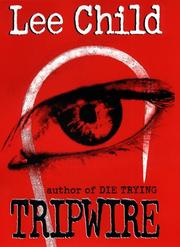
Tripwire
In Key West, Jack Reacher follows a murdered detective's trail to New York, an old mentor's files, and a loan shark stealing a dead soldier's name.
2,688-word summary · 12 min read
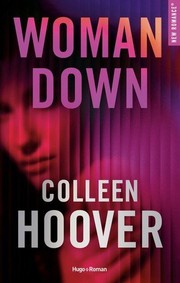
Woman Down
A blocked author hides out at a lakeside cabin and falls for a detective who may be muse, lover, or trap in Hoover's twisty 2026 thriller.
2,445-word summary · 11 min read
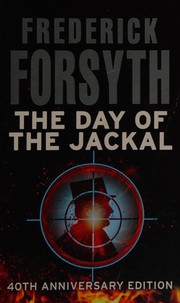
The Day of the Jackal
An English assassin takes an OAS contract to kill de Gaulle while a quiet French detective races to stop him in 1963 Paris.
2,969-word summary · 13 min read
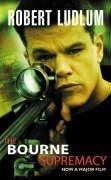
The Bourne Supremacy
David Webb is pulled back into Jason Bourne when an impostor kills in his name in Hong Kong and Marie is kidnapped. Ludlum's dense 1986 sequel stretches…
3,266-word summary · 15 min read
The Guardian
Widowed at twenty-five, Julie Barenson leans on a Great Dane named Singer, then dates two men and learns one of them is a killer.
2,221-word summary · 10 min read

Killing Floor
Ex-military policeman Jack Reacher is arrested for murder in Margrave, Georgia, then learns the victim was his brother.
2,872-word summary · 13 min read
Butcher & Blackbird
Two rival killers who only murder other killers meet once a year for a deadly contest, then slowly fall for each other in this dark romantic comedy.
2,335-word summary · 10 min read
The Bourne Identity
An amnesiac pulled from the sea hunts his identity as Jason Bourne while assassins and the CIA close in.
2,994-word summary · 13 min read
Verity
Colleen Hoover's Verity explained: Lowen, injured Verity Crawford, the hidden autobiography, and the letter that flips everything.
2,593-word summary · 12 min read

What She Knew
Rachel lets her eight-year-old son run ahead in a Bristol park, and the nine-day search turns her into a suspect in the public eye.
2,952-word summary · 13 min read

The Beach House
A young valet is beaten to death at a Hamptons party, and his law-student brother spends a year building a case against the family that covered it up.
2,049-word summary · 9 min read

Six Years
A professor who promised to forget the woman he loved sees her husband's obituary and discovers that the wedding, the marriage, and the woman herself may never…
2,076-word summary · 9 min read

Rules of Prey
Minneapolis detective Lucas Davenport hunts a killer who leaves a new rule at every scene and treats murder as a game of wits.
1,914-word summary · 9 min read

Magic Burns
A magic flare hits Atlanta, and mercenary Kate Daniels must recover stolen maps, find a missing witch, and keep a teenage girl alive while Celtic gods try to…
2,021-word summary · 9 min read

Cross My Heart and Hope to Spy
Cammie Morgan returns to Gallagher Academy for a second year of spy training, only to fall for a boy from a rival spy school and hunt a mole in her own school.
2,567-word summary · 11 min read