
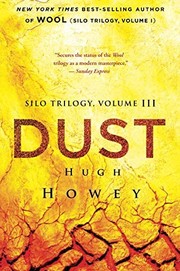
Dust
2,273-word summary 10 min read 468 pages in the book
- First published
- 2013
- Publisher
- Mariner Books
- Pages
- 468
- ISBN
- 9780544838260
- Series
- Silo (#3)
Reading options
What's inside (9 sections)
I picked up Dust because Shift had left me thinking about Donald in that cold control silo and Juliette walking into a dead place with kids in it. Dust by Hugh Howey, published in 2013 by Mariner Books, is the 468 page third book in the Silo series with ISBN 9780544838260. It closes the story that started with Wool Omnibus and widened in Shift. I read it in three sittings at the kitchen table.
The short version is this. Juliette is now mayor of Silo 18 and she wants to break through to Silo 17 where Solo and a handful of children are barely hanging on. Donald is awake in Silo 1 and learning that the men who built the silos plan to keep only one of them. Lukas is in IT trying to read the servers. Solo is trying to keep pumps running in a ruin. All of that meets in a choice about whether to stay buried or walk out and risk the air.
If you have not read the first two, stop and read Wool first. Dust assumes you know Juliette, Lukas, Solo, Donald, Thurman, and why going outside to clean has always meant death.
Mayor of a tired silo
Juliette never asked to lead anyone. She was Mechanical, happiest with a wrench and a pump she could hear. At the start of Dust she is mayor of Silo 18 because she survived the outside and came back, and people read that as proof she knows something. She does not feel that way. She feels tired and a little guilty.
Silo 18 is tired too. The uprising from Wool left marks. Some levels trust her. Some think she will get them killed. The farmers worry about food. Mechanical worries about parts. IT worries about order. Father Wendel worries about what digging means for the soul of the place, and Lukas worries in his quiet way about what the servers are really saying.
What I liked here is how ordinary the politics feel. Juliette holds a town hall and it goes badly in the way real meetings go badly. People interrupt. A question about rations turns into a question about whether she is lying about the outside. She tries to be plain with them. That honesty helps with some and scares others.
There is a small beat early on that stayed with me. Juliette is on the stairs, legs aching, and she realizes she has not fixed anything with her hands in days. She misses the deep levels where a fault had a shape you could hold. Leading, for her, is mostly listening and then choosing between poor options. Howey writes that weariness well, and it makes her easier to trust than a polished hero would be.
The machine behind the wall
The big push in Silo 18 is the dig. Juliette believes Silo 17 is not fully dead. She met Solo there at the end of Wool, or rather Solo found her, and she knows children survived there too. Her plan is blunt: cut through the wall at the base of Silo 18 and reach 17, bring help, bring people together before both places fail on their own.
Behind the concrete her crew finds something strange. A tunnel boring machine, huge, old, parked as if someone left it mid job decades ago. Raph, a young miner who sticks close to Juliette, helps get it working. They borrow power from the generator, which makes Mechanical nervous because the generator is the heart of everything. If it coughs, lights go, farms go, air goes. Juliette feels that pressure every time she orders more fuel to the cutter.
The digging scenes are some of the strongest in the book for me. It is loud, slow, dusty work. Progress is measured in feet. People bring food down and stand around watching the cutter turn.
I will admit I lost track of exactly how many days the dig takes. Howey stretches time here. That looseness bothered me a little, but it also felt true to how big projects blur.
What matters is what the machine means. It was not built to join two silos. It points farther. Juliette files that away. At the time she just wants a hole wide enough for people and supplies.
Going back outside
While the dig runs, Juliette decides to test the outside again. This is the part I found hardest to put down. She has already survived cleaning once because the tape on her suit held in a way the others did not. Now she wants samples. Air, dirt, airlock swabs. She wants to know if the world is really as dead as the screens show, or if the silos are part of why it looks dead.
She goes out in a patched suit with Lukas talking to her on the radio. She fills small containers and scrapes the ground. When she comes back in, the cleaning process is brutal. Her father, who is medical, helps enforce it.
In the lab she looks at what she brought in and the result unsettles her. The contamination is worst right around the silos and inside the airlock system itself. Farther out, readings shift. She starts to suspect the cleaning ritual, the suits, the air pushed out during exits, all of it helps keep a cloud of tiny machines active near the buildings. The world may be hurt, but the area around the silos is being kept hurt.
I am keeping this vague on purpose because Howey reveals it in pieces, but the idea is simple and chilling. The silos hide from a ruined sky, and their routines feed the ruin.
The men who stay frozen
Chapters in Silo 1 feel colder, and I mean that as praise and complaint. Donald Keene helped draw the silos back in 2007 when he was a congressman working for Senator Paul Thurman. He thought he was building shelters for a bad day. He woke much later with the name Troy, on shifts, watching other silos on screens, taking orders to end rebellions with gas or with cuts to supplies.
By Dust, Donald is sick. His body is breaking down after time outside and too many wakings without proper treatment. His sister Charlotte is with him, hidden. She was a pilot, practical, funny in a dry way, and she keeps him alive with stolen food. I liked Charlotte at once.
Thurman is still in charge in the way a tired king is in charge. He speaks softly. He remembers names. He believes the plan must hold: most silos will be allowed to fail or be shut down, and one will be kept to reseed the earth after enough centuries pass. He talks about saving humanity. What he means is choosing who counts as humanity.
There is also Anna, Thurman’s daughter, who appears mostly in records and in what she left behind in code. She saw the selection plan and tried to jam it. A lot of what keeps Silo 17 and 18 alive traces back to her.
Darcy, a security officer in Silo 1, becomes important later. A dead woman in a pod does not add up. He pulls the thread. I found his sections a little slow at first. Stay with it. His change from rule follower to someone willing to hide fugitives is believable.
My fair criticism: Silo 1 drags in the middle. Donald coughs, hides, reads files. After the noise of the dig it can feel like the air going out. Still, if you love Wool for its pace, know Dust asks for patience here.
When Silo 18 falls
I will not soften this. Silo 18 does not make it, and Howey handles the loss without turning it into spectacle.
Thurman decides Silo 18 knows too much and has grown too restless. The kill method is not bombs. It is gas through systems people trust, and code that locks doors that used to open. Lukas is in IT when it starts. He gets a warning out to Juliette. Get people through to 17. Close the way behind you.
What follows is hurried and sad. About two hundred people push through the new tunnel with what they can carry. Shirly, her friend from Mechanical, stays at the tunnel mouth to seal it with a blast so the gas does not follow. She knows what that means.
Lukas dies in Silo 18. He was the boy who loved the stars, who became the man who stayed at his post so others could leave. Juliette learns it later, over a radio that goes quiet. Elise, one of the kids from 17, loses her small dog Puppy in the chaos too.
If you are keeping score: Walker helps where she can. Martha from Supply stretches food. Father Wendel walks with his people into 17 and feels he has led them to a grave.
Solo and the children
Solo is Jimmy Parker, the boy who lived alone in Silo 17 for decades after it fell. In Dust he is trying, with mixed success, to be something like a father to a group of kids who survived in the ruins. Elise is the one you will remember. Seven, sharp, devoted to Solo and to Puppy.
Silo 17 is in rough shape. Pumps fail. Food stores are thin. Solo knows every stair and pipe, but knowing is not the same as fixing when parts are gone. He guards what works with a fierce pride that can look like selfishness.
Elise wanders. At one point she follows a man named Rash to a chapel area because he promises food. What happens there is ugly. Women are held, an implant is cut out of a leg without care, papers are pushed for marriage. Jimmy finds her with a gun and gets her out. Howey does not linger on gore.
There is also a fire over books. Some newcomers from 18 start burning paper they call lies. Juliette and Raph try to stop it. Clothes catch. A room seals. People die on the other side of a door. Juliette stands in soot and sees how fast fear turns cruel.
Food runs short after the move. Hoarding starts. A pantry Solo kept full looks empty in days once two hundred mouths know about it. Juliette rations, argues, begs. She shows the kids how to check pipes and lets Solo teach, because he needs to be needed. Slowly a rough shared life forms. Not happy. Workable. I found these pages sadder than the escape itself, since no enemy is left to blame, just math and hunger.
Servers, Seed, and a walk
The turn that decides the ending comes from Lukas’s old work and Juliette’s habit of looking at machines until they give up sense.
The servers in the silos are laid out like the silos themselves. Juliette stares at the pattern and sees it. The diggers were not meant to link neighbors. They point outward, toward a place marked as Seed, far beyond the ring of silos. A storehouse left by planners who assumed one group would one day be allowed out.
Juliette calls a meeting in the server room itself. She tells them plainly what happened to 18. Silo 1 killed it from far away. Staying in 17 means waiting for the same hand to close. Or they can fix suits, pack food, and walk.
Some laugh. Some get angry. One woman asks if Juliette wants them to die tired instead of safe. It is a fair question. Juliette answers as a mechanic. She says she cannot promise safety. She can promise they will not be steered anymore.
They vote with their feet over days. Volunteers patch suits. They pack seeds, tools, water. Solo does not want to go at first. Elise talks him round by asking if Puppy would have liked grass.
In Silo 1, Donald decides to break the control room even if it kills him. Charlotte tries to get him to leave with her. Darcy helps, giving up his badge. Thurman shoots Donald before the charge is set. Donald fires anyway, wounded, from the floor. Charlotte feels it through the ground as she climbs toward the sky.
The walk itself is the part I will keep. Juliette leads. Suits fog. For a long stretch there is only dust and breathing. Then readings change. They crest a hill and see a valley with trees and a tower in the distance, stocked with cans and tools. Seed.
Juliette’s father takes his helmet off first. He breathes. He laughs. Then helmets come off all around.
Charlotte reaches them later, thin and burned, after crossing alone. Juliette runs to her with water and a blanket.
That night they make a fire. Elise leans on Juliette and they pick out stars. They name shapes for Lukas and for Puppy. Courtnee asks if they will be okay. Juliette says she thinks they can make anything they want now.
I closed the book and sat a while. Dust does not pretend the past is fixed. Silo 1 is gone, but the dead stay dead. What changes is who decides next. For the first time, no one is watching on a screen. That image of open sky after so many stairs is what I kept.
Should you read it? If Wool pulled you in and Shift gave you the history, yes. Expect a slower middle, a hard loss, and an ending that earns its light. I liked Wool more for its tight focus, but Dust gave me the image I wanted: people who lived their whole lives under concrete learning how to stand in wind.
FAQ
When was Dust published?
First published in 2013 by Mariner Books. The edition cited here runs 468 pages with ISBN 9780544838260.
Is Dust part of a series?
Yes. It is book 3 in the Silo series, after Wool Omnibus and Shift, and it finishes Juliette and Donald's story.
Who are the main characters in Dust?
Juliette Nichols, Lukas Kyle, Solo or Jimmy Parker with Elise, Donald Keene with Charlotte, Thurman, Darcy, Shirly, Walker and Father Wendel.
Similar books
More from Silo first, then related titles.
Wool Omnibus
In a buried silo, a sheriff asks to go outside, and a mechanic learns why no one returns from cleaning.
2,095-word summary · 9 min read
The City of Ember
Two twelve-year-olds trade jobs and chase a chewed-up note to save their fading underground city before its lights fail.
2,998-word summary · 13 min read

Never Fade
Ruby, now a leader in the Children's League, must track down the boy whose memories she erased, because he holds the only proof of what caused the disease that…
2,188-word summary · 10 min read
The Twelve
The middle volume of the Passage trilogy braids the year America died, a picnic massacre decades earlier, and the survivors' war against the twelve master…
2,089-word summary · 9 min read
The Caves of Steel
Detective Elijah Baley must solve a Spacer's murder in a domed New York, partnered with R. Daneel Olivaw, a humaniform robot built in the victim's image.
2,445-word summary · 11 min read
Y: The Last Man, Vol. 1: Unmanned
Yorick Brown and his monkey Ampersand survive a plague that kills every Y-chromosome mammal and cross a collapsed America.
2,525-word summary · 11 min read

Under the Never Sky
Exiled from her Pod, Aria crosses a storm-scarred wilderness with Outsider Perry to find family and the fabled Still Blue.
2,572-word summary · 11 min read


An Absolutely Remarkable Thing
Hank Green's An Absolutely Remarkable Thing follows artist April May after she and Andy film a giant Carl robot in New York that appears in cities worldwide…
2,699-word summary · 12 min read
Pines
A Secret Service agent wakes hurt in Wayward Pines, Idaho, hunting two missing agents, and finds a town that will not let him leave.
2,452-word summary · 11 min read

Ready Player Two
Wade finds the ONI headset and seven new shards, reuniting the High Five against Anorak for the OASIS future.
2,157-word summary · 10 min read
Sphere
A Navy team finds a centuries-old spacecraft on the Pacific floor, and psychologist Norman Johnson faces what its sphere wakes in minds.
2,275-word summary · 10 min read
Morning Star
Broken in a box by the Jackal, Darrow rises with Howlers to open Mars mines to sky.
2,009-word summary · 9 min read

Leviathan Wakes
A destroyed ice hauler, a missing heiress, and an alien growth pull a crew and a tired detective toward war across the solar system.
3,653-word summary · 16 min read
The Death Cure
Thomas refuses WICKED's final test, remembers too much, and runs with the Gladers toward a last cure and a ship north.
2,955-word summary · 13 min read

The Scorch Trials
Thomas and the Gladers cross a burned wasteland to reach haven while WICKED watches.
2,097-word summary · 9 min read

The Host
Stephenie Meyer imagines Earth settled by Souls, where Wanderer wakes inside Melanie Stryder and hears her voice refuse to fade, sparking a desert flight to…
2,288-word summary · 10 min read

Ready Player One
In 2045 Wade Watts hunts Halliday's three keys inside the OASIS, racing IOI with Art3mis, Aech, Daito and Shoto for the Jade Key onward.
1,971-word summary · 9 min read
The Maze Runner
Maze Runner retold: Thomas wakes in Glade, walls move, Grievers sting, Teresa triggers end.
1,907-word summary · 8 min read
Prelude to Foundation
A young Hari Seldon arrives on Trantor with a theory he cannot yet prove, and a hunt through the planet-city forces him to turn psychohistory into a real…
2,013-word summary · 9 min read

Authority
The new director of the Southern Reach takes over an agency that is hiding the truth about Area X, and the building starts to change around him.
2,029-word summary · 9 min read
Year One
A plague released in Scotland kills most of humanity, and the survivors discover magic, build a town, and wait for a child who may save them.
2,029-word summary · 9 min read

Iron Widow
Wu Zetian enlists to avenge her sister, kills her pilot, and becomes an Iron Widow in a mecha Huaxia where the machines are built to kill women.
2,444-word summary · 11 min read

Archenemies
Nova steals for the Anarchists while Adrian hides his Sentinel identity, and a serum that erases prodigy powers puts them both at risk.
2,485-word summary · 11 min read
The First Fifteen Lives of Harry August
Harry August dies and is born again into the same life, again and again, until a warning from a child tells him the world is ending faster with each pass.
2,189-word summary · 10 min read

Carve the Mark
On a planet divided between conquered and conqueror, the tyrant's sister and a kidnapped oracle's son discover that their gifts make them useful to everyone…
2,340-word summary · 10 min read
The House of the Scorpion
A clone raised in a drug lord's poppy fields learns what he was made for and chooses what to do with the life he was given.
2,527-word summary · 11 min read
The Age of Miracles
A California girl grows up while the Earth's rotation slows, and ordinary adolescence continues alongside slow catastrophe.
2,417-word summary · 11 min read
Sleeping Giants
A girl falls into a field and lands in a giant metal hand. Years later a secret team assembles the rest of the machine, and it chooses its own pilots.
2,466-word summary · 11 min read