
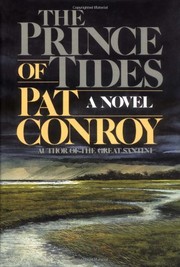
The Prince of Tides
2,022-word summary 9 min read 567 pages in the book
- First published
- 1986
- Publisher
- Houghton Mifflin
- Pages
- 567
- ISBN
- 9780395353004
Reading options
What's inside (7 sections)
I started this book expecting a football novel and got a family excavation instead. The Prince of Tides by Pat Conroy was first published in 1986 by Houghton Mifflin, a 567 page first edition with ISBN 9780395353004. Conroy grew up in South Carolina in a military family, and he writes the lowcountry like someone who left and never fully left. Marsh, shrimp boats, live oaks, and houses that hold heat. I read it across a week, a hundred pages at a time, because the voice is rich and the material is heavy.
Tom Wingo narrates. He is a Southern man in his thirties, out of work as a teacher and coach, married and flailing, funny on purpose to avoid feeling much. His twin sister Savannah, a poet in New York, has tried to kill herself again. Her psychiatrist, Susan Lowenstein, calls Tom and asks him to come up and fill in the family history Savannah cannot or will not tell. Tom agrees because he loves his sister and because running has stopped working.
What follows is part memory, part present tense therapy by proxy. Tom talks to Susan. He remembers Colleton County. He resists, jokes, charms, then tells more than he meant. Slowly the Wingo past surfaces. A violent father. A mother who rewrote reality to survive. An older brother who shone. And one summer night that split all of them.
Tom comes to New York
Tom arrives in Manhattan feeling like a fraud in borrowed clothes. Susan office is calm, ordered, expensive. She is smart, direct, and tired of his act within one session. He tries lines that worked on football parents. She waits. He tells a cleaned up story about shrimping and sunsets. She asks about Savannah poems, which are full of drowned dogs, locked houses, and a tiger. He deflects. She writes something down.
His own life in South Carolina is stalled. His wife Sallie is having an affair with a dentist neighbor. His daughters are embarrassed by his unemployment and his jokes. His mother Lila calls with pep talks that rewrite his childhood into a highlight reel. His father Henry, the Marine pilot turned shrimper, is mostly silent and scary in memory, a man who hit first and asked nothing after.
In New York, Tom walks a lot. He notices doormen, subways, and how nobody says hey. He eats with Susan after sessions, which breaks rules and both of them know it. He meets her husband Herbert, a famous violinist who is vain and insecure, and her son Bernard, a teenager training hard to be cruel in the way only a lonely rich kid can be. Tom, ex coach, cannot help coaching Bernard a little. Teach him to throw a football. Tell him to stand up straight. It is the one place Tom feels useful.
I liked these early chapters for the friction. Tom Southern storytelling against Susan clinical listening. He performs. She prunes. Underneath, both are lonely in marriages that have cooled. Conroy lets attraction build without turning it cheap. Long talks, shared cigarettes in that eighties way, a walk in the rain. You know it is a bad idea and you understand why they do it anyway.
A small complaint. Tom can be too quotable. Every other page has a line ready for a review. After a while I wanted him to stammer. He does, later, when the story gets too close. That shift works because Conroy earned it by letting Tom be glib first.
The Wingo house on Melrose Island
The heart of the book is Tom memory of growing up on Melrose Island near Charleston. Henry Wingo flew fighters, then shrimped, drank, and ruled by fear. He beat his wife and kids, then expected loyalty at the table. Lila Wingo came from money, married down for love or escape, and coped by mythmaking. In her version, the Wingos were princes of the tide, gifted and beloved. Tom learned early to translate. Prince meant bruised. Beloved meant scared.
The kids made a pack. Luke, the oldest, golden and brave, who could run through woods and catch a football in the dark. Savannah, Tom twin, who read early and wrote poems to tell the truth Lila would not. Tom, who joked and followed Luke everywhere. They raised each other between storms. They had dogs, friends, and the river. They also learned to read Henry footsteps and Lila moods.
Conroy writes boyhood beautifully here. Shrimping at dawn with cold hands. Football practice in August heat. A teacher who sees Savannah gift and lends her books. A Black neighbor family, the Newburys, who offer steadier love than the Wingos manage, and who pay for that closeness in a segregated town. These chapters breathe. You can smell pluff mud and rain.
Then the violence sharpens. Henry loses jobs and pride. Lila spends to keep face. Luke starts fighting back, which thrills Tom and terrifies Savannah. Savannah tries to name what happens in poems and gets punished for airing laundry. Tom learns to make himself small or funny. The family talent becomes survival with good lines.
I found Lila the hardest and most human character. She is snobbish, lying, and tireless in protecting her image. She is also a woman with no good options in that time and place, clinging to status because it is the only shield she knows. Conroy does not excuse her. He shows how her stories feed the kids shame. When she later claims she did her best, you both wince and ache, because in her narrow frame she did.
Luke and the tigers
Luke deserves his own section because he carries the book moral weight. As a teen he becomes a local football star, gentle off the field, fierce on it. Coaches love him. Girls love him. He loves the marsh more than glory. After Vietnam, after a knee injury and a stint that leaves him changed, he comes home to find developers and the government carving up Colleton County for a chemical plant and a bridge that will kill the shrimping life.
Luke response is Conroy at his most romantic and political. He studies law at night, petitions by day, and when legal routes fail, he takes direct action. He sabotages construction, frees tied dogs, and becomes a folk outlaw called the Prince of Tides in local papers. Tom idolizes him and fears him. Savannah writes about him as a white tiger, beautiful and doomed. Henry calls him a fool. Lila brags about him at parties while begging him to stop.
The tiger image comes from Savannah poems and from a real escaped tiger Luke once tracked with Tom. Conroy uses it without overexplaining. Luke is rare, caged by history, dangerous when cornered. The night Luke faces armed men on a bridge, with Tom beside him, is the most cinematic stretch in the novel and also the saddest. Courage does not save him. It marks him.
Some readers find the Luke chapters idealized. I felt that too in spots. He is almost too good, too handsome, too pure in motive. But the book needs one clear light to measure the rest by. And Conroy gives Luke flaws. Pride, temper, a refusal to leave when leaving would save him. His love for home becomes a trap. That feels true to many Southern sons I have known.
After Luke death, the family seals over. Lila invents a cleaner story. Henry goes quieter and meaner. Savannah leaves for New York and changes her name in spirit if not law. Tom marries, coaches, jokes, and avoids rivers that remind him. The wound goes underground and poisons sleep, sex, and parenting. Which is why Susan work matters.
What happened that summer
The central trauma arrives late, which is deliberate. Tom has circled it for four hundred pages with jokes and side stories. Susan keeps asking about gaps. Why does Savannah write about locked doors. Why does Tom flinch at certain male voices. Why did the twins stop sleeping through the night at thirteen.
The answer involves three escaped convicts who break into the Wingo house one summer when Henry is away. Conroy stages the home invasion plainly and terribly. The men hold Lila, Tom, Savannah, and Luke at gunpoint, rape Lila and the twins, and force Luke to watch. When the men leave, Lila makes a choice that defines the family. Bury the bodies after Luke and Tom kill two of them in revenge, clean the house, and never speak of it. No police. No doctor. No talk. Protect the family name by entombing the truth.
Tom telling this to Susan is the hardest chapter to read and the best written. He starts clinical, then breaks into present tense, then stops and asks for water. Susan does not comfort with cliches. She stays, takes notes, asks what he heard through the wall. He remembers Savannah breathing. He remembers Luke hands shaking. He remembers his mother washing sheets at 3 a.m. as if laundry could fix it.
Conroy handles the assault without leering. The focus stays on aftermath. Savannah stops eating, writes constantly, tries to die the first time at sixteen. Tom starts fighting at school and laughing too loud. Luke goes cold and protective, sleeping with a gun. Lila polishes the myth harder. Henry, told nothing, senses rot and hits more. Silence, meant to save them, starves them.
I appreciated that Conroy shows class and race in this aftermath too. The Newbury family knows something happened and offers help without demanding details. Their kindness contrasts with white town gossip that blames Savannah wildness for her troubles. The book is dated in some language, an eighties Southern novel, but its point about who gets believed still lands.
If there is a flaw, it is that Susan has Tom recover a bit too neatly once the secret is out. Real disclosure is messier, with backslides. Conroy does give Tom nightmares after telling, and a fight with Sallie that nearly ends the marriage. Still, the arc bends toward healing faster than life often allows. I forgave it because the emotional logic felt right. Naming lets Tom choose differently with Bernard and with his daughters.
New York consequences
Telling changes Tom present. He stops performing for Susan and starts working. He confronts Sallie about her affair without cruelty, admits his own absence, and asks for time to become a better father rather than a funnier one. He coaches Bernard not to be a bully but to be brave enough to lose. He faces Herbert with pity instead of jealousy. He sleeps with Susan once, and Conroy treats it as both human and wrong, a breach that helps Tom see he wants repair, not rescue.
The climax is not a courtroom or a shootout. It is Savannah remembering and choosing to live, Tom calling his mother and refusing her version for the first time, and Tom returning South to walk the marsh without running. Savannah publishes poems that tell the truth slant. Lila, older and smaller, finally says a partial sorry, which Tom accepts as all she can give. Henry dies unreconciled, which feels honest. Some men never learn to say it.
The last pages on the bridge where Luke died got me. Tom speaks to his brother aloud, funny and plain, and promises to raise his daughters with fewer myths. No miracle. Just a man deciding to stay in the room. After 567 pages of tides, that restraint feels earned.
What stays with me is Conroy argument about storytelling itself. Lila stories hide. Savannah poems reveal. Tom jokes deflect. Susan questions uncover. The same past can be a prison or a tool depending on who tells it and to whom. Tom learns to tell it straight, with humor as seasoning not shield. That is the real princehood. Not ruling water, but facing it.
Read it if you like big voiced Southern fiction that is not afraid of feeling. Give yourself time. Skim the football drills if you must, but do not skip the therapy talks. They are the plot. And call your sibling after. I did.
FAQ
When was The Prince of Tides published?
Houghton Mifflin published it in 1986. The first edition runs 567 pages and the ISBN is 9780395353004.
Is it part of a series?
No. It is a standalone novel, though Conroy returns to lowcountry families and coaches in other books.
Does it deal with heavy subjects?
Yes, in the sense that suicide, abuse, rape, and family violence drive the plot. The telling stays serious rather than sensational.
Similar books

Violeta
A woman born in 1920 writes her life story to her grandson, from one pandemic to another, through wealth, ruin, passion, and dictatorship in South America.
2,555-word summary · 11 min read
The Stationery Shop
Two teenagers fall in love in a Tehran stationery shop in 1953, are separated by the coup and a family deception, and meet again sixty years later.
2,024-word summary · 9 min read

Alone With You in the Ether
Two people in Chicago agree to six conversations, and the experiment becomes a love affair that is also a study of bipolar disorder, obsession, and the shape…
2,713-word summary · 12 min read

The Shadow Sister
Star D'Apliese steps out of her sister's shadow and follows a bookshop clue into the Edwardian life of Flora MacNichol, a woman who gave up love for duty.
2,260-word summary · 10 min read

The Lowland
Two brothers grow up beside a marshy lowland in Calcutta, and the choices of the younger one draw the older into a life of duty, distance, and quiet grief that…
2,213-word summary · 10 min read
Stones from the River
Trudi Montag is born a dwarf in a small German river town in 1915 and grows up to keep the town's library and its secrets, from the First World War to the…
2,818-word summary · 13 min read

On Chesil Beach
Two newlyweds spend one terrible night on Chesil Beach in 1962, and the rest of their lives is decided by it.
2,456-word summary · 11 min read

Ivanhoe
A disinherited Saxon knight, a great tournament, a besieged castle and a trial by combat. Scott's most famous novel, set in England in 1194.
2,834-word summary · 13 min read
Euphoria
Three anthropologists in 1930s New Guinea turn fieldwork into a love triangle, and a real history breathes behind them.
2,048-word summary · 9 min read
Eligible
Austen's Bennet sisters move to modern Cincinnati, where marriage is a reality show and the house is losing its value.
2,293-word summary · 10 min read

Big Swiss
A transcriptionist for a sex coach falls for one of his clients, the tall Swiss gynecologist she calls Big Swiss, in a funny novel about work and secrets.
2,523-word summary · 11 min read

A Spool of Blue Thread
Four generations of the Whitshank family in Baltimore, and the silences, resentments and quiet love they hand down without ever saying so.
2,408-word summary · 11 min read
Troubles in Paradise
In the final Paradise novel, Irene Steele rebuilds her life on St. John while the truth about Russ's death and Todd Croft's criminal empire finally surfaces.
2,471-word summary · 11 min read

This Is How You Lose Her
Yunior cycles through love affairs and betrayals in nine linked stories, tracing the damage he does and the family history behind it.
2,195-word summary · 10 min read
We Were the Mulvaneys
After a rape following a school dance, the Mulvaneys, a family that believed it was blessed, comes apart over fifteen years. Narrated by the youngest son.
2,094-word summary · 9 min read

The Little Paris Bookshop
A Paris bookseller who prescribes novels as medicine finally opens a twenty one year old letter from his lost love and sails south through France to find her.
2,050-word summary · 9 min read
By the River Piedra I Sat Down and Wept
Pilar, 29, meets her childhood friend again in Madrid and finds a rumored miracle worker. One winter week through the Pyrenees to the river Piedra, and the…
2,845-word summary · 13 min read
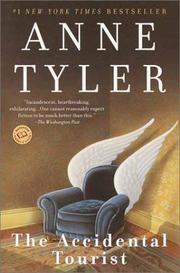
The Accidental Tourist
Grieving Macon writes travel guides for haters of travel, then Muriel intrudes.
2,252-word summary · 10 min read
I Capture the Castle
Cassandra journals six months of love and money trouble in a castle.
2,402-word summary · 11 min read
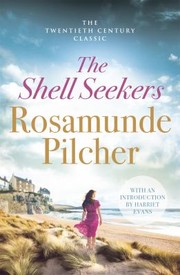
The Shell Seekers
Elderly Penelope Keeling must decide the fate of her father's treasured painting while her three children press her to sell.
2,592-word summary · 12 min read
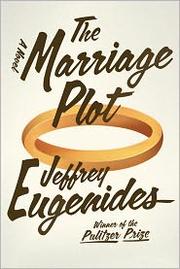
The Marriage Plot
At Brown in 1982, Madeleine loves Austen while torn between brilliant Leonard and steady Mitchell.
2,804-word summary · 12 min read
The Evening and the Morning
Edgar, Ragna, and Aldred build a bridge town that becomes Kingsbridge around 997, facing Viking raids, harsh law, and a scheming bishop in Follett's prequel.
2,833-word summary · 13 min read

The Berry Pickers
A four year old vanishes from a Maine blueberry camp in 1962, and two families carry the loss for decades until Joe and Norma face the truth.
2,606-word summary · 12 min read
Pushing the Limits
Scarred Echo and foster kid Noah take on tutoring, family secrets, and a custody fight in this 2012 debut about trust after harm.
2,831-word summary · 13 min read
The English Patient
In a ruined Italian villa in 1945, a burned man, a nurse, a thief, and a sapper trade pasts shaped by desert love and war.
2,006-word summary · 9 min read

Lady Chatterley's Lover
A baronet's wife, starved in a marriage the war broke, takes the gamekeeper as her lover. Lawrence's banned 1928 novel of class and touch.
2,566-word summary · 11 min read

Daughter of Fortune
Eliza Sommers flees Chile for California gold rush San Francisco, disguised and searching for her lover, finding freedom with Tao Chi'en.
2,009-word summary · 9 min read
Brooklyn
Eilis Lacey leaves Enniscorthy for Brooklyn boarding house work, love with Tony, then a home death forces divided choice.
2,143-word summary · 10 min read
Writers & Lovers
A broke waitress in Boston grieves her mother, finishes a novel, and chooses between two men.
2,473-word summary · 11 min read

Whidbey
Three women orbit one murdered abuser in this tense island whodunnit.
2,221-word summary · 10 min read