
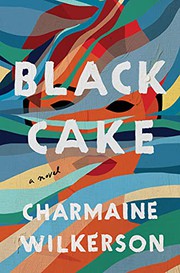
Black Cake
2,063-word summary 9 min read 400 pages in the book
- First published
- 2022
- Publisher
- Ballantine Books
- Pages
- 400
- ISBN
- 9780593358337
Reading options
What's inside (7 sections)
I came to Black Cake sideways, the way you hear about a book three times in a month from three different people and finally take the hint. Charmaine Wilkerson published it in 2022 with Ballantine Books, a 400-page debut that became a bestseller, got picked for a big book club, and turned into a streaming series. That kind of trajectory can make me suspicious. Books that arrive with that much noise sometimes turn out to be engineered for adaptation rather than written to last. This one surprised me. It is warm without being soft, and it has more on its mind than its glossy reputation suggests.
The setup is a classic engine for a family story. Eleanor Bennett dies in California, and her two adult children, Byron and Benny, who have barely spoken in years, meet at a lawyer's office to hear her will. Byron is the elder, accomplished and guarded, a man who built a life on control. Benny is younger, the one who left home early and stayed away, carrying old clashes with their parents that never got resolved. They are not just grieving. They are grieving a mother they realize they did not fully know, in the company of a sibling they no longer know how to talk to.
What Eleanor leaves them is strange and specific: a frozen black cake, the dense rum-soaked Caribbean fruitcake made for weddings and holidays, and hours of voice recordings telling her life story. The instructions are that the cake must be shared when the time is right. Byron and Benny sit down with the tapes expecting a few fond memories. What they get instead is a confession that rearranges everything they thought they knew about their mother, their family, and themselves.
Covey
The recordings begin decades earlier, on a Caribbean island, with a girl named Coventina Lyncook. Everyone calls her Covey. She is the daughter of a shopkeeper father of Chinese descent, raised mostly by him after her mother's early death, and she is a swimming prodigy. In the early 1960s, Covey is the fastest girl in the water anyone around her has ever seen, training for a future that could carry her off the island entirely. Wilkerson writes the swimming scenes with real love. You can feel the cold shock of the water, the counting of strokes, the particular loneliness of a girl whose talent sets her apart from everyone her age.
Covey's life off the pool deck is more complicated. An engagement ties her to a powerful local family, the kind of match that would secure her future but also close it down. Her best friend, Bunny, is the one person who sees her clearly. And then comes the night that breaks everything: a killing at a gathering, with Covey in the wrong place and suspicion falling on her fast. Whether she is guilty matters less, in the moment, than who she is: a young Black girl with no protection against the people who have already decided. With help, she runs that same night. A storm, a boat, a drowning that may or may not have happened. By morning, the island believes Covey Lyncook is dead.
I will not go further into the mechanics of her escape, because Wilkerson parcels out the details the way Eleanor parcels out the tapes, and half the pleasure is the slow reveal. What matters is the shape of it. A girl with a gift and a future loses both in a single night, through no fault of her own, and has to become someone else entirely to stay alive. Everything Eleanor Bennett later is, a careful woman in California with a locked past, starts here, in salt water, in the dark.
Eleanor
The middle of Covey's story takes place in London, where she lives for years under a new name without legal status. These are some of my favorite chapters. Wilkerson knows this world well: the rented rooms, the cash-in-hand jobs, the constant low fear of being noticed by the wrong official, the friendships formed with other people living half-visible lives. Covey, now calling herself Eleanor, learns how to be unremarkable on purpose. She works, she saves, she keeps her head down. She also, slowly, lets a few people in, and those relationships carry the particular intensity of bonds formed by people who cannot afford to be careless with trust.
There is a romance in London, and it does not go the way romances in novels usually go. I appreciated that. Wilkerson is not interested in rescue. What Eleanor gets from these years is not a savior but an education in survival, and what she loses is time: years when she cannot go home, cannot call home, cannot be the person she was. When she finally leaves England for America, it is not a triumph. It reads more like another escape, sideways into a new life rather than upward into a better one.
California brings Bert Bennett, a decent widower who offers steadiness, and two children, and the long project of becoming an ordinary American mother. Eleanor throws herself into it with the same discipline she once gave to swimming. She cooks, she volunteers, she keeps a beautiful house. And she tells no one, not her husband and not her children, who she used to be. Reading these chapters, I kept thinking about how much energy secrecy takes. Eleanor's whole adult life is a performance of normalcy staged over a trapdoor, and Wilkerson shows the cost without ever making Eleanor seem cold. She is protecting her children the only way she knows how: by making sure the past cannot touch them. The tragedy is that the past touches them anyway, because silence has its own weight, and children always feel it.
Byron and Benny, listening
Back in the present, the tapes force Byron and Benny to spend time together, and their storyline is where the book is most alive for me. Two estranged siblings, stuck in a room with their dead mother's voice, cannot avoid each other forever. Old grievances surface fast. Benny left home young after years of friction with their parents over identity and independence, and Byron, who stayed closer and played by the rules, never quite understood the leaving. Each of them thinks the other had it easier. Both of them are wrong in the usual sibling way.
What I liked is that Wilkerson does not make their reconciliation a matter of one big conversation. It happens in increments: a shared meal, a remembered joke, a moment when one of them hears something on a tape and looks up to find the other already crying. Grief does some of the work. Curiosity does the rest. As Eleanor's story gets stranger and more dangerous, the siblings become collaborators almost without noticing, pausing tapes to argue about what their mother could possibly mean, calling the lawyer with questions, following small clues. Detecting their mother's past gives them something to do together besides resent each other, and doing things together turns out to be the point.
The tapes eventually require a trip. I will keep the destination vague, but Byron and Benny end up traveling to the island their mother fled, carrying her ashes and her story back to the place where both began. These late chapters are the most moving in the book. There is a scene involving the water that I will not spoil, and a scene involving the cake that earns its sentiment honestly. Black cake, it turns out, keeps for years if stored right, soaked in rum and wrapped tight. So do some family truths. The question Eleanor poses from beyond the grave is whether her children will unwrap them or keep them sealed. Their answer, when it comes, feels like the right one: share the cake, tell the story, let the dead rest and the living eat.
What the book is really about
Under the family mystery, Black Cake is a novel about names and papers. Who gets to be called what, who gets documents and who does not, how a name change can be a prison break or a prison. Covey becomes Eleanor becomes Mrs. Bennett, and each name is a different survival strategy. Benny, too, has fought over names and identity with parents who could not accept change, and Byron has built his whole self around credentials and titles that turn out to be thinner armor than he thought. Wilkerson keeps returning to the idea that identity is something you carry, not something stamped on you, and that the people who love you should be the last ones to demand your papers.
Food does similar work. The black cake is the obvious symbol, dense and dark and full of things soaked until they transform, but the book is full of cooking: island dishes remembered bite by bite, London meals stretched to feed unexpected guests, California dinner parties where Eleanor performs belonging through recipes she learned from other people's mothers. For a character cut off from her own mother so young, learning to feed people is how Covey mothers herself and then her children. There is one passage about the proper making of the cake, the months of soaking fruit, the wrapping and unwrapping, that reads like a quiet thesis for the whole novel. Some things cannot be rushed. Some things keep.
Migration sits underneath all of it, and this is where Wilkerson's own background in journalism shows. The undocumented years in London are written with specific, unshowy knowledge: which jobs ask no questions, which landlords look away, how a person without status reads every room for exits. Nothing in these chapters feels researched in the bad way, where you can see the index cards. It feels lived, or at least closely witnessed. The book is quietly angry about borders, about who gets to move freely and who has to swim for it, but it never stops being a story to make a speech. The politics stay inside the characters, where they belong.
The ending, and a few honest complaints
The final revelations land well. Without giving them away, I will say that Eleanor's story contains one more buried fact, about someone else who survived that long-ago night, and that Byron and Benny's response to it is generous in a way that feels earned rather than imposed. The book closes not with everything resolved but with the family finally facing the same direction: toward the truth, toward each other, toward the water. I cried a little at the cake scene. I do not mind admitting it.
Now the complaints, because a retelling should be honest and this book is not flawless. The cast is large, swollen by London friends, island neighbors, lawyers, spouses, and colleagues, and some of them blur together. A few late-appearing relatives arrive mainly to deliver information and then exit, and you can feel the plot machinery when they do. Byron's professional life gets a subplot involving his career that never quite catches fire; I suspect it exists to give him somewhere to be wrong and learn from it, but it reads like a thread from a different draft. And the pacing wobbles in the last third, where the tapes, the trip, the revelations, and the sibling repair all compete for pages. Readers who like their mysteries tight may find the ending overstuffed. I found it abundant, but I can see the other view.
There is also the question of neatness. For a book about messy truths, Black Cake ties its threads with unusual tidiness. Every secret surfaces, every wound gets its scene, the cake gets shared on schedule. I did not mind, the emotional logic holds, but readers who prefer their family sagas ragged and unresolved should calibrate accordingly.
None of that stopped me from pressing this book on people. As a debut, it is remarkably assured: big-hearted, well-built, full of food and water and music, sad about the right things and hopeful without cheapness. If you like multigenerational stories about hidden pasts, in the line of books where a parent's death opens a door into a whole secret history, this is one of the better recent ones. Read it before you watch the series, or after; either way, save something sweet for the last fifty pages. You will want it.
FAQ
When was Black Cake published?
Ballantine Books published it on February 1, 2022. The first hardcover runs 400 pages with ISBN 9780593358337.
Who are the main characters?
Byron and Benny Bennett, estranged adult siblings, and their late mother Eleanor, born Coventina Lyncook, a swimming prodigy who fled Jamaica as a girl.
Was Black Cake adapted for television?
Yes. It became a Hulu streaming series in 2023, after being a bestseller and a Read with Jenna book club pick.
Similar books

A Spool of Blue Thread
Four generations of the Whitshank family in Baltimore, and the silences, resentments and quiet love they hand down without ever saying so.
2,408-word summary · 11 min read
Middlesex
Cal Stephanides traces three generations from Greece to Detroit to explain being intersex and becoming himself.
2,013-word summary · 9 min read

Violeta
A woman born in 1920 writes her life story to her grandson, from one pandemic to another, through wealth, ruin, passion, and dictatorship in South America.
2,555-word summary · 11 min read
The Idiot
A Turkish-American freshman at Harvard falls in love through email with a Hungarian math student and spends a summer in Hungary trying to turn correspondence…
2,019-word summary · 9 min read
Only Time Will Tell
A Bristol dockworker's son wins a scholarship, falls in love with the daughter of the family that owns the shipyard, and learns that his father's death was not…
2,082-word summary · 9 min read
Unaccustomed Earth
Lahiri’s second story collection follows Bengali families in America and abroad, tracing the quiet distances between parents and children, spouses, and the…
2,333-word summary · 10 min read
The Lowland
Two brothers grow up beside a marshy lowland in Calcutta, and the choices of the younger one draw the older into a life of duty, distance, and quiet grief that…
2,213-word summary · 10 min read
Her Fearful Symmetry
Twins Julia and Valentina inherit a London flat above Highgate Cemetery from an aunt they never met, then find a ghost in it and a family secret.
2,057-word summary · 9 min read
Stones from the River
Trudi Montag is born a dwarf in a small German river town in 1915 and grows up to keep the town's library and its secrets, from the First World War to the…
2,818-word summary · 13 min read

The Pilot's Wife
Kathryn Lyons's husband dies in a plane crash, and the investigation reveals a secret life that forces her to rethink their marriage.
2,006-word summary · 9 min read
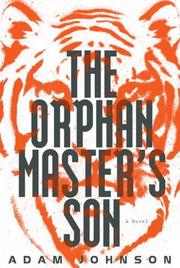
The Orphan Master's Son
Adam Johnson's Pulitzer-winning novel follows Pak Jun Do from a North Korean orphanage to a deadly identity swap, under a state whose loudspeakers never stop…
2,219-word summary · 10 min read
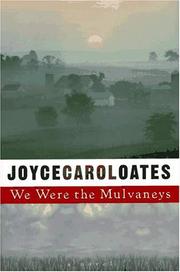
We Were the Mulvaneys
After a rape following a school dance, the Mulvaneys, a family that believed it was blessed, comes apart over fifteen years. Narrated by the youngest son.
2,094-word summary · 9 min read

The Berry Pickers
A four year old vanishes from a Maine blueberry camp in 1962, and two families carry the loss for decades until Joe and Norma face the truth.
2,606-word summary · 12 min read
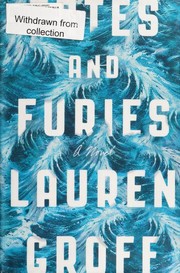
Fates and Furies
Lauren Groff tells one 24 year marriage twice, first through Lotto's bright luck, then through Mathilde's hidden past and quiet control.
2,992-word summary · 13 min read

White Teeth
Archie and Samad's wartime bond tangles their London families across generations, genes, and faith.
2,110-word summary · 9 min read
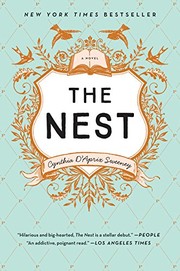
The Nest
Four adult Plumb siblings wait on a shared trust in New York until brother Leo drains it after a drunk driving crash, forcing each to face debt, school bills,…
2,854-word summary · 13 min read
Giovanni's Room
An American in Paris stalls between his fiancee in Spain and an Italian bartender who loves him. Baldwin's brief tragedy still stings.
2,264-word summary · 10 min read
There There
Twelve Native characters converge on a powwow in Oakland in Tommy Orange's 2018 debut about identity, family, and survival.
2,157-word summary · 10 min read

Steppenwolf
Harry Haller, half man and half wolf in his own mind, dances, loves, and enters a magic theatre in Hesse's strange 1927 novel.
3,181-word summary · 14 min read

Invisible Man
A nameless young Black man goes from a Southern college to Harlem, hunting for identity in a country that refuses to see him.
2,871-word summary · 13 min read

Interpreter of Maladies
Nine stories follow Bengali families split between Calcutta and New England, through marriage, grief, and arrival.
2,412-word summary · 11 min read
Commonwealth
An uninvited kiss at a christening breaks two marriages, and six stepsiblings share wild summers until loss and a novel pull them apart.
2,348-word summary · 10 min read
Ask Again, Yes
Two neighboring police families in a New York suburb are shattered when illness turns violent, and the children torn apart find each other again decades later.
2,096-word summary · 9 min read
The Prince of Tides
A South Carolina man tells a psychiatrist about his family past to help his twin sister, and faces what he buried.
2,022-word summary · 9 min read
The Immortalists
Four siblings visit a fortune teller in 1969 who tells each their death date, shaping how they live and love.
2,007-word summary · 9 min read
The Covenant of Water
Three generations of a Kerala family face a drowning affliction from 1900 to 1977, from child bride Big Ammachi to physician Mariamma who seeks its cause.
2,955-word summary · 13 min read
The World According to Garp
Writer Garp navigates fame, marriage, and loss with bears and wrestling.
2,072-word summary · 9 min read
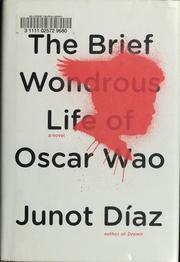
The Brief Wondrous Life of Oscar Wao
Oscar loves sci-fi and wants love, while Yunior traces family curses back through Trujillo terror.
2,056-word summary · 9 min read
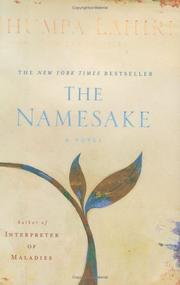
The Namesake
Jhumpa Lahiri follows Gogol Ganguli from a hated namesake to adult loss, marriage, and family reckoning between Calcutta and Boston.
2,878-word summary · 13 min read

The Paper Palace
Elle faces Jonas choice at Cape Cod while assault memory returns.
2,588-word summary · 12 min read