

The Gentleman's Guide to Vice and Virtue
2,724-word summary 12 min read 513 pages in the book
- First published
- 2017
- Publisher
- Katherine Tegen Books
- Pages
- 513
- ISBN
- 9780062382801
- Series
- Montague Siblings (#1)
Reading options
What's inside (8 sections)
A friend pressed this book into my hands two years ago and said, you will want to throw it across the room and then hug it. She was right on both counts.
The Gentleman's Guide to Vice and Virtue by Mackenzi Lee was first published June 27, 2017 by Katherine Tegen Books, 513 pages in the hardcover first edition, ISBN 9780062382801, and it opens the Montague Siblings series as book one. It follows Henry Montague, called Monty, an eighteen year old heir who drinks too much, gambles too often, and sleeps with women or men as he pleases. He is bisexual and fairly open about it in an England where the law says he could hang for it, which tells you most of what you need to know about his sense of self preservation. His father despises him. His best friend Percy is the person he loves most in the world and cannot say so. His fifteen year old sister Felicity is smarter than both boys and furious about it, because nobody will let her use her mind for anything real.
Monty narrates, and his voice is the reason the book works. He is funny in the way people are funny when they are scared, always reaching for the joke before anyone can land a blow. Under the jokes sits a boy who was expelled from school after a relationship with another young man came to light, then beaten by his own father for the shame of it. That beating matters. It explains why Monty flinches around his father, why he performs carelessness like armor, and why he clings so hard to Percy, who has seen him at his worst and stayed.
Percy is the steady center. He is biracial in a white aristocratic world that never lets him forget it, patient where Monty is frantic, and living with epilepsy that he keeps secret because seizures in that century bring fear and disgrace rather than care. When the tour ends he is meant to go to Holland to study law, a plan that feels more like exile than opportunity. Felicity, meanwhile, is supposed to be dropped at a finishing school in Marseille to learn how to pour tea and marry well. She wants to study medicine instead. She reads, she argues, she notices everything the boys miss, and her fury at being locked out of lectures and hospitals gives the book half its spine.
Expulsion, threats, and a year abroad
The setup is simple and cruel. Monty's father, Lord Montague, agrees to the traditional Grand Tour, a year of culture and scenery for young gentlemen, with one condition hanging over it. Come home ready to run the estate and behave like a proper heir, or be cut off without a penny. Monty hears the threat clearly. He has already been told that one more rumor about boys will finish him.
So the party sets out: Monty, Percy, Felicity, and their chaperone Mr. Lockwood, a tutor type hired to keep Monty from drink and disgrace. Lockwood wants museums and improving conversation. Monty wants one last year of pleasure before the trap closes, and he has a private plan inside the public trip. Tell Percy how he feels, or at least spend every possible hour near him before Percy sails to Holland and the door shuts for good.
What I liked here is how fast Lee makes the stakes personal rather than abstract. The Tour is not about seeing Rome. It is about three young people who each know exactly what their society has filed them under. Disappointing heir. Brown boy with no future in England. Clever girl with nowhere to put it. They board the boat to France carrying those labels, and the fun of the early chapters comes with an edge because you know each of them is running out of time.
A small complaint this early: Monty's self pity can loop. He tells you he is worthless, then does something reckless to prove it, then tells you again. The first two rounds earned my sympathy. By the third I wanted to shake him. It pays off later, but the opening third asks for patience.
Paris and the box nobody should have taken
Paris is where the year comes off its hinges. Monty picks a fight with Percy, the kind that starts about nothing and is really about everything, and storms off to prove he does not care. He ends up at Versailles, drinking, showing off, and slipping away with a royal courtesan. The encounter gets interrupted by her lover, a powerful French nobleman, the Duke of Bourbon, with whom Monty already had an ugly run in.
Stung and drunk and wanting the last word, Monty steals a small ornate box from the Duke's desk on his way out. Just a trinket, he thinks. A souvenir of his own daring.
It is not a trinket. Readers who know the term from fan discussions call it the Baseggio Box, and the whole rest of the novel turns on it. Monty cannot read its markings. He shows it around, guesses wrong about what it opens, and treats it like a joke long after the reader understands it is bait. That gap, between what Monty thinks he stole and what it actually is, drives the middle of the book.
I found these Paris chapters the funniest in the novel and also the most painful to reread. The comedy is broad, gambling halls and bad decisions and Monty saying the worst possible thing at Versailles, but Lee keeps cutting to Percy's face while Monty performs. Percy watches the boy he cares about humiliate himself for strangers and says little. Felicity watches both of them and files everything away. You laugh, then you feel guilty for laughing, which seems to be exactly the effect Lee wants.
Robbers, ports, and a trip falling apart
On the road toward Marseille the party gets robbed by highwaymen, and from there the planned Tour collapses into something closer to a chase. Lockwood loses control of the itinerary and then, in effect, of the children. Marseille does not go as arranged. The finishing school will not solve Felicity. Funds run thin. Strange men keep appearing where they should not be.
The route scrambles south and east, through Barcelona toward Venice and beyond, with the Duke's people never far behind. There are stowaways and narrow escapes, a stretch with pirates that I half expected to feel silly and instead read as genuinely frightening, and a lot of sleeping in places no lord's son should have to sleep. Monty's money and title, which opened every door in London and Paris, buy less and less the farther they run. At one point he tries the old trick of spending his way out of trouble and discovers the trick needs a audience that respects English pounds. It was satisfying to watch that education happen to him.
The trio dynamic is the best part of this long middle. Percy, who started the book as the person Monty leans on, begins to pull back, and you understand why. Loving Monty is exhausting when Monty keeps proving he will choose the bottle and the crowd over the one honest conversation they need to have. Felicity moves the other way, from tagalong sister to full partner. She picks locks with her mind, talks her way past suspicious innkeepers, and starts keeping the expedition's accounts in her head because the boys cannot be trusted with sums. There is a brief, sweet connection between Felicity and a young man they meet on the road, handled lightly, which matters mostly because Monty reacts with sudden big brother alarm. For a boy who claims to care about nothing, he cares a great deal about who gets near his sister.
My criticism of this stretch is structural. The chase repeats its own beat. Arrive somewhere hopeful, Monty mishandles something, men with guns or warrants appear, flee by night. Around the fourth cycle I started skimming descriptions of docks. Lee writes action well, but the novel is long and the middle could have lost thirty pages without losing anything important. Younger me would have loved every escape. Current me wanted one more quiet chapter, the three of them talking on a roof somewhere, to balance the running.
The heart, the cure, and the question of fixing people
Slowly the box gives up its secret, and the book turns from travel romp into something stranger. The markings point toward alchemy, toward a hidden heart and a key said to grant long life or even reverse death. Tombs get opened. Old puzzles get solved, mostly by Felicity, whose self taught reading in natural philosophy turns out to be the most useful skill anyone packed. The Duke of Bourbon wants what the box promises, and he is willing to hunt three teenagers across a continent to get it.
This is where Percy's epilepsy stops being background and becomes the moral center. Monty learns enough to believe the Duke's prize might cure seizures, and the thought takes hold of him with terrible force. If he could deliver that, would Percy forgive him everything. Would it prove his love is worth something. Would it make up for every missed chance and cruel joke.
Lee handles this with more care than I expected. Monty never quite says out loud that he wants to fix Percy, but the wish is all over his narration, and the book lets it sit there looking ugly and human. Percy, when he understands what Monty is dreaming, is clear in the way he is clear about everything important. He did not ask to be a project. He wants medicine that helps and people who stay, not a miracle that erases him. Their conversations around this are the strongest pages in the novel for me, because Monty has to hear that love that tries to rebuild the other person is still an attempt at control. He does not absorb the lesson at once. He argues, he sulks, he tries again. That slowness felt true.
Felicity's thread braids in here too. The same world that calls Percy broken calls her unfit for study. She has been told, in so many words, that her brain is decorative. Watching her decode the alchemical clues while grown men with weapons wait on her answer is the book's quiet answer to every schoolmaster who shut a door on her. She is not a sidekick who happens to be clever. She is the expedition's mind, and Lee finally lets the boys admit it.
If the alchemy plot has a weakness, it is vagueness at the edges. I finished the book still fuzzy on some mechanics of the heart and key, what exactly they do and what they cost. Fans argue about this online, and I take that as a sign Lee cared more about what the prize means to each character than about building a watertight magic system. That choice worked for me emotionally and left me slightly unsatisfied logically. Your mileage may vary, especially if you read fantasy for rules.
Where it drags and where it shines
Honest accounting time, because this book is very good and not perfect.
The drag, first. Beyond the repeating chase beats I already mentioned, the Duke of Bourbon never quite becomes a person. He is menace in fine coats, frightening in the moment and thin afterward. Lockwood fades too, which is a shame, because a stricter chaperone with a visible inner life could have sharpened the early chapters. And Monty's narration, for all its charm, leans on a few moves. A joke to deflect, a sudden plunge into shame, a grand gesture to make up for it. Once you see the cycle you cannot unsee it, and two or three scenes play out almost identically.
The voice itself will divide readers. Lee writes the 1700s with modern ease. Monty thinks and talks much more like a clever teenager now than like a lord's son then, and the slang and rhythm make no attempt at period accuracy. I loved it, because the alternative is often stiff pastiche, but if you want your historical fiction to sound dug from an archive, this will annoy you. There is also a lot of coincidence holding the plot together. People overhear the right thing, arrive at the right port, find the one person who can read the clue. Adventure stories run on luck, yet here the luck sometimes shows its strings.
Now the shine, which outweighs all of that for me. The handling of Percy's Blackness in white Europe is direct without becoming a lecture. Strangers stare, hosts assume he is a servant, and Monty, who loves him, keeps failing to notice until Percy makes him look. Those scenes stung in a useful way. The handling of Felicity's exclusion from medicine is just as pointed. And the bisexuality at the center is refreshingly unapologetic. Monty desires women and men, Percy returns his feeling, and neither of them gets punished by the narrative for wanting. The danger comes from the world, not from the story judging them. In a genre that spent years killing queer characters to teach lessons, that mercy matters.
Monty grows without being sanded smooth. He ends the book still impulsive, still funny, still too loud, but finally willing to listen longer than he talks. That is a harder arc to write than simple redemption, and Lee sticks the landing.
An island, a choice, and who will love this
The climax takes the trio to a small island with the Duke closing in, and Lee stages it as tomb tricks, rising water, and bad choices under pressure. I will keep the details light, because the fun is in watching Felicity solve things while Monty finally does what she tells him. The place itself starts coming apart as the prize changes hands, and Monty faces the decision the whole book has been building toward. Grab what the Duke wants, or get his people out alive.
He chooses his people. That sounds simple and it is not, for him. Everything Monty was raised to value says take the prize, buy back his father's favor, secure the estate and the name. He walks away from that math instead. Back in the ordinary world he answers his father in a way that costs him the inheritance he spent eighteen years being shaped for, and the cost lands because Lee does not pretend money does not matter. Monty is scared about what comes next. He chooses Percy anyway, openly, and Percy chooses him back, with clear eyes about how hard loving Monty will be.
Felicity's ending pleased me most. She turns from the finishing school path toward real study, toward the medical reading nobody will credit her for, and the book treats that ambition as equal in weight to the boys' romance. The sequel follows her adventures, and after this book you will want to go straight there.
Who should pick this up. Readers who like historical adventure with a modern pulse, teamwork that actually feels earned, romance that survives bad decisions, and heroines who steal every scene. Readers who need tight magic systems or strict period voice may bounce off. Readers who want a quick beach read should know the length is real. At 513 pages this is a commitment, though the chapters move fast and the last hundred fly.
I closed it thinking about privilege, which is not what I expected from a book with pirates and a stolen box. Monty starts the story believing his charm exempts him from consequences and ends it understanding that Percy and Felicity never had that exemption. He cannot give them his protection anymore, because he has little left to give. What he can give is attention, apology put into practice, and room. For a boy raised to take up every inch of space, learning to make room is a genuine change. That is why, despite the saggy middle and the fuzzy alchemy, I keep recommending it. The adventure is fun. The education of its hero is better.
Facts held: first published June 27, 2017 by Katherine Tegen Books, 513 pages in the hardcover first edition, ISBN 9780062382801, author Mackenzi Lee, Montague Siblings book one. Summary follows that text.
FAQ
When was The Gentleman's Guide to Vice and Virtue published?
It was first published June 27, 2017 by Katherine Tegen Books. The hardcover first edition runs 513 pages with ISBN 9780062382801.
Is it part of a series?
Yes. It is book one of the Montague Siblings series, followed by Felicity's story in The Lady's Guide to Petticoats and Piracy.
Do Monty and Percy end up together?
They admit their feelings during the chase and choose each other at the end, while Felicity turns toward medical study instead of finishing school.
Similar books
More from Montague Siblings first, then related titles.

Last Night at the Telegraph Club
The 2021 National Book Award winner follows Lily Hu, a Chinese American teenager in 1954 San Francisco, as she falls for Kath and learns what it costs to be…
2,336-word summary · 10 min read

Anatomy: A Love Story
In 1817 Edinburgh, a noblewoman who wants to be a surgeon disguises herself to study anatomy and falls for the grave robber who supplies her with bodies.
2,031-word summary · 9 min read

Vow of Thieves
Kazi and Jase return to Tor's Watch to find it occupied, and their marriage is tested by captivity, betrayal, and a war for the town of Hell's Mouth.
2,059-word summary · 9 min read

Archenemies
Nova steals for the Anarchists while Adrian hides his Sentinel identity, and a serum that erases prodigy powers puts them both at risk.
2,485-word summary · 11 min read

The Valley of Horses
Exiled from the Clan, Ayla survives alone in a hidden valley, tames a horse and a cave lion, and nurses a wounded stranger back to life.
2,311-word summary · 10 min read

Carve the Mark
On a planet divided between conquered and conqueror, the tyrant's sister and a kidnapped oracle's son discover that their gifts make them useful to everyone…
2,340-word summary · 10 min read

I Kissed Shara Wheeler
Shara Wheeler kisses her rival Chloe Green at prom and disappears, leaving a scavenger hunt that forces Chloe to rethink everything she knew about her.
2,083-word summary · 9 min read

The Rose & the Dagger
Shahrzad is pulled from her Caliph husband and left in a desert camp of rebels, needing to break his curse and end a war before it ends her.
2,520-word summary · 11 min read

The First to Die at the End
On the night Death-Cast launches, a boy with a bad heart meets a model with everything ahead of him, and one of them gets the call.
2,908-word summary · 13 min read

Origins
Stefan's diary of 1864 and 1888: how he and Damon fell for Katherine, became vampires, and went looking for a killer in London.
2,056-word summary · 9 min read

Ivanhoe
A disinherited Saxon knight, a great tournament, a besieged castle and a trial by combat. Scott's most famous novel, set in England in 1194.
2,834-word summary · 13 min read

We Hunt the Flame
In a fractured Arabia-inspired world, a disguised huntress and a prince-assassin race to find a magic-restoring book and confront an ancient evil.
2,195-word summary · 10 min read

Lore
Lore Perseous, the last of a hunted bloodline, is pulled back into the Agon when a wounded Athena offers her revenge against the god who killed her family.
2,188-word summary · 10 min read
Cemetery Boys
A trans brujo in East Los Angeles summons the ghost of a boy who refuses to move on, and together they uncover a murder hidden beneath Día de los Muertos.
1,997-word summary · 9 min read

Aristotle and Dante Dive into the Waters of the World
Ari and Dante return for senior year in El Paso, navigating first love, AIDS, family grief, and the cost of being openly gay in 1987 Texas.
2,188-word summary · 10 min read

Fable
Abandoned on a lawless island at fourteen, Fable spends four years diving for gems to buy passage off it, straight into the cutthroat trade of the Narrows.
2,320-word summary · 10 min read

Wayward Son
Simon and Baz road trip America after the war to decide what normal means.
2,505-word summary · 11 min read

The Winner's Curse
An aristocratic girl buys a slave who is secretly a prince plotting rebellion.
2,124-word summary · 9 min read

The Iron Queen
Meghan faces the Iron King past while Ash pays a winter price.
2,548-word summary · 11 min read

Loveless
Georgia starts university sure she wants love, then learns she is aro-ace.
2,539-word summary · 11 min read
Grave Mercy
Convent assassin Ismae spares Gavriel and hunts traitors in Brittany.
2,357-word summary · 10 min read
Chain of Gold
Cordelia and James hunt demons in Edwardian London while hearts tangle.
2,364-word summary · 11 min read

A Winter's Promise
Ophelia reads objects and is sent to marry Thorn on a cold ark.
2,502-word summary · 11 min read

Under the Never Sky
Exiled from her Pod, Aria crosses a storm-scarred wilderness with Outsider Perry to find family and the fabled Still Blue.
2,572-word summary · 11 min read
Queen of Air and Darkness
Emma and Julian face the Cohort, Thule, and the parabatai curse in Cassandra Clare's 880-page Dark Artifices finale of love, Faerie bargains, battle, weddings,…
2,653-word summary · 12 min read
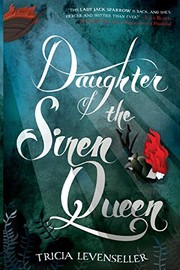
Daughter of the Siren Queen
Alosa hunts the last map pieces toward Isla de Canta while defying her father Kalligan, facing her brother Draxen, and choosing her loyal crew and Riden at…
2,643-word summary · 12 min read
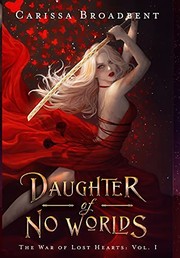
Daughter of No Worlds
A former slave with rare magic hires exiled warrior Max to train her for a daring rescue, sparking slow burn love and wider war in this big 520-page fantasy…
2,529-word summary · 11 min read
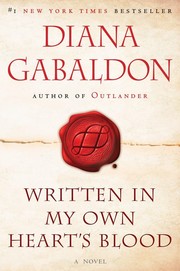
Written in My Own Heart's Blood
1778 war splits Jamies and Claires across rebellion and time as Brianna hunts a kidnapped son.
2,008-word summary · 9 min read

The Iron Daughter
Exiled with Ash after the scepter theft, Meghan hunts the Iron stronghold as iron magic wakes inside her.
2,995-word summary · 13 min read
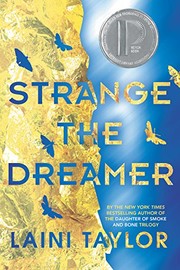
Strange the Dreamer
Orphan librarian Lazlo Strange joins a quest to the lost city of Weep, where blue-skinned godspawn haunt dreams.
2,221-word summary · 10 min read