

The Girls' Guide to Hunting and Fishing
2,166-word summary 10 min read 288 pages in the book
- First published
- 1999
- Publisher
- Viking Press
- Pages
- 288
- ISBN
- 9780670883004
Reading options
What's inside (7 sections)
A friend gave me her copy with the spine already broken and said I would finish it fast and argue with it for a long time. She knew me too well. I read it in three sittings, all past midnight, and then I kept bringing it up at dinner for a week.
The book is seven linked stories about one woman, Jane Rosenal, from age fourteen to her early thirties. Melissa Bank published it in 1999 with Viking Press. My edition runs 288 pages. Each story stands alone, but together they work like a novel told in jumps, with years missing between chapters and Jane a little different every time she comes back into view.
The thread holding the stories together is advice. Jane collects rules for love the way other people collect recipes. Books with titles that promise a husband in thirty days. Tips from friends. Warnings from her mother. Every story tests one set of instructions against real life, and real life wins every round, though Jane takes a while to admit it.
It landed in the late nineties, beside the first big wave of funny dating fiction, and it stood apart because the sentences were so plain and cut so clean. It spent sixteen weeks on the New York Times bestseller list. The Los Angeles Times line that followed Bank around for years was this:
Bank writes like John Cheever, but funnier.
That is close to right, except nobody laughed at Cheever over breakfast the way people laughed at this. These are summaries, so expect the full shape of the book below, endings included.
Fourteen and taking notes
The first story, "Advanced Beginners," finds Jane at fourteen, all elbows and attention. She watches her parents the way a spy watches a border. Her father is loud and sure of himself. Her mother manages him. Her older brother Henry has already learned to leave the room when voices rise. Jane has not learned that yet, so she stays and memorizes everything.
What I kept noticing is how early Jane learns the central habit of the book. The men around her give instructions. Her father explains the world. Boys her age explain girls to her. Jane listens, nods, and then files the lesson next to all the evidence against it. She is polite about it. She is fourteen, so politeness is survival. But the reader can see her keeping score.
There is a crush, of course, handled with total embarrassment and total seriousness at once. Bank remembers exactly how large small rejections felt at that age. A phone that does not ring can ruin a weekend. A casual hello in a hallway can fund a month of hope. She writes those scenes short, which makes them hit harder. A long paragraph would have given Jane a dignity she did not feel.
The comedy starts here too, dry and at Jane's own expense. She wants to seem older. She practices sentences in the mirror and tries on opinions she found in magazines. Nothing works. The gap between the girl she performs and the girl she is will follow her for the rest of the book, and Bank never mocks her for it. That gentleness is a big part of why I kept turning pages.
One more thing this story sets up: Jane's father. He is the kind of man who fills a room and calls it love. He teases and he lectures. At dinner, he holds court. Jane adores him and competes with him at the same time, and that knot will take her twenty years to untie. You could read this story as a sweet family comedy. It reads better the second time, once you know what comes later.
A beach house and a hospital corridor
Years pass between stories, and Bank does not fill the gaps. She trusts you to catch up. Jane resurfaces around college age in "The Floating House," sharing a summer rental with friends. Couples form and dissolve around her. She watches other people's marriages from the next room, the way she watched her parents as a girl, except now she is old enough to be invited into the joke and young enough to misunderstand most of it.
This is a quieter story, mostly atmosphere. Screen doors and borrowed cars. Someone's older sister visits with a baby and opinions. Jane drifts through it half amused and half lonely, auditioning versions of her future. The couples she observes all seem to be following scripts of their own, and none of the scripts look restful. Bank writes very little dialogue here and lets Jane's watching do the work. It is the kind of story that seems slight until you realize it moved three or four pieces into place.
Then "My Old Man" changes the temperature completely. Jane's father is dying, and the story moves between the hospital and Jane's affair with an older man. Bank never gives a speech about the connection. She does not need to. Jane keeps choosing men who arrive with answers, the way her father always arrived with answers, and she keeps discovering that answers are not the same as care.
The hospital scenes are the best writing in the first half of the book. Small details carry them. A chair that hurts to sit in. A nurse Jane tries to befriend because befriending people is what Jane does when she is scared. Her father, smaller now, still performing certainty for an audience of one daughter. I liked this story most on my first read because grief finally forces Jane to stop narrating herself and just be in the room.
The affair ends the way these things end, with Jane embarrassed and a little wiser and mostly sad. Bank lets it be shabby instead of tragic, and that restraint is doing real work. A messier writer would have made the older man a villain or a savior. Here he is just a man who enjoyed being admired, and Jane is just a young woman who confused admiration with safety. She files that lesson too, though she will need to relearn it at least once more.
Manhattan, and the rules get louder
By "The Best Possible Light" and "The Worst Thing a Suburban Girl Could Imagine," Jane is working in Manhattan publishing, which Bank knew from the inside. She spent years as a copywriter while writing this book across more than a decade, and the office scenes have the ease of lived experience. People speak in deadlines. Flirtation happens near the copier.
Jane gets involved with an older editor, a man with a reputation and an apartment that impresses her more than it should. The power gap is obvious to everyone except Jane, which is the point. He opens doors for her career and closes other doors without telling her. Bank writes the seduction as a series of small professional favors, and that is what makes it queasy. Nothing dramatic happens, and that is exactly how it works.
The title of the fifth story is a joke Jane tells on herself. The worst thing a suburban girl could imagine is becoming exactly what the city expects: provincial, eager, easily fooled. Jane spends the whole story trying to prove she is a city person now, which only proves how suburban her fears still are. There is a party scene where she drinks too much and talks too fast that I recognized from my own twenties with uncomfortable clarity. Everyone has performed sophistication for a room that was not watching.
These two stories also show Jane's friendships at their funniest. Her girlfriends trade theories about men with total confidence and a terrible record. One of them has a rule for everything: when to call, what to wear. Bank clearly loves these women even as she shows how their counsel keeps Jane circling the same mistakes. Advice is the book's running gag and its quietest villain. Jane follows it faithfully, and it fails her faithfully, and she asks for more.
Here is where I started to fidget, slightly. The boyfriends in these middle stories share a shape. Older. Verbal. Sure of themselves. Damaged in familiar ways. Taken one by one the stories are strong, but read back to back the men blur, and Jane's bad pattern starts to feel like the book's pattern. Bank knows it, I think, because the later stories answer the charge. Still, a stretch in the middle moves slower than the rest, and I put the book down for a day around page 180 without minding much.
Anyone at all, and then Robert
"You Could Be Anyone" finds Jane near thirty, looking at friends' lives like windows she could have climbed through. One married with kids. One still waiting tables and happier than the married one. The story's question sits in its title. Choice feels wide open and also somehow already made. Jane dates a man who could work out, in theory, and keeps waiting to feel something she does not feel. Bank is gentle with this stretch of life, the part where everyone is tired of auditions but keeps showing up to them.
Then the title story, the longest and the one everything has been walking toward. Jane is in her early thirties and seeing Robert, an older divorced man. He is kind in a plain way that confuses her, because kindness without performance reads to Jane as a lack of interest. She buys a manual called How to Meet and Marry Mr. Right and carries it to the register like contraband. Then she tries to run Robert through its program.
The comedy here is sharper because the stakes are higher. Jane times her calls and rations her attention. She treats spontaneity as a tactic, which ruins it. Robert keeps responding like a normal person, which ruins her system. There is a dinner with his daughter where Jane tries so hard to be liked that she becomes someone nobody could like, and Bank writes it with such sympathy that I had to put the book down and stare at the wall for a minute. Every woman I know has a version of that dinner.
What breaks the pattern is not a grand gesture. Jane gets tired. That sounds small, and Bank means it to sound small. Tired of calculating. Tired of asking friends what three words in a voicemail mean. She starts saying plain things to Robert and letting him answer, and it turns out he was listening all along. The whole book has been about instructions, and the ending is Jane throwing them out. The story closes without a wedding and without a breakup speech. Jane is with a decent man, being a more honest version of herself, and for once she is not narrating the moment while she lives it.
Readers who want the fairy tale version got part of it on screen years later, when two of these stories were reworked into the 2008 film Suburban Girl. The movie takes the publishing affair and the city comedy and sands down the edges. It is pleasant. It is also proof of what the book does that films struggle with, which is to let a woman be wrong for 250 pages and still keep your loyalty.
What I would warn you about
The fair complaints first. The episodic shape means some stories carry more weight than others, and the middle sags where the men repeat. The male characters exist mostly as lessons for Jane, which is a choice with costs. Robert is the exception, and he arrives late. Readers who want fully drawn men will find the book thin on that front, and there is no point pretending otherwise.
The frame also dates the material in ways worth naming. The pressure Jane feels is the nineties marriage clock, loud and specific. Dating manuals and friends who speak of husbands the way recruiters speak of placements. Anyone younger may read those scenes as period pieces. I found them interesting as history, though I can see a younger reader hearing static where I heard my own past. The gender setup can also grate. Jane orbits men for most of the book, and the story treats that as her flaw rather than the world's, which is honest but not always comfortable.
None of that stopped me from pressing the book on a friend, with one instruction. Read it as a book about attention, not romance. Jane's problem was never a shortage of suitors. It was that she watched men the way she once watched her parents, waiting for instructions, instead of watching what actually happened in front of her. When she finally looks straight at her life, the whole book exhales. I finished the last page at one in the morning and sat quiet for a while, which does not happen often.
If you pick it up, give it past the first story. Jane at fourteen is only the doorway.
FAQ
When was The Girls' Guide to Hunting and Fishing published?
Viking Press published it in 1999, and it spent sixteen weeks on the New York Times bestseller list.
Is it a novel or a collection of stories?
It is seven linked stories about Jane Rosenal, from age fourteen to her early thirties, so it reads like a novel told in episodes.
Is this book only for women?
No. Jane's dating life is the frame, but the real subject is family, work, and dropping borrowed rules, which applies well beyond dating.
Similar books

What Happened to Goodbye
Mclean has reinvented herself in four towns since her parents divorced. In Lakeview she uses her real name, and for the first time staying put becomes a choice.
2,796-word summary · 12 min read
Brown Girl Dreaming
Jacqueline Woodson retells her childhood in verse, moving from Ohio to South Carolina to Brooklyn while the civil rights movement reshapes the world around her.
2,727-word summary · 12 min read

Little Town on the Prairie
In the spring after the Long Winter, fifteen-year-old Laura sews shirts, studies for a teaching certificate, and helps send her blind sister Mary to college.
2,071-word summary · 9 min read
Unaccustomed Earth
Lahiri’s second story collection follows Bengali families in America and abroad, tracing the quiet distances between parents and children, spouses, and the…
2,333-word summary · 10 min read

The Age of Miracles
A California girl grows up while the Earth's rotation slows, and ordinary adolescence continues alongside slow catastrophe.
2,417-word summary · 11 min read
Tales from the Café
Four more visitors to a Tokyo café travel through time under strict rules, each hoping to say the thing they could not say before.
2,242-word summary · 10 min read
Peace Like a River
An asthmatic boy in the early 1960s narrates his family's search for his older brother, who is accused of two killings and has escaped custody.
1,969-word summary · 9 min read

The Chosen
A shattered pair of glasses in a 1944 Brooklyn softball game starts a friendship between a Hasidic boy and his Orthodox neighbor, and their fathers pull them…
2,443-word summary · 11 min read

2 States: The Story of My Marriage
A Punjabi boy from Delhi and a Tamil Brahmin girl from Chennai meet at IIM Ahmedabad, and turn a love marriage into a campaign to convince two families.
2,634-word summary · 12 min read
This Is How You Lose Her
Yunior cycles through love affairs and betrayals in nine linked stories, tracing the damage he does and the family history behind it.
2,195-word summary · 10 min read

The Second Summer of the Sisterhood
Four friends share the traveling pants through a summer of grandmothers, first loves, and mothers who are learning to let go.
2,209-word summary · 10 min read
On the Come Up
Bri Jackson, a sixteen-year-old rapper in Garden Heights, chases a record deal while a viral song turns her into a symbol she never wanted to be.
2,034-word summary · 9 min read

Old Yeller
Travis Coates takes in a stray yellow dog that protects his family on the Texas frontier, and learns about loyalty and loss.
2,165-word summary · 10 min read
Hearts in Atlantis
Five linked stories follow Bobby Garfield, Carol Gerber, and their friends from a haunted childhood in 1960 to the long aftermath of Vietnam.
2,402-word summary · 11 min read
Beautiful Stranger
After a betrayal, Sara Dillon moves to New York and starts a no-strings affair with a British stranger, only to find that control and intimacy are harder to…
2,015-word summary · 9 min read

Aristotle and Dante Dive into the Waters of the World
Ari and Dante return for senior year in El Paso, navigating first love, AIDS, family grief, and the cost of being openly gay in 1987 Texas.
2,188-word summary · 10 min read
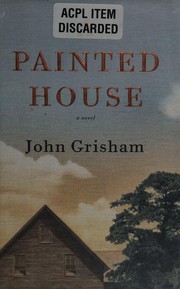
A Painted House
In 1952 Arkansas, seven-year-old Luke Chandler picks cotton with his family and learns how quickly poverty, violence, and adult secrets can end a childhood.
2,060-word summary · 9 min read

The Story of Edgar Sawtelle
A mute boy on a Wisconsin dog-breeding farm relives Hamlet as his uncle returns, his father dies in the barn, and the dogs inherit what is left.
2,392-word summary · 11 min read
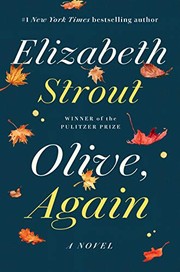
Olive, Again
Elizabeth Strout returns to Crosby, Maine, as Olive Kitteridge marries Jack Kennison, confronts her son, and faces old age, grief, and small-town judgment.
2,333-word summary · 10 min read

Someone Like You
Halley and her best friend Scarlett face a summer of grief, a surprise pregnancy, and Halley's dangerous first romance in Sarah Dessen's 1998 young adult novel.
2,218-word summary · 10 min read
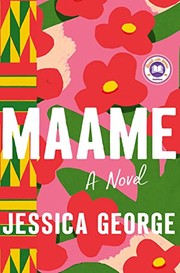
Maame
Maddie Wright, 25, has spent years as the responsible one in her Ghanaian British family, and the year she finally tries to live for herself is the year…
2,108-word summary · 9 min read
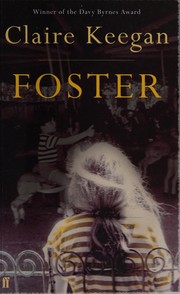
Foster
A girl spends a summer with relatives on a Wexford farm and is cared for properly for the first time. A spare novella about family and what children notice…
2,043-word summary · 9 min read
Cold Sassy Tree
In 1906 Georgia, fourteen-year-old Will Tweedy watches his widowed grandfather marry a much younger woman three weeks after his grandmother's funeral.
2,154-word summary · 10 min read
Clap When You Land
Two half sisters, one in Sosúa and one in Queens, discover each other after their father dies in a plane crash, in Elizabeth Acevedo's novel in verse.
2,890-word summary · 13 min read
Men Without Women
Seven stories about men living after women leave, die, or stay distant.
2,673-word summary · 12 min read
Summer Sisters
Vix and Caitlin share Martha's Vineyard summers from age twelve into adulthood, through first love, grief, marriage, and a disappearance that still haunts Vix.
3,633-word summary · 16 min read
Purple Hibiscus
Kambili, fifteen, watches her devout factory-owner father rule the Enugu house through fear until a Nsukka visit teaches her speech and freedom.
2,595-word summary · 12 min read
Life As We Knew It
Sixteen-year-old Miranda keeps a diary while an asteroid strike on the moon brings tsunamis, blackouts, and a frozen year of hunger to her Pennsylvania town.
2,485-word summary · 11 min read
Almond
Yunjae, born with alexithymia, navigates grief and friendship with troubled Gon after losing mother and grandmother.
2,088-word summary · 9 min read
Tell the Wolves I'm Home
A grieving fourteen year old secretly befriends her late uncle's boyfriend in 1980s New York, testing family loyalty and love.
3,014-word summary · 13 min read