
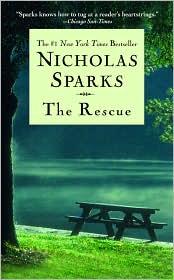
The Rescue
1,939-word summary 9 min read 339 pages in the book
- First published
- 2000
- Publisher
- Warner Books
- Pages
- 339
- ISBN
- 9780446525503
Reading options
What's inside (5 sections)
Storms bring people together in Sparks books and this one starts with the biggest. The Rescue by Nicholas Sparks was first published in 2000 by Warner Books, a 339 page hardcover with ISBN 9780446525503. Taylor McAden volunteers as a fireman in Edenton, North Carolina. Denise Holden crashes her car in a storm with her four year old son. Taylor finds them. I read it in three evenings, crying twice at kitchen table scenes rather than the rescues, which tells you where the book really lives.
Taylor narrates much of it in close third. He is a contractor by day, fire volunteer by calling, and a man who avoids staying. His father died in a fire he could not stop. His mother loves him through worry. He dates women who want more than weekends. He leaves first, kindly and completely, before anyone can need him past repair. The storm night changes the pattern by giving him two people who need exactly what he knows how to give at first, then everything he does not.
Denise is the heart. A young mother from Atlanta who moved to Edenton for quiet after a bad relationship. She works long hours, stretches money, and parents Kyle with fierce patience. Kyle does not speak at four. Doctors disagree about why. Denise reads to him nightly, narrates the world for him, and refuses pity that treats him as broken. When Taylor finds them in the ditch, Kyle silent with shock, Denise begs in the rain. Save him first. That order defines her through the whole book. Child first. Self later. Always.
Storm and found
The rescue chapters open with weather as character, which Sparks writes well without disaster movie gloss. Rain that turns roads to slicks. Wind that drops pines across routes. Radios crackling with calls Taylor answers because he always does. Denise drives home from a late shift, tired, with Kyle asleep in back. Water takes the car. She gets them out and holds Kyle above rising water until headlights come. Taylor wades in, carries Kyle first as asked, then Denise. No speeches in rain. Just hands and blankets.
Aftermath binds them through gratitude that embarrasses both. Denise bakes to thank the station. Taylor fixes her car through his business at cost. Kyle watches Taylor with the focus of a child who does not speak but sees everything. He follows Taylor around the yard, hands him tools, and sleeps better after visits. Denise notices and worries about attachment to a man famous for leaving. She sets rules for herself. Polite thanks. No dates. Rules last until Taylor shows up with groceries during a flu week and stays to mop without being asked. Care without performance is hard to refuse.
Kyle evaluation thread gives the middle its spine beyond romance. Denise seeks answers about his speech. A specialist suggests routines, patience, and possibly a different school setting. Money looms. Insurance covers little. Taylor, who built half the town, builds Kyle a sensory corner with lights and textures for free. He researches quietly at the library after shifts. Those unasked efforts matter more than flowers. Denise, used to doing everything alone, learns to accept help that comes without strings by watching Kyle accept Taylor first. Kids sense safety before mothers permit it.
Taylor father wound surfaces in parallel scenes that explain his leaving without excusing it. As a teen he watched his father, also a fireman, die in a collapse he could not prevent by going back in. The guilt calcified into a rule. Do not stay where loss can find you. He dates women who will not ask for staying. Denise breaks the rule by needing staying in plain daylight. A scene where he almost leaves after a good week, packing his truck at dawn, then unpacks when Kyle leaves a drawing on the seat, had me holding breath. Staying starts with one unpacked bag.
A fair note. Early Taylor charm can read as generic good guy with tools. Flannel. Truck. Dog. Stick through. Once his panic about Kyle fever shows, the type gains texture. He prays awkwardly in a hospital chapel, bargaining like a rookie. That unpracticed prayer reveals more than any backstory monologue. Competent men feel helpless too. They just hide it in work until work fails.
Denise past and the ex
Denise ex, Ray, enters as threat and test that the book handles with care rather than thriller excess. He is Kyle father in biology and absence, charming when he wants something, mean when denied. He appears in Edenton claiming reform and visitation. Denise refuses unsupervised time based on history he calls exaggeration. Taylor wants to scare him off with fireman presence. Denise insists on legal lines, not male posturing. That insistence keeps her agency front and center. She survived him once by leaving. She will not outsource protection now to a boyfriend, however willing.
Custody pressure builds through lawyers and money Denise does not have. Ray files motions. Denise misses work for hearings. Kyle regresses with shouting nearby. Taylor offers to pay and she refuses, which causes their first real fight. He hears rejection of help. She hears control wearing kindness. They talk it through on her porch after Kyle sleeps, the book best dialogue scene. She explains that accepting money for lawyers would let Ray claim she was bought. He listens without fixing, then offers childcare during hearings instead of cash. Specific help, no strings. She accepts. That negotiation models healthy support better than any rescue. Ask what helps. Believe the answer.
Kyle speech progress threads through with patience that avoids miracle cures. He signs first. Then one word. Then a sentence under stress that shocks everyone into stillness. Sparks does not present talking as fix for all. Kyle remains himself, quiet and observant, with or without words. Taylor learns to wait through silences without filling them. Denise learns to celebrate small sounds without performing progress for therapists. A scene where Kyle says Taylor name to warn about a hot pan, first practical use, matters more than any milestone chart. Language serves love here, not scores.
Work details ground both leads beyond romance beats. Taylor bids jobs, manages crews, and eats costs when storms delay. Denise waitresses extra shifts with feet that ache, counting tips for evaluations. Money stress is constant without dominating. Rent. Gas. Lawyer retainers. Those pressures explain why Denise hesitates to trust a man with a dangerous volunteer habit. Another mouth to worry about when budgets already bleed. Love must fit around shifts, not just storms. The book respects that math.
If there is a sag, it is the middle lawsuit stretch where filings and continuances repeat. Necessary for stakes, but two hearings blur. I skimmed one procedural and missed nothing. The payoff, when Ray overplays in open court and a judge sees through charm, needs the buildup of paper. Still, tighter by twenty pages would have helped momentum between kitchen scenes that carry the real story.
Choosing to stay
The last act tests whether rescue can become residence, which is the book whole question in one line. Taylor gets hurt on a call that goes wrong in ways his father death echoes. Trapped. Smoke. Choice between self and a kid inside. He goes in because that is who he is, and comes out because luck and training hold this time. Denise waits at the hospital furious and grateful both. She tells him she cannot love a man who courts death weekly. He hears an ultimatum where she meant a plea. They separate for weeks that feel honest rather than staged. Space to decide, not to punish.
Denise uses the space to stabilize on her own terms. She takes a better shift. She sets visitation boundaries Ray must follow or lose. She lets Kyle set pace with Taylor through letters rather than visits. Those letters, dictated to Denise with drawings, are the tenderest pages. Kyle draws Taylor truck with all three inside. No words needed. Taylor answers with postcards of fixed things. A porch. A fence. Small repairs as love language while big questions wait.
Taylor uses the space to change patterns, not just promise. He talks to his mother about his father without deflecting. He tells his crew chief he needs fewer night calls for a while. He shows up to Kyle school meeting as support, not savior, sitting in back while Denise speaks. That restraint convinces more than any grand gesture. Presence without taking over. When he finally says he wants to stay, in Denise kitchen with Kyle asleep nearby, it lands because behavior preceded words for chapters. Staying shown first. Said after.
The ending is not a wedding. It is a repaired porch, a custody order with teeth, and a date that starts on time. Kyle speaks more, not perfectly. Denise accepts help without surrendering judgment. Taylor keeps volunteering with limits that honor both callings. Family forms around a table with homework and bills, not just storms. That ordinariness feels earned after 339 pages of weather. Rescue got them together. Routine keeps them.
What stays with me is Sparks argument about heroism. Rushing into water matters once. Showing up for speech therapy matters weekly. Taylor learns the second rescue is harder and better. Denise teaches it by example long before he admits need. Readers who come for storms stay for kitchens. Both deliver. Keep tissues for the drawing on the truck seat. That image, a silent boy asking a leaving man to stay without words, holds the whole book. Stay. Just stay. He does. The storm itself deserves a last technical note that shows Sparks research without showing off. Rain rates that flood Edenton streets in sheets. Wind that drops pines across routes Taylor knows by heart. Radios that fail in hollows volunteers memorized. Taylor navigates by landmarks when lights die, counting driveways from the bridge. That local knowledge, learned on calls over years, matters more than horsepower. Denise later learns the same roads as a mother who must drive them in worse weather with a silent child. Place learned through emergency becomes home through repetition. Storms teach streets faster than maps. Both learn. Both stay.
Taylor mother and crew add found family texture that keeps the book from narrowing to couple only. His mother cooks for the station, remembers every volunteer birthday, and tells Taylor plainly when he is running. Son, you fix everyone roofs but your own. That line lands because she says it while handing him a casserole for Denise, love with instructions. His crew teases him about the contractor who finally met a job he cannot bid. They cover his shifts when custody hearings run long without keeping score. Those unlogged favors model the community the book praises. People who show up with tools and stay past dark. Denise learns their names and thanks them by name, which matters more in small towns than flowers. Remembered names are love made practical.
Kyle school world deserves a last look as the book quietest triumph. A new teacher who learns his signs before demanding speech. Classmates who stop staring after a frank talk Denise gives with Kyle permission. Show and tell where Kyle shows a fire truck drawing and the class claps for colors, not words. Those ordinary inclusions accumulate into belonging that therapy alone cannot buy. Sparks, often accused of melodrama, gets this exactly right by keeping it small. No assembly speech. Just a teacher moving Kyle seat closer and a boy sharing crayons without being asked. Inclusion as furniture arrangement plus patience. That is how schools save kids daily, and the book honors it without fanfare.
FAQ
When was The Rescue published?
Warner Books published it in 2000. It runs 339 pages and the hardcover ISBN is 9780446525503.
Is it part of a series?
No. It stands alone among Sparks romances, though it shares his North Carolina setting.
Similar books

The Wedding
Wilson Lewis courts his own wife again with Noah's help as daughter Anna plans her wedding.
2,076-word summary · 9 min read

Dear John
A soldier and a student trade letters through war until duty and waiting pull them apart.
2,138-word summary · 10 min read

Without Merit
Merit Voss feels invisible in a crowded converted church home until Sagan, Luck, and a painful night force the truth out.
3,300-word summary · 15 min read

It Ends with Us
It Ends with Us from Lily's flower shop to her marriage: alternating past and present, Ryle's cycles of violence, and why the ending refuses a clean romantic…
2,381-word summary · 11 min read

The Longest Ride
A stranded widower relives his marriage while a Wake Forest student and a bull rider test new love in North Carolina.
2,488-word summary · 11 min read

The Last Song
Angry teen Ronnie spends a summer in Wilmington with her pianist father, finding first love, family repair, and loss.
2,761-word summary · 12 min read

What Happened to Goodbye
Mclean has reinvented herself in four towns since her parents divorced. In Lakeview she uses her real name, and for the first time staying put becomes a choice.
2,796-word summary · 12 min read

Sam's Letters to Jennifer
A grieving journalist reads her grandmother's letters and finds a decades-long love affair that changes how she sees her family.
2,310-word summary · 10 min read
Between Sisters
Estranged sisters Meghann and Claire reunite in Washington when Claire announces a rushed wedding, then face their mother's desertion and a medical crisis.
2,467-word summary · 11 min read
How to Walk Away
Margaret Jacobsen has the job, the fiance, and the future mapped out, until a small-plane crash on Valentine's Day takes almost all of it in one afternoon.
2,012-word summary · 9 min read

Dial A for Aunties
A wedding photographer accidentally kills her blind date, and her mother and three aunties help her hide the body during the biggest wedding of their careers.
2,076-word summary · 9 min read

True Colors
Three Grey sisters split over love and duty after their father judges them.
2,596-word summary · 12 min read

The Identicals
Twin sisters swap Nantucket and Martha Vineyard lives for a summer.
2,556-word summary · 11 min read

Collided
Sophie bets she can resist playboy Liam, then pit walls fall.
2,219-word summary · 10 min read

Heart of the Matter
Two Boston mothers collide after a burn injury puts a single mom in the orbit of another woman's surgeon husband.
2,585-word summary · 11 min read

Captivated by You
Eva and Gideon hide a secret Caribbean marriage while planning a Monterey wedding as Gideon arrest, press threats, and Corinne strain test them in Crossfire…
3,016-word summary · 13 min read

The Statistical Probability of Love at First Sight
Hadley misses a flight, meets Oliver to London, and faces her father wedding in one day.
2,002-word summary · 9 min read

The Switch
A burned-out consultant and her 79-year-old grandmother swap London and Yorkshire homes for two months, facing grief, dating apps, and village politics.
2,782-word summary · 12 min read

After Ever Happy
Tessa and Hardin face family truths and tragedy before wedding.
2,373-word summary · 11 min read

A Spark of Light
A gunman takes a Mississippi abortion clinic hostage as a negotiator finds his own daughter inside.
2,486-word summary · 11 min read

The Silver Linings Playbook
A man leaves a mental facility sure his wife waits, then dance practice and hard truths reshape him.
2,981-word summary · 13 min read

Paper Princess
Ella trades survival jobs for a mansion with five Royals, where desire and secrets collide.
2,075-word summary · 9 min read

Lola and the Boy Next Door
Costume maker Lola must choose between older Max and inventor Cricket while her two dads hold home steady.
2,045-word summary · 9 min read
Forever, Interrupted
Elsie elopes in May, loses Ben nine days later, and learns grief beside the mother in law she never met.
2,051-word summary · 9 min read

Addicted to You
Lily hides sex addiction and Lo hides drinking while faking love to fool their rich families.
2,064-word summary · 9 min read

The One Plus One
Broke cleaner Jess Thomas gets a lift from wealthy Ed Nicholls to take math gifted daughter Tanzie to her Olympiad, and a cramped road trip slowly turns to…
3,020-word summary · 13 min read

The Girl You Left Behind
Two women a century apart fight for what they love, joined by a portrait painted in wartime France and claimed in modern London.
2,613-word summary · 12 min read

Life's Too Short
A travel YouTuber facing possible ALS takes in baby Grace and falls for Adrian, the lawyer next door.
2,913-word summary · 13 min read

Grey
Fifty Shades retold by Christian Grey: his nightmares, his need for control, the contract, and the breakup that breaks him.
2,980-word summary · 13 min read

Get a Life, Chloe Brown
A chronically ill woman recruits her gruff handyman neighbor to help her finish a bold Get a Life list.
2,147-word summary · 10 min read