
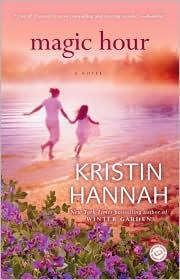
Magic Hour
1,970-word summary 9 min read 416 pages in the book
- First published
- 2006
- Publisher
- Ballantine Books
- Pages
- 416
- ISBN
- 9780345522184
Reading options
What's inside (4 sections)
I had only read The Nightingale and The Great Alone, so Magic Hour, first published in 2006, Ballantine paperback edition running 416 pages, ISBN 9780345522184, felt like meeting Hannah before she became a historical blockbuster machine. It is contemporary, set in the Olympic Peninsula rainforest, about a feral child who walks out of the woods and two sisters, a psychiatrist and a police chief, who must figure out who she is. It is sentimental in places, procedural in others, and it understands sisterhood and small town policing better than most thrillers.
Julia Cates is a famous child psychiatrist in Los Angeles who loses everything after a scandal. A patient she cleared harms someone and the media blames her. She retreats to Rain Valley, Washington, where her sister Ellie is police chief, to hide and to heal. Ellie, divorced, tough, funny about dating in a town with few options, loves Julia but resents being the responsible one who stayed. Their mother died young. Their father, a doctor, was distant. The sisters have not lived near in years. Forced proximity reopens old roles. Julia analyzes. Ellie acts.
The girl in the woods
The inciting incident is pure hook. A six year old girl emerges from the forest with matted hair, broken teeth, no speech, carrying a dead wolf pup as if it were a doll. She growls, bites, hides under tables. Ellie must house her while the state decides. Julia, despite disgrace, is the only expert available. She names her Alice, after Alice in Wonderland, and starts slow work. Sit nearby without touching. Offer food without eye contact. Hum a song and see if Alice hums back. Those early sessions, told from Julia's close point of view, are the best writing. Patient, specific, humble about how little psychiatry knows when language never formed.
Hannah researched feral children and it shows without lectures. Critical periods for language, the difference between neglect and wolf myths, why Alice walks on all fours sometimes and upright others, how she tracks by smell. Julia keeps notes that read like fieldwork. Slept three hours. Ate with hands. Made eye contact for two seconds when dog barked. Those small gains feel huge because Hannah makes you wait for them. A scene where Alice touches Julia's hair voluntarily had me tearing up. No dialogue, just a hand reaching. That restraint is stronger than any speech about healing.
Ellie's police work runs parallel. Who is Alice. Missing persons reports, dental records, a cabin in the woods with signs of long habitation, a man who may have kept her. Cree? Actually the suspect is a loner with his own trauma. Ellie must investigate while protecting Alice from curiosity seekers and from a system that wants quick foster placement. Her chapters are procedural in a good way. Knock on doors. Check охот? Actually check hunting cabins. Deal with a deputy who means well but talks too much. The town, loggers, nurses, teachers, all have opinions about the wild girl. Ellie filters noise while managing her own crush on the local doctor? Actually on a newcomer? She dates awkwardly between shifts, which humanizes her beyond badge.
The sisters' dynamic carries the middle. Julia wants to take Alice to Los Angeles for specialists. Ellie wants to keep her in Rain Valley with stability. Both positions make sense and both are partly about their own needs. Julia needs a success to redeem her career. Ellie needs to prove her town can care. They fight about beds, schools, interviews, then make up over wine and childhood stories. A late night kitchen talk where they admit their mother favored differently lands because it is not resolved. They just name it and keep working. That feels like real sisters, not TV sisters.
For pacing, the first 150 pages fly. Girl appears, sisters reunite, town reacts. The middle assessment chapters repeat. Another test Alice fails, another meeting where officials debate, another night Julia dreams about her scandal. Two case conferences in a row blurred for me. I skimmed one because the point, systems want labels fast, was clear. Then a breakthrough where Alice says a word, not mama, but a forest sound name, snaps it back. Language as music rather than labels. Hannah handles it beautifully without making it miracle. One word after months is realistic and moving.
Who kept her and why
The mystery of Alice's origin unfolds slowly and I will keep specifics light. She was kept by someone who loved her in a broken way, not by wolves. The man in the cabin has his own history of loss and mental illness. He did not set out to raise a wild child. He failed to let her go to the world. When Ellie finds evidence, she must arrest someone the town pities while protecting Alice from learning too much too fast. That tension, justice versus healing, drives the last third better than any twist.
Without spoiling the reveal, the responsible adult is not a monster in a mask. He is a lonely man who found a baby and did his damaged best in isolation. The book asks whether love without community counts as care. Julia argues no, a child needs language, peers, doctors. Ellie argues context matters for sentencing even as she enforces law. Both are right, which makes the court and custody scenes sad rather than triumphant. Alice, caught between, chooses in small ways that adults must honor. She runs to Julia when scared. She hides behind Ellie when strangers come. Those choices tell the court more than tests.
The scandal from Julia's past returns through reporters and ethics boards. A journalist tracks her to Rain Valley. Old headlines resurface. Julia must decide whether to speak publicly about failure or to work quietly and let results talk. Her growth from defensive expert to humble learner mirrors Alice's growth from silence to speech. Both learn to ask for help. A scene where Julia tells Ellie she was wrong about a diagnosis and needs her sister's practical read made me like Julia more than any success. Admitting limits is the real magic hour, the title's dawn and dusk light when things show clearly.
For romance, there is some, but it stays secondary. Ellie and a local man circle each other with humor about small town dating pools. Julia and a single dad? Actually with a doctor? The relationships give relief without taking over. A date interrupted by Alice needing comfort shows priorities without speeches. If you want steamy, look elsewhere. This is hand holding and showing up, which fits the book's ethic. Care as daily practice.
For criticism, Hannah sentimentalizes in spots. Sunsets beam during breakthroughs. Dogs stare knowingly. A town meeting ends with applause that feels staged. Two speeches about what children need go long. I skimmed one because I agreed but did not need persuading. Also, the villain for Julia's past scandal is thin, a producer like figure who exploits tragedy for ratings. He appears to threaten and vanishes. And Alice's age, six, sometimes reads younger or older depending on scene needs. Language progress is realistic overall but one leap, from sounds to sentences, comes fast for plot.
Still, at 416 pages in this edition it reads fast for its length. Short chapters alternating Julia and Ellie, cliffhangers about test results. I finished in three evenings and called my sister after. That is what Hannah does well. She makes you want to repair. The final custody decision, plus Julia's choice about where to practice, felt earned because both sisters compromise. No one gets everything. Alice gets stability with room to grow wild in safe ways. That balance, structure plus forest walks, is the book's answer. Healing needs both walls and woods.
For who this is for. If you liked The Great Alone for wilderness and sisters, try this earlier contemporary. If you want thriller twists, there are some but this is character first. If feral child stories unsettle you, know Alice's past is handled without lingering abuse scenes, focusing on present care. I closed it thinking about the title hour, dawn and dusk in rainforest when light goes gold and everything shows. Julia learns to work in that light, seeing Alice clearly without needing her to be normal. That seeing is love as practice, which stays longer than any diagnosis.
The rainforest as therapist deserves a paragraph because Hannah uses place as treatment without mysticism. Alice heals faster outdoors where sounds make sense. Wind in cedars, rain on leaves, a dog breathing nearby. Indoors, with buzzing lights and ringing phones, she shuts down. Julia learns to hold sessions on trails, letting Alice set pace and distance. Ellie learns to interview witnesses while walking rather than in rooms. Those choices are practical, not poetic. Fresh air lowers heart rates. Movement helps nonverbal kids regulate. Hannah, who lives in the Northwest, writes trails with specific plants, sword ferns, nurse logs, banana slugs that make Alice laugh for the first time. That laugh, at a slug, does more than any test score. It shows curiosity returning, which is the precondition for language. I started walking after hard chapters myself, which tells you the setting works on readers too.
Julia's disgrace in Los Angeles needs fuller reckoning because Hannah risks making her too sympathetic too fast. Julia cleared a troubled teen who later harmed someone, missing signs she should have caught while chasing TV appearances and book sales. The ethics board hearing excerpts show ambition crowding judgment. She took a complex case for exposure, testified confidently beyond data, enjoyed being called expert. When it broke, she fled rather than facing families. Rain Valley forces her to sit with that without cameras. She replays testimony while washing dishes. She avoids calls from her agent about comeback interviews. A scene where she tells Ellie the full truth, including the fee she took, without excuses, is the first time I trusted her. She does not cry for sympathy. She states facts and accepts Ellie's anger. That accountability, slow and untelevised, earns her second chance with Alice more than any credential. Healing others cannot start with self protection.
Ellie's policing of a small town where everyone knows her order at the diner also shows constraints city procedurals skip. She cannot be anonymous. Victims know where she lives. Suspects coached her kid brother in Little League. When she arrests the cabin man, she must drive past his mother's house daily after. Those entanglements make every decision personal in ways big city detectives avoid. Hannah shows Ellie using that closeness well. She gets a confession by bringing soup rather than threats. She gets a neighbor to talk by remembering his dog's name. Those soft skills are police work too, though male deputies joke about social work. Ellie lets them joke and keeps solving. By the end, when state officials try to take Alice fast, Ellie stalls with paperwork she knows by heart. Bureaucracy as care. Forms filed correctly to buy a child one more safe night.
The title hour itself, dawn and dusk when light slants gold through rainforest, returns as practice rather than metaphor by the end. Julia starts taking Alice out at those hours without agenda, just to be in light that shows clearly. Ellie ends shifts with walks instead of paperwork. Even the town, skeptical at first, brings casseroles at dusk rather than noon when heat holds. Those small timing choices show healing as schedule as much as feeling. Do hard talks when light helps. Rest when dark comes early. Hannah does not preach circadian science. She shows sisters learning when they see best. I tried it after finishing, taking a hard phone call at sunset instead of midnight. It helped, which is more than most novels give. A habit to borrow, not just a story to remember.
FAQ
Who is Alice?
A six year old walks out of Olympic Peninsula woods with no speech, carrying a dead pup. Julia names her Alice and starts slow contact work.
When was Magic Hour published?
It was first published in 2006. The Ballantine paperback cited runs 416 pages with ISBN 9780345522184.
Similar books
Between Sisters
Estranged sisters Meghann and Claire reunite in Washington when Claire announces a rushed wedding, then face their mother's desertion and a medical crisis.
2,467-word summary · 11 min read
True Colors
Three Grey sisters split over love and duty after their father judges them.
2,596-word summary · 12 min read
Garden Spells
Two sisters reunite in their family home in Bascom, North Carolina, where an apple tree shows anyone who eats from it the biggest event of their life.
2,030-word summary · 9 min read
The Identicals
Twin sisters swap Nantucket and Martha Vineyard lives for a summer.
2,556-word summary · 11 min read
The Switch
A burned-out consultant and her 79-year-old grandmother swap London and Yorkshire homes for two months, facing grief, dating apps, and village politics.
2,782-word summary · 12 min read
The Longest Ride
A stranded widower relives his marriage while a Wake Forest student and a bull rider test new love in North Carolina.
2,488-word summary · 11 min read
Things We Left Behind
Lucian Rollins returns to Knockemout to bury his father's past and collides with librarian Sloane Walton.
2,777-word summary · 12 min read

Part of Your World
ER doctor Alexis Montgomery falls for carpenter Daniel Grant in Wakan while her surgeon family presses duty.
3,078-word summary · 14 min read
Just for the Summer
Emma and Justin date to break a matching curse, then face sudden guardianship and illness on Lake Minnetonka.
3,090-word summary · 14 min read
Things We Never Got Over
Naomi runs from her wedding to help her twin in Knockemout and clashes with Knox Morgan.
3,358-word summary · 15 min read

Book Lovers
Sharp literary agent Nora Stephens gets dragged to small-town Sunshine Falls with her sister and keeps colliding with brooding editor Charlie Lastra.
1,952-word summary · 9 min read
Home Front
A Guard pilot deploys, comes home wounded, while husband and daughters fight to heal together.
2,091-word summary · 9 min read
Winter Garden
Two sisters keep a deathbed promise: hear their cold mother's Russian fairy tale to the end, and find besieged Leningrad inside it.
2,983-word summary · 13 min read

What Happened to Goodbye
Mclean has reinvented herself in four towns since her parents divorced. In Lakeview she uses her real name, and for the first time staying put becomes a choice.
2,796-word summary · 12 min read

The Shadow Sister
Star D'Apliese steps out of her sister's shadow and follows a bookshop clue into the Edwardian life of Flora MacNichol, a woman who gave up love for duty.
2,260-word summary · 10 min read

Little Town on the Prairie
In the spring after the Long Winter, fifteen-year-old Laura sews shirts, studies for a teaching certificate, and helps send her blind sister Mary to college.
2,071-word summary · 9 min read
Little Earthquakes
Four Philadelphia women meet during pregnancy and discover that new motherhood is nothing like the plan, while friendship becomes the thing that holds them…
1,997-word summary · 9 min read

Too Much and Never Enough: How My Family Created the World's Most Dangerous Man
Mary L. Trump's 2020 memoir traces how a cold, zero-sum Queens household shaped her uncle, and uses family tax documents to challenge his self-made story.
2,059-word summary · 9 min read
Mrs. Everything
Two Jewish sisters in Detroit grow up, apart and together, across seven decades of American life, from the 1950s to the 2016 election.
2,362-word summary · 10 min read
Shopaholic and Sister
Becky Brandon returns from a ten-month honeymoon to meet the half-sister she always wanted, then discovers that Jess is thrifty, prickly, and nothing like the…
2,591-word summary · 12 min read

Sam's Letters to Jennifer
A grieving journalist reads her grandmother's letters and finds a decades-long love affair that changes how she sees her family.
2,310-word summary · 10 min read
Act Your Age, Eve Brown
Eve Brown crashes into a Lake District bed and breakfast, breaks the owner's arm, and talks her way into his kitchen. A grumpy-sunshine romance about work,…
2,474-word summary · 11 min read
Beautiful Boy: A Father's Journey Through His Son's Addiction
David Sheff recounts watching his son Nic slide into meth addiction, and his own desperate, humbling search for how to help without destroying them both.
2,076-word summary · 9 min read
The House We Grew Up In
The Bird family of the Cotswolds breaks apart after a suicide and spends twenty years not talking about what happened.
2,198-word summary · 10 min read
Saving Noah
A seventeen-year-old swimmer confesses to molesting two girls he coached, and his mother must decide what unconditional love is worth.
2,976-word summary · 13 min read
Eligible
Austen's Bennet sisters move to modern Cincinnati, where marriage is a reality show and the house is losing its value.
2,293-word summary · 10 min read

At First Sight
Jeremy and Lexie are married and expecting a baby when anonymous emails tell him the child may not be his.
2,317-word summary · 10 min read

A Spool of Blue Thread
Four generations of the Whitshank family in Baltimore, and the silences, resentments and quiet love they hand down without ever saying so.
2,408-word summary · 11 min read
On the Come Up
Bri Jackson, a sixteen-year-old rapper in Garden Heights, chases a record deal while a viral song turns her into a symbol she never wanted to be.
2,034-word summary · 9 min read

Delilah Green Doesn't Care
Delilah returns to Bright Falls to photograph her stepsister's wedding and falls for Claire, a bookstore owner and single mother, while a cruel bet threatens…
2,315-word summary · 10 min read