

The Girl in the Spider's Web
2,035-word summary 9 min read 416 pages in the book
- First published
- 2015
- Publisher
- Knopf
- Pages
- 416
- ISBN
- 9780385354288
- Original title
- Det som inte dödar oss
- Series
- Millennium (#4)
Reading options
What's inside (12 sections)
I picked up The Girl in the Spider's Web wondering if anyone besides Larsson could write Salander. David Lagercrantz published it in 2015, first in Sweden as Det som inte dödar oss, with the US edition from Knopf that September. My reading follows the 416 page hardcover. Blomkvist chases an AI scientist's story while Salander protects an autistic boy who draws what killers want. It is a worthy continuation with a different temperature, cooler where Larsson burned.
Lisbeth Salander and Mikael Blomkvist have not spoken in some time when the book opens. Blomkvist, crusading editor of Millennium, gets a call from Frans Balder, a renowned Swedish AI researcher who says his life is in danger and, more urgently, that his young son needs protection. Balder worked on American defense projects and knows something about machine intelligence that powerful people will kill to control or bury. He wants Millennium to publish his story as insurance. Blomkvist, hungry for a story that matters, reaches for Salander, who as usual has plans of her own.
August draws what matters
August Balder, eight years old, is the book's bruised heart. Autistic and mostly nonverbal after trauma, he draws with photographic precision what he sees. He witnessed his father's world and its threats, and his sketchbooks hold secrets that spies, criminals, and agencies all want. When Balder is murdered, August becomes target and witness both, a child who can not explain what his drawings prove. Salander, who recognizes a fellow outsider kid surviving adults, takes his protection personally.
Her guardianship gives the book its warmest thread. She arranges safe houses, teaches him small defiant skills, and stands between him and professionals with her usual economy of mercy. Those scenes recall her own childhood in institutions where no one stood for her. Lagercrantz understands that Salander's violence reads as care when aimed at children. She is terrifying on behalf of the small. August, who trusts almost no one, trusts her drawings-to-hand routine. That trust, wordless and complete, moved me more than any hack.
Blomkvist's half of the story runs on journalism rather than keyboards. His doggedness, less glamorous than Salander's raids, carries the procedural spine. Sources who lie. Documents that vanish. A sister, Erika Berger, holding Millennium together while he vanishes into the story. Those newsroom beats will satisfy Larsson loyalists. The magazine still matters. Ink still threatens.
Blomkvist's journalism holds the center
Blomkvist's shoe leather deserves emphasis because hackers get the glamour while reporters do the grinding. He cultivates Balder's colleagues over coffees, reads AI papers he barely understands twice, and absorbs humiliation from officials who hang up. Those scenes honor journalism as process rather than heroics. Knock. Note. Verify. His sister Erika keeps Millennium solvent through ads and threats while he vanishes into story, a partnership the trilogy always treated as love without romance. That newsroom thread will satisfy readers who miss Larsson's media moral center. Publishing itself is act of resistance when subjects own lawyers.
His relationship with Salander stays productively off rhythm here. He worries paternally. She tolerates him instrumentally. Their reunion lacks the old electric charge by design. Years and damage intervene. What remains is professional trust that functions without warmth displays. He holds information for her. She leaves him alive in server logs. Those courtesies constitute love in their dialect. Readers wanting reunion swoon should look elsewhere. This volume respects estrangement as honest outcome of prior books' traumas. People drift even after saving each other. Work continues across silence.
Camilla returns
The book's boldest move reintroduces Camilla, Salander's twin sister, as present villain rather than backstory ghost. Where Lisbeth survived their father Zalachenko's orbit through fire and rage, Camilla learned to serve power and enjoy it. She runs with criminal networks that want Balder's research and August's silence, and she understands her sister well enough to hurt her precisely. Twin as mirror and opposite is classic thriller material that Lagercrantz handles with restraint. Few joint scenes. Maximum dread between them.
Their history, sketched through memories rather than info dumps, explains without excusing. Two girls, one father who brutalized, two opposite adaptations. Fight versus join. The book resists making Camilla a cartoon by giving her competence and grievances of her own. She resents Lisbeth's myth as survivor while she did what survival required in rooms with no exits. That moral murk suits Millennium's worldview. Monsters are made in houses before they bill governments. The twins' eventual collision, staged with patience across the final third, pays off while leaving room for the next volumes. Sisters unfinished.
The espionage around them spans Stockholm and Washington with hacker republic help. NSA operative Ed Needham, decent man in indecent systems, hunts the same leak from the American side and finds Salander hunting back. Their cat and mouse through servers and safe houses adds transatlantic scope Larsson's trilogy touched less. Cyber gangsters, private armies, and agency lifers all want the boy's drawings or the scientist's code. Bodies accumulate in snow. Lagercrantz stages action cleanly, all winter light and short breath. Stockholm has rarely felt colder or more watched.
Stockholm winter as weapon
The winter setting does more than mood by shaping tactics on both sides. Snow records approaches. Darkness arrives early for cover. Cold punishes stakeouts and safe houses alike. Salander uses weather like equipment, timing server raids to storms that keep witnesses inside. Pursuers lose her in whiteouts she navigates by memory. Those details give the thriller Nordic specificity beyond brand. Not just snow for cover art. Snow as accomplice to whoever respects it most. She does.
Hacker tradecraft gets loving procedural detail that tech readers will enjoy without drowning others. Burner laptops. Air gapped machines. Cameras looped. Lagercrantz, journalist by training, explains just enough to convince while keeping pace. Jargon arrives translated through action rather than lectures. Watch her type and understand. That show don't tell approach to hacking suits Salander's own impatience with explanations. She acts. Logs show. Blomkvist asks what happened. She shrugs. Readers fill gaps with delight rather than confusion. Mystery preserved inside procedure revealed.
What continues and what changes
What continues is anger at powerful men, procedural journalism, and Salander's white hot rage on behalf of the used. Lagercrantz keeps her fiery and feral in the ways fans require. She hacks, boxes, and refuses pity. Blomkvist pines, persists, and gets punched by events. Millennium publishes against threats. Those continuities reassure within chapters. The potter's hand differs but the clay remembers. USA Today called it twisty page turner. Paste called it worthy successor. Both fit. The machine runs.
What changes is temperature and texture. Larsson wrote with journalistic fury and baggy excess. Lagercrantz writes leaner, cooler, more procedural sentences with less digression into Swedish institutions. Some fans will miss Larsson's rage and sprawl. Others will welcome pace that never stalls across 416 pages. The AI plot feels ripped from headlines in ways Larsson's finance conspiracies did then. Different decade. Different dread. Same outsiders against systems. The transplant holds because roots were always moral rather than stylistic. Protect the small. Publish the truth. Burn the rest.
Length suits the machinery. No bloat, though the middle stacks agencies thickly enough to blur. A character list helps newcomers track Swedes, Americans, and hackers. The ending resolves August's danger and the immediate conspiracy while leaving Camilla standing for books five and six. That open door frustrated some readers wanting clean closure. Series logic requires it. Salander's story was never one book. It is ongoing war with truces called endings.
Erika, armor, and Millennium's walls
Erika Berger holding the magazine together deserves acknowledgment as the series' unsung load bearer. While Blomkvist vanishes into sources, she faces advertisers, lawyers, and staff fears with charm that costs sleep. Her scenes remind that publishing truth requires business survival first. Bills paid. Lawsuits dodged. Those logistics rarely thrill but enable every revelation readers cheer. Without Erika there is no Millennium, only Blomkvist's notes in drawers. Lagercrantz honors that infrastructure briefly but genuinely. Editors matter. Remember to thank yours.
August's drawings as evidence raise lovely questions about testimony without language that the book explores through procedure. Courts need words. His pictures show truths he can not swear to in formats law struggles to admit. Salander understands immediately because her own credibility was always questioned for manners rather than facts. Together they embody evidence that systems mishandle. Drawn. Hacked. Felt. The thriller resolves through protection more than prosecution, which realists will recognize as often the best available outcome. Safety first. Trials later, maybe. That prioritization suits Millennium's skepticism about institutions. Save the kid. Publish what can be proved. Let the rest burn in servers.
AI dread done right
The artificial intelligence plot deserves credit for staying concrete where techno thrillers often float. Balder's research concerns machine learning applied to defense systems ordinary readers can grasp. Who teaches weapons to decide. What happens when code inherits bias. Those questions need no PhD to fear correctly. Lagercrantz keeps exposition tied to August's drawings and Salander's break ins rather than white papers. Show code through consequences. A drone veering. A file deleting itself. That narrative discipline prevents the middle from becoming seminar. Stakes stay physical even when threats are digital. Bodies still bleed when servers lie.
What the AI thread costs is Larsson's institutional specificity about Sweden. Banks, courts, and welfare offices that grounded the trilogy fade behind American agencies and hacker collectives. Some readers will miss Stockholm particulars that made earlier books feel reported. The trade gains global scope while losing local texture. Fair exchange for a fourth volume reaching new readers, though purists may grumble about less Sweden per page. August's crayons ground what servers abstract. Keep eyes on the boy when networks blur. Human scale persists inside machine dread.
For series loyalists weighing change
Readers attached to Larsson's voice should know exactly what shifts and what stays before deciding. Stays: Salander's fury, Blomkvist's doggedness, Millennium's imperiled idealism, Sweden's corrupt corridors. Shifts: leaner sentences, cooler temperature, American agencies sharing stage. None of these betray the mythos. All reflect a new hand with respect and its own strengths. Lagercrantz wrote with internet disconnected and estate watching, pressure that could have frozen lesser writers. Instead he delivered propulsion with care. Judge the book as continuation rather than imitation and it satisfies. Different cook. Same fire. Still burns.
Snow, servers, and keeping faith
What finally convinces skeptics of continuation is texture rather than thesis. Snow squeaking under boots outside safe houses. Server fans humming inside them. Coffee going cold during stakeouts both physical and digital. Those details accumulate into Stockholm you can feel in fingers. Lagercrantz reported crime for years before novels, and the habit shows in observed particulars that inventors skip. Door codes. Bus routes. Waiting room chairs. Real world grit under thriller gloss keeps pages honest when plots tower. Trust details and the towers stand. The book earns its 416 pages through such grounding, never floating free into abstraction where lesser techno thrillers live. Stay low. Look closely. Fear correctly.
Who should enter the web
Give The Girl in the Spider's Web to Millennium readers who finished Hornets' Nest and need Salander again, to thriller fans who like hackers plus journalists, to film viewers of the 2018 Foy adaptation who want the fuller book. It suits winter reading with locks checked. Do not give it to readers needing Larsson's exact voice or standalone closure. Pair it with Dragon Tattoo reread to feel both authors' hands on the same myth.
At 416 pages I read it in four nights, marking August pages. Salander starts solitary and ends guarding a boy who draws killers accurately, choosing protection over solitude. That choice, repeated across her saga, is why the continuation justifies itself past estate planning. Twins split. Systems hunt. One hacker stands between a child and all of it. Some things do not kill you. They make Salander stronger for the volumes ahead, where Camilla waits with longer grudges and deeper networks. The web holds because its center refuses to break. New hands can tend old threads when they respect the pattern. Lagercrantz does, and August proves it page by drawn page. Read on without fear. The myth survives its maker.
FAQ
When was The Girl in the Spider's Web published?
Knopf published the US edition on September 1, 2015. The hardcover runs 416 pages and the ISBN is 9780385354288.
Is it part of a series?
Yes. It is book four of Millennium, continuing Larsson's trilogy with Lagercrantz writing Salander and Blomkvist.
What is the original title?
Det som inte dödar oss, meaning That Which Does Not Kill Us, translated by George Goulding.
Similar books
More from Millennium first, then related titles.

The Girl with the Dragon Tattoo
Stieg Larsson's The Girl with the Dragon Tattoo explained: Blomkvist at Vanger, Lisbeth Salander, the Vanger family secret, and the long mid-book hush.
2,254-word summary · 10 min read

The Girl Who Played with Fire
Lisbeth Salander is framed for murder while Blomkvist digs into trafficking and her past.
3,101-word summary · 14 min read

The Girl Who Kicked the Hornet's Nest
Shot and buried, Lisbeth Salander survives to face trial and the secret Section that destroyed her life.
1,923-word summary · 9 min read

What She Knew
Rachel lets her eight-year-old son run ahead in a Bristol park, and the nine-day search turns her into a suspect in the public eye.
2,952-word summary · 13 min read

The Beach House
A young valet is beaten to death at a Hamptons party, and his law-student brother spends a year building a case against the family that covered it up.
2,049-word summary · 9 min read

Six Years
A professor who promised to forget the woman he loved sees her husband's obituary and discovers that the wedding, the marriage, and the woman herself may never…
2,076-word summary · 9 min read

The Trespasser
A Dublin Murder Squad detective investigates a staged dinner-party killing and finds a cover-up that reaches into her own department.
2,051-word summary · 9 min read

Rules of Prey
Minneapolis detective Lucas Davenport hunts a killer who leaves a new rule at every scene and treats murder as a game of wits.
1,914-word summary · 9 min read

The Late Show
Exiled to the LAPD night shift after accusing her supervisor, Renée Ballard keeps two cases that were meant to be handed off at dawn: a brutal assault and a…
2,563-word summary · 11 min read

4th of July
Lindsay Boxer shoots two armed teenagers in self-defense, faces a wrongful-death trial, and spends her leave chasing a string of throat-slashing murders in…
2,192-word summary · 10 min read

The Camel Club
Four Washington misfits witness a murder on Roosevelt Island and stumble into a conspiracy that reaches the Oval Office, with a hostage president and a nuclear…
2,354-word summary · 10 min read

61 Hours
A bus crash strands Jack Reacher in a snowbound South Dakota town where a drug gang, a corrupt police force, and a single witness are on a collision course.
2,227-word summary · 10 min read

The Last Mile
Melvin Mars is hours from execution for his parents' murder when another man confesses, and FBI cold case detective Amos Decker goes looking for the trap.
2,746-word summary · 12 min read

Still Missing
A realtor is abducted at a Vancouver Island open house and held for more than a year. Told through therapy sessions, the novel follows her escape and the hunt…
2,466-word summary · 11 min read

Bad Luck and Trouble
A deposit of $1,030 summons Jack Reacher back to his old army unit, which is being picked off one name at a time.
2,366-word summary · 11 min read

3rd Degree
The third Women's Murder Club novel follows a San Francisco terror cell and a three-day killing schedule, and it costs the club a member.
2,685-word summary · 12 min read

Worth Dying For
Reacher stops for one night in rural Nebraska and finds a family that runs the county, a missing girl and a shipment worth killing for.
2,021-word summary · 9 min read

Say You're Sorry
A widowed prosecutor defends the teenager accused of killing her babysitter, uncovering a small town's secrets and a killer hiding in plain sight.
2,116-word summary · 9 min read

Finlay Donovan Knocks 'Em Dead
Someone has put a contract on Finlay Donovan's ex-husband, and the novelist and her nanny have to find the hitman before the school pickup.
1,990-word summary · 9 min read

Echo Burning
Reacher hitches a ride with a Texas woman who wants her abusive husband killed, then has to prove she did not murder him when he comes home.
2,209-word summary · 10 min read

The Survivors
Kieran Elliott returns to Evelyn Bay twelve years after a storm killed his brother, and a young woman's murder forces the town to face what it has concealed.
2,571-word summary · 11 min read

Girl, Forgotten
A rookie US marshal guards a judge with a stalker and ends up reopening the 1982 prom-night murder of the judge's pregnant daughter.
2,111-word summary · 9 min read

The Woods
Twenty years after two teenagers were murdered and two vanished at summer camp, prosecutor Paul Copeland identifies a fresh corpse as one of the missing.
2,490-word summary · 11 min read

The Redbreast
Harry Hole chases an ageing sniper through modern Oslo while two Norwegian volunteers on the Eastern Front carry a fifty-year-old betrayal toward a royal…
2,453-word summary · 11 min read

The Poet
A crime reporter investigates his twin brother's apparent suicide and uncovers a killer who leaves Edgar Allan Poe quotes behind, in the novel that took…
2,020-word summary · 9 min read

The Boy from the Woods
Wilde, found feral in a New Jersey forest in 1986, hunts for a missing teenager while a senator's secrets tear a wealthy town apart.
2,270-word summary · 10 min read

Razorblade Tears
Two ex-con fathers, one Black and one white, hunt their murdered sons' killers in a Richmond that never gave the boys a fair shake.
2,880-word summary · 13 min read

Broken Harbor
A family is found slaughtered in a half-built Dublin estate where no one broke in, and star detective Scorcher Kennedy must explain the holes in the walls.
2,308-word summary · 10 min read
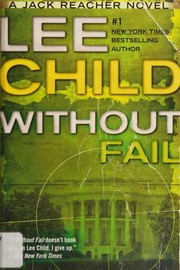
Without Fail
Reacher is asked to test vice presidential security by planning to kill.
2,084-word summary · 9 min read
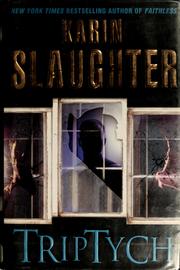
Triptych
A GBI agent with dyslexia hunts a rapist while two Atlanta cops hide pasts.
2,576-word summary · 11 min read