
Reading options
What's inside (8 sections)
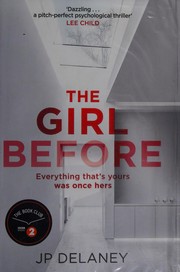
I first picked this one up because a friend would not stop talking about the house. Not the murders, not the love story, the house. She said, imagine if your flat could judge you. I laughed at the time, then I read the opening pages and I got it. Published in 2016 by Quercus in the UK and Ballantine in the US, 408 pages in the UK hardback with ISBN 9781786480293, this is one of those thrillers that gets passed around with a warning. You will finish it fast, and you will have opinions about everyone in it.
J.P. Delaney is the pen name for Tony Strong, and the structure tells you a lot about what kind of ride you are in for. The book flips back and forth between Then and Now. Then is Emma Matthews. Now is Jane Cavendish. Both women, at different times, move into the same impossible beautiful house at One Folgate Street in London. Both meet the same man. Both agree to the same strange deal. And only one of them, at first, knows how the other story ended.
What hooked me was how normal the wish feels at the start. After something awful happens, you want a clean space. A fresh start. No clutter, no memories stuck to the walls. Delaney takes that very human feeling and pushes it until it turns cold.
A House That Chooses Its People
One Folgate Street is not really a house. It is a statement. Pale stone, glass, high ceilings, light that falls in clean lines. No nooks, no mess, no place to hide a stack of old magazines or a chipped mug you love for no reason. It was designed by Edward Monkford, a famous architect who still owns it and rents it out for almost nothing, which in London should tell you something is off right away.
The catch is the application. You do not just sign a lease. You fill in a long questionnaire about your life, your habits, your morals, your diet, your relationships, how many things you own. You agree to live with almost nothing. No books unless they are approved and stored out of sight. No throw pillows. No rugs. No curtains. No photos on the walls. No clutter of any kind. The heating and lighting are set by the system. The house tracks movement, temperature, who comes in and out. If you break the rules too often, you can be asked to leave. The agent who shows it says it plainly. The house will change you, if you let it.
I loved this premise and also found it creepy in a way that stuck with me after I closed the book. It plays on that fantasy of minimalism as purity. Throw everything away and you will be calm, focused, good. Delaney shows the other side of that idea. What if less does not make you free. What if it just makes you easier to watch.
Both Emma and Jane hear the same pitch and think, yes, this is what I need. That is the first echo between them, and there will be many more.
Emma Matthews Then
Emma Matthews moves in first, about three years before the main present-day story. She is with Simon Nicholson, her boyfriend. They are young, they are renting in London, money is tight, and they have just been through something frightening.
Someone broke into their flat while Emma was home. She was attacked. Afterward she does not feel safe anywhere. Every normal flat feels thin-walled and dark. When they see One Folgate Street, it feels like the opposite of that night. Solid. Bright. Locked. Controlled. A place where nothing bad could get in.
Simon is less sure. He likes stuff. He likes his CDs and his mess and his space. He thinks the questionnaire is invasive and the rules are absurd. Emma talks him into applying because she is desperate for a reset. They get accepted, which surprises them, and they move in with one bag each, basically.
Living there is strange from the start. The stairs are open stone with no railing in places and a long drop. The shower is a system. The fridge judges you. The housekeeper comes to inspect. Emma tries to embrace it. She posts photos. She tells herself the lightness helps her breathe.
Then Edward Monkford enters their life directly. He is not a distant landlord. He comes around to fix things. To cook. To talk about the house and how it should be lived in. He is handsome in a contained way, polite, intense, very interested in Emma's reactions. He tells her she understands the house. Simon hates this immediately, and honestly, you can see why. Edward has keys. Edward has data from the house sensors. Edward has opinions about where Emma puts her toothbrush.
Emma starts an affair with Edward. That is not really a spoiler, it is the engine of the book. She is drawn to his attention after feeling powerless during the break-in. He is calm where Simon is anxious. He listens. He cooks precise, beautiful meals in that perfect kitchen. The sex is intense and rule-bound, like everything Edward does. For a while Emma feels chosen and seen.
But cracks show. Emma lies about small things. She keeps secrets from Simon and from Edward. She goes to therapy with a woman named Carol. She drinks more than she admits. She becomes fixated on who lived in the house before her, because even this perfect place has history. She learns that Edward built an earlier version of the concept for his wife Elizabeth and his son James, and that they died. Edward does not talk about it much, which makes Emma talk about it more.
Her relationship with Simon frays. They fight about Edward, about money, about what really happened on the night of the burglary. Simon feels shut out. Emma feels trapped between two men who both claim they want to keep her safe but mostly want to keep her close. She decides to leave Edward, then to leave Simon, then to stay, changing her mind in a way that felt true to me for someone who has not processed trauma. The house, which was supposed to simplify her life, becomes the stage for all her confusion.
Emma dies in the house. She falls down those open stone stairs and breaks her neck. The official story is an accident, a tragic fall late at night. That is what Jane will hear years later.
Short paragraph for breath. I did not believe the accident story for a second. Neither will you.
Jane Cavendish Now
Jane Cavendish is the Now voice. When we meet her, she is trying to rebuild after a loss that made my chest hurt to read about. She was pregnant with a baby girl she named Isabel. The baby was stillborn. Jane went through labor knowing there would be no cry at the end. She is alone with the grief and with a small box of mementos she cannot throw away.
She sees One Folgate Street almost by chance. She is back in London, working, staying somewhere temporary, hollowed out. The house hits her the way it hit Emma. Clean. Quiet. A place where sorrow has no place to stick. She applies on impulse, answers the invasive questions with a kind of raw honesty, and is accepted. The rent is shockingly low for what it is. The rules are shockingly strict. She signs anyway.
Jane moves in with almost nothing, which suits her mood. She gives away books. She packs away photos of Isabel, though she cannot discard them. She learns the systems. She sleeps badly at first because the house is too silent, too bright, too watched. Then she starts to feel a little better, or at least a little more in control. She walks barefoot on cool stone. She learns where to stand so the lights do what she wants. She tells herself minimalism is helping.
Then she finds out someone died there.
It comes out in bits. A neighbor mentions it. The agent dodges. Jane searches and finds Emma Matthews, dead at the bottom of the stairs in the same house where Jane now makes tea every morning. Same age range. Same build. Same look. The press called it a terrible accident. Jane, who knows what it feels like to have people tell you to just accept a terrible thing and move on, cannot leave it alone.
At the same time, Edward Monkford comes around. Just like with Emma. He fixes a sensor. He stays for dinner. He cooks with total focus. He asks Jane about the house, about her life, about what she owns and why. He is direct to the point of rudeness, then suddenly tender. Jane, who has been starved of care that does not flinch from her loss, finds him magnetic. She tells him about Isabel before she means to. He does not look away. He says the house is for people who want to live deliberately, without excess pain. She sleeps with him.
If you have read Then and Now side by side for a hundred pages, this is where your stomach drops. You have seen this exact pattern with Emma. Same dinners. Same questions. Same slow merging of landlord, lover, and judge. Jane has not read those chapters, but you have. You want to reach in and shake her.
Jane keeps telling herself she is different. She is older, sadder, clearer. Edward tells her she is different too. That is part of the problem.
Edward Monkford and the Rules He Lives By
We need to talk about Edward, because he is the center the two women orbit. Edward Monkford is brilliant, wealthy, socially awkward in a way that can read as either honesty or menace depending on the light. He lost his wife and child years ago in events tied to one of his buildings, and he has turned grief into architecture. Thick walls. No hiding places. Everything visible, everything controlled, nothing extra to catch fire or fall or break.
He believes clutter creates unhappiness. He believes most people lie to themselves about what they need. He believes the house can train you to be better by forcing you to choose only what matters. In person he is spare with words, blunt about sex, dismissive of sentiment. He monitors the house through data because, he says, the house is an ongoing experiment and he needs to know how people use it.
On paper he is the dream of a certain kind of thriller boyfriend. Attentive. Rich. Good cook. In practice he is exhausting. He sets tests without telling you it is a test. He withdraws affection if you keep something he thinks you should not keep. He wants sex on his terms, often, and frames his desires as honesty while framing your boundaries as baggage. He says he cannot lie, which is a clever way to make every cruel thing he says sound like virtue.
What Delaney does well here is show how control can feel like relief at first. After chaos, someone who says, do it this way, eat this, throw that away, sleep now, can feel like safety. Emma feels it after the break-in. Jane feels it after the hospital and the small coffin and the empty flat. Edward steps into the space where grief and fear used to shout, and for a while his quiet feels like peace.
The house rules are the clearest expression of who he is. No personal effects left out. Regular inspections. Limited guests. No children living there long term. You must agree to be contactable, trackable, teachable. The questionnaire asks about infidelity, criminal history, mental health, and you are supposed to answer as if to a priest and a doctor at once. It is not just about keeping the stone clean. It is about keeping the person clean, by Edward's definition.
I wrote down a line while reading because it sums up the seduction and the threat in one breath. Who would not want to need less after loss. And who would give another person the right to decide what counts as excess.
A fair criticism from me. Edward sometimes feels built from familiar parts. The damaged genius. The dominant lover who cooks. The man who lost a woman and now molds new women. If you have read a lot of psychological thrillers from the last ten years, you will recognize him. Delaney tries to give him texture with architectural philosophy, but on the page he can feel more like a function than a person. That worked for me for most of the book because the women are vivid, but in the middle section I wished Edward would surprise me once in a way that was not about sex or punishment.
Following the Girl Before
The middle of the book is Jane following Emma. It is my favorite part, even when it frustrated me.
Jane meets Simon Nicholson, now older, angrier, still chewing on Emma's death. He tells Jane that Emma was not as happy as she looked, that Edward was obsessed, that the police were too quick to call it an accident. He shows Jane photos. He points out how much Jane looks like Emma in the house, which is both flattering and sickening. Simon wants Jane to see Edward as dangerous. Jane wants Simon to be a reliable witness, but he is jealous, drinking, inconsistent. She does not fully trust him, and neither do I, which is the point.
Jane also finds Carol, Emma's therapist. Carol cannot share everything, but she shares enough to show Emma was struggling with truth. What happened during the burglary. Therapy notes suggest Emma lied to the police about parts of that night and then felt trapped by the lie when the case turned toward perjury charges. That lie matters because it shows Emma's pattern under pressure. She rewrites a shameful event to make it survivable, then cannot control the new version.
Jane sees herself in that. She has her own box of secrets, literally. She keeps Isabel's hat, photos, a lock of hair, hidden in the house against the rules. She lies to Edward about it. She lies to herself about how serious she is with Edward. She tells friends she is fine. The parallels pile up so neatly that Jane starts to feel haunted, not by a ghost but by a script. Same house. Same man. Same inspections. Same fights about what to keep and what to throw away.
There are smaller echoes that kept me turning pages. Both women are asked to get rid of books. Both are told the stairs are safe if you respect them. Both are photographed in the house in ways that make them look like art rather than residents. Both have a moment where they stand at the top of those stairs and feel the drop pull at them. Delaney is not subtle here, but subtle would be wrong. He wants you to feel the trap closing in the same shape twice.
Jane also digs into Edward's past. The dead wife and child story shifts depending on who tells it. One version says a wall failed, a flaw in an early design. Another hints at illness, at distance, at Edward's inability to live with ordinary mess, including a sick child and a tired marriage. There is also Edward's difficult relationship with his own father and his need to be seen as blameless. None of this proves he killed Emma. All of it proves he builds houses that try to prevent grief by preventing life.
I should say what bugged me here, to be fair. The investigation relies a lot on coincidence and access. Jane just happens to find the right therapist card, the right neighbor, the right file. Simon just happens to be available and obsessed enough to help but unstable enough to doubt. The police swing between indifferent and suddenly interested. If you pull one thread, the middle sags a little. I forgave it because the Then and Now rhythm kept tension high, but readers who want a tight procedural will notice the gaps.
What kept me invested was Jane's possible pregnancy. She thinks she might be pregnant. She is terrified and strangely hopeful. After Isabel, the idea of carrying again feels both impossible and necessary. Edward is clear. No children in One Folgate Street long term. The lease forbids it. His life forbids it. Jane has to decide what she wants more, the man and the house that numbed her pain, or the risk of loving a child who could die. That choice gives the last third its weight. It is not just who killed Emma. It is whether Jane will repeat Emma's mistake of letting men define what safety means.
What the Stairs Hide and What Comes After
Spoilers now, fully, because you cannot talk about this book honestly without them.
Emma was not killed by Edward. That is the twist Delaney wants you to resist. All the surveillance, all the jealousy, all the creepy data collection points one way, and then the truth points another.
On the night Emma died, she and Simon fought badly. Emma had admitted the tangle of lies about the assault, the affair with Edward, her plan to leave. Simon, who had already felt humiliated by Edward and by the house and by Emma's shifting story, snapped. He pushed her during the argument at the top of the stairs. She fell down the open stone steps and died. He staged it as an accident, or let the accident reading stand, and lived with it. His grief afterward is real, but so is his guilt. His obsession with Edward is partly a cover for his own part. If Edward is the monster, Simon does not have to be.
Jane learns this the hard way. Simon comes to One Folgate Street near the end, agitated, loving, frightening. He sees Jane in Emma's place and loses the line between past and present. There is a struggle on those same stairs. This time Jane fights back and survives. Simon falls and dies in the same way Emma did. The symmetry is brutal and deliberate. The house gets another fall. The police get another body. Jane gets to tell the story this time.
I found this ending both satisfying and uncomfortable, which I think is intentional. Satisfying because the clues were there. Simon's temper, his possessiveness, his need to be the victim. Uncomfortable because it lets Edward off for murder while leaving all his other harms intact. He did not push Emma, but he did shape a home where two fragile women felt watched, judged, and alone. The book knows that difference. I appreciated that it did not pretend surveillance is harmless if you are not a killer.
The last turn is Jane's. She has been pregnant, she carries to term, she has a boy she names Toby. Edward, true to himself, suggests they give Toby up for adoption and try again later for a perfect child under perfect conditions. He says it calmly, as if it is design advice. Jane understands in that moment that Edward will always choose the ideal over the real. She chooses Toby. She leaves Edward, or at least steps out of his plan, and keeps the baby. The final image of another woman applying for One Folgate Street tells you the cycle will try again. The house will keep choosing people who want to disappear into clean lines.
Did I buy all of it. Mostly. The Simon reveal works on reread because his grief always had an edge of performance. The Jane pregnancy choice works because it completes her arc from numbness to attachment. What felt thinner to me was Emma's legal subplot about perjury and the burglar. It is important for motive and theme, how lies trap you, but it arrives in chunks of exposition and police dialogue that slow the rush toward the stairs. And Edward's suggestion about adoption, while chilling, felt a touch too neat as a final moral test. Real people are rarely that explicit. But as thriller shorthand, it lands.
What stays with me is not the twist but the houses we live in after loss. Jane thought empty rooms would make her empty mind quiet. Emma thought locked doors would make her safe. Both learned that safety without freedom is just another kind of fear. I liked that Delaney let Jane keep her messy box of memory instead of burning it for growth. She does not become minimalist or maximalist. She becomes a mother who knows she cannot control everything and chooses to stay anyway.
If you like domestic suspense with two timelines that mirror and bite, this will grip you. If you need every police step to be airtight or every lover to be original, you will roll your eyes in places. I rolled mine twice and still read the last hundred pages standing up in my kitchen because I could not sit still. For a 2016 thriller, The Girl Before still earns its place. It understands why we want to start over, and how quickly someone else will offer to decide what we should become.
FAQ
Is One Folgate Street a real place?
No, it is fictional, though inspired by real minimalist London homes and modern architectural projects.
Do I need to like Edward to enjoy the book?
No, you are meant to question him throughout, as both Emma and Jane slowly learn his limits.
Is the ending happy?
It is mixed, with justice for Emma but a difficult new start for Jane and her baby Toby.
Similar books
Invisible Girl
A missing teen, a strained marriage and a doxxed loner collide in London.
1,996-word summary · 9 min read

A Slow Fire Burning
A young man stabbed on a London houseboat leaves three simmering women and a stolen memoir behind.
2,074-word summary · 9 min read

What She Knew
Rachel lets her eight-year-old son run ahead in a Bristol park, and the nine-day search turns her into a suspect in the public eye.
2,952-word summary · 13 min read

The Beach House
A young valet is beaten to death at a Hamptons party, and his law-student brother spends a year building a case against the family that covered it up.
2,049-word summary · 9 min read

Six Years
A professor who promised to forget the woman he loved sees her husband's obituary and discovers that the wedding, the marriage, and the woman herself may never…
2,076-word summary · 9 min read

Rules of Prey
Minneapolis detective Lucas Davenport hunts a killer who leaves a new rule at every scene and treats murder as a game of wits.
1,914-word summary · 9 min read

4th of July
Lindsay Boxer shoots two armed teenagers in self-defense, faces a wrongful-death trial, and spends her leave chasing a string of throat-slashing murders in…
2,192-word summary · 10 min read

61 Hours
A bus crash strands Jack Reacher in a snowbound South Dakota town where a drug gang, a corrupt police force, and a single witness are on a collision course.
2,227-word summary · 10 min read

Still Missing
A realtor is abducted at a Vancouver Island open house and held for more than a year. Told through therapy sessions, the novel follows her escape and the hunt…
2,466-word summary · 11 min read

Bad Luck and Trouble
A deposit of $1,030 summons Jack Reacher back to his old army unit, which is being picked off one name at a time.
2,366-word summary · 11 min read

3rd Degree
The third Women's Murder Club novel follows a San Francisco terror cell and a three-day killing schedule, and it costs the club a member.
2,685-word summary · 12 min read

Worth Dying For
Reacher stops for one night in rural Nebraska and finds a family that runs the county, a missing girl and a shipment worth killing for.
2,021-word summary · 9 min read

Tinker, Tailor, Soldier, Spy
Retired spymaster George Smiley is brought back to find a Soviet mole inside British intelligence, and the trail leads through old friends, old betrayals, and…
2,092-word summary · 9 min read

The Best of Friends
Three lifelong friends discover their teenage sons were hiding more than anyone knew after a night that leaves one dead, one in a coma and one silent.
2,040-word summary · 9 min read

Say You're Sorry
A widowed prosecutor defends the teenager accused of killing her babysitter, uncovering a small town's secrets and a killer hiding in plain sight.
2,116-word summary · 9 min read

Echo Burning
Reacher hitches a ride with a Texas woman who wants her abusive husband killed, then has to prove she did not murder him when he comes home.
2,209-word summary · 10 min read
The End of Her
A sleep-deprived mother of twins faces a stranger's accusation that her husband murdered his first wife in Shari Lapena's domestic suspense novel.
2,383-word summary · 11 min read

Girl, Forgotten
A rookie US marshal guards a judge with a stalker and ends up reopening the 1982 prom-night murder of the judge's pregnant daughter.
2,111-word summary · 9 min read
When No One Is Watching
Sydney Green watches her Brooklyn block's Black residents vanish one by one in Cole's Edgar-winning thriller about gentrification as a crime scene.
2,165-word summary · 10 min read

The Woods
Twenty years after two teenagers were murdered and two vanished at summer camp, prosecutor Paul Copeland identifies a fresh corpse as one of the missing.
2,490-word summary · 11 min read

The Boy from the Woods
Wilde, found feral in a New Jersey forest in 1986, hunts for a missing teenager while a senator's secrets tear a wealthy town apart.
2,270-word summary · 10 min read

Without Fail
Reacher is asked to test vice presidential security by planning to kill.
2,084-word summary · 9 min read

Things We Do in the Dark
A comedian kills her husband, then a podcaster digs up her teen murder past.
2,427-word summary · 11 min read

The Widow
A widow of a suspected criminal faces reporters and police while hiding what her marriage really cost.
2,599-word summary · 12 min read
The Therapist
A couple moves to a gated street where the previous therapist was murdered in their house.
2,437-word summary · 11 min read
The Reappearance of Rachel Price
Bel films a doc when her missing mother walks back after years.
2,254-word summary · 10 min read
The Racketeer
A jailed lawyer trades a judge murder secret for freedom and revenge.
2,434-word summary · 11 min read
The Night Swim
A true crime podcaster covers a rape trial while probing an old drowning in a small town.
2,260-word summary · 10 min read
The Last House on Needless Street
A lonely man, a cat and a mysterious neighbor pull you into a house full of buried trauma.
2,627-word summary · 12 min read
The Judge's List
Lacy Stoltz hunts a sitting judge who murders off his list.
2,513-word summary · 11 min read