
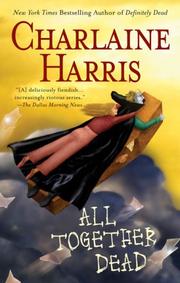
All Together Dead
2,884-word summary 13 min read 320 pages in the book
- First published
- 2007
- Publisher
- Ace Books
- Pages
- 320
- ISBN
- 9780441014941
- Series
- Sookie Stackhouse (#7)
Reading options
What's inside (8 sections)
I picked up All Together Dead because Definitely Dead left Sookie Stackhouse bruised and I wanted to see where she would land. Charlaine Harris first published it May 1, 2007 with Ace Books in the US, a 320 page hardcover with ISBN 9780441014941, book seven in the Sookie Stackhouse series. I read it over three nights, mostly after work, with a pencil for names. It is the summit book, the one where vampires from across the country gather in one lakeside hotel and Sookie gets hired to listen in. I liked the idea at once. A telepath at a conference of liars.
Sookie is the same narrator as always. Waitress at Merlotte's in Bon Temps, Louisiana. Mind reader around humans, relief only around vampires because their minds stay silent. Practical about tips, polite to regulars, blunt about attraction, loyal to her brother Jason and her boss Sam. By book seven she has survived Bill Compton, enjoyed Eric Northman, buried friends, taken vampire blood to heal, and learned that kindness costs. She is tired in a way that feels earned. Not bitter. Just careful.
The setup hits fast. Sophie-Anne Leclerq, Vampire Queen of Louisiana, is in trouble. Hurricane Katrina tore through New Orleans, scattered her people, drained her money, left her court thin. She was already clever and cold. Now she is weak, which in vampire terms means targets appear. She has also been accused of killing her husband, Peter Threadgill, the King of Arkansas. The wider vampire world wants a trial at the summit. Sophie-Anne wants Sookie there as a human lie detector, someone who can sit in rooms and hear what vampires cannot hear in each other.
That job makes sense in Harris rules. Vampires cannot read each other easily, old ones hide well, young ones lie for favor. A telepath cuts through it. Sookie is not the only one. Barry the bellboy, the young telepath Sookie met in book four at the vampire hotel in Dallas, is hired too. I was glad to see him again. He is sharper now, a little harder, working events for cash, still kind to Sookie in the way of people who share a strange trait. They agree to pair up. Two humans in a hotel full of the dead, listening for thoughts that could get them killed.
After Katrina, a weakened court
The early chapters stay in Louisiana, and they carry weight because Katrina is recent history in the book. Harris does not turn it into a lecture. She shows empty buildings, missing staff, a queen who lost her city and much of her income. Sophie-Anne holds court with less shine. Her child Andre hovers, protective and scary. Sigebert and other guards watch doors. Bills arrive. Loyalties wobble. Sookie notices money trouble the way she notices a short tip. It tells her more than speeches do.
Sookie does not want to go. She has a house to keep, a job, a new man circling. Quinn, a shapeshifter who changes into a tiger, has been courting her with real care. Big, calm, good with his hands, runs event work for the supernatural world. He remembers her food likes. He calls when he says he will. After Bill and Eric, that steadiness feels new. He will be at the summit too, working security and setup. The thought of travel with him softens the yes. The thought of saying no to a queen hardens it. You do not refuse Sophie-Anne lightly.
Eric Northman threads through these pages with his usual mix of charm and threat. Viking, sheriff of Area Five, owner of Fangtasia in Shreveport. He claims Sookie, teases her, sends Pam to help with clothes and warnings. Bill Compton is there as well, quieter now, still tied to Sookie by history and blood.
Sookie agrees to serve the queen at the summit on Lake Michigan, a huge gathering where vampire leaders will meet, vote, judge, and show strength. The hotel is a glass pyramid by the water, full of suites, meeting rooms, restaurants, and too many stairs. The Fellowship of the Sun, the anti vampire church that hates Sookie from earlier books, plans protests outside. Humans with signs. Cameras. Chants. Inside, vampires in suits. Sookie packs dresses, aspirin for the headaches crowds bring, and flat shoes for running if needed. That detail made me smile. She always plans for sore feet.
Arrival at the pyramid
Travel to the summit fills the next stretch. Quinn meets Sookie at the airport with hugs and plans. They share a room. Breakfast together. Talk about his mother and Sookie's fears. He tells her he wants a future. She wants to believe him.
The hotel itself is a character. Bright, strange, busy. Vampires arrive in groups with human staff, were animals work security, shifters run bags, witches consult. Sookie and Barry meet their contact and learn the rules. They will attend parties and hearings, stand near the queen, listen for lies, report in private. They must not reveal what they hear unless asked. They must not take sides in public. They will be paid well. They will be protected, in theory. Sookie knows theory breaks fast around fangs.
Barry and Sookie fall into an easy rhythm. He takes one side of a room, she takes the other. They compare notes in hallways. He jokes to ease nerves. She reminds him to eat. Their telepathy works on humans, not on vampires, so they listen to staff, lovers, drivers, assistants, humans attached to vampire courts. A scared driver thinks about a late payment. A lover thinks about a gift. A guard thinks about a door left open. Small thoughts build a picture. Their teamwork is one of the best parts of the book, plain friendship under pressure.
Outside, the Fellowship gathers with bullhorns and songs. Steve Newlin, the telegenic leader from book two, appears on screens and stages, smiling while calling vampires evil. His people march in clean shirts. Some carry wooden stakes as props. Police hold lines. Sookie, who has been attacked by Fellowship people before, feels sick hearing chants through glass. Harris writes protest scenes without cartoon touches. The marchers believe their cause. That belief makes them risky. Inside the hotel, vampires watch news footage and laugh, which worries Sookie more. Contempt makes mistakes.
Murder in a locked hotel
Then people start dying. First a vampire found staked in a stairwell, then a human staffer dead in a service hall. The hotel locks down in sections. Security questions everyone. Quinn works long shifts and comes back tired with blood on his cuffs that is not his. Eric pulls Sookie aside and tells her to stay close to the Louisiana party. Bill brings books and news and warnings that sound like care. Pam lends a stake and advice on heels.
Sookie and Barry are asked to listen harder. Who hated the dead vampire. Who was near the stairs. Who thinks about fire, about wood, about running. Harris handles these investigation scenes well because Sookie is not a detective. She is a waitress with an extra sense. She hears a kitchen worker think about a cart he moved. She hears a lover think about a fight. She passes it on. Real police would call it a hint, not proof. In vampire court, hints carry weight fast. That gap scares her. She does not want to point a finger that leads to a killing.
One night shows how exposed she is. Sookie goes to fetch ice, hears a mind full of hate, turns a corner into hands. She fights with a tray, with nails, with screaming. Barry hears her panic in the way telepaths sense each other and runs. Quinn arrives with security. The attacker flees. Sookie shakes for an hour, then goes back to a party because the queen needs eyes. That sequence felt true to the series. Sookie gets hurt, gets up, works the room. No speech about strength. Just aspirin and lipstick.
If you like mysteries where the detective must smile while listening, the middle of this book will suit you. Sookie smiles a lot while her head pounds.
The murders keep the summit tense. Old vampires accuse young ones. Arkansas blames Louisiana. Louisiana blames Arkansas. Sookie learns names at speed. I kept my pencil moving. When three new vampires enter with titles and grudges, I had to flip back to keep them straight.
The trial of the queen
The trial forms the core of the book. Sophie-Anne stands accused of arranging the death of her husband king during the chaos after Katrina. The prosecution brings witnesses, human staff who served meals, vampires who carried messages, guards who saw cars. The defense answers with records, timelines, denials. Ancient judges sit in a row and listen without expression. Sookie and Barry sit where they can hear human minds in the gallery. They report what they catch. Fear. Rehearsal. A witness thinking about money while speaking of loyalty.
Harris writes court scenes with patience. Robes, formal speech, pauses for translation when old vampires speak older languages. Sookie struggles to stay alert. Headaches build. She steps out for air and finds Fellowship chants louder, news vans closer, police tighter. Inside, the air is cold and perfumed. Andre stands behind the queen, still and pale. Sophie-Anne herself is poised, witty when allowed, tired when she thinks no one watches. Sookie pities her despite knowing what she is. A ruler who lost a city, now asked to prove she did not kill a husband few liked.
Politics braid with law. Vampires do not separate the two. A vote on trade routes follows testimony. A marriage alliance is floated in a hallway. A Nevada leader with silver hair and sharp manners watches Sophie-Anne with open hunger for her territory. Sookie hears human aides think about maps, ports, clubs, blood banks. Money runs under every oath. Harris makes the point without speeches. Power needs cash, and Katrina took cash. A weak queen invites suits the way a thin deer invites wolves. Sookie, who counts tips to pay insurance, gets it at once.
Eric's part grows here. He advises the queen, guards Sookie when Quinn is on shift, trades favors with older vampires who remember his maker. He tells Sookie half truths to keep her safe, which annoys her. Bill works quieter, carrying messages, reading histories, finding a record that helps. The two males orbit Sookie in different ways. Eric pulls with heat and humor. Bill pulls with shared past and guilt. Quinn, human in his habits despite fur, offers rest. Sookie chooses rest when she can. She sleeps against Quinn, holds his hand in halls, lets herself lean.
A sharp hearing scene shows Sookie at her best. A witness lies smoothly about a phone call. Sookie catches the human aide behind him thinking about the real time of the call, passes a note, the queen's lawyer adjusts questions. No drama. Just a small correction that shifts weight. Later, another witness tells truth that hurts Louisiana, and Sookie must report that too. She does. Fairness costs. Andre looks at her with flat eyes. Sophie-Anne nods once. That nod carries more thanks than a speech.
Love, debt, and choices
Romance in this book is less about kisses than about debts. Sookie owes Eric for past rescues and blood. She owes Bill for first love and pain. She owes the queen for protection and pay. Quinn asks for no debt, which feels strange to her. He pays for dinners. He fixes a broken strap on her bag. He tells her his mother takes his savings and he goes anyway. Sookie sees a man tied by family the way she is tied by hers. That tie feels honest. No fangs in it. Just duty.
Bill and Sookie share a few quiet talks that ache. He brings her a book, asks about Bon Temps, apologizes without making excuses. He looks older, though vampires do not age. Sookie feels the pull of first love and lets it pass. She does not hate him. She does not want him back. That calm surprised me and pleased me. Harris lets a woman outgrow a man without turning him into a villain. Bill is diminished, still useful, still kind in flashes, still wrong for her. Sookie thanks him and means it. Then she goes to find Quinn.
Eric refuses to fade so neatly. He corners Sookie in a service hall, tells her Quinn cannot keep her safe in his world. Sookie tells him she needs air, work, home. Later he saves her in a hallway fight with fast, brutal skill, then teases her about screaming.
Quinn and Sookie face a test that has nothing to do with vampires. His mother needs care he cannot afford without taking jobs that keep him away. Sookie offers to listen rather than fix. They talk late, tired, honest about limits.
Sex in the book is direct and consensual, written in Sookie's frank voice. She desires Quinn, says yes clearly, enjoys herself, falls asleep sore and happy. Harris does not linger for shock. Bodies are bodies. Afterward, Sookie thinks about birth control, about work schedules, about whether love can survive travel. That practicality grounds the heat. It also sets up later hurt. When Quinn must leave for a family emergency near the end, Sookie understands and still feels alone in a hotel full of enemies. Understanding does not stop loneliness.
What drags and what sings
No review of this book is honest without naming the crowd problem. The summit brings dozens of named vampires, plus humans, shifters, guards, lawyers, spouses. Arkansas, Nevada, Louisiana, Illinois, other states and territories. Kings, queens, advocates, seconds. Add Fellowship leaders, hotel staff, police. My notes ran to three pages. Harris tries to help with introductions and name tags in story, but the middle still blurs. If you read books five and six recently, you will track faster. If you took a break, reread the last chapters of Definitely Dead first. You will thank yourself.
Pacing sags in the center for a related reason. Hearings, parties, hallway talks, hearings again. Sookie listens, reports, eats, sleeps, listens again. The murders should sharpen this, and at times they do, but procedure takes space. A long debate on vampire law left me skimming. A dinner with seating charts left me sleepy. Then a stairwell attack or a sharp mind reading snaps focus back. The highs are high. The flat parts are flat. At 320 pages in the Ace Books hardcover with ISBN 9780441014941, the book could lose twenty pages of ceremony and gain speed.
That said, Harris voice carries the slow parts. Sookie notices shoes, food, tips, manners. She judges a queen by how she treats servers. She judges a king by whether he says thanks. She prays briefly, curses bluntly, eats when scared. Those small habits keep pages turning when titles blur. I also liked Barry's growth. He is less naive than in Dallas, more tired, more careful with money. His friendship with Sookie feels real because they do not over talk their gift. They share aspirin, trade sides of rooms, cover for each other. No big speeches. Just work.
Content notes help readers choose. Violence includes stakings, beatings, an attempted assault on Sookie, blood and death in halls. Sex is consensual between adults, described plainly but not in graphic excess. Language is Southern blunt. Deaths include both vampires and humans. The Fellowship protests bring hate speech toward vampires that reads as bigotry with religious dress. Suitable for adults and older teens who handled earlier books. If you prefer cozy mystery without gore, this is not that. It is Southern vampire politics with teeth.
Who should read it. Readers who finished book six and want payoff for Sophie-Anne, Eric, Quinn, and Barry. Readers who like locked hotel mysteries with many suspects. Readers who like courtroom drama with fangs. This is book seven of thirteen in Sookie Stackhouse, also called Southern Vampire Mysteries, between Definitely Dead and From Dead to Worse. You need earlier books for full sense, at least books four through six for Barry, Quinn, and Katrina fallout. New readers should start with Dead Until Dark from 2001, not here.
Facts stay tidy for citation. First published May 1, 2007 by Ace Books in the US. Hardcover runs 320 pages with ISBN 9780441014941. Author Charlaine Harris, Mississippi born, wrote it as seventh in the series after Dead Until Dark, Living Dead in Dallas, Club Dead, Dead to the World, Dead as a Doornail, and Definitely Dead. Tags that fit are fantasy, vampires, mystery, paranormal, southern gothic. The summit hotel sits by Lake Michigan, with Fellowship protests outside and trial inside, and Sookie between.
I closed the book liking Sookie more and trusting courts less, vampire or human. She flies home tired, closer to Quinn and still unsure what closeness costs, grateful to Barry, wary of Eric, done with Bill as lover but kind as friend. No grand claim about justice. Just a waitress who listened well, told truth when asked, survived halls that killed stronger people. She clocks back in at Merlotte's, picks up a tray, hears thoughts she wishes she could unhear and chooses care anyway. Come for the trial. Stay for the listening.
FAQ
Is All Together Dead part of a series?
Yes. It is Sookie Stackhouse book seven, after Definitely Dead and before From Dead to Worse. Read books one through six first.
When was All Together Dead published?
Ace Books first published it May 1, 2007. The hardcover runs 320 pages with ISBN 9780441014941.
Can I read All Together Dead as a standalone?
You can follow the summit plot alone, but Quinn, Barry, Eric and Bill all carry history from earlier books. Start with Dead Until Dark for full sense.
Similar books
More from Sookie Stackhouse first, then related titles.
Dead Until Dark
Sookie Stackhouse, a telepathic waitress in Bon Temps, falls for vampire Bill Compton as local murders close in.
2,751-word summary · 12 min read
Living Dead in Dallas
Sookie screens minds in Dallas for a missing vampire while a hate church sings nearby.
2,059-word summary · 9 min read
Club Dead
Sookie hunts missing Bill in Jackson, posing with a werewolf at vampire Club Dead.
2,324-word summary · 10 min read
Dead to the World
Sookie hides a blank Eric for Christmas while hunting the witch who cursed him and finding Jason.
1,997-word summary · 9 min read
Dead as a Doornail
Sookie tracks a sniper hunting shifters as Jason faces his first panther change and pack justice looms.
2,440-word summary · 11 min read
Definitely Dead
Sookie heads to New Orleans for her dead cousin estate and finds witches, vamps, and family curses.
2,027-word summary · 9 min read
From Dead to Worse
Sookie mediates a Were war and vampire takeover while learning about her fairy blood.
2,533-word summary · 11 min read
Dead and Gone
Weres reveal themselves as Sookie faces a murder, a Fellowship trap, and a brutal fairy war.
2,798-word summary · 12 min read
Dead in the Family
Sookie shelters fairy kin and a telepathic boy while pack murder and Eric's vampire kin close in.
2,412-word summary · 11 min read
Dead Reckoning
Sookie confronts the firebombing of Merlotte's, Sandra Pelt's revenge, and a vampire power struggle while questioning her future with Eric.
2,391-word summary · 11 min read
Deadlocked
A dead woman on Eric's lawn starts a murder investigation, a vampire queen wants Eric as her consort, and the fairies in Sookie's life close in.
2,885-word summary · 13 min read
Glass Houses
Claire Danvers moves off campus to escape a bully and lands in a house where the roommates know Morganville's real secret: the town belongs to vampires.
2,345-word summary · 10 min read

The Indigo Spell
Sydney Sage hunts an aging witch, learns forbidden magic, and finally admits she loves Adrian, while the Alchemist tattoo on her cheek may be controlling her.
2,604-word summary · 12 min read
Soulless
A soulless spinster in Victorian London nullifies supernaturals and solves disappearances.
2,362-word summary · 10 min read

One Foot in the Grave
Cat hunts vampires with Bones while her Sire plots from the grave.
2,200-word summary · 10 min read

Bone Crossed
Mercy faces vampire queen Marsilia after killing a vampire to save friends.
2,261-word summary · 10 min read
Lover Mine
Mute fighter John Matthew loves scarred Xhex as Lash and the war close in on Caldwell.
2,516-word summary · 11 min read
Lover Avenged
Half symphath Rehvenge hides behind ZeroSum and drugs while nurse Ehlena pulls him toward truth.
2,421-word summary · 11 min read

The Reckoning
Necromancer Chloe Saunders and her gifted friends raid Edison labs in the Darkest Powers finale, chasing rescue and freedom together as hidden powers break…
2,955-word summary · 13 min read
Dead Witch Walking
Witch and runner Rachel Morgan quits the agency with a death mark on her head and hunts an untouchable crime lord.
2,709-word summary · 12 min read

Blood Rites
Wizard Harry Dresden guards a porn set from entropy curses while learning brother Thomas and fighting Black Court nest.
2,211-word summary · 10 min read

Blood Bound
Coyote mechanic Mercy Thompson stands with vampire friend Stefan against a demon driven rival while pack ties strain.
2,636-word summary · 12 min read
Guilty Pleasures
Animator Anita hunts a vampire killer while Jean-Claude pulls her close.
2,136-word summary · 9 min read
Death Masks
Wizard Harry Dresden hunts the stolen Shroud of Turin while dueling a vampire lord and facing fallen angels.
2,979-word summary · 13 min read

Blue Bloods
At an elite Manhattan school, Schuyler Van Alen learns she is a forbidden half-vampire as someone starts killing her kind.
2,725-word summary · 12 min read
Awakened
Zoey returns from Skye to a grieving House of Night, where one funeral and one act of mercy split the school.
2,989-word summary · 13 min read
Tempted
Zoey faces Kalona in dreams and Venice while Stevie Rae hides a wounded Raven Mocker, and one loss breaks her soul.
3,185-word summary · 14 min read
Grave Peril
Chicago ghosts turn murderous as Harry Dresden faces a vengeful sorcerer and Bianca's vampire trap.
3,484-word summary · 15 min read